
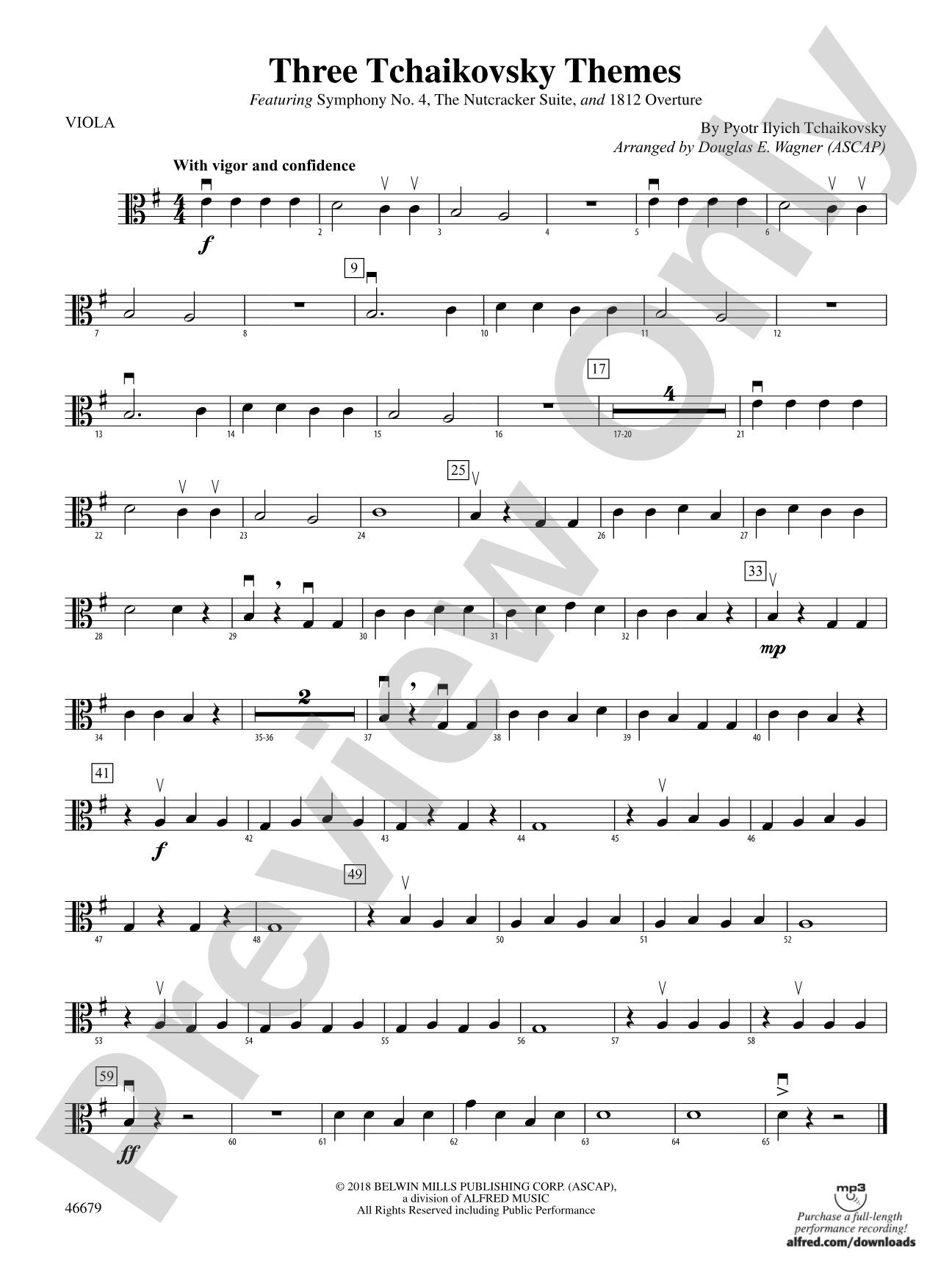

Three Tchaikovsky Themes: Viola
Featuring: Symphony No. 4 / The Nutcracker Suite / 1812 Overture
By Pyotr Ilyich Tchaikovsky [Peter Ilyich Tchaikovsky] / arr. Douglas E. Wagner
Grade: 1
Item: 00-PC-0017817_VA1
$5.99
Pickup currently not available
Description
Russian Romanticism reached its peak with the music of Tchaikovsky, as the three instantly recognizable excerpts included in this uncomplicated arrangement will attest---Symphony No. 4, Mvt. IV, The Nutcracker Suite (Overture), and 1812 Overture. Younger players should have no problem mastering this music, which has been richly scored by Douglas E. Wagner to make even the smallest ensemble sound great. Teachable moments abound in "Three Tchaikovsky Themes" including the development of full, confident bowing; the awareness of dynamic contrast and contouring of phrases; an opportunity for discussion, with this music standing as an introduction to the memorable melodies and embracing harmonies of this period. Fun to play, and an almost guaranteed hit with any audience!


Don't just read it, hear it, play along with it, and watch your students grow with it. In MakeMusic Cloud, Three Tchaikovsky Themes: Viola comes alive with professional accompaniment, adjustable tempo, and built-in practice tools that turn solo practice into real progress.
Open in the Player
Jump straight in and assign it today.
Start Your Free Trial
Open this title and explore the full library in minutes.
Sample Audio
1
Audio File
--:--
0:00
0:00
Sample Video
Additional Details
Series:
Belwin Beginning String Orchestra
Publisher:
Alfred Music
Page Count:
72
SKU:
00-PC-0017817_VA1
More about this title
About the Composer: Pyotr Ilyich Tchaikovsky
Pyotr Ilyich Tchaikovsky (1840-1893) stands as one of the most performed composers of the Romantic era, creating music that speaks directly to audiences through memorable melody and emotional immediacy. His gift lay in crafting themes that lodge in memory and harmonies that feel both accessible and deeply expressive, which is precisely why his work translates so effectively to educational settings.
Tchaikovsky's orchestral mastery shaped how we hear drama, celebration, and introspection in music. His ballets, symphonies, and concert overtures remain staples of concert halls worldwide, and their enduring popularity with young musicians reflects the directness and sincerity of his compositional voice.
Why we love this
Douglas E. Wagner's scoring keeps three of Tchaikovsky's most beloved themes within reach of younger ensembles without sacrificing the richness that makes these melodies unforgettable. Grade 1 orchestration at this level rarely sounds polished, but this arrangement is genuinely satisfying to perform and hear, which means your students get real musical payoff for their effort.
What to expect
These three Tchaikovsky excerpts carry the warmth and grandeur of Russian Romantic music, from the celebratory energy of the 1812 Overture to the lyrical grace of the Nutcracker Overture. Young musicians often encounter Tchaikovsky first through this familiar material, and hearing these themes come together under their own bows creates a genuine sense of accomplishment.
Who it's for
String orchestras in their first or second year of ensemble playing. This arrangement welcomes players who are still building independence and confidence while offering them music that feels substantial and worth learning.
How to get the most out of it
- Shape each theme by listening across the section to the arc of the melody, rather than playing phrase-by-phrase. Tchaikovsky's themes reward long, singing lines even at this level.
- Work dynamics as carefully as rhythms. The contrast between softer accompaniment figures and fuller melodic statements creates the drama that makes these pieces engaging for audiences.
- Balance the violas and cellos as harmonic foundation. In Grade 1 writing, these middle voices often carry the richness of the harmony, and letting them breathe prevents the sound from thinning.
- Establish a steady tempo before the first rehearsal and stick to it. Younger ensembles benefit from predictability, which frees their focus for listening and responding to one another.
How to use it
Open a concert with these pieces to establish audience connection immediately; Tchaikovsky's themes are often recognized even by listeners unfamiliar with classical music. This arrangement also pairs well as a lighter offering alongside contemporary or challenging contemporary works, giving your program shape and variety.
Skills your students will build
- Confident, sustained bowing across musical phrases
- Dynamic contrast and phrase shaping within the ensemble
- Listening for balance between melody and harmonic support
- Awareness of Romantic era compositional style and orchestration
- Ensemble cohesion and response to conductor in faster passages