
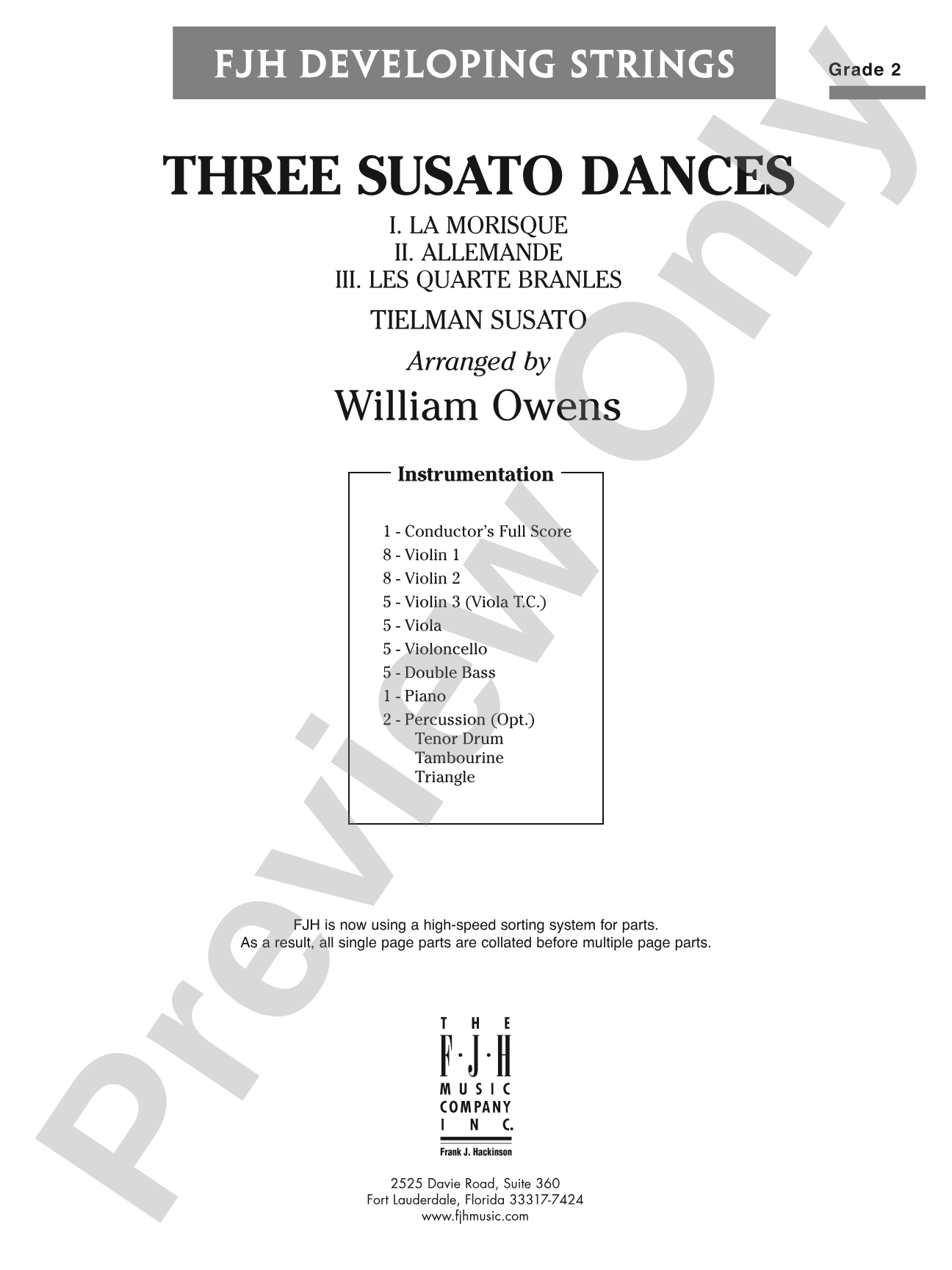
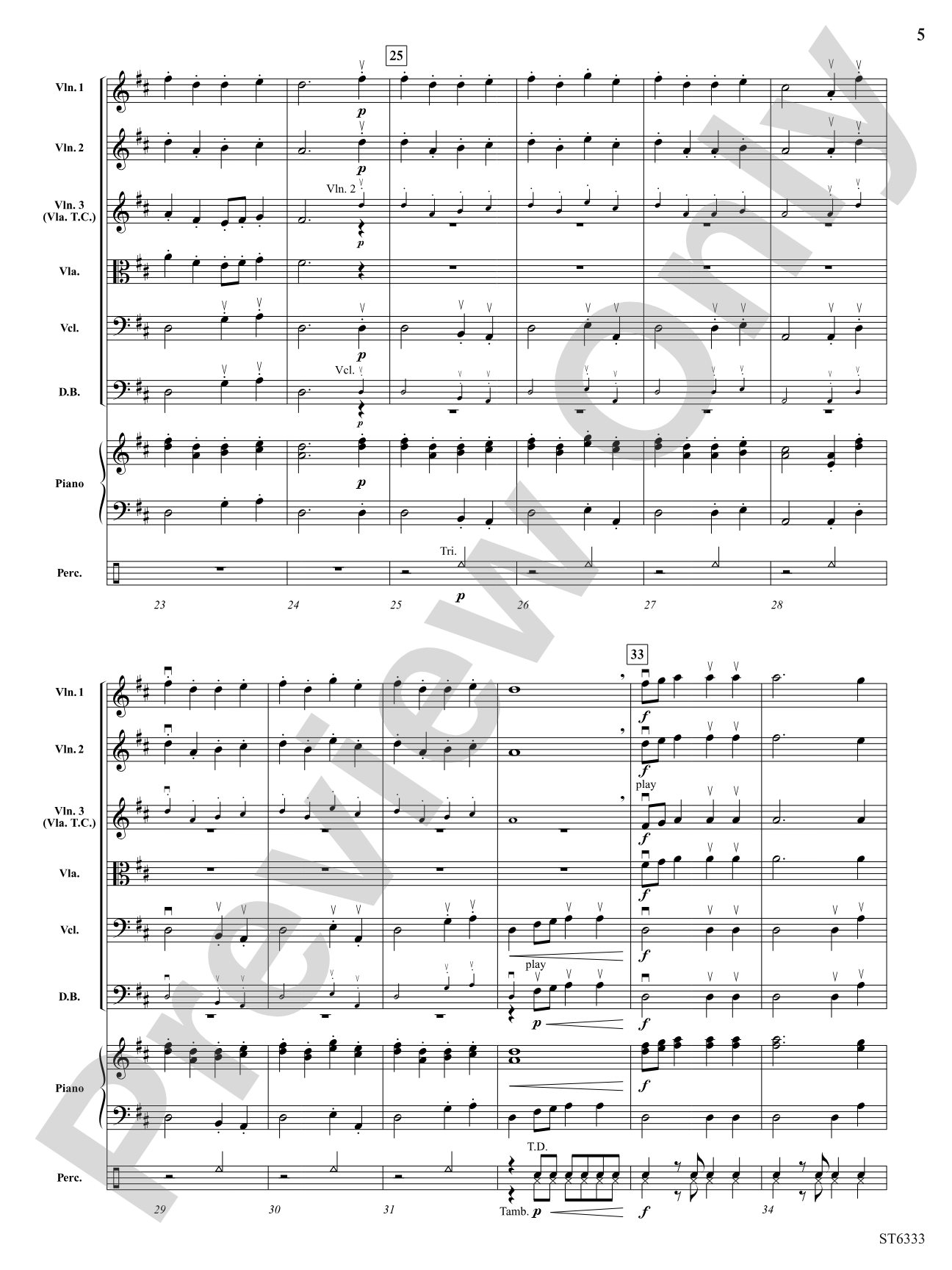
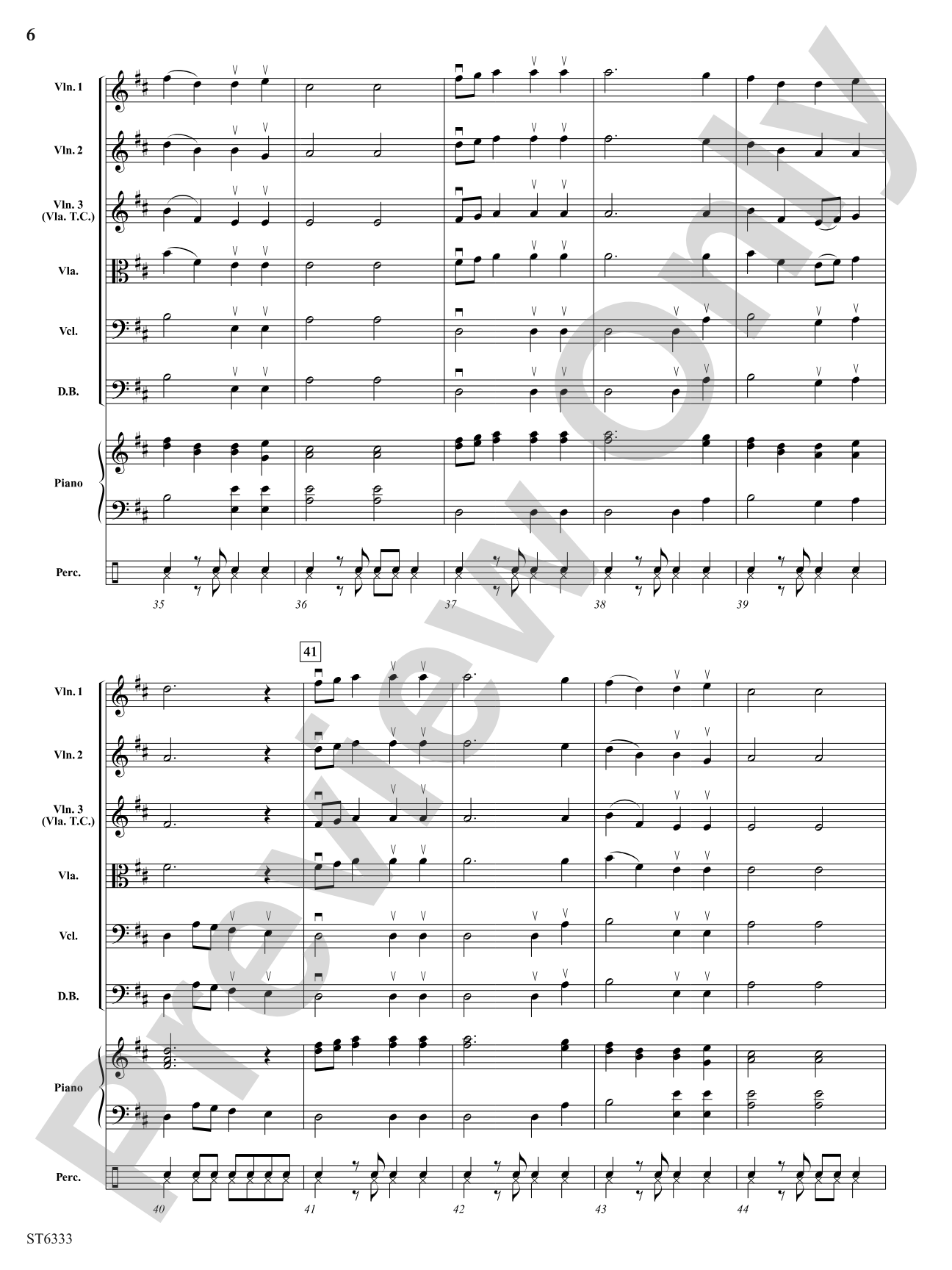
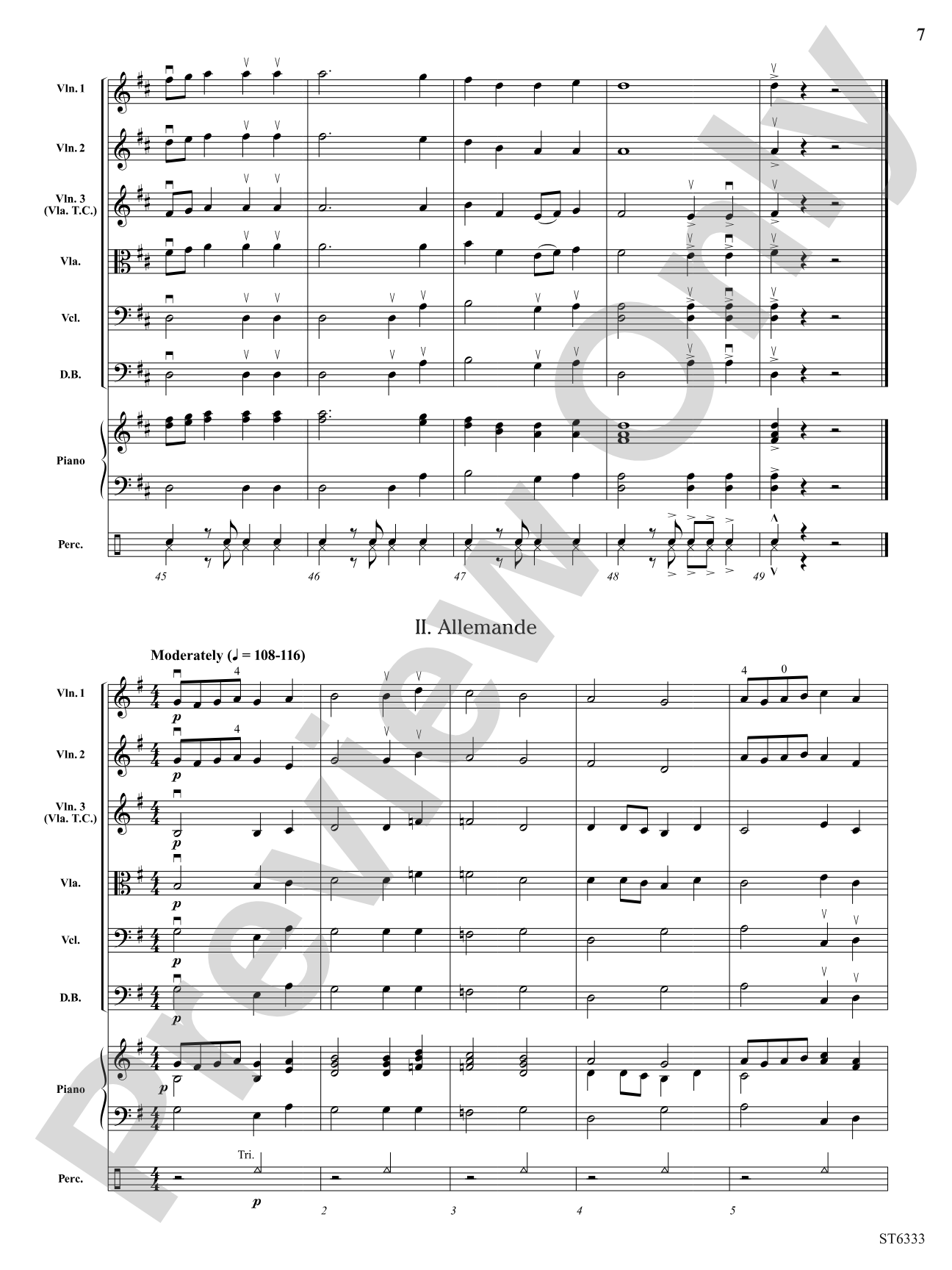
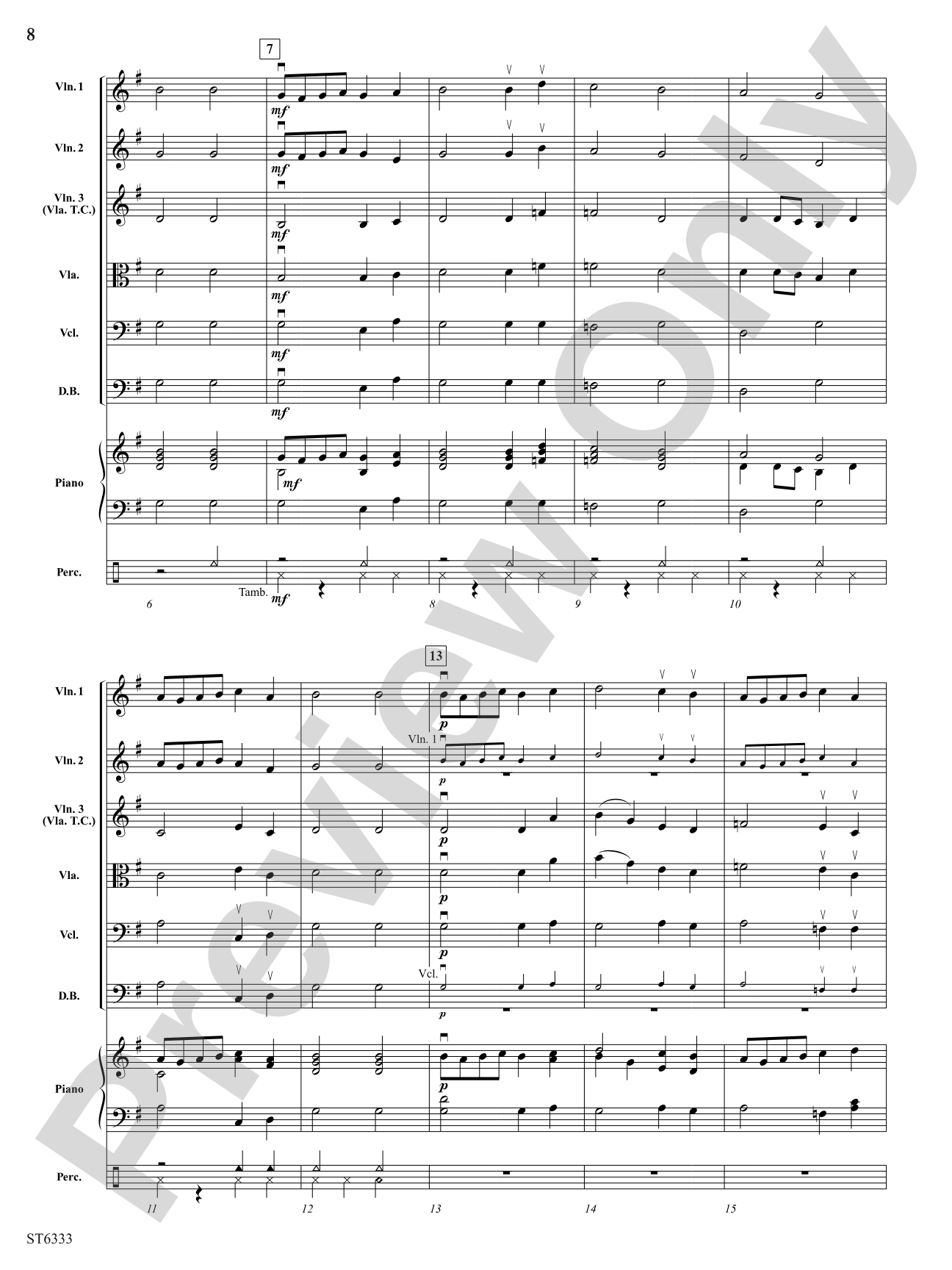
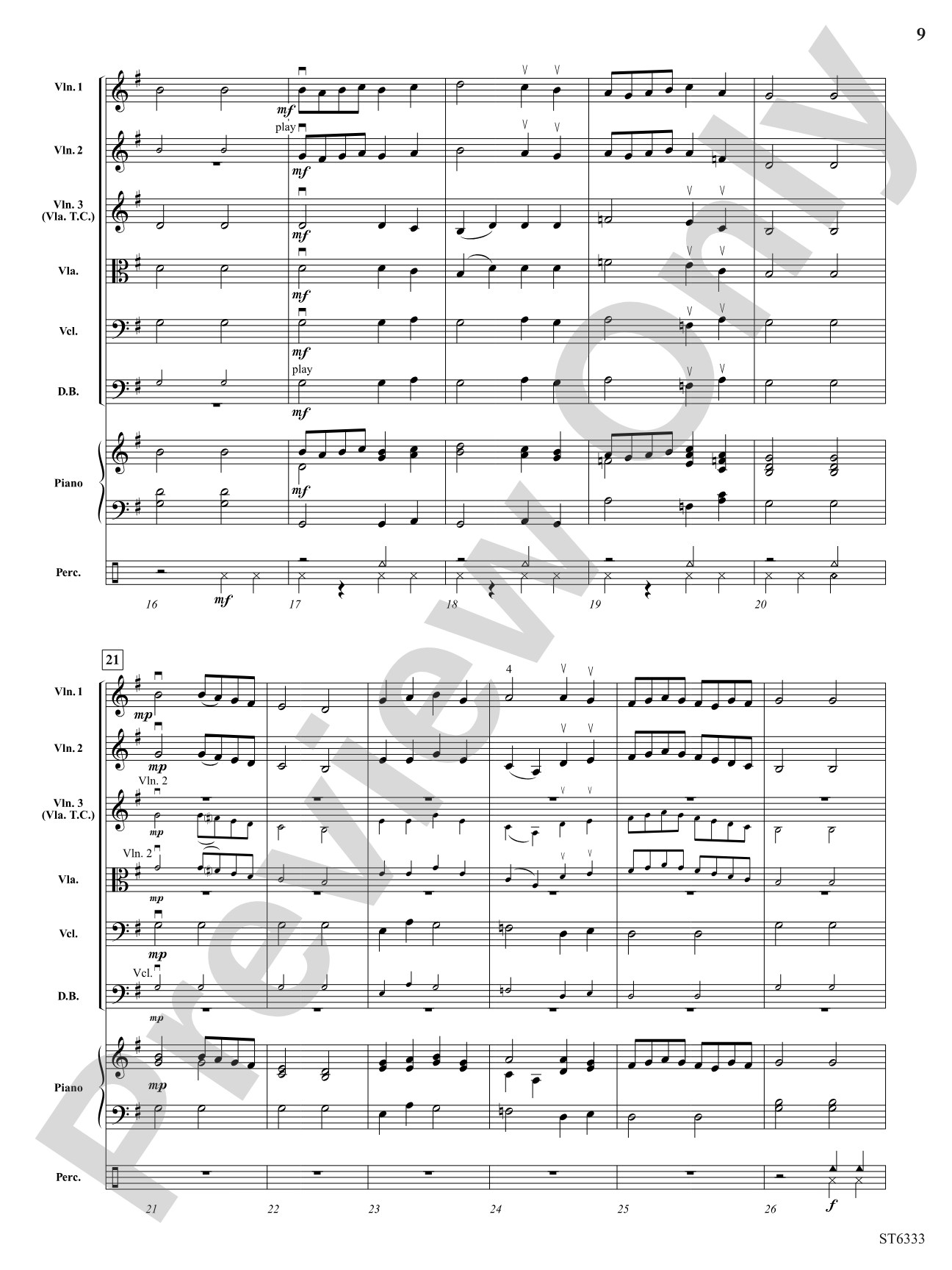
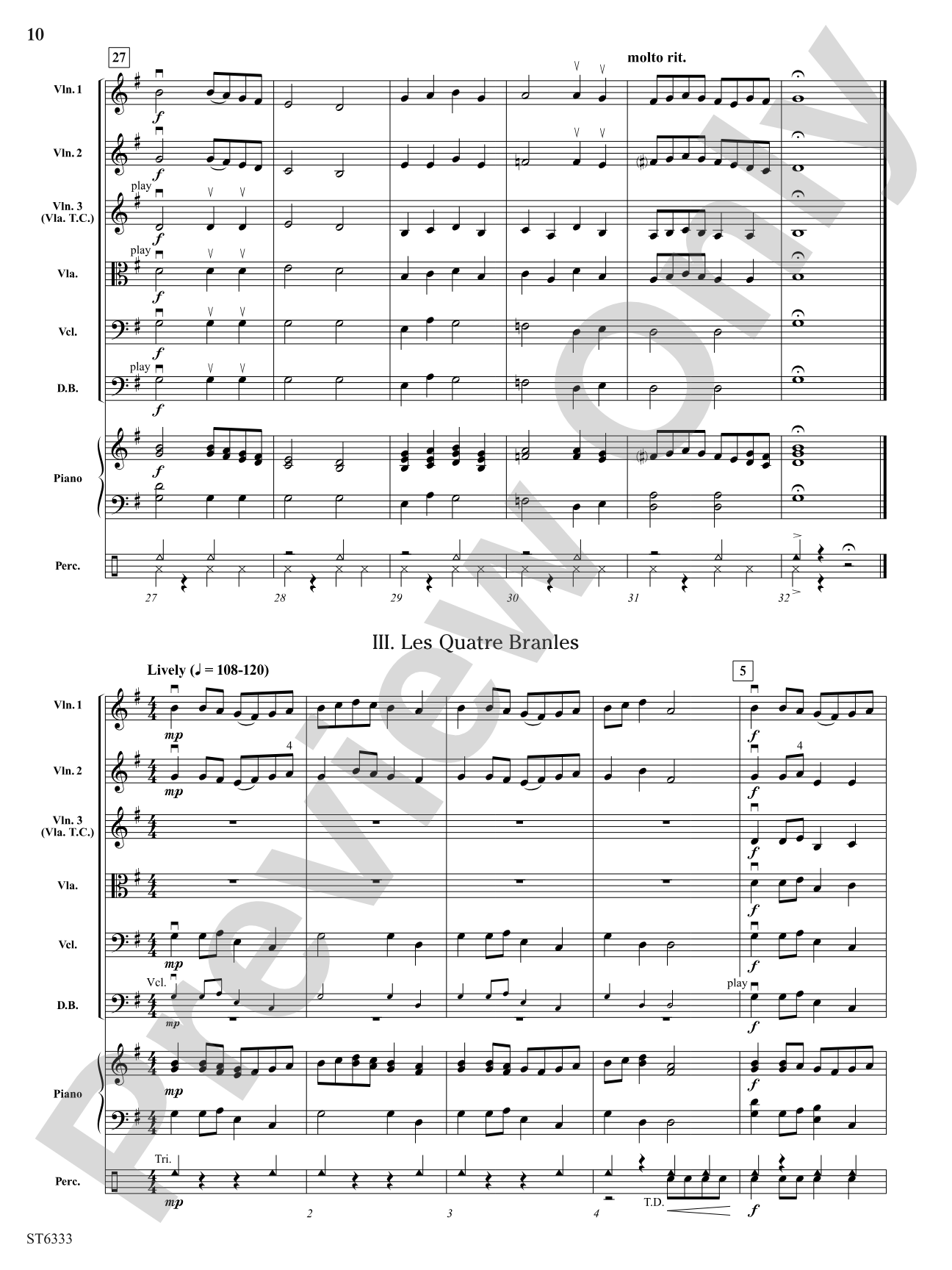
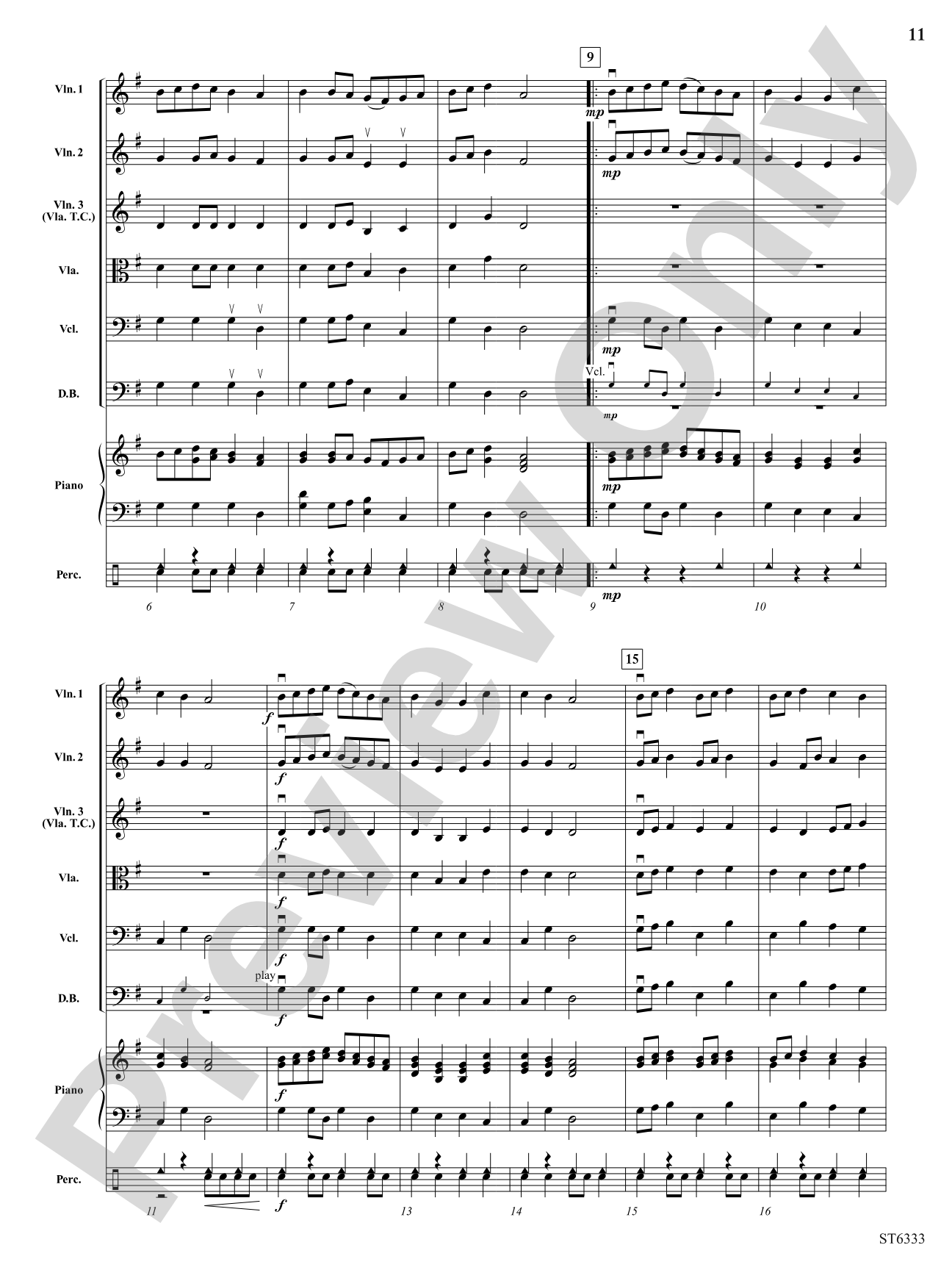
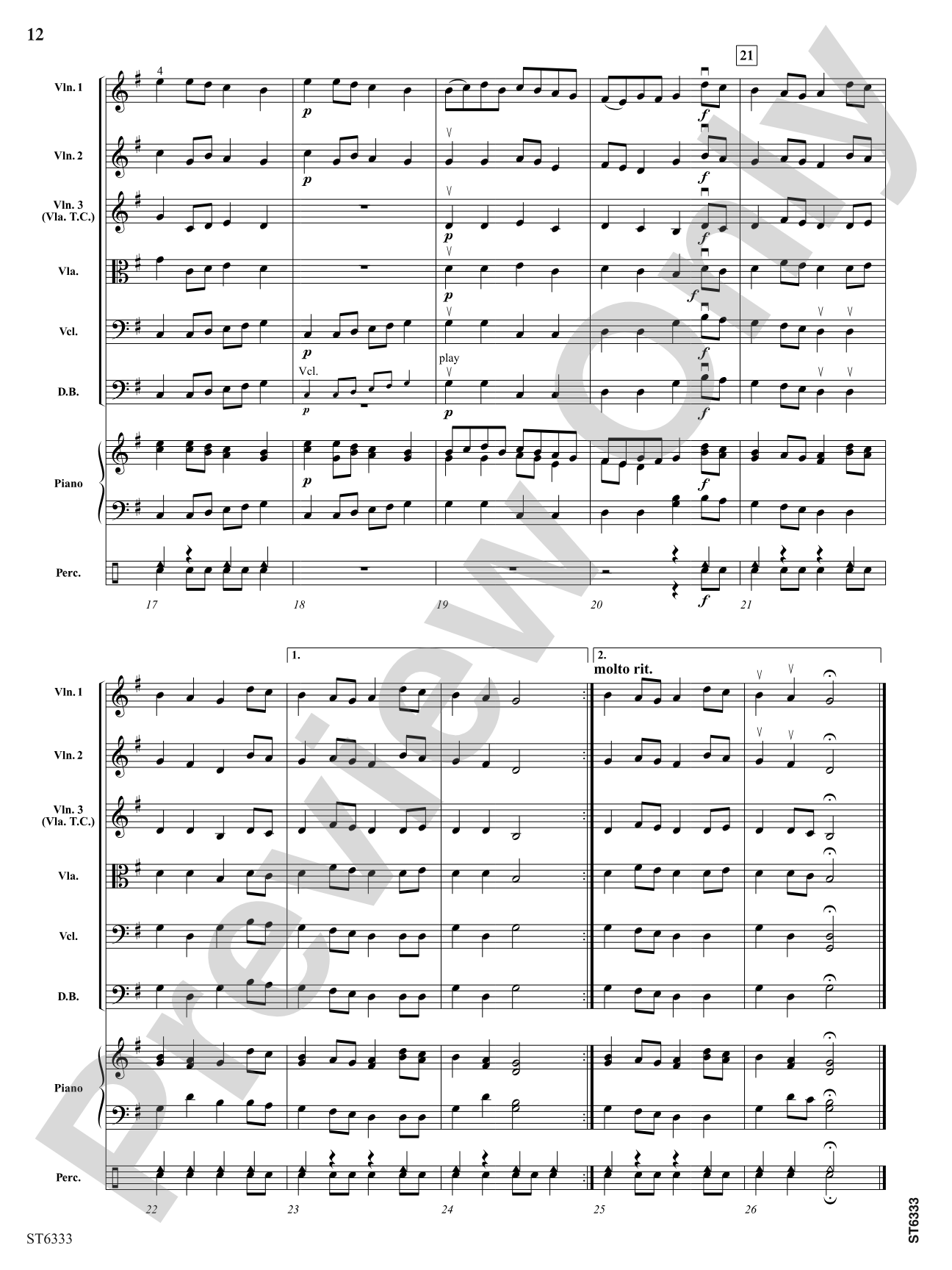

Three Susato Dances: String Orchestra Conductor Score & Parts
By Tielman Susato / arr. William Owens
Grade: 2
Item: 98-DST6333

$50.00
Pickup currently not available
Buy Extra Parts (Digital PDF Download)
| Product | Price | Quantity |
|---|---|---|
| Three Susato Dances: Score | $5.00 | |
| Three Susato Dances: Violin 1 | $7.00 | |
| Three Susato Dances: Violin 2 | $7.00 | |
| Three Susato Dances: Violin 3 (Viola T.C.) | $7.00 | |
| Three Susato Dances: Viola | $7.00 | |
| Three Susato Dances: Violoncello | $7.00 | |
| Three Susato Dances: Double Bass | $7.00 | |
| Three Susato Dances: Piano | $7.00 | |
| Three Susato Dances: Percussion (Opt.) | $7.00 |
Parts Added to Cart!
Description
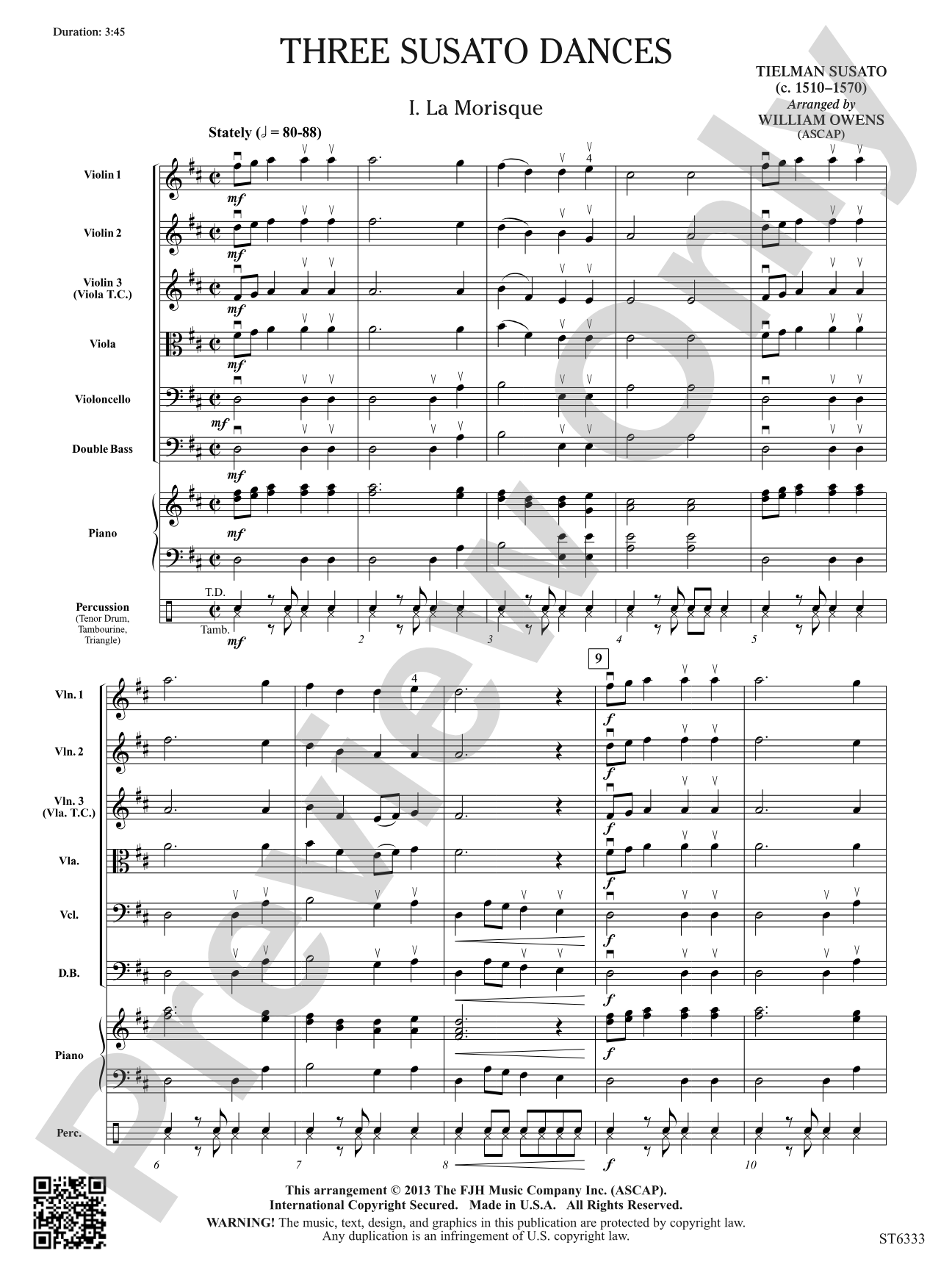
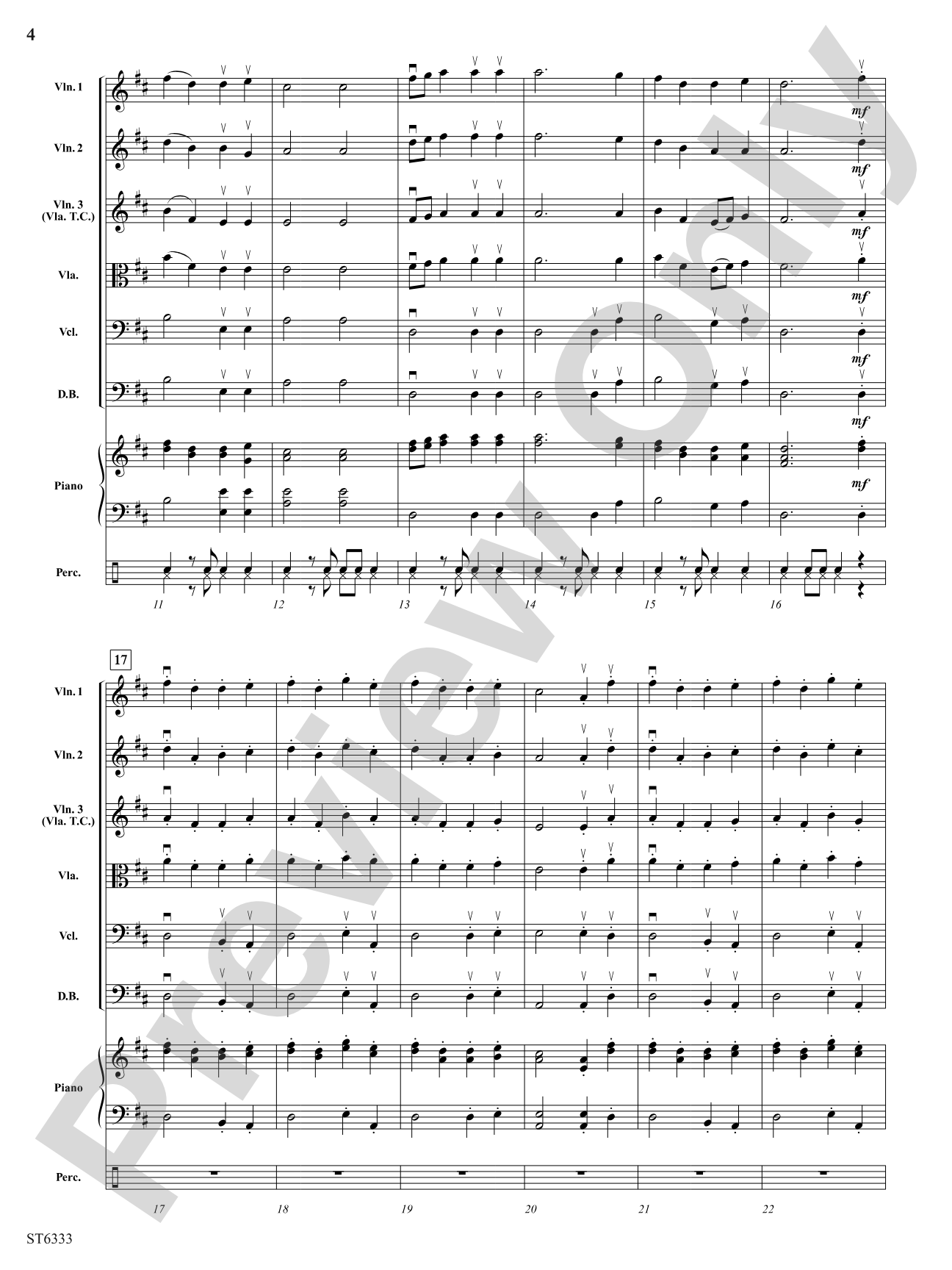
The music of Renaissance composer Tielman Susato comes alive in this striking three-movement setting of his most popular melodies! Optional percussion parts add an extra touch of 16th century "panache" to each skillfully scored installment. These timeless and catchy melodies will delight your students and charm any audience. Outstanding!


Don't just read it, hear it, play along with it, and watch your students grow with it. In MakeMusic Cloud, Three Susato Dances: String Orchestra Conductor Score & Parts comes alive with professional accompaniment, adjustable tempo, and built-in practice tools that turn solo practice into real progress.
Open in the Player
Jump straight in and assign it today.
Start Your Free Trial
Open this title and explore the full library in minutes.
Sample Audio
1
Audio File
--:--
0:00
0:00
Sample Video
No sample videos found.
Additional Details
Series:
FJH String Orchestra
Publisher:
The FJH Music Company, Inc.
SKU:
98-DST6333
More about this title
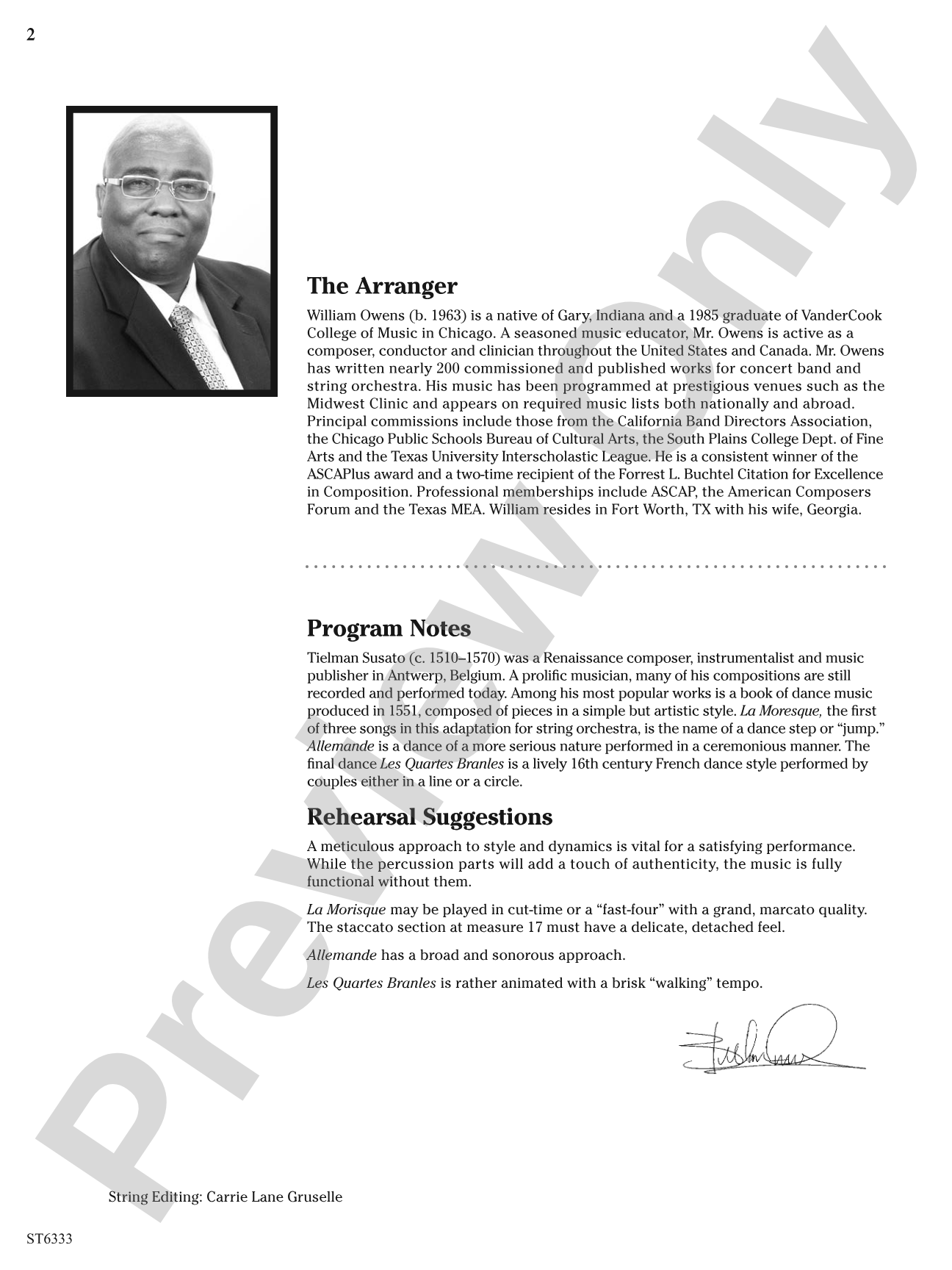
About the Composer: Tielman Susato
Tielman Susato (1510–1564) was a Flemish Renaissance composer and publisher whose instrumental dances shaped the sound of 16th-century Europe. Working in Antwerp, he published hundreds of compositions across multiple collections, establishing himself as one of the most prolific and commercially successful musicians of his era. His dances blend folk traditions with refined compositional technique, making them both accessible and musically substantial.
Susato's melodies remain essential to string education because they sit perfectly under young musicians' hands while maintaining authentic Renaissance character. Teachers value his work for its clarity, memorable phrasing, and the way it teaches musicians to shape melodic lines with shape and purpose.
Why we love this
This arrangement captures the infectious energy of Renaissance dance rhythms while Owens's scoring lets every section shine without overwhelming younger players. The optional percussion parts give you flexibility to match the sophistication of your ensemble, and the three-movement structure creates natural pacing for a concert or festival performance.
What to expect
These dances pulse with the joy and rhythmic drive of 16th-century celebrations. Susato's melodies are naturally memorable and energetic, shaped by centuries of folk tradition, so your students will feel immediately connected to music that audiences recognize and enjoy.
Who it's for
String orchestras at the high school or advanced middle school level will find this arrangement accessible and rewarding. Directors seeking authentic Renaissance material that plays reliably and engages students will appreciate how Owens has maintained Susato's character while writing for learners.
How to get the most out of it
- Shape each melodic phrase with forward momentum; these dances drive toward natural arrival points rather than stopping on every note.
- Balance the optional percussion carefully so it enhances rather than overshadows the string lines, especially in the first rehearsals when intonation is still settling.
- Articulate rhythmic patterns cleanly in the ensemble to lock the dances' propulsive character; sloppy rhythms muddy the Renaissance style.
- Separate the three movements with a brief pause to let the audience absorb what they've heard before moving forward.
How to use it
Program this as a thematic set at a spring or winter concert, or enter it in a festival where it can demonstrate your orchestra's rhythmic precision and style. The three-movement arc and festive character also make it effective as a concert opener that sets an engaged, approachable tone.
Skills your students will build
- Renaissance articulation and phrasing appropriate to dance rhythms
- Rhythmic clarity and ensemble precision in repeated metric patterns
- Balance and blend when optional parts join the main ensemble
- Melodic shaping across sectional lines