
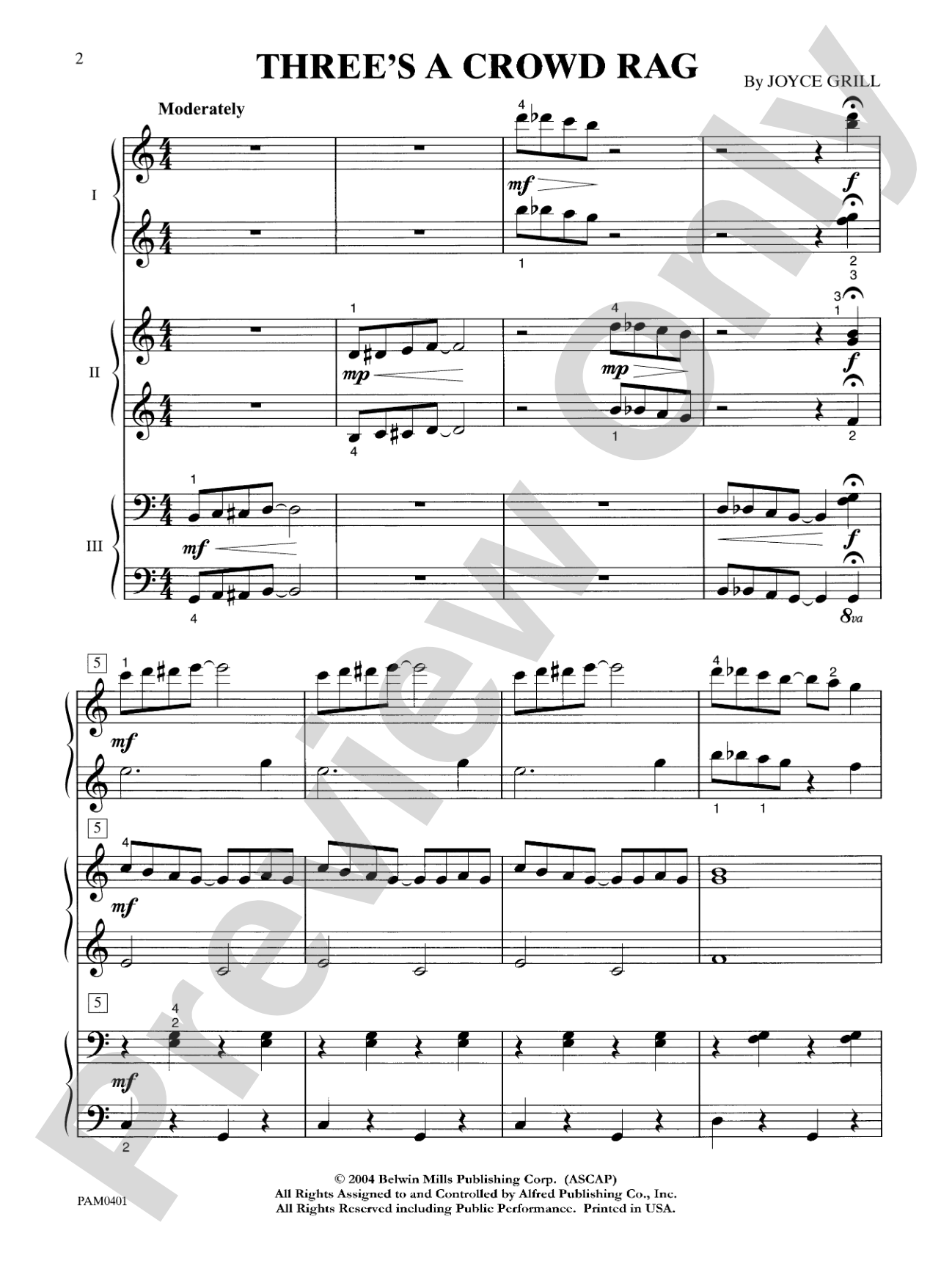
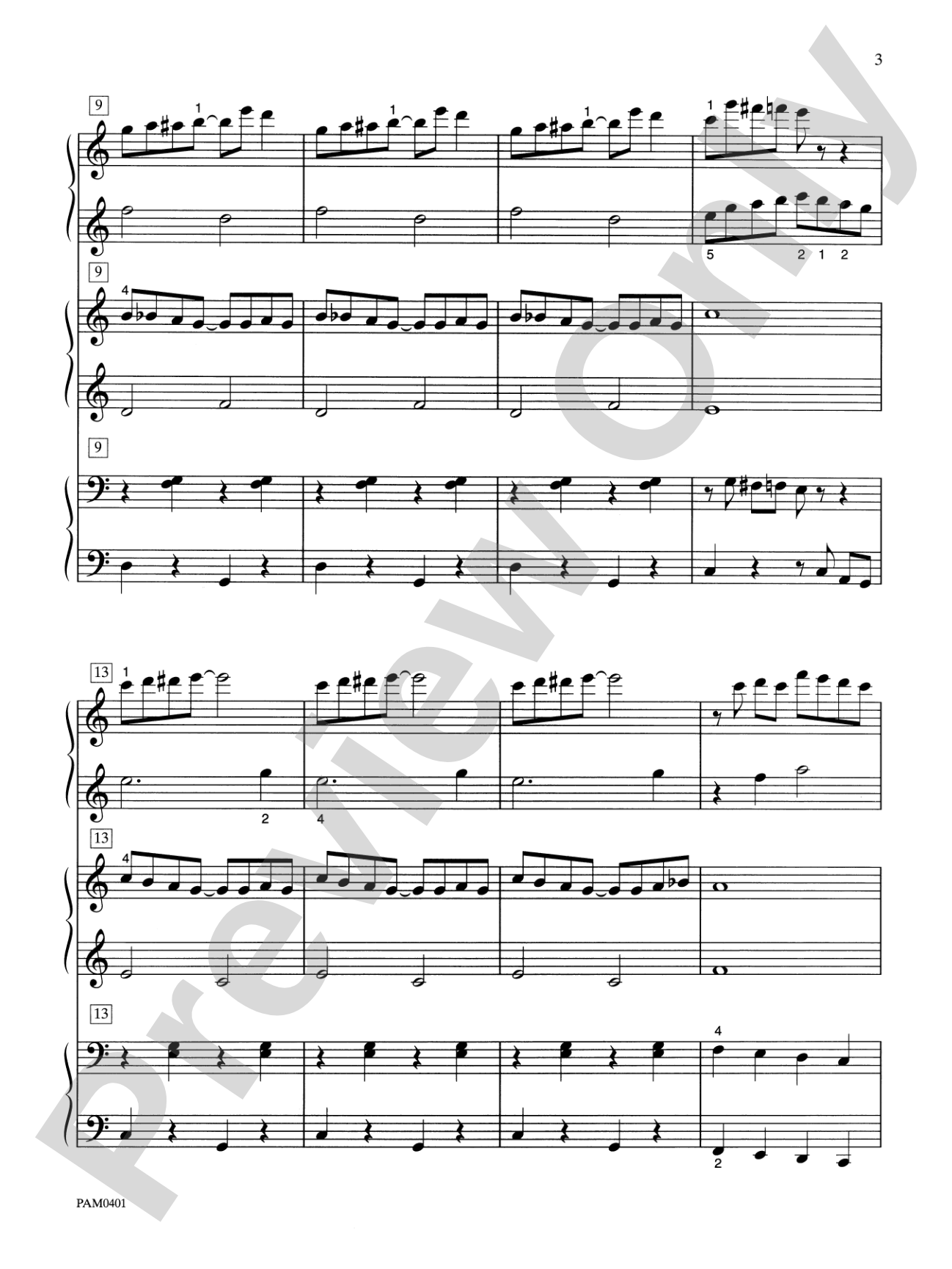

Three's a Crowd Rag - Piano Trio (1 Piano, 6 Hands): Piano
By Joyce Grill
Level: Early Intermediate
Item: 00-PB-0000826
$4.99
Pickup currently not available
Related Items
Three's a Crowd Rag: Piano Trio (1 Piano, 6 Hands) Sheet |
$4.99
|
View |
Description
This exciting and dynamic ensemble piece for one piano, six hands creates a thrilling ragtime experience conjuring up sounds of old piano rolls coming from a honky-tonk piano. The excitement builds to a frenzy as two of the players shove the third off the bench and that player finishes the piece standing up and reaching between the other two players -- great audience appeal! A Federation Festivals 2024-2028 selection.


Three's a Crowd Rag - Piano Trio (1 Piano, 6 Hands): Piano isn't in MakeMusic Cloud just yet...but it could be. Let us know you'd like to see it, and you'll help shape what comes next. In the meantime, start a free trial and dive into thousands of interactive titles your students can play along with today.
Request This Title
Tell us you want it.
Start Your Free Trial
Explore everything that's ready to play right now.
Sample Audio
No sample audio found.
Sample Video
No sample videos found.
Additional Details
Series:
Keyboard Ensemble Series
Publisher:
Alfred Music
Page Count:
8
SKU:
00-PB-0000826
More about this title
About the Composer: Joyce Grill
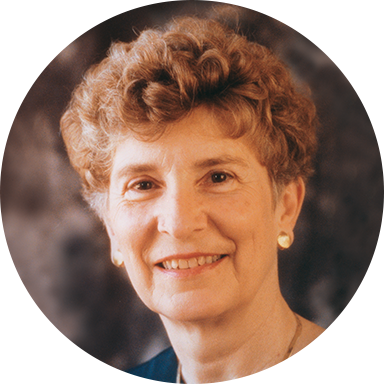
Joyce Grill brings decades of teaching wisdom to her ensemble compositions, having shaped music education as an emeritus faculty member at the University of Wisconsin-La Crosse. Her credentials include the MTNA Master Teacher Certificate, service as Wisconsin State President and Division Vice-President of MTNA, and recognition as a MTNA Foundation Fellow in 2006. She studied composition and theory with Nadia Boulanger at the School of Fine Arts in Fontainebleau and piano with the renowned Casadesus duo, training that informs her skillful writing across all levels.
Grill's gift for ensemble writing has made her a sought-after guest conductor for multi-piano events, and her published works reflect a practical understanding of what works in the teaching studio and on stage. She holds degrees from the University of Wisconsin-Madison and maintains active involvement in professional music education through workshops, advisory boards, and her founding role in the La Crosse Area Music Teachers Association.
Why we love this
The sheer theatrical energy of this piece gives students a reason to rehearse together: watching someone get playfully shoved off the bench while still completing the piece adds comedy and spectacle that young pianists remember. The ragtime idiom sits perfectly at early intermediate level, with enough rhythmic drive and ensemble coordination to feel challenging without overwhelming players, and the Federation Festivals selection ensures it will read well in adjudicated settings.
What to expect
The honky-tonk character evokes a lively saloon where three hands fly across the keys in coordinated chaos, building energy until the standoff becomes inevitable. The ragtime syncopation creates infectious forward momentum, and the theatrical ending transforms what could be a simple ensemble piece into a memorable performance experience.
Who it's for
This piece works for any studio or school with at least three early intermediate pianists who can collaborate on a single instrument. It appeals especially to teachers preparing students for festival competition or seeking an ensemble experience that combines technical growth with genuine entertainment value.
How to get the most out of it
- Establish a steady tempo before rehearsal begins; the ensemble sound depends on all three players locking into the same ragtime pulse, especially as the piece accelerates toward the climax.
- Rehearse the hand-crossing sections separately so the standing player can find comfortable angles and avoid tangling fingers with the seated players.
- Work out the choreography (the shoving moment) during a run-through rather than leaving it to chance; this gives the audience a satisfying laugh and prevents genuine collisions.
- Record a rehearsal to hear how the three parts blend; ragtime pieces reveal imbalances quickly, and you may need to adjust dynamic levels so the melody reads clearly through the ensemble texture.
How to use it
Schedule this as a lighter moment in a recital program, perhaps pairing it with other Keyboard Ensemble Series pieces or placing it before a more serious work to give audiences a chance to settle in. Its Federation Festivals pedigree makes it ideal for competitive festivals where judges appreciate both technical execution and engaging presentation.
Skills your students will build
- Coordinating three independent parts on one keyboard while maintaining ensemble rhythm
- Reading and executing ragtime syncopation and jazz-inflected rhythms
- Managing hand independence and crossing at the piano
- Balancing tone and dynamic control within a three-person ensemble
- Listening actively to blend with other pianists sharing the same instrument