
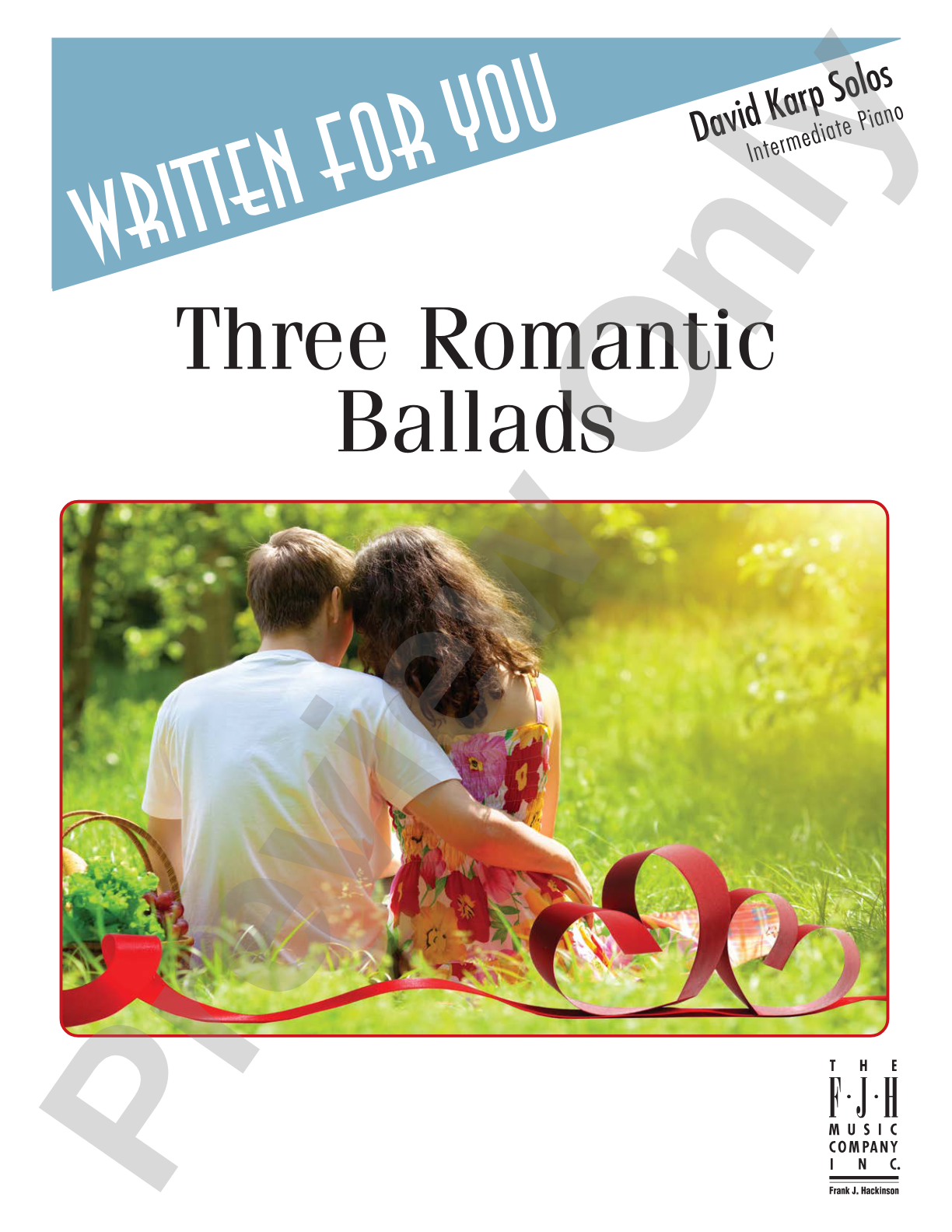

Three Romantic Ballads: Piano
By David Karp
Item: 98-DW9425
$3.95
Pickup currently not available
Related Items
Three Romantic Ballads: Intermediate Piano Sheet |
$3.95
|
View |
Description
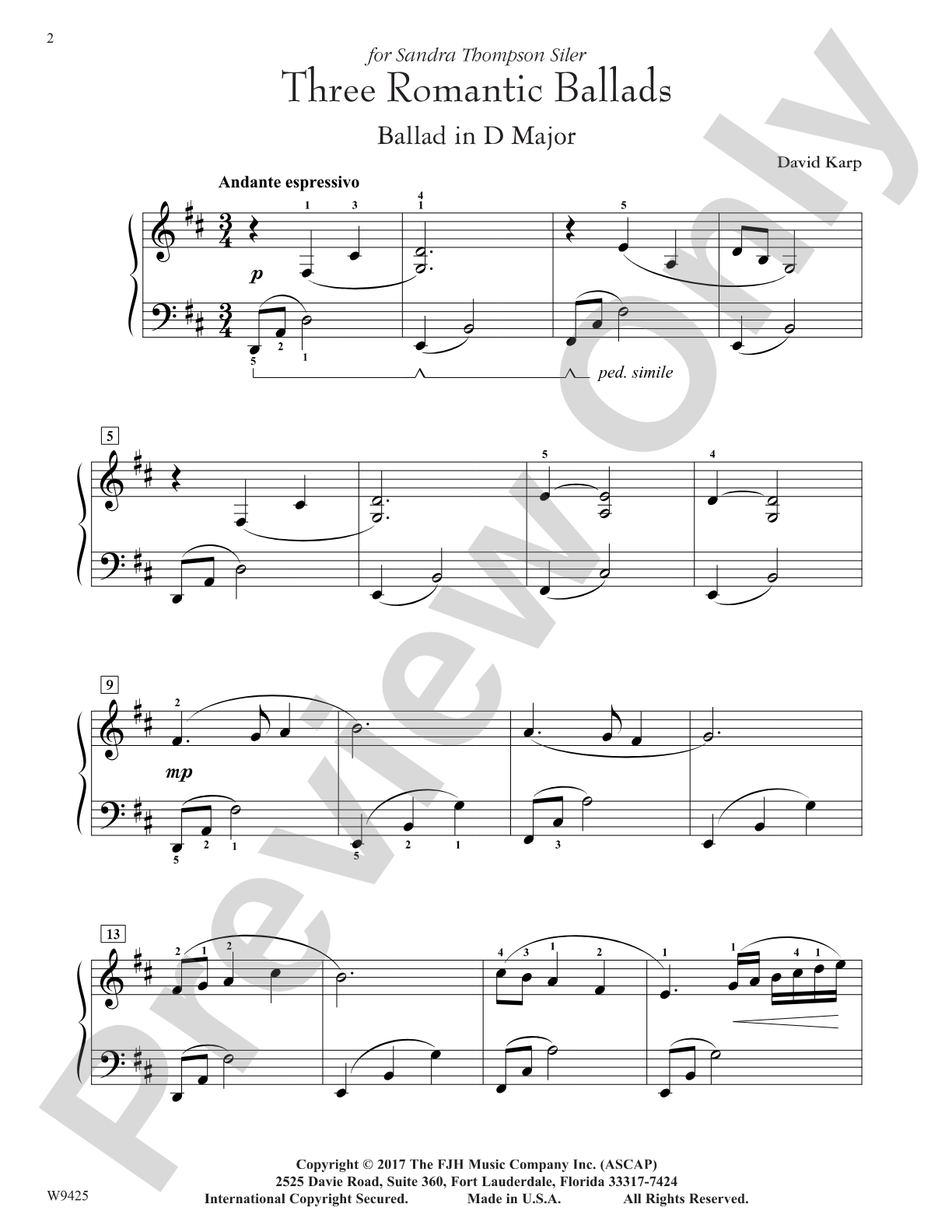
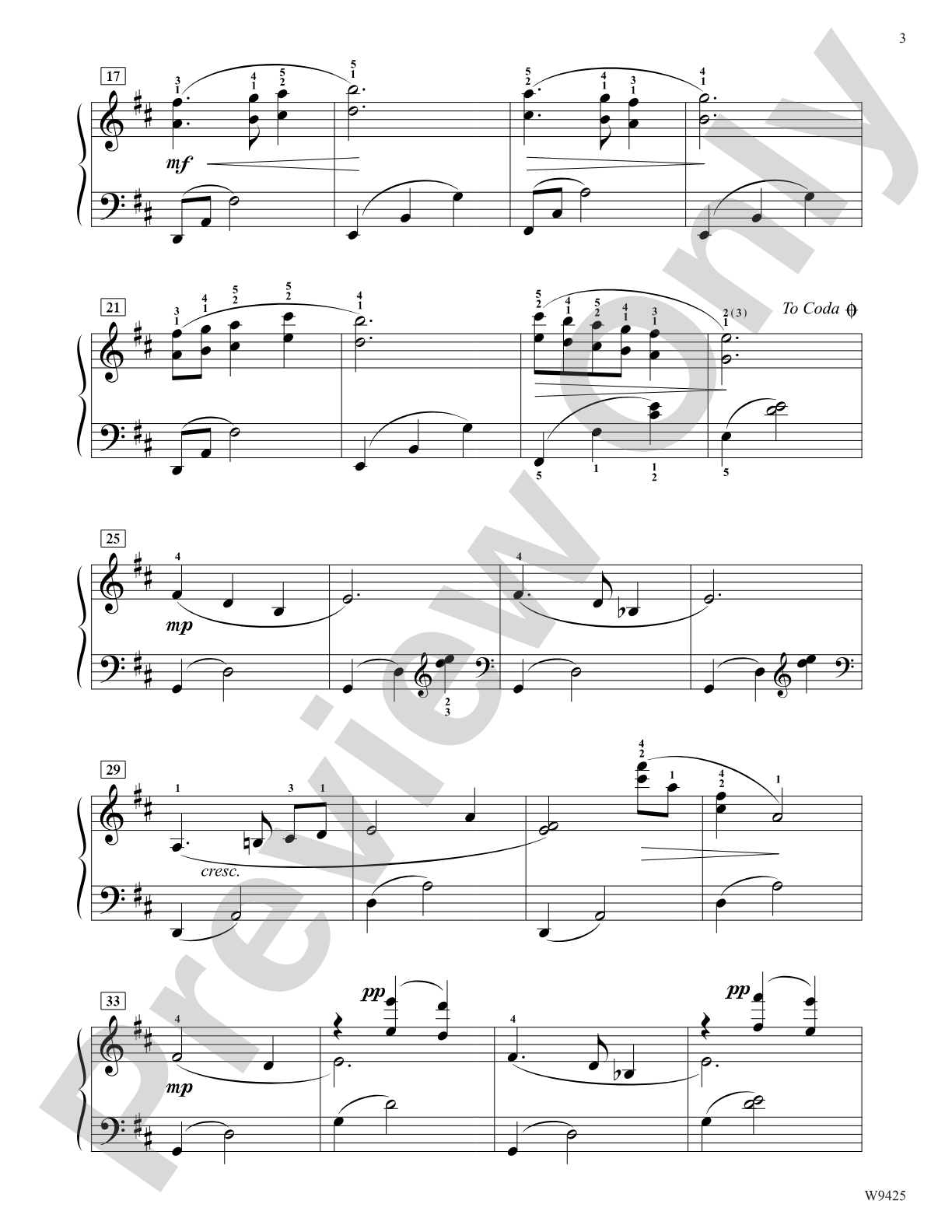
Ballad in D Major starts with short phrases using scale passages and harmonic intervals of a sixth as melodic components. Shorter note values appear in the middle section building to a chordal texture at the end. The next ballad in G minor, marked "andante espressivo"� employs extended L.H. arpeggios and some cross rhythms (2 vs 3). Ballad in F Major has frequent changes in register for the L.H. and the pulse varies from duplets to triplets in the accompaniment. Students will enjoy playing the beautiful melodies in these ballads that call for rubato and use of pedal.


Three Romantic Ballads: Piano isn't in MakeMusic Cloud just yet...but it could be. Let us know you'd like to see it, and you'll help shape what comes next. In the meantime, start a free trial and dive into thousands of interactive titles your students can play along with today.
Request This Title
Tell us you want it.
Start Your Free Trial
Explore everything that's ready to play right now.
Sample Audio
No sample audio found.
Sample Video
No sample videos found.
Additional Details
Series:
Written For You
Publisher:
The FJH Music Company, Inc.
SKU:
98-DW9425
More about this title
Why we love this
Karp understands what intermediate pianists need: genuine musical substance without unnecessary technical obstacles. Each ballad introduces a distinct compositional challenge (harmonic intervals, cross-rhythms, register shifts) that builds independent skills across the three pieces rather than repeating the same demands. The writing calls for real musicianship—rubato, pedal control, phrasing—which means students engage with interpretive choices from the start.
What to expect
Each ballad unfolds with the intimate, reflective quality of Romantic-era song transcriptions. The opening D Major ballad feels approachable and singing; the G minor ballad deepens into something more introspective, its arpeggios creating a gentle rocking motion beneath a contemplative melody. The final F Major piece sparkles with varied colors as the left hand dances between registers, creating the sense of storytelling interrupted by moments of quiet wonder.
Who it's for
Intermediate pianists ready to explore longer-form song-like structures and to work with interpretive technique. Students developing comfort with rubato and pedal use will find each ballad rewards thoughtful practice. The three contrasting keys and textures make these ideal for recital programming or for students building an expressive repetoire beyond technical studies.
How to get the most out of it
- Shape the scale passages and harmonic sixths in the first ballad with clear direction; let the shorter note values breathe rather than rushing through them.
- Balance the extended left-hand arpeggios in the G minor ballad so they support the melodic line without overwhelming it; the cross-rhythms settle more easily when the accompaniment texture stays transparent.
- Approach the register shifts in the F Major ballad deliberately; mark where the left hand jumps and plan your hand position changes to maintain legato across the staff break.
- Use the pedal musically throughout, changing it with harmonic shifts rather than mechanically sustaining entire phrases.
How to use it
Program these as a suite during a recital to showcase expressive depth at the intermediate level, or teach them across a semester to develop interpretive vocabulary alongside technical growth. Any one works as a stand-alone recital piece; together they demonstrate a student's range in a single performance.
Skills your students will build
- Melodic phrasing with scale passages and harmonic intervals
- Cross-rhythms and polyrhythmic independence (2 vs 3)
- Extended left-hand arpeggios and accompaniment texture control
- Pedal technique and harmonic voice-leading
- Rubato and Romantic-era interpretation
- Hand position management across wide register shifts
- Reading and executing varied rhythmic accompaniment patterns (duplets and triplets)