

Three Romances - Piano Suite: Piano
By Catherine Rollin
Level: Late Intermediate
Item: 00-PB-0000692
$5.50
Pickup currently not available
Related Items
Three Romances: Piano Sheet |
$5.50
|
View |
Description
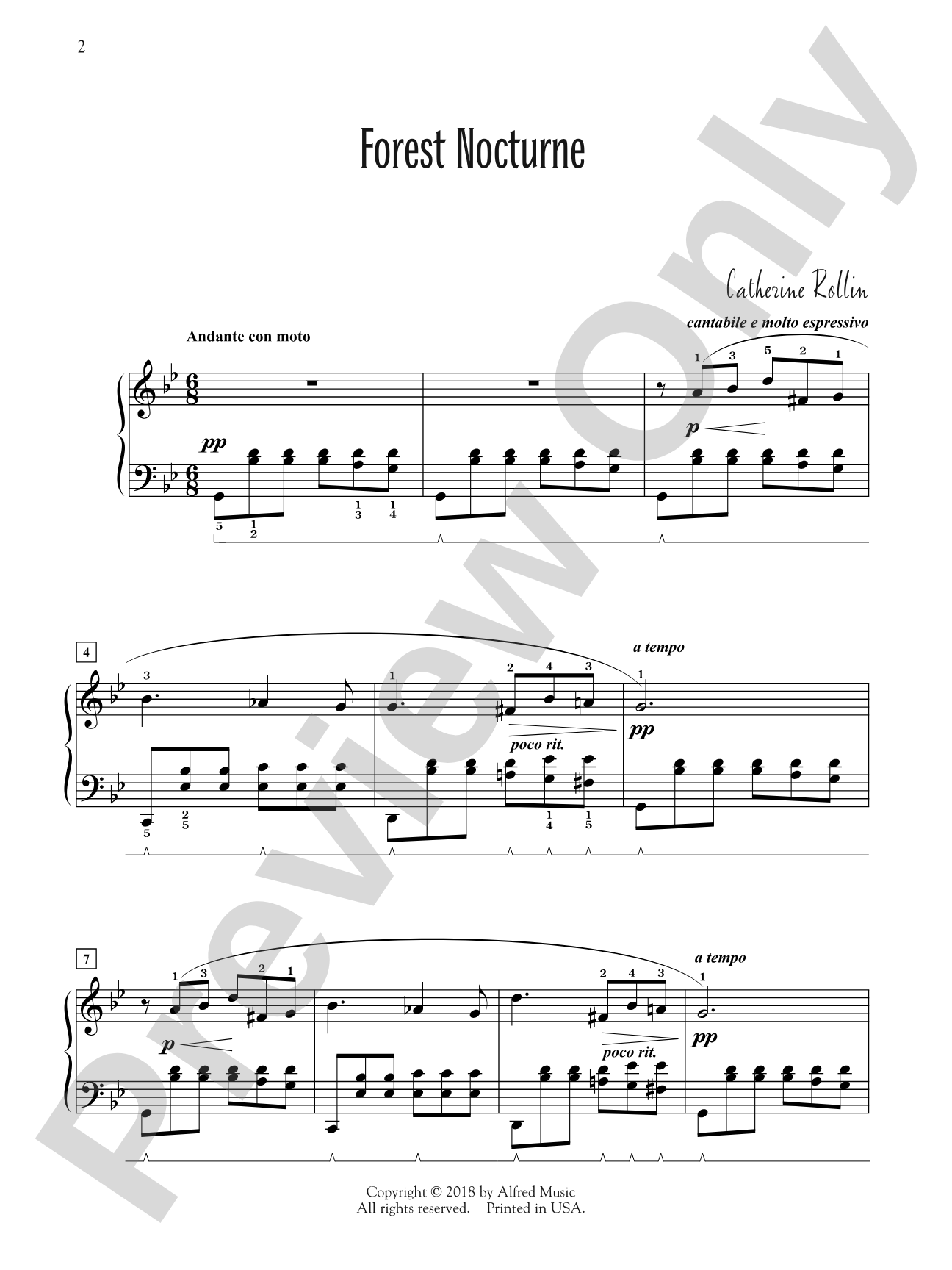
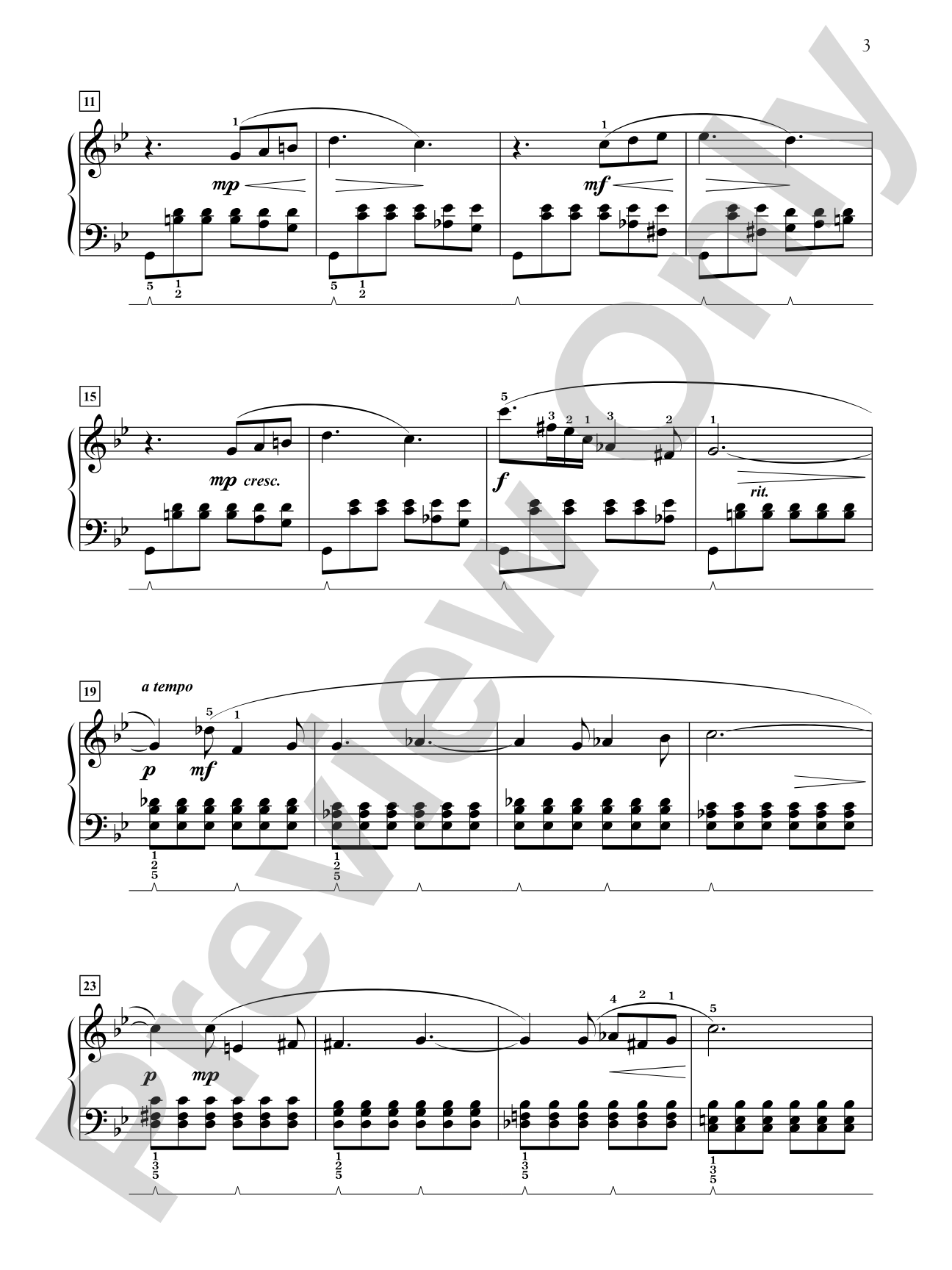
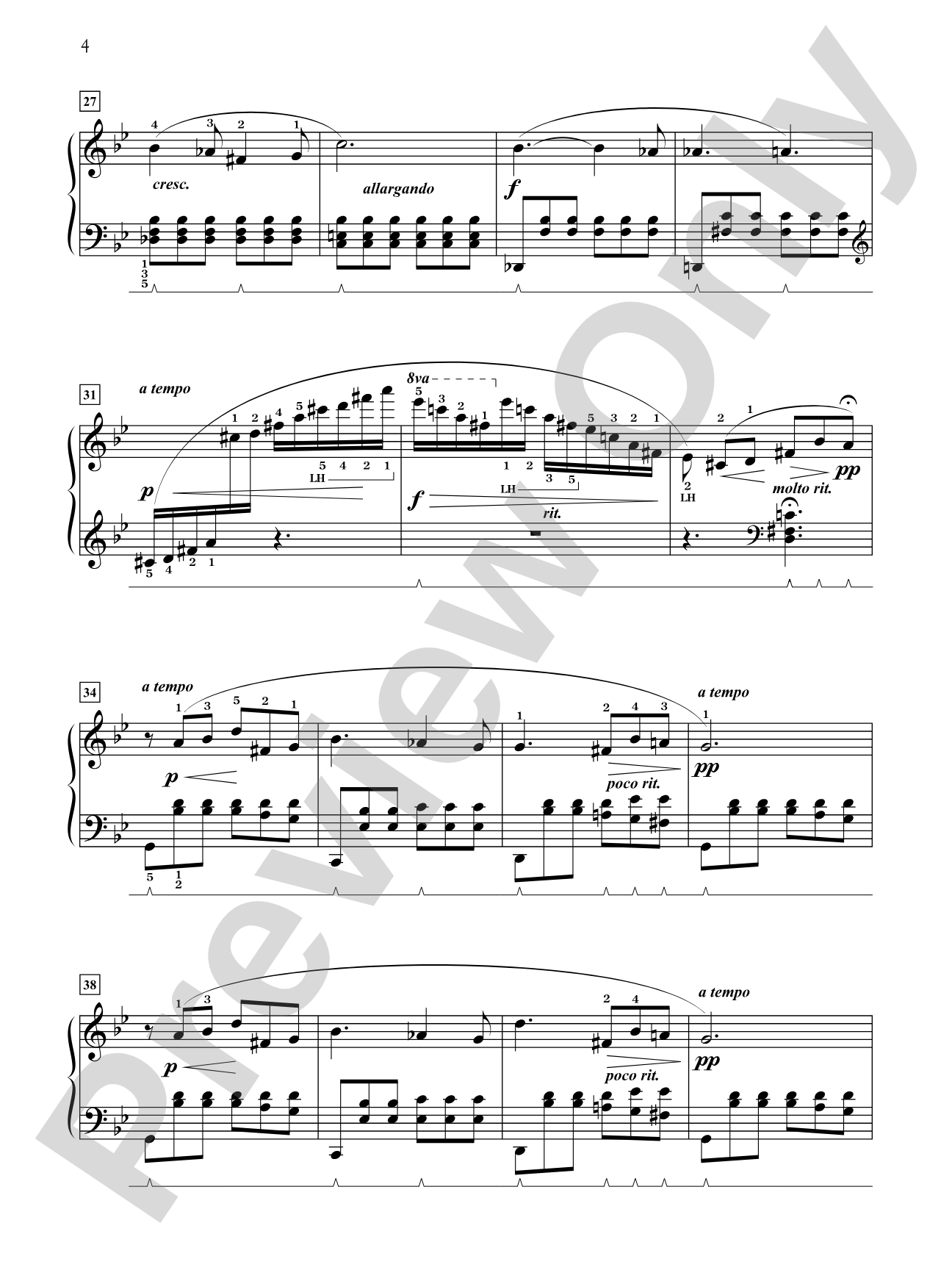
Three Romances includes original solos written in genres from the Romantic period. Students will find them useful as preparation for studying compositions by composers such as Chopin, Schumann, and Grieg. The first movement is a nocturne in compound meter. A continuous eighth-note accompaniment is interrupted by arpeggios divided between the hands. The fantasy requires students to project the right-hand melody over a continuous accompaniment in the same hand. The final waltz includes a jump-bass accompaniment in the left hand. Movements: Forest Nocturne * Night Fantasy * Wistful Waltz. A Federation Festivals 2020-2024 selection.


Three Romances - Piano Suite: Piano isn't in MakeMusic Cloud just yet...but it could be. Let us know you'd like to see it, and you'll help shape what comes next. In the meantime, start a free trial and dive into thousands of interactive titles your students can play along with today.
Request This Title
Tell us you want it.
Start Your Free Trial
Explore everything that's ready to play right now.
Sample Audio
No sample audio found.
Sample Video
No sample videos found.
Additional Details
Series:
Recital Suite Series
Publisher:
Alfred Music
Page Count:
12
SKU:
00-PB-0000692
More about this title
About the Composer: Catherine Rollin

Catherine Rollin balances an active performance schedule with mentoring students who consistently win competitions. She has led workshops and masterclasses across North America and Asia, sharing her compositional craft with hundreds of musicians. Her degrees from the University of Michigan (Bachelor of Musical Arts with distinction) and Oakland University School of Performing Arts (Master of Music) ground her understanding of both keyboard technique and music theory.
Rollin's compositions have earned commissions from Clavier Companion, MTNA, and the Michigan Music Teachers Association, with numerous works appearing in the National Federation of Music Clubs Festivals Bulletin. She has judged the MTNA Student Composition Competition at the national level and served on the prestigious Lynn Freeman Olson Composition Contest panel. A 2018 Steinway Society featured artist, Rollin also received an MTNA commission for Suite Detroit, a trio for flute, alto saxophone, and piano that premiered at the 2018 national conference. Her ASCAP award-winning Museum Masterpieces series (Books 1-4) has been presented as a multimedia concert experience.
Why we love this
Rollin writes with a genuine understanding of late-intermediate pianists: technically accessible but genuinely musical. Each movement targets a specific technical challenge (compound meter fingering, hand independence, jump patterns) without sacrificing melodic interest or harmonic depth. The Federation Festivals selection confirms these pieces meet the standards expected in competitive performance settings.
What to expect
Nocturnal and introspective, with moments of lyrical warmth. The suite creates an intimate recital arc: the opening nocturne establishes a quiet, reflective mood; the fantasy stretches the hand's independence over shimmering accompaniment; the final waltz offers a gentler conclusion with rhythmic grace rather than virtuosic display.
Who it's for
Late-intermediate pianists preparing for recitals or festivals who want substantial repertoire that bridges classical technique and Romantic-era style. These pieces work especially well for students beginning to explore Chopin, Schumann, and Grieg in their own studies.
How to get the most out of it
- Map the arpeggios in the nocturne before adding the continuous eighths; the hand position shift requires planning to maintain the legato line.
- In the fantasy, isolate the right-hand melody with a singing tone, then layer in the left-hand accompaniment at half tempo to achieve independence without losing musical shape.
- Shape the jump-bass waltz with clear intention: treat the leaps as musical gestures, not mechanical technical exercises, to prevent rhythmic stiffness.
How to use it
Present all three movements consecutively as a recital anchor, or extract individual pieces for competitions where variety in mood and style matters. The suite also works well as a teaching sequence, introducing Romantic period characteristics across a single composer's voice rather than jumping between multiple works.
Skills your students will build
- Voicing independence between hands in compound meter contexts
- Sustaining legato melody while managing continuous accompaniment patterns
- Executing clean left-hand leaps with rhythmic precision
- Interpreting rubato and phrase shaping in the Romantic idiom
- Recognizing and performing stylistic characteristics of nocturne, fantasy, and waltz forms