
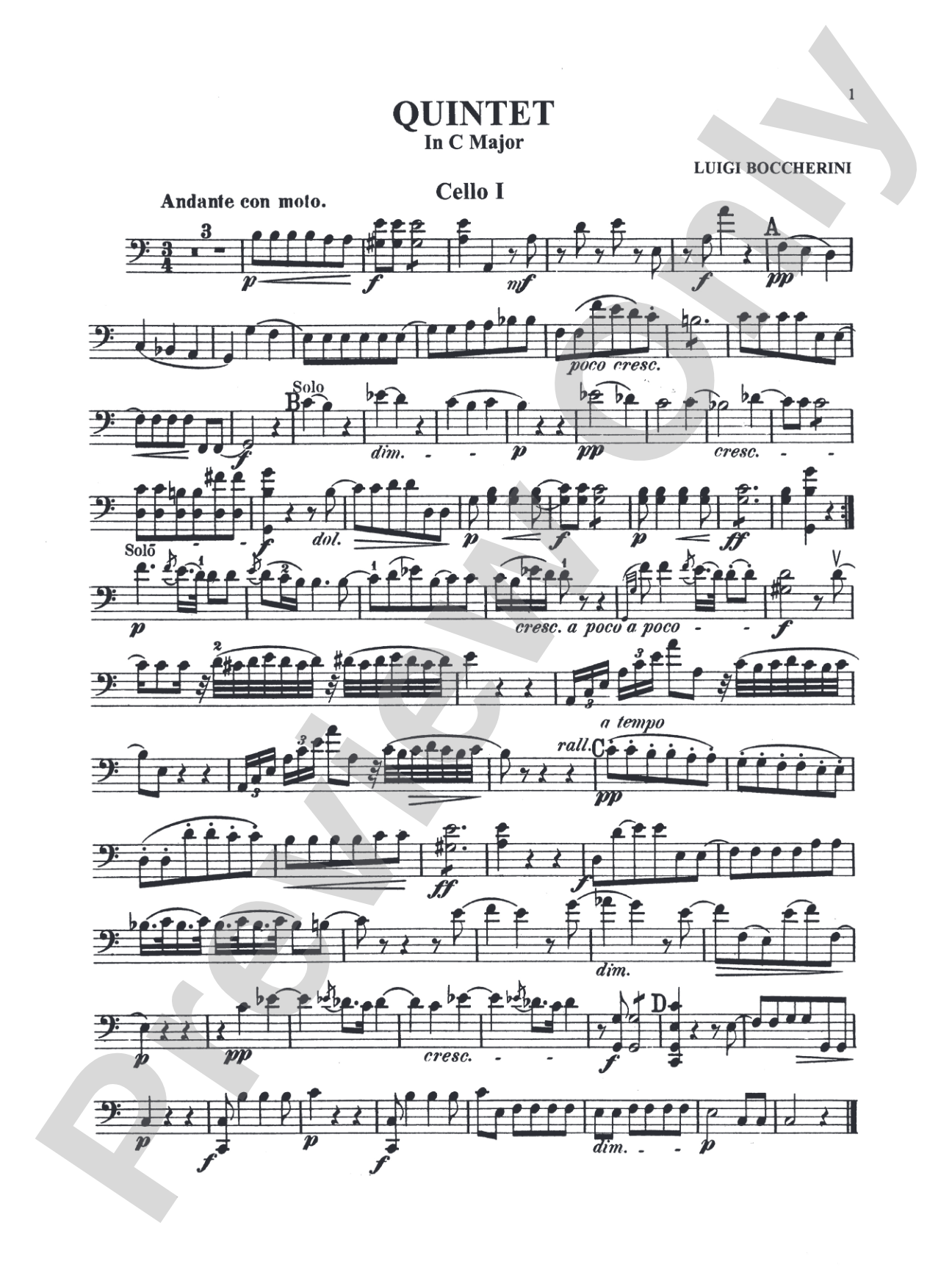
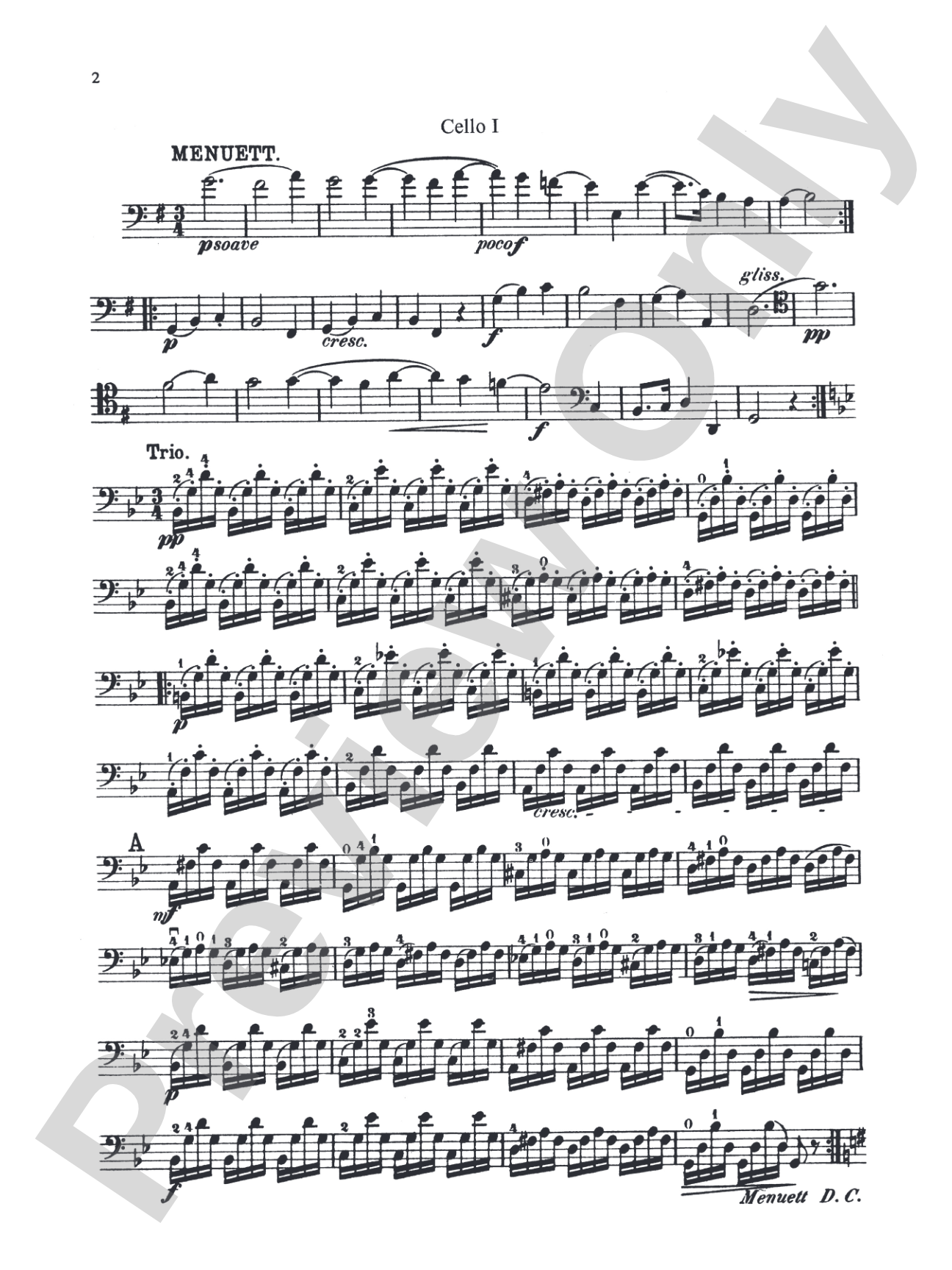
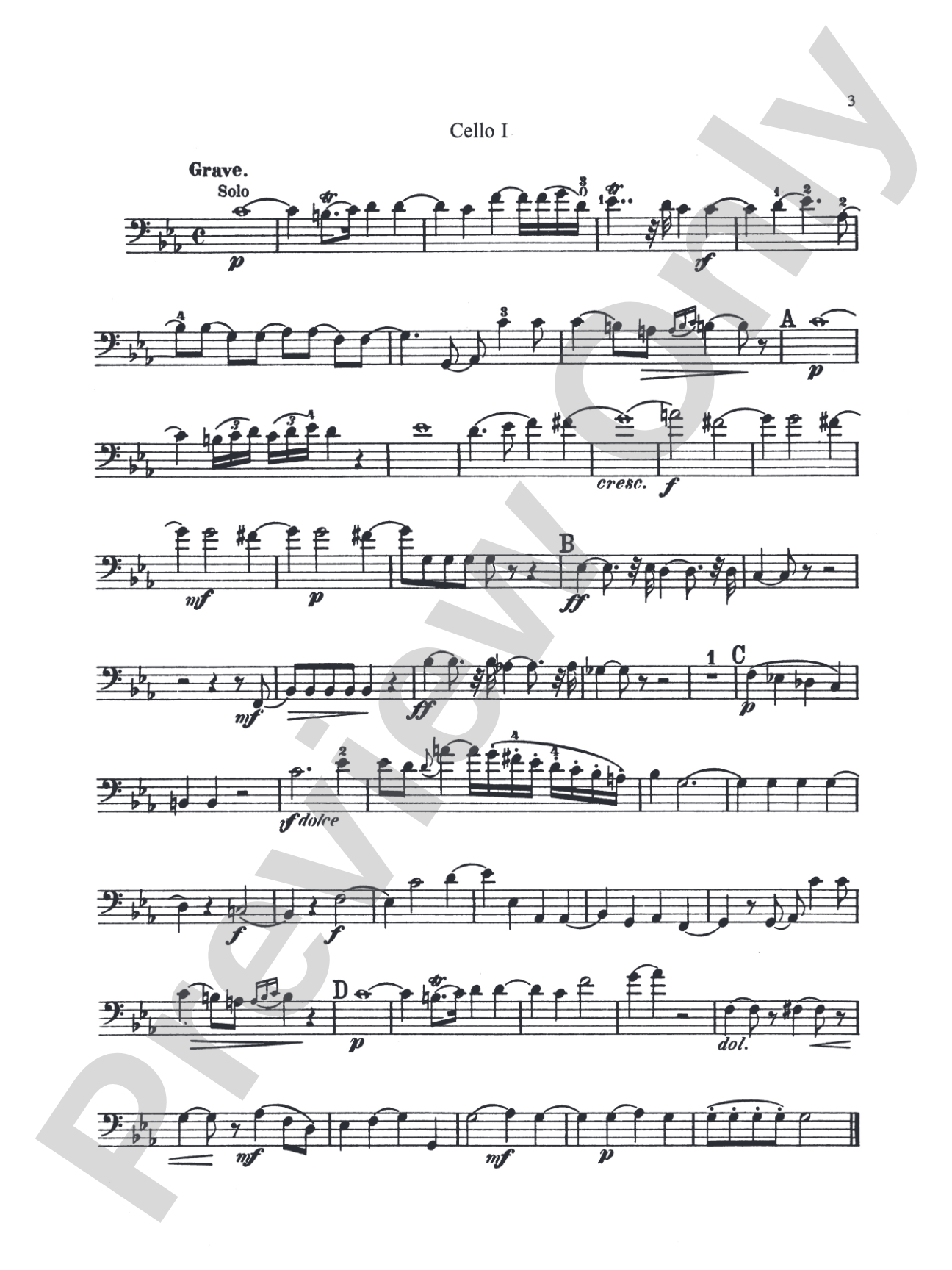
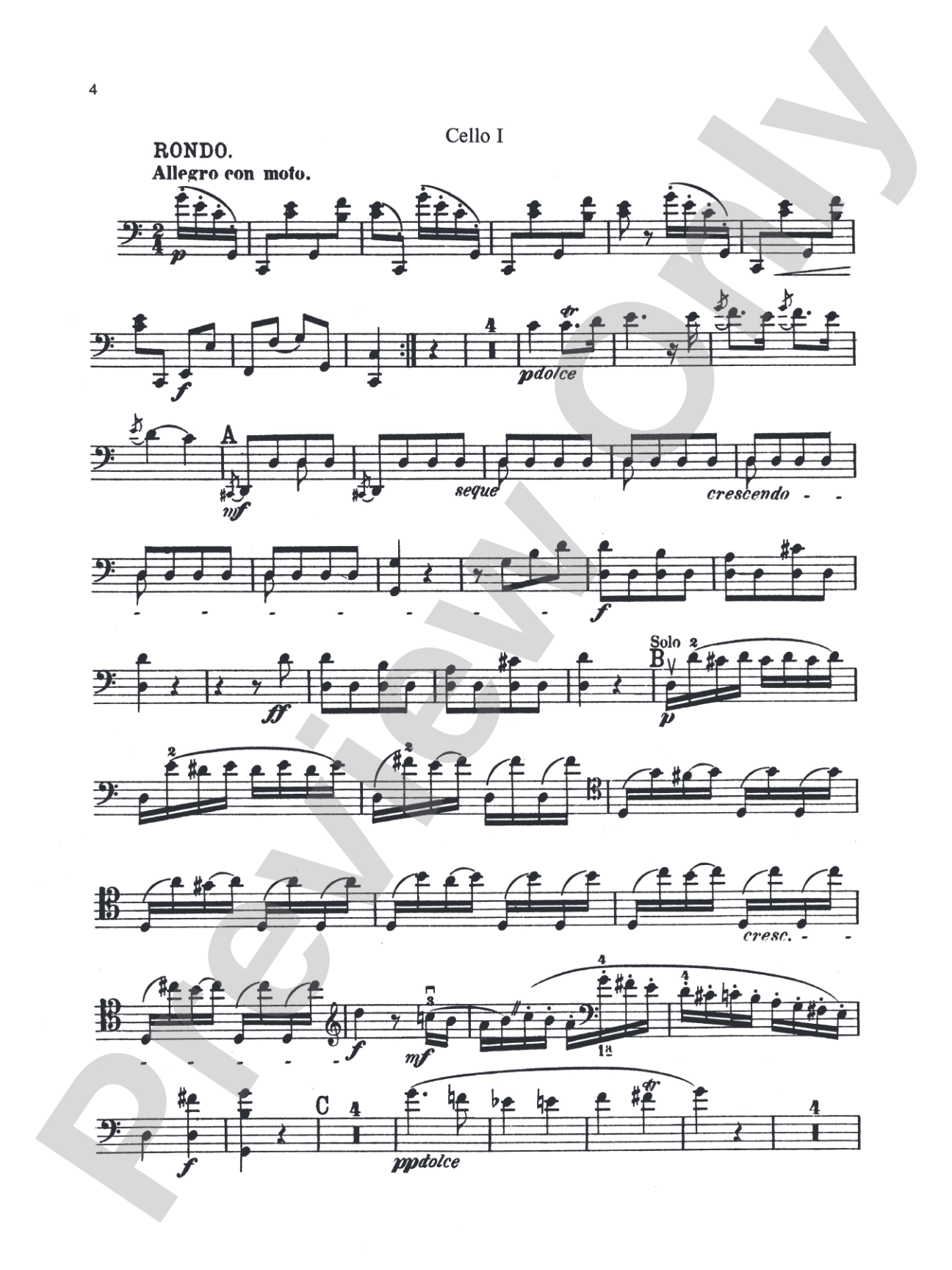

Three Quintets: Cello
By Luigi Boccherini
Item: 00-PC-0017802_VC1
$3.00
Pickup currently not available
Description
This collection contains violin, viola, and cello parts for three of Boccherini's string quintets: C major, E-flat Major, and D Major (Bird Sanctuary). KALMUS EDITIONS are primarily reprints of Urtext editions, reasonably priced and readily available. They are a "must" for students, teachers, and performers.


Three Quintets: Cello isn't in MakeMusic Cloud just yet...but it could be. Let us know you'd like to see it, and you'll help shape what comes next. In the meantime, start a free trial and dive into thousands of interactive titles your students can play along with today.
Request This Title
Tell us you want it.
Start Your Free Trial
Explore everything that's ready to play right now.
Sample Audio
No sample audio found.
Sample Video
No sample videos found.
Additional Details
Series:
Kalmus Edition
Publisher:
Alfred Music
Page Count:
92
SKU:
00-PC-0017802_VC1
More about this title
About the Composer: Luigi Boccherini
Luigi Boccherini (1743-1805) was an Italian cellist and composer who became one of the most prolific chamber music writers of the Classical era. His string quintets represent some of the finest examples of the genre, showcasing his gift for elegant melodic writing and sophisticated harmonic language. Boccherini spent much of his career in Spain in service to the Spanish court, where he composed over 100 chamber works that remain central to the string quintet repertoire.
As an accomplished cellist himself, Boccherini understood the instrument intimately and often featured it prominently in his quintets. His music bridges the galant style of the mid-18th century with early Classical forms, making his quintets accessible teaching works that still reward careful interpretation and ensemble refinement.
Why we love this
These three quintets give advanced string ensembles genuine masterworks that sound substantial without requiring virtuosic display. The Bird Sanctuary quintet in particular offers a recognizable, engaging work that audiences respect while the C major and E-flat Major quintets provide contrasting textures and moods for thoughtful programming. Boccherini's assured harmonic voice and transparent scoring reward musical maturity rather than technical flash.
What to expect
Boccherini's quintets shimmer with the elegance of the Spanish court where they were born, combining Italian melody with Classical restraint. The writing feels conversational and warm, with dialogue that flows naturally between parts, inviting listeners into intimate musical discourse. Even in moments of dramatic interest, these works maintain an air of gentility and grace.
Who it's for
String ensembles at the college level and advanced high school chamber programs looking for substantial Urtext repertoire that sits comfortably above beginner quintets. Musicians preparing for chamber music competitions, festivals, or recitals will find these works both musically rewarding and appropriately challenging. Teachers seeking to build ensemble refinement through music that requires listening and adjustment rather than technical facility.
How to get the most out of it
- Shape the long melodic lines with subtle dynamic inflection; resist the impulse to sit back on sustained passages, as Boccherini's voice-leading depends on gentle forward motion.
- Balance the two violins carefully in dialogue sections, ensuring the second violin's inner voices remain audible without overshadowing the principal line.
- Approach the ornamentation with restraint; the galant grace notes and turns should feel natural to the phrase, not applied as decoration.
- Coordinate articulation across the ensemble so pizzicato passages (common in the cello part) sit cleanly within the harmonic texture rather than punctuating it.
How to use it
Program one quintet on a chamber music concert alongside Haydn or Mozart quintets to demonstrate the breadth of the form during the Classical period. The Bird Sanctuary quintet works particularly well as an accessible, recognizable anchor for audiences while the C major and E-flat Major pieces support deeper programming of Boccherini's less-heard works. These are strong choices for university chamber ensemble showcases and competition circuits.
Skills your students will build
- Ensemble balance and voice independence in five-part texture
- Stylistic understanding of galant ornamentation and phrasing
- Coordinated articulation and rhythmic precision across parts
- Interpretation of dynamic shaping in long, lyrical lines
- Collaborative listening and musical conversation between parts