
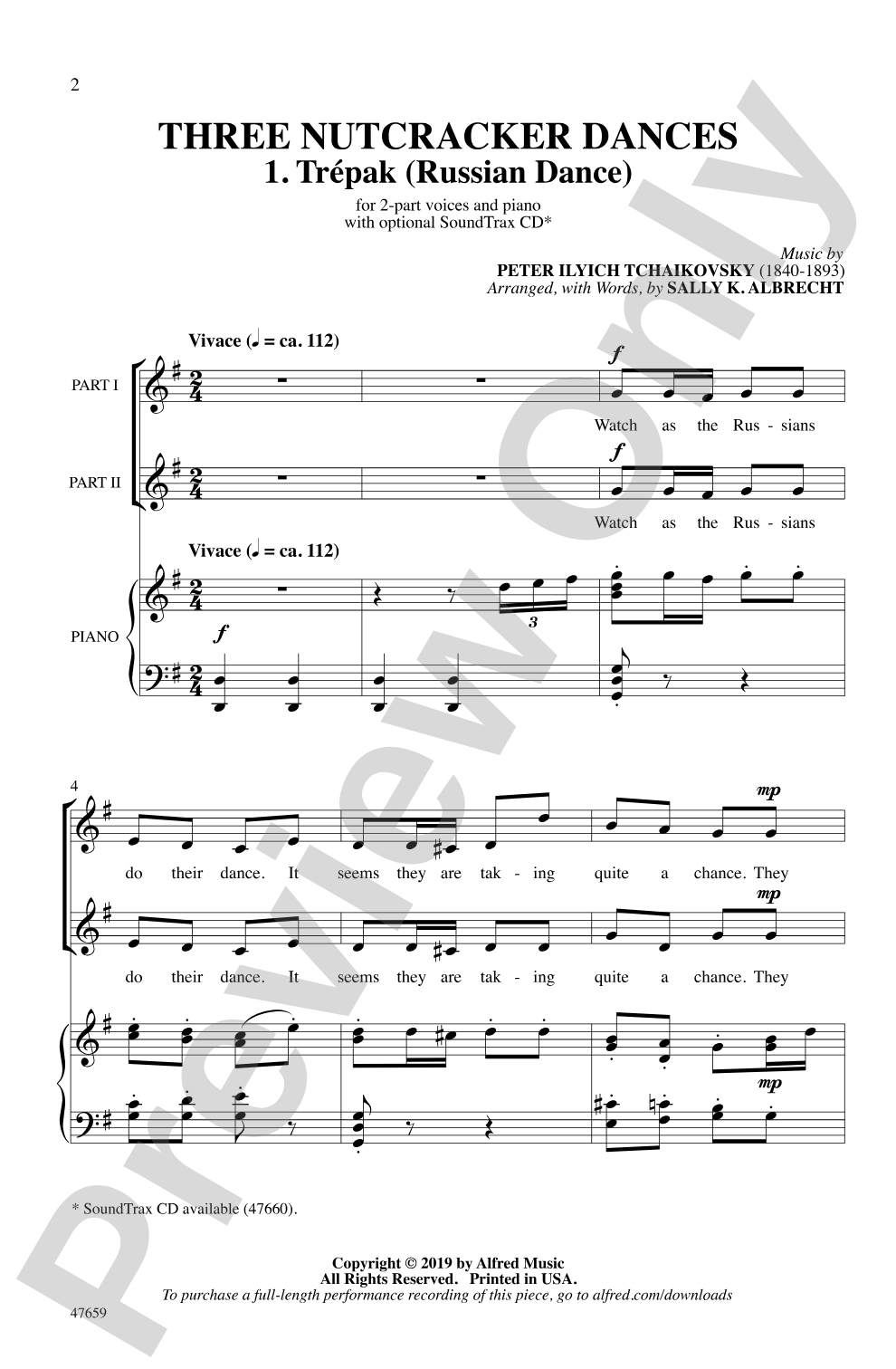
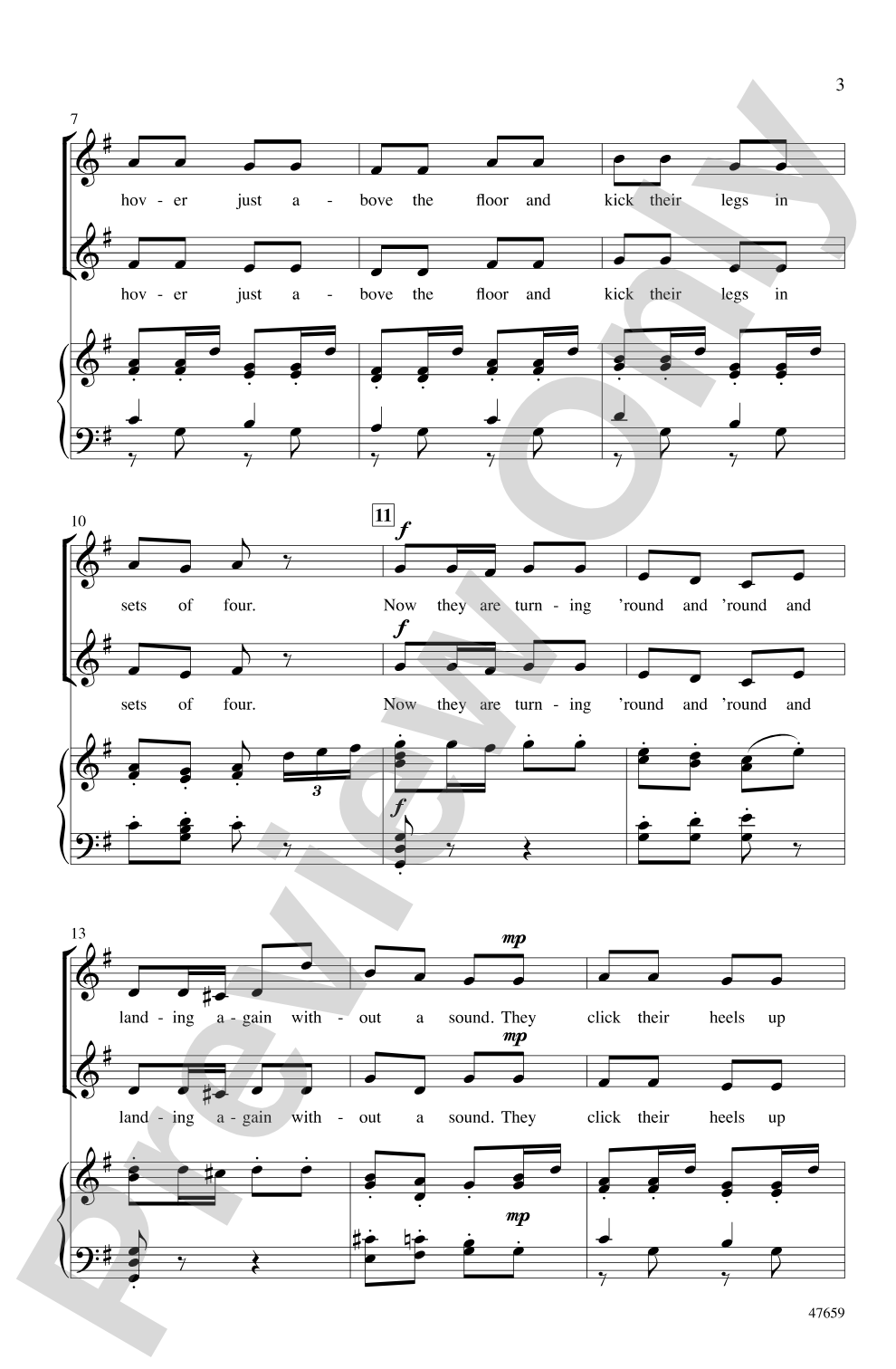
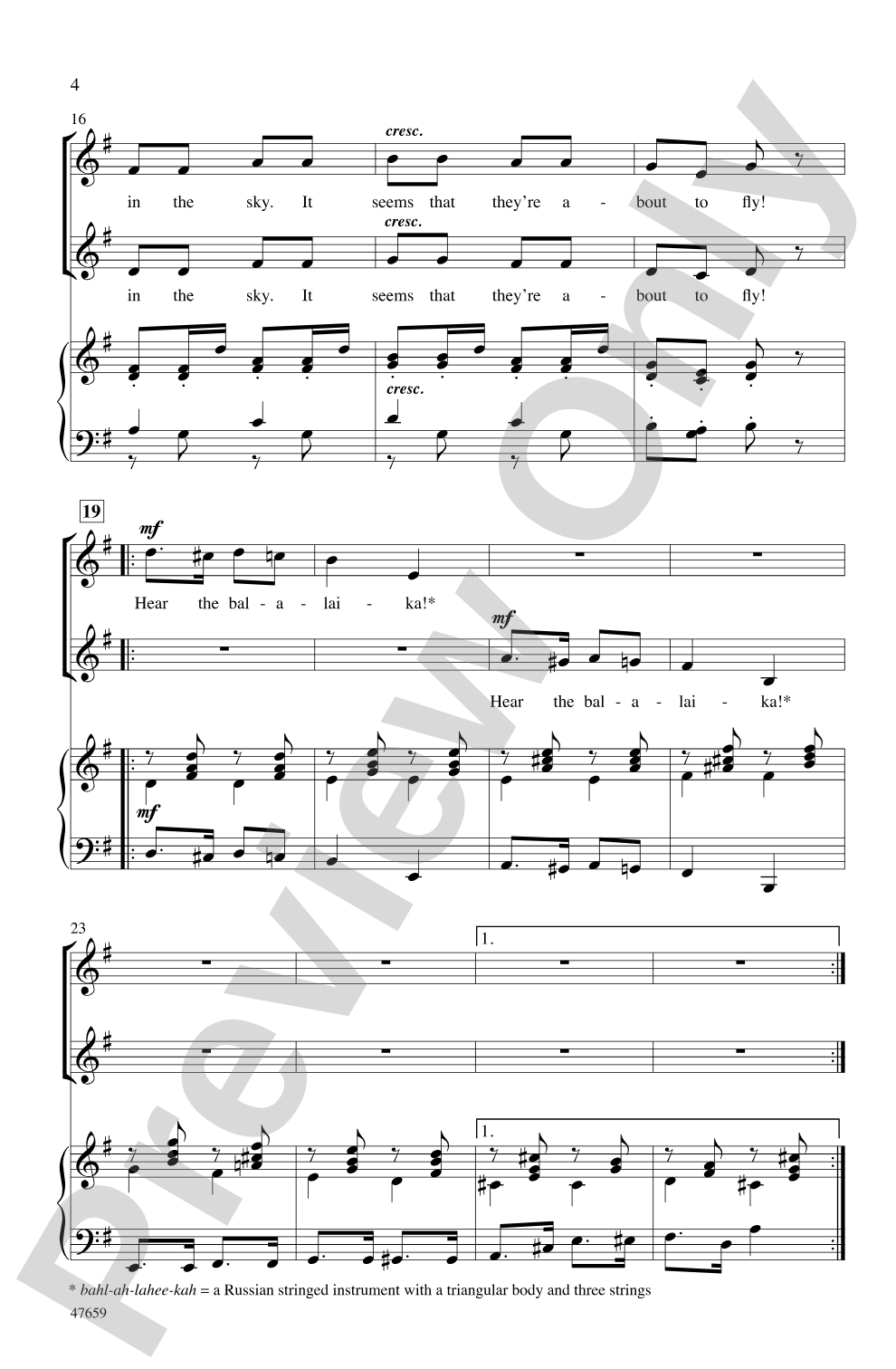
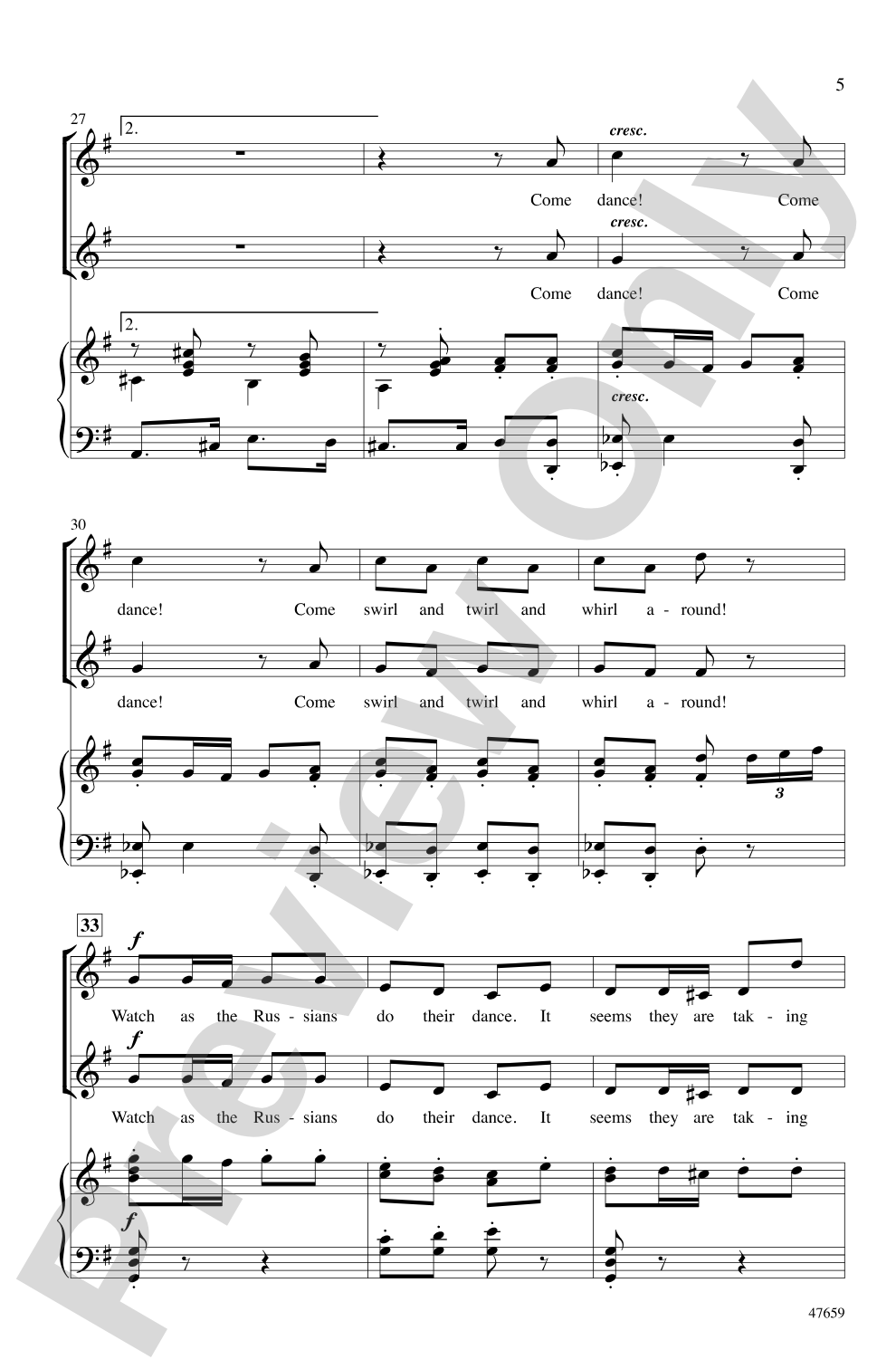

Three Nutcracker Dances: 2-Part Choral Octavo
1. Trépak (Russian Dance) 2. Dance of the Sugar Plum Fairy 3. Waltz of the Flowers
Music by Peter Ilyich Tchaikovsky / arr., with words, by Sally K. Albrecht
Item: 00-PO-0005981
$2.30
Minimum order quantity: 20 copies
Pickup currently not available
Description
Ignite a love for Tchaikovsky's holiday classic with three iconic themes from his world-famous Nutcracker Suite. Sally's original lyrics playfully describe Russian dancers, sugar plums, and waltzing flowers. Children who have seen the ballet on stage (or recent movie adaptations) will be delighted! May be performed individually or as a 5 1/2-minute set.


Three Nutcracker Dances: 2-Part Choral Octavo isn't in MakeMusic Cloud just yet...but it could be. Let us know you'd like to see it, and you'll help shape what comes next. In the meantime, start a free trial and dive into thousands of interactive titles your students can play along with today.
Request This Title
Tell us you want it.
Start Your Free Trial
Explore everything that's ready to play right now.
Sample Audio
1
Audio File
--:--
0:00
0:00
Sample Video
Additional Details
Series:
Alfred Choral Designs
Publisher:
Alfred Music
Page Count:
20
SKU:
00-PO-0005981
More about this title
About the Composer: Ilyich Tchaikovsky
Pyotr Ilyich Tchaikovsky (1840-1893) stands as one of the most performed composers in the concert hall, and for good reason. His gift for writing instantly memorable melodies paired with rich orchestration made him a master of the Romantic era. The Nutcracker Suite, composed in 1892, has become synonymous with the winter season and remains one of the most beloved ballet scores ever written.
Why we love this
Sally K. Albrecht's arrangement captures the pure joy and theatrical charm of Tchaikovsky's original themes while making them singable and accessible for young singers. The addition of her playful, vivid lyrics transforms these iconic dances into narrative moments that bring the ballet world to life on the concert stage. Directors appreciate how effectively this octavo bridges the gap between classical masterwork and children's engagement, especially when audiences have familiarity with the ballet itself.
What to expect
Expect infectious melodic charm paired with the sophisticated elegance of Tchaikovsky's harmonic language. These dances shimmer with Russian exoticism and capture the wonder and whimsy of the Nutcracker world, creating a listening experience that feels both timeless and theatrical.
Who it's for
This octavo works wonderfully for elementary through middle school choirs, especially ensembles with singers who have some concert or ballet experience. Holiday programs, winter concerts, and spring celebrations all benefit from this repertoire, and the piece engages singers who might not yet be comfortable with more complex harmonies or dramatic subjects.
How to get the most out of it
- Lean into the character and storytelling of each dance; these aren't abstract pieces but rather portraits of Russian dancers, delicate plums, and graceful flowers. Let the singers inhabit each movement vocally and theatrically.
- Shape the phrasing to match the natural rhythm of Albrecht's lyrics rather than treating them as secondary to the melody. The words should feel effortless and conversational, not forced onto the tune.
- Balance brightness and clarity in the upper voices with warmth and support from the lower part to maintain the signature Tchaikovsky sound while keeping the young singers' voices healthy.
- If performing as a suite, use the transitions between dances to shift mood and tempo distinctly. Individual performances work equally well, so choose your staging accordingly.
How to use it
Program these dances as a complete suite to create a five-and-a-half-minute choral centerpiece in your winter concert, or select individual movements to space throughout your program. They work beautifully as an opener, as a bridge between more serious repertoire, or as part of a thematic programming block celebrating composer masterworks or holiday classics.
Skills your students will build
- Singing from iconic classical sources and understanding how melodies from concert music differ from pop songs
- Maintaining independence in a two-part texture with clear melodic and harmonic roles
- Interpreting character through lyrics and musical phrasing in concert settings
- Following theatrical and musical transitions between distinct sections