
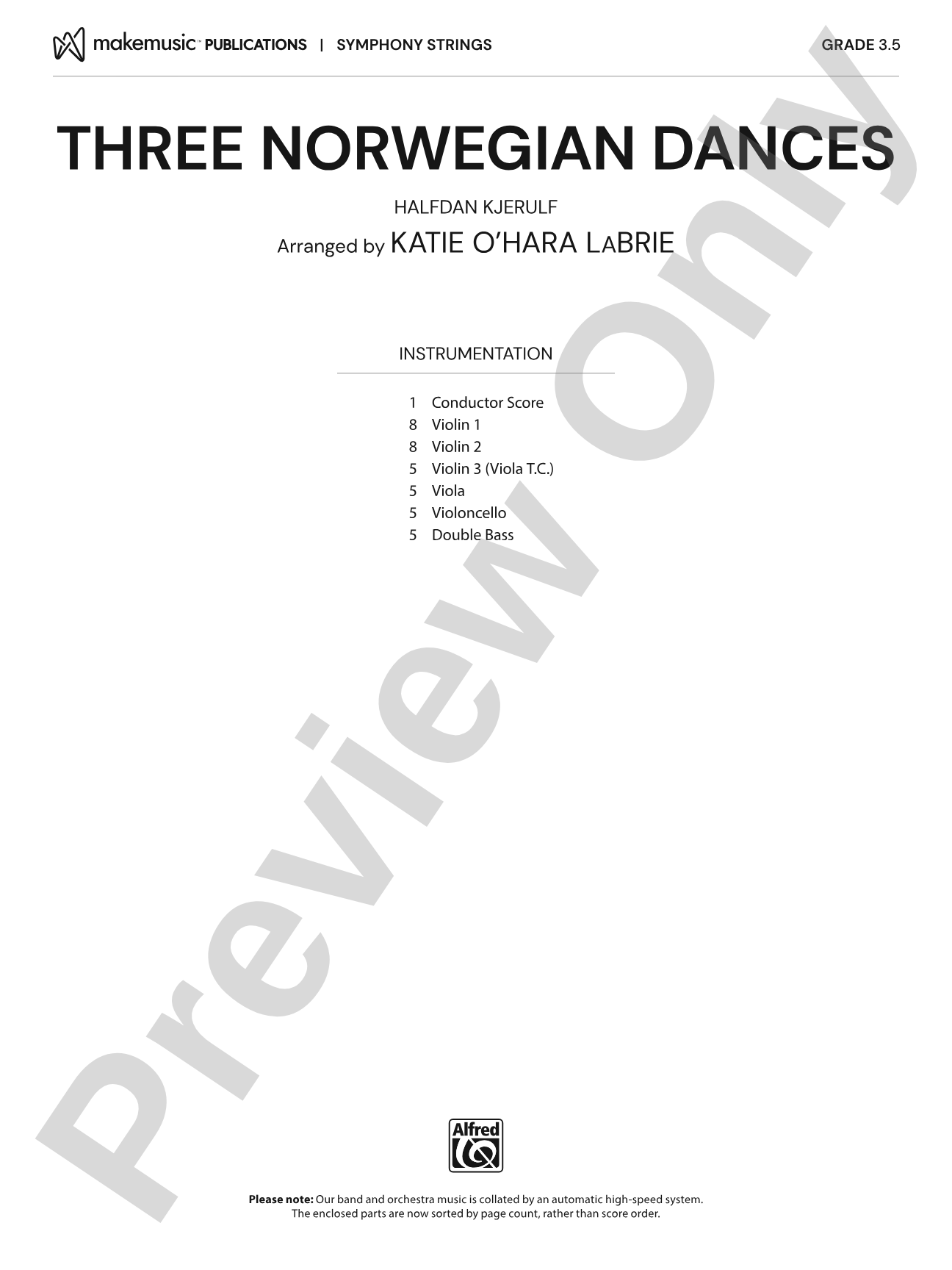
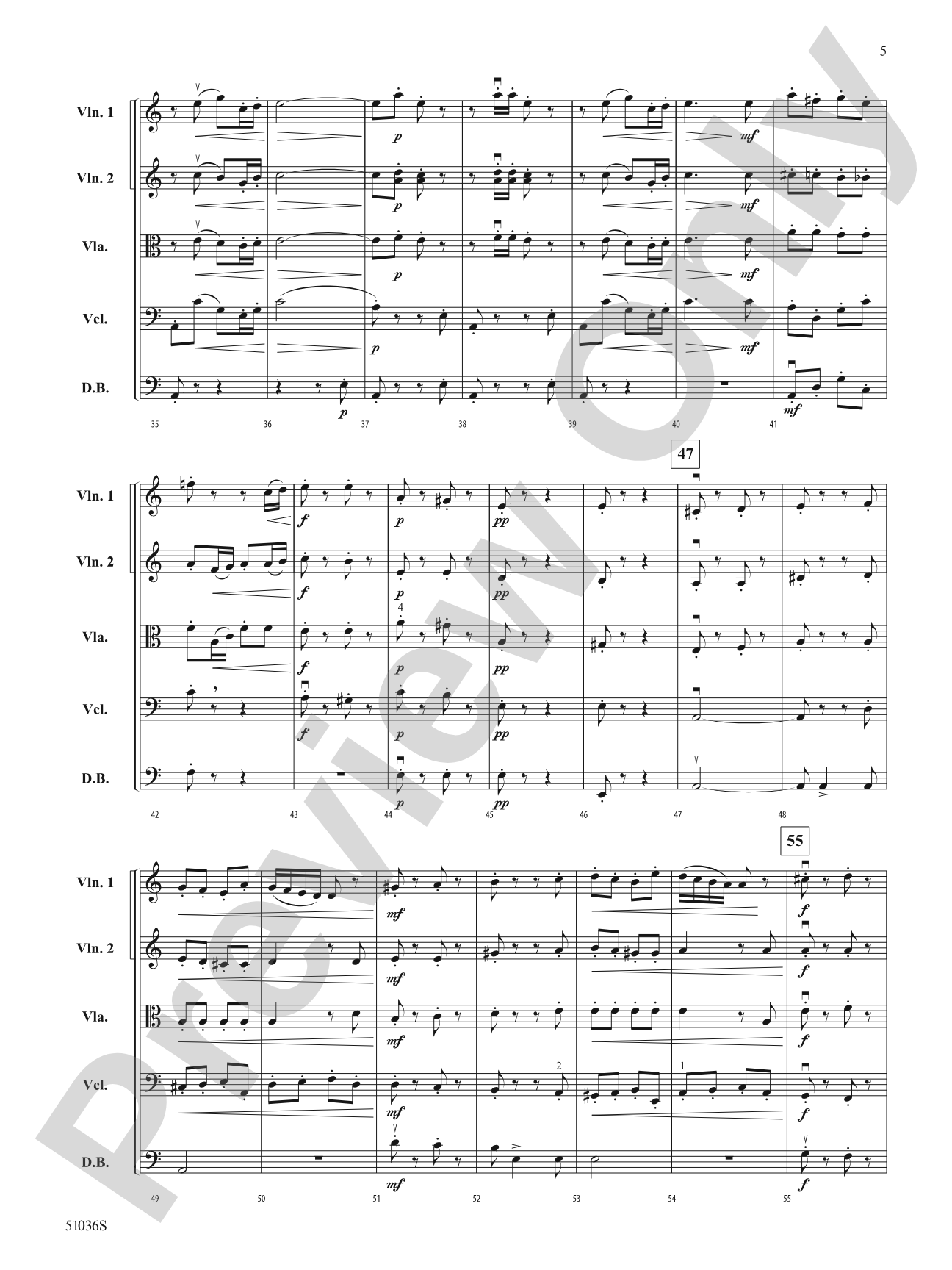
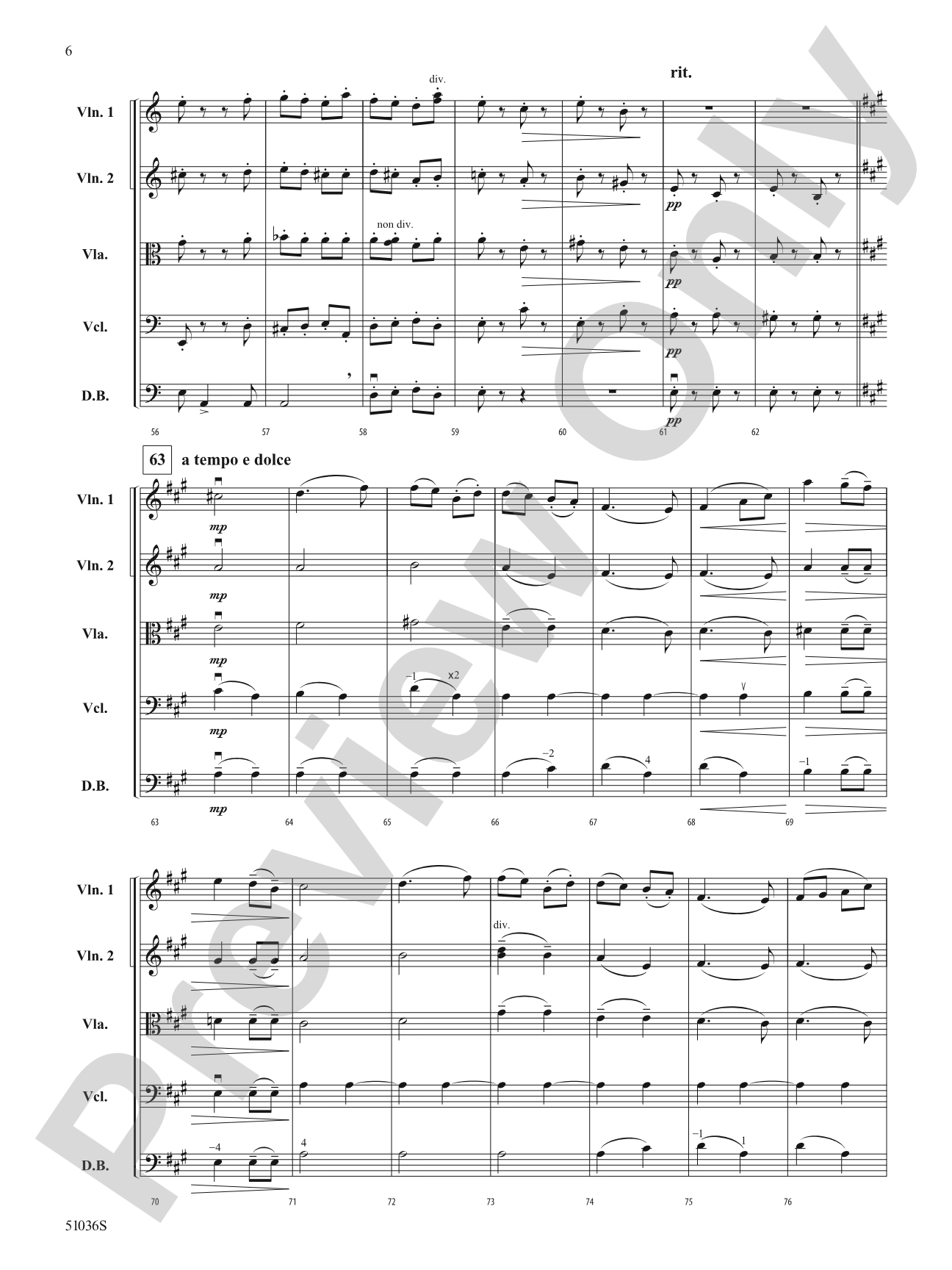
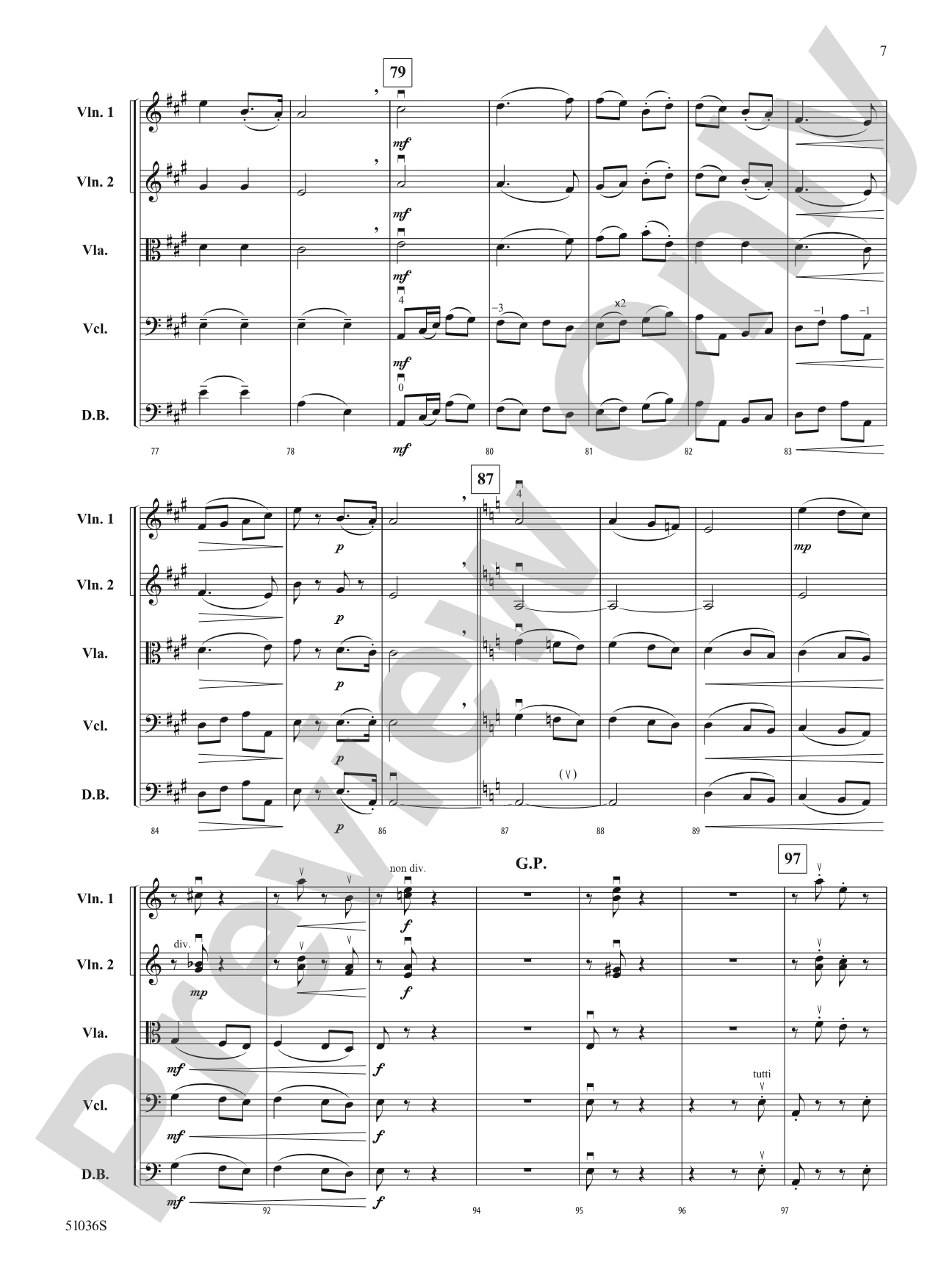
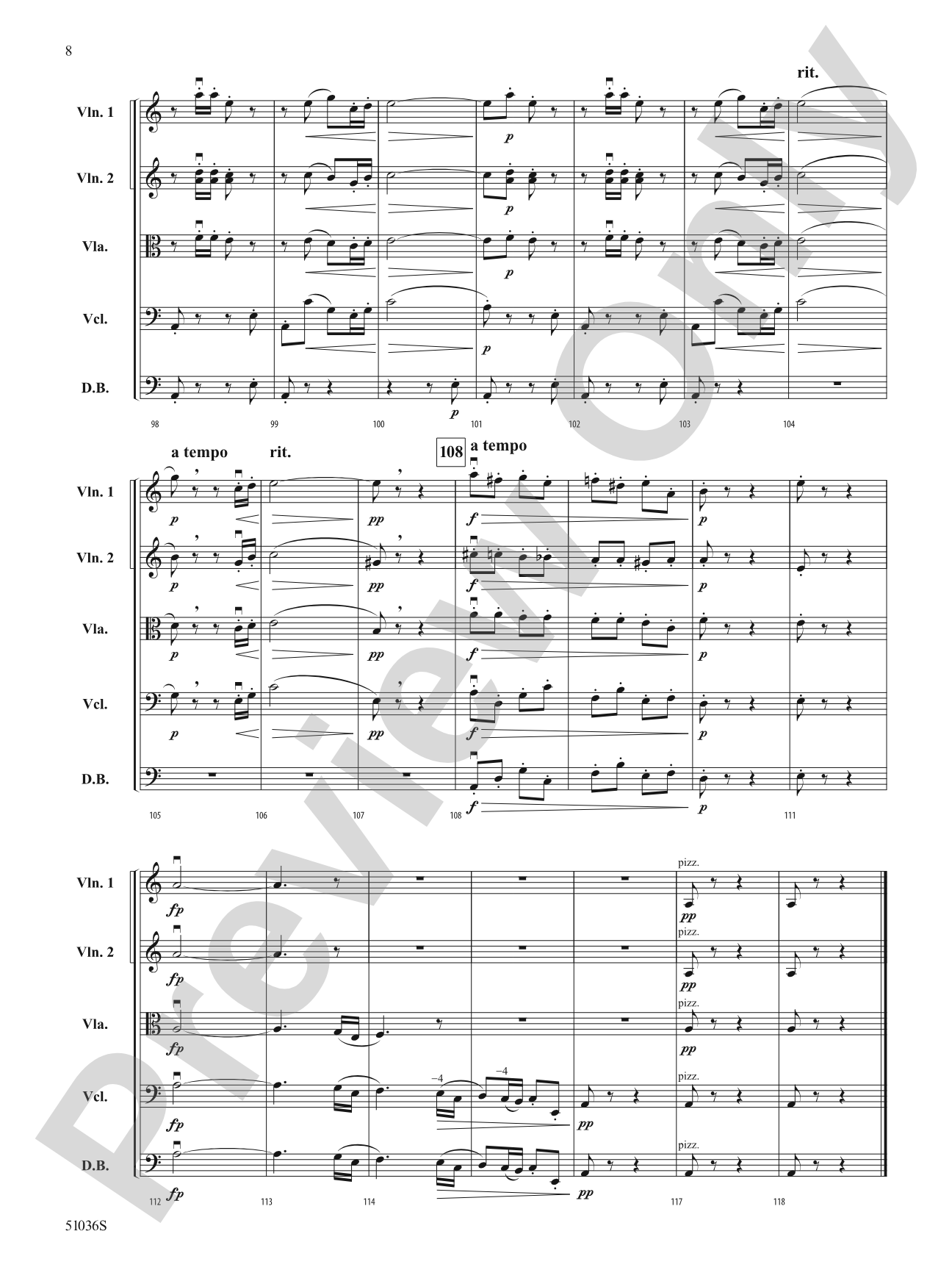
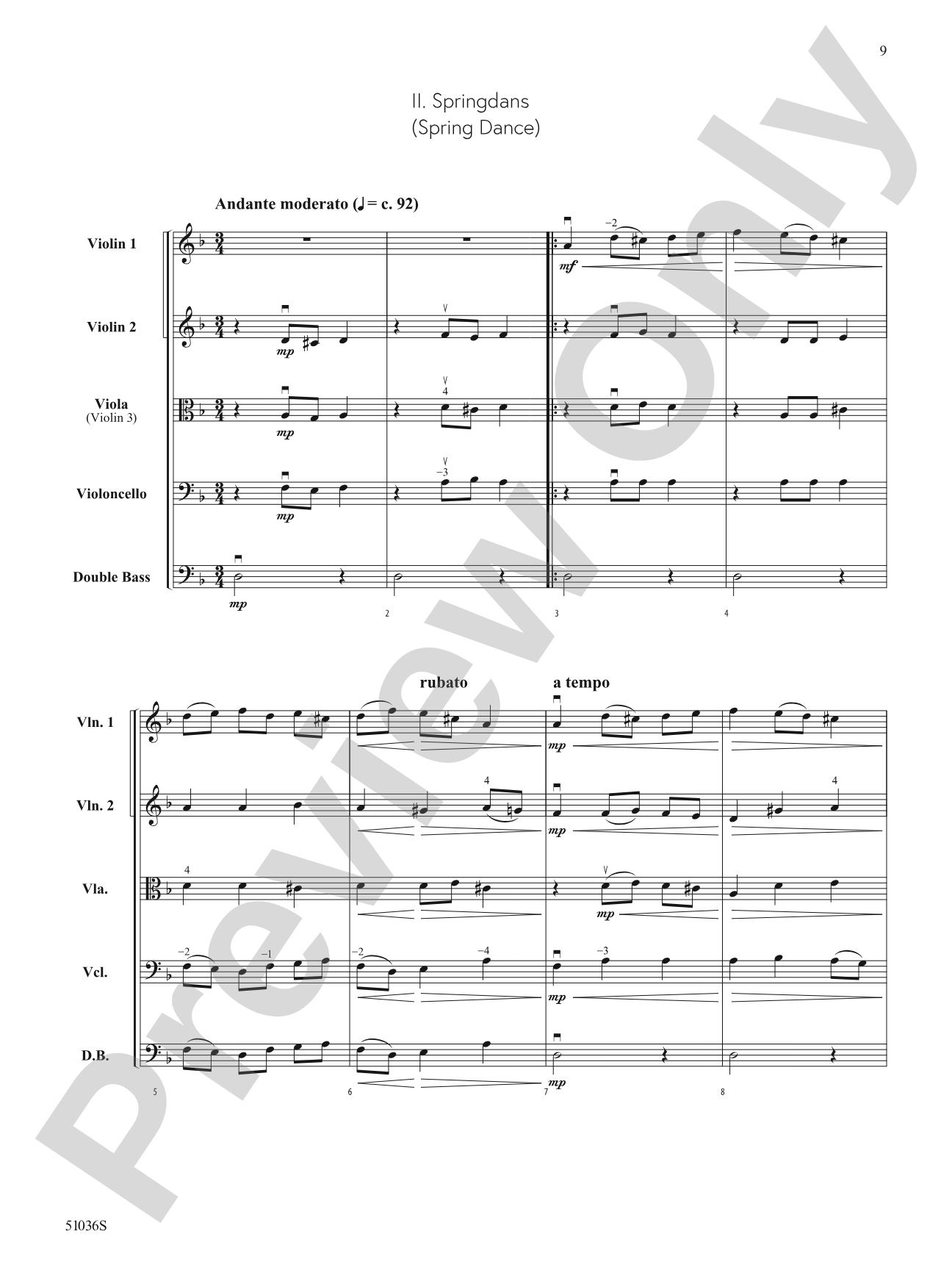
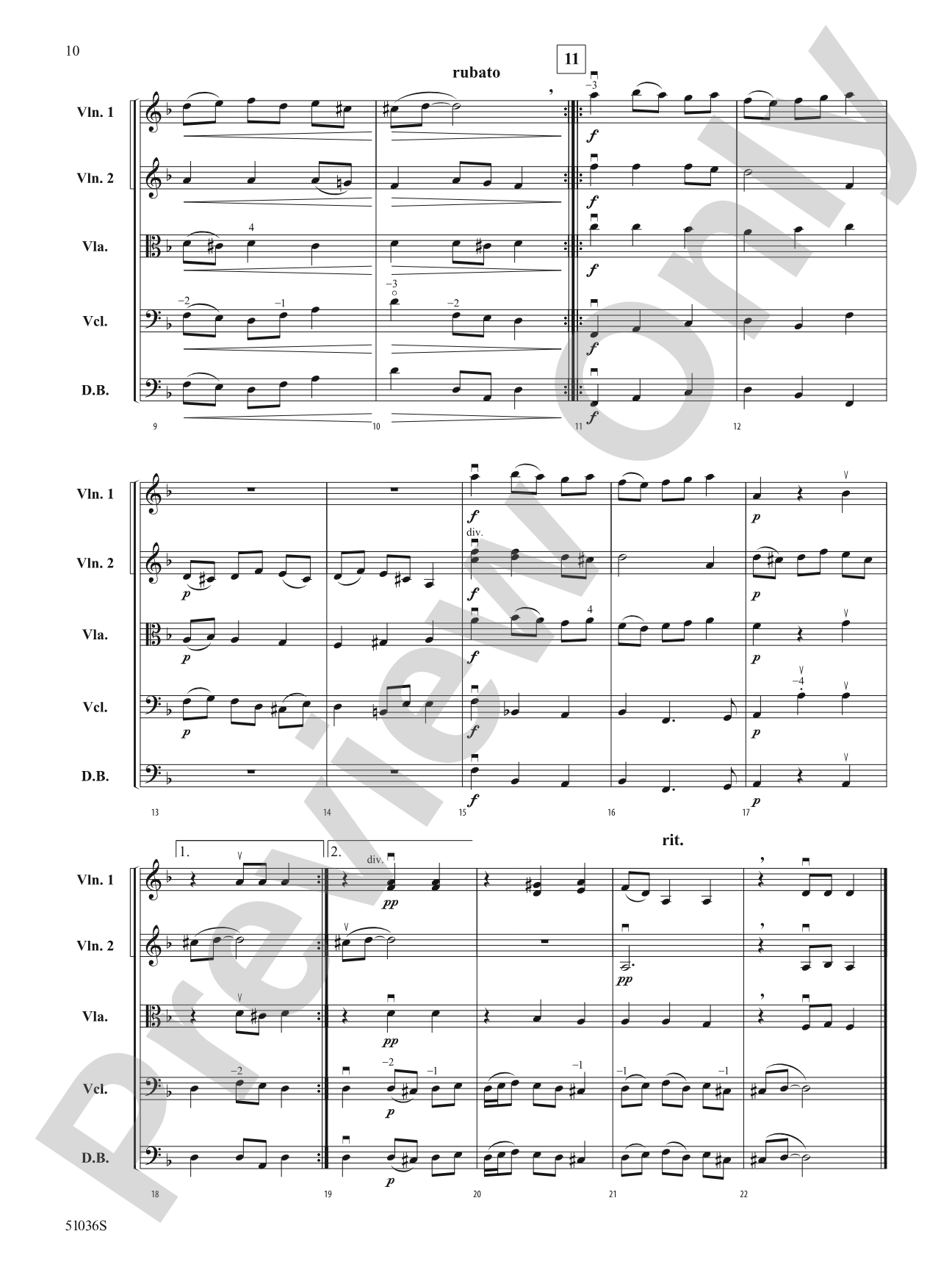
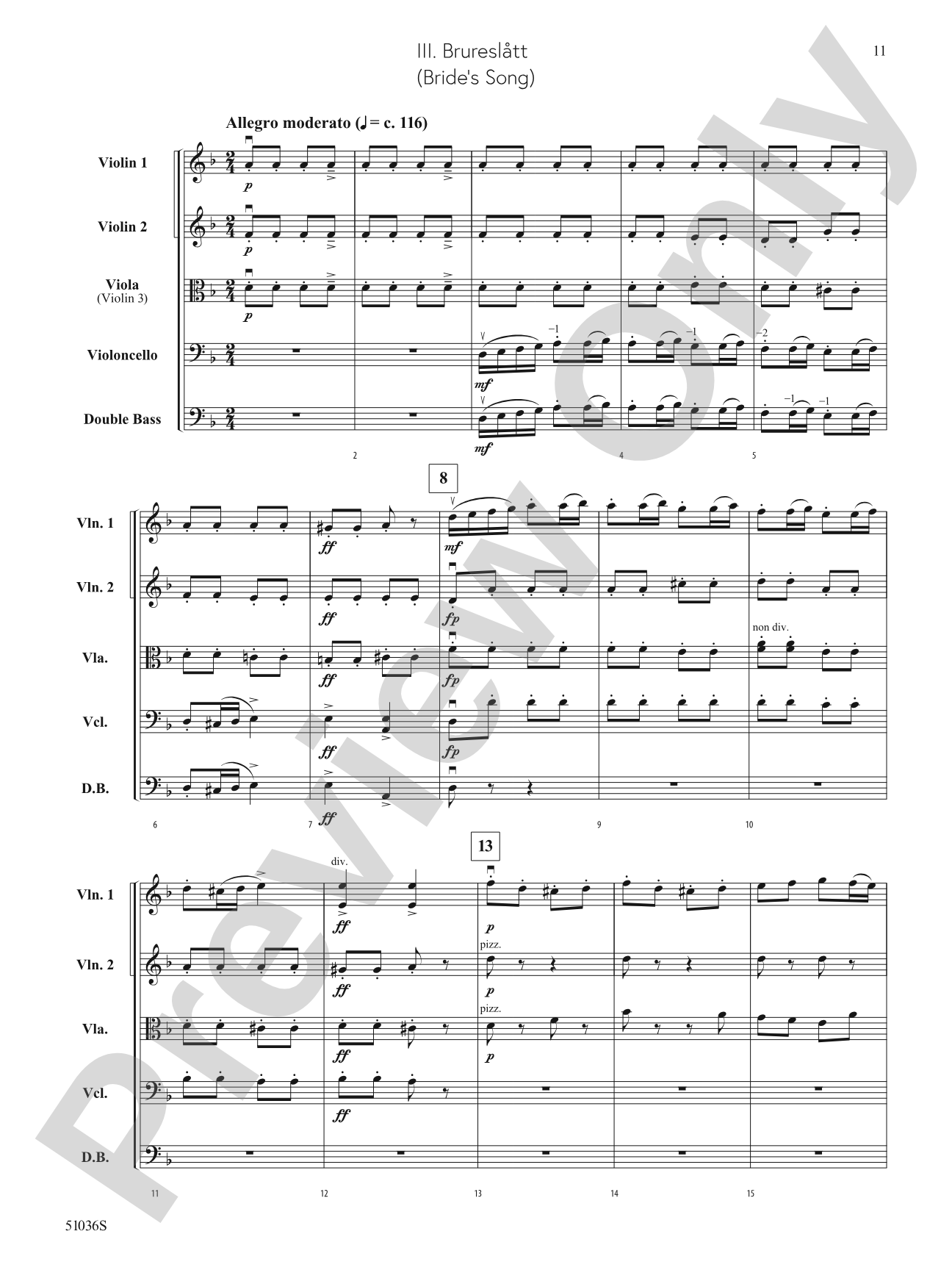
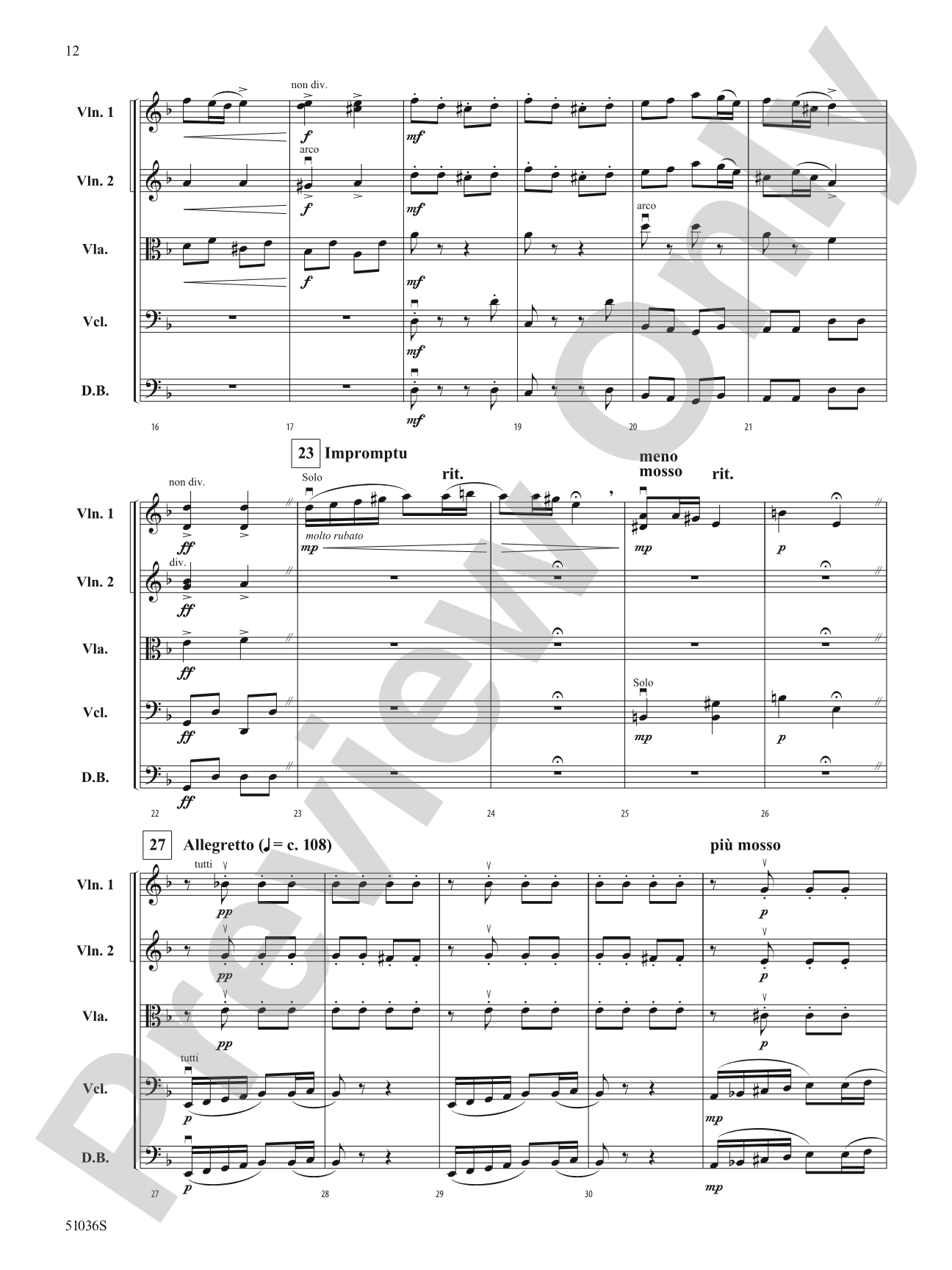
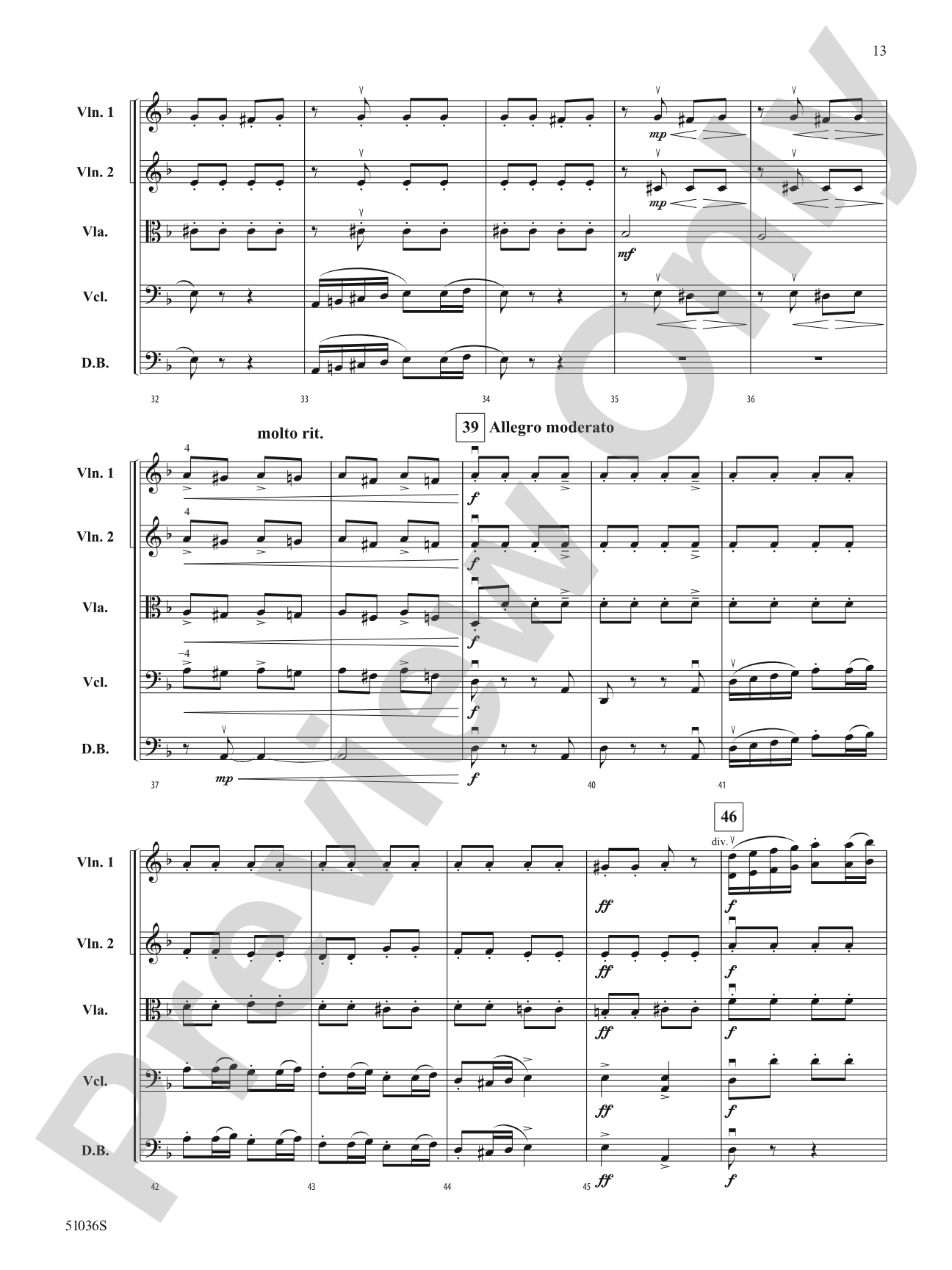
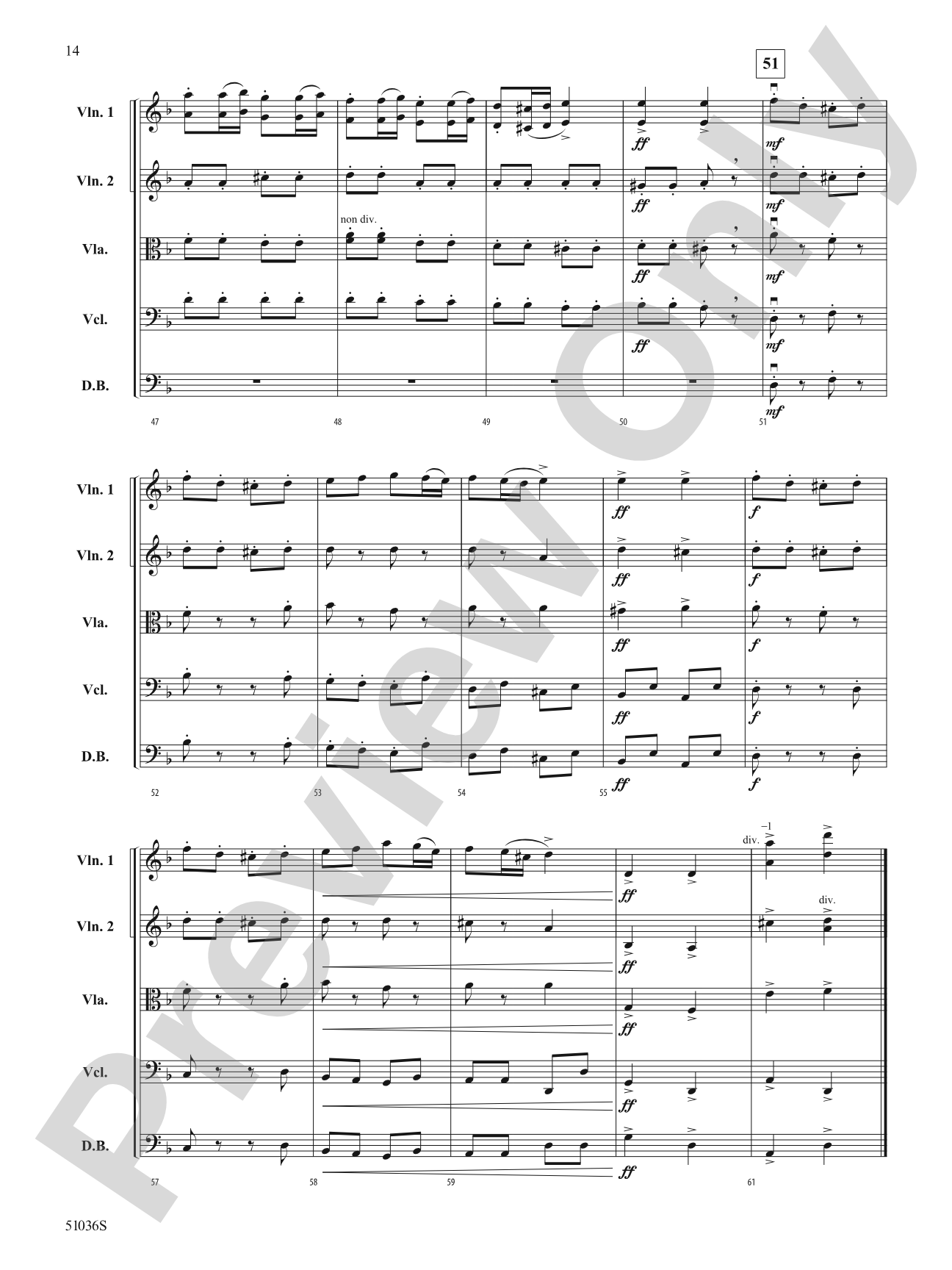

Three Norwegian Dances: String Orchestra Conductor Score & Parts
By Halfdan Kjerulf / arr. Katie O'Hara LaBrie
Grade: 3.5
Item: 00-PK-0008947

$75.00
Pickup currently not available
Buy Extra Parts (Digital PDF Download)
| Product | Price | Quantity |
|---|---|---|
| Three Norwegian Dances: Score | $10.00 | |
| Three Norwegian Dances: 1st Violin | $3.00 | |
| Three Norwegian Dances: 2nd Violin | $3.00 | |
| Three Norwegian Dances: 3rd Violin (Viola [TC]) | $3.00 | |
| Three Norwegian Dances: Viola | $3.00 | |
| Three Norwegian Dances: Cello | $3.00 | |
| Three Norwegian Dances: String Bass | $3.00 |
Parts Added to Cart!
Description
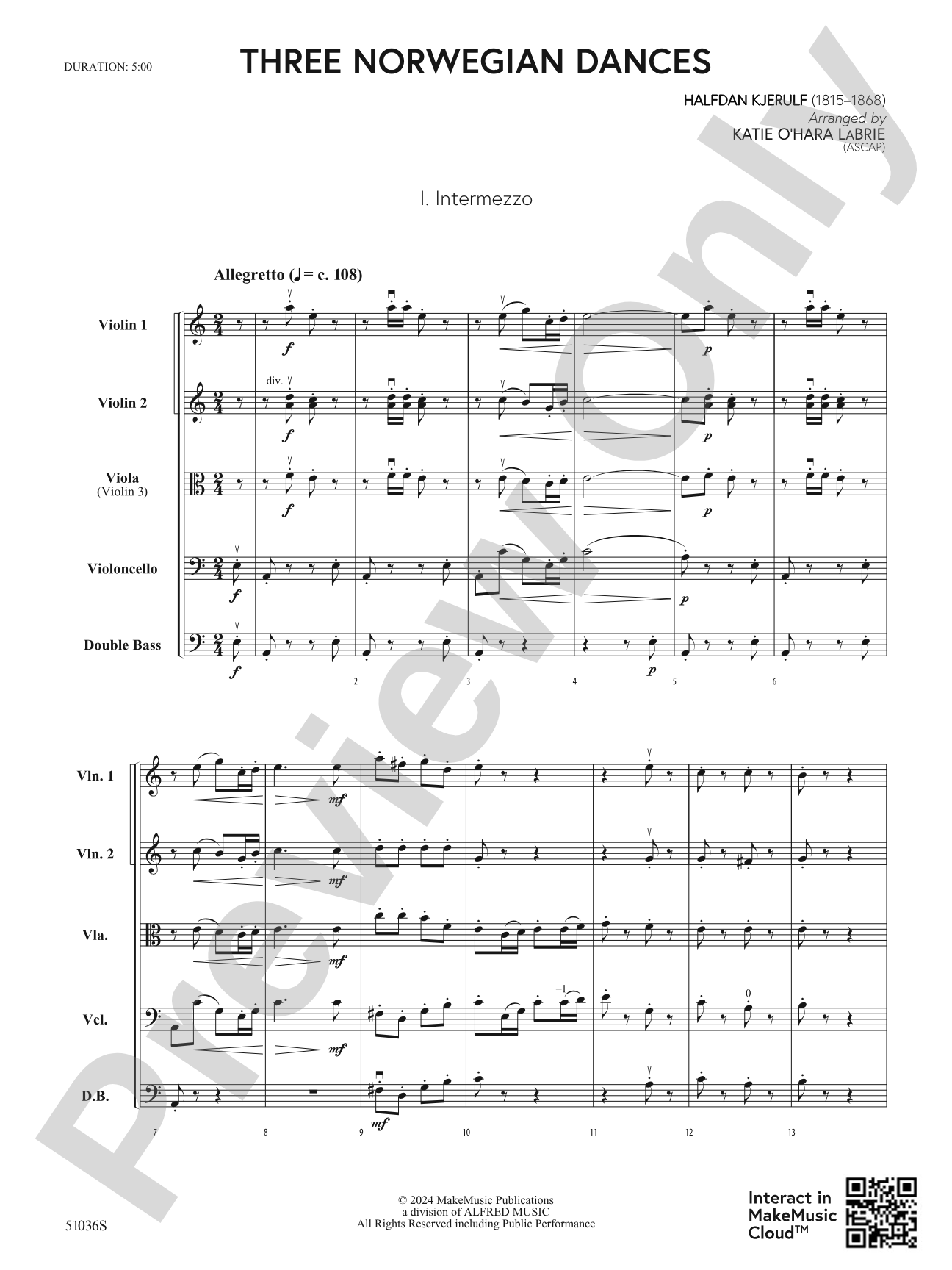
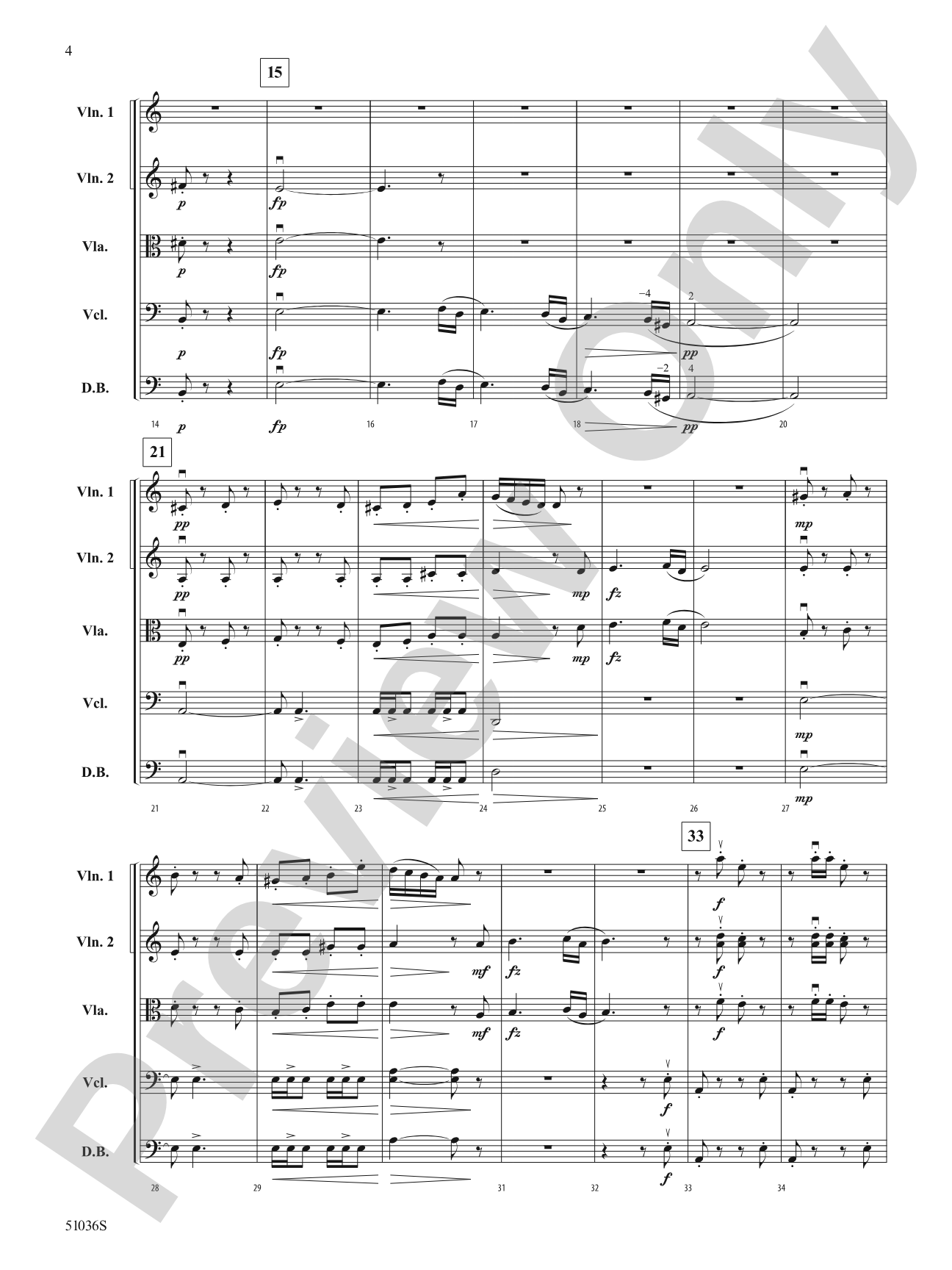
Three Norwegian Dances is a fantastic mini-suite that features the music of Halfdan Kjerulf, a predecessor of Edvard Grieg (who is believed to have influenced Grieg's music). The work, arranged by Katie O'Hara LaBrie, includes the lively and animated Intermezzo, the lyrical Spring Dance with a waltz-like quality, and the fiery Brureslått. Incredible music that engages all sections of the orchestra! (5:00)


Don't just read it, hear it, play along with it, and watch your students grow with it. In MakeMusic Cloud, Three Norwegian Dances: String Orchestra Conductor Score & Parts comes alive with professional accompaniment, adjustable tempo, and built-in practice tools that turn solo practice into real progress.
Open in the Player
Jump straight in and assign it today.
Start Your Free Trial
Open this title and explore the full library in minutes.
Sample Audio
1
Audio File
--:--
0:00
0:00
Sample Video
Additional Details
Series:
MakeMusic Symphony Strings
Publisher:
MakeMusic Publications
SKU:
00-PK-0008947
More about this title
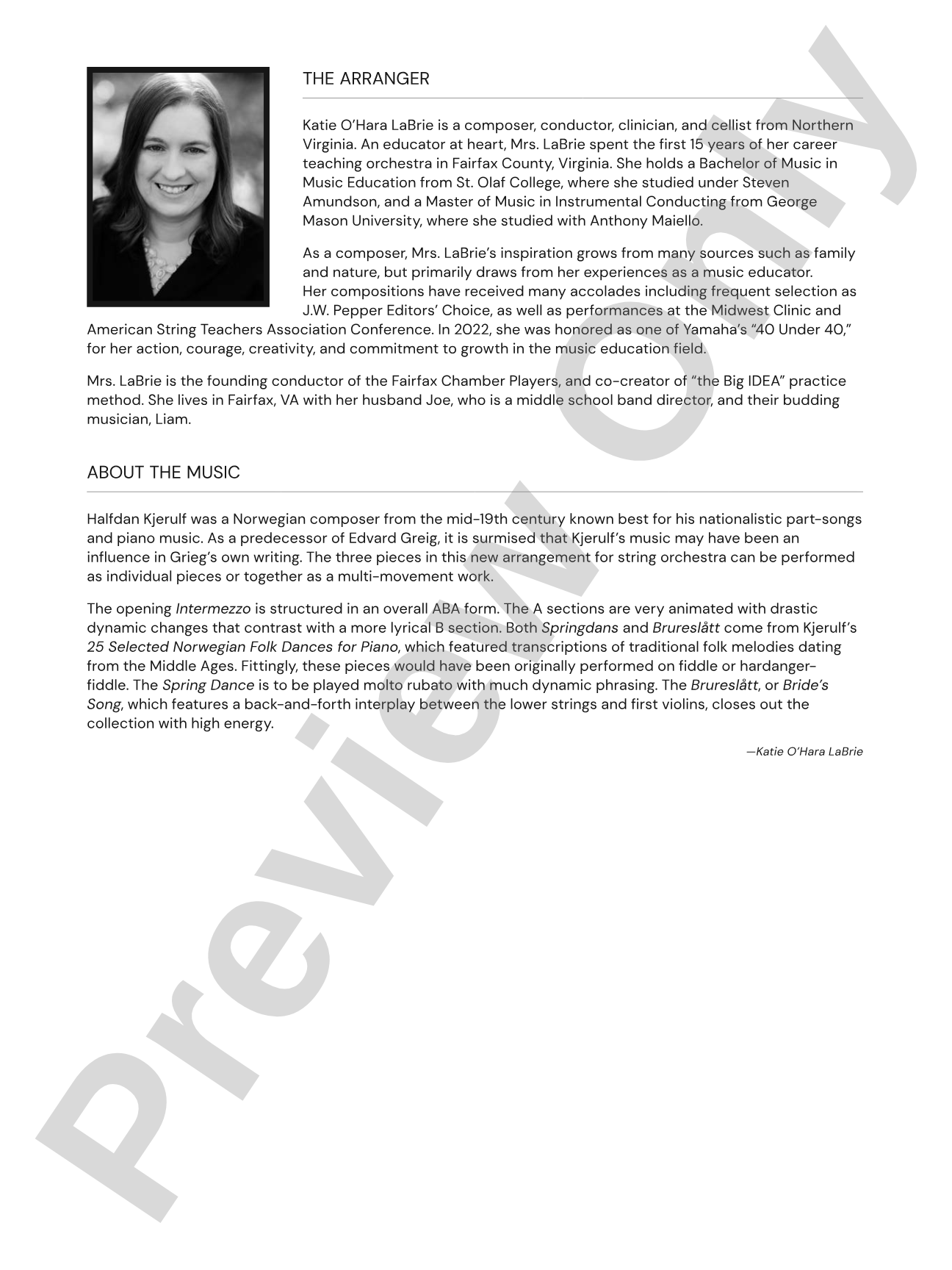
About the Composer: Halfdan Kjerulf
Halfdan Kjerulf (1815-1868) was a Norwegian composer and organist whose salon works and vocal compositions shaped the musical landscape of 19th-century Scandinavia. Working a generation before Edvard Grieg, Kjerulf established many of the harmonic and melodic characteristics that would later define Norwegian Romanticism, earning him recognition as a crucial predecessor in the development of a distinctly Scandinavian musical voice.
Kjerulf's instrumental works balance formal structure with lyrical expressiveness, drawing deeply from Norwegian folk traditions and the natural landscapes of his homeland. His influence on Grieg's compositional approach underscores his importance in music education, where his pieces offer students access to the roots of Nordic musical identity.
Why we love this
Katie O'Hara LaBrie's arrangement opens the full sound world of Kjerulf's Norwegian Dances to developing orchestras without sacrificing musical integrity. Each movement calls on different ensemble strengths, so your students get substantial work across all sections while the piece remains thoroughly engageable at Grade 3.5.
What to expect
Three distinct emotional landscapes unfold across five minutes: first, bright and spirited conversation; then introspective lyricism with waltz-like grace; finally, rhythmic vitality and folk-rooted exuberance. The work captures the character of Norwegian dance traditions while maintaining the refined harmonic language of salon music.
Who it's for
String orchestras at the intermediate level looking for repertoire that combines musical substance with accessible string writing. Conductors seeking contest or festival material that exposes students to Scandinavian Romanticism while building confidence across all string sections.
How to get the most out of it
- Shape the Intermezzo with clear articulation and rhythmic snap; the animated character depends on ensemble precision rather than rubato.
- Allow the Spring Dance's lyrical melody to breathe naturally, especially in the second violins and violas where countermelody enriches the texture.
- Balance the Brureslått's fiery energy with dynamic control; the driving rhythm should feel propulsive without becoming forced or rushed.
- Use sectional string balance rehearsals to ensure the accompaniment figuration supports rather than overwhelms the melodic line in each movement.
How to use it
Program this alongside other Romantic-era string works to create a concert thread exploring regional musical identity, or use it as a standalone contest piece that gives your orchestra multiple moods to explore in a single performance. The modest five-minute duration also makes it ideal for filling concert slots or building programming variety across an evening.
Skills your students will build
- Sustaining lyrical phrases with dynamic shape and vibrato control
- Ensemble rhythmic precision in fast articulated passages
- Balancing melodic and accompaniment roles across string sections
- Responding to bowing challenges in quick dance rhythms
- Stylistic awareness of Scandinavian musical idiom and folk-influenced composition