

Three New Madrigals: 3-Part Mixed, a cappella Choral Octavo
Music by Jay Althouse
Item: 00-PO-0002880
$2.95
Minimum order quantity: 20 copies
Pickup currently not available
Description
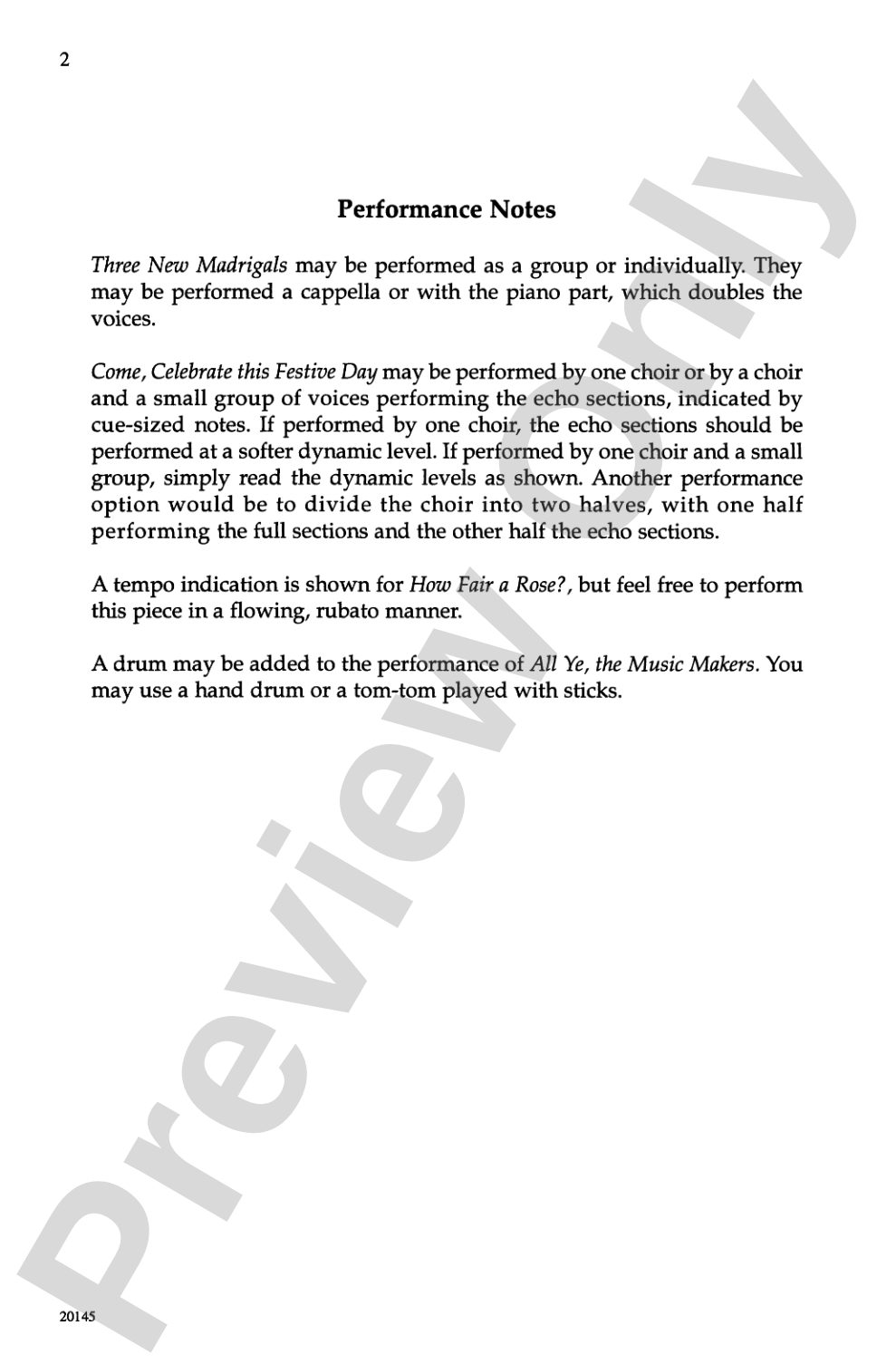
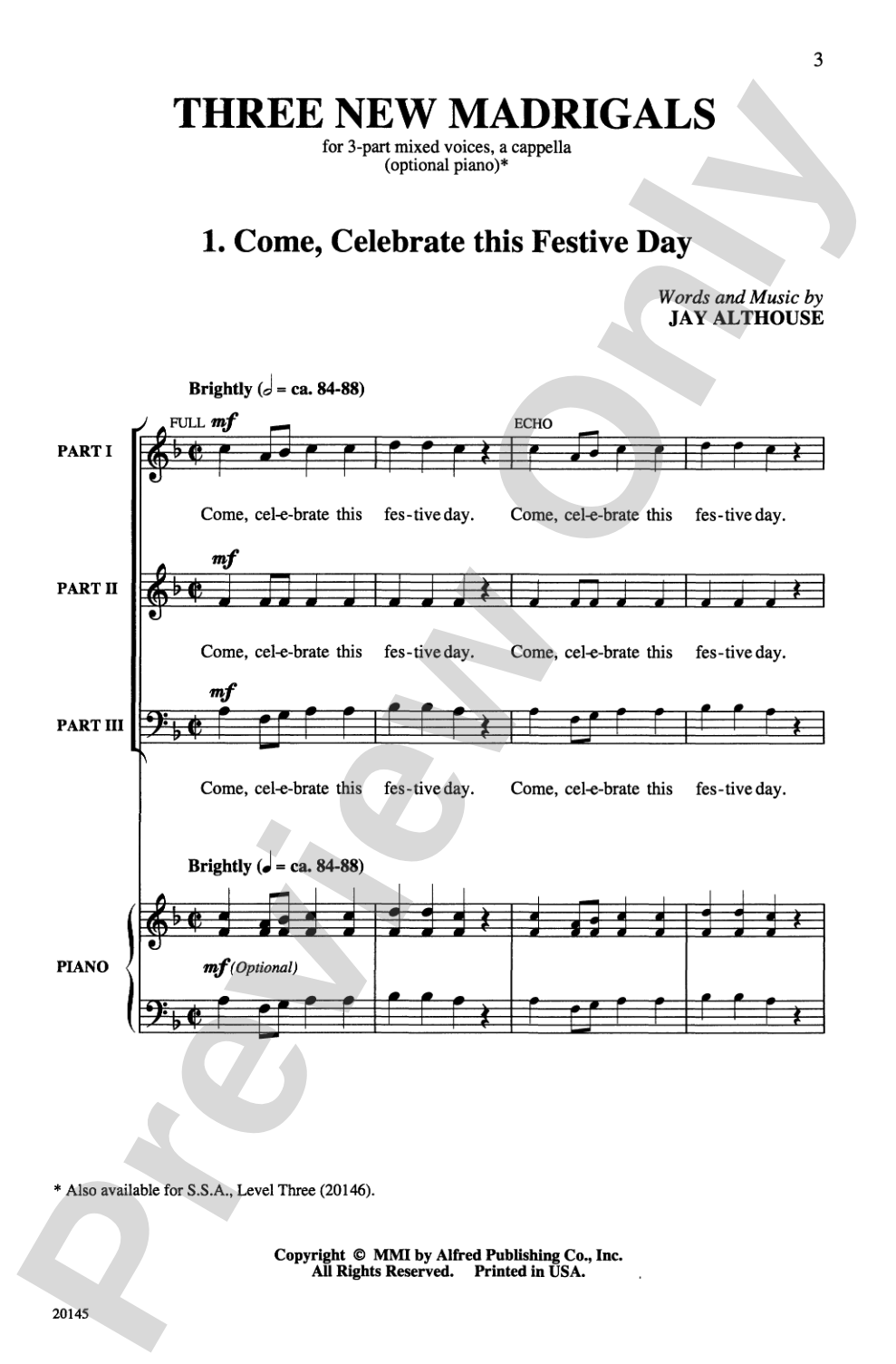
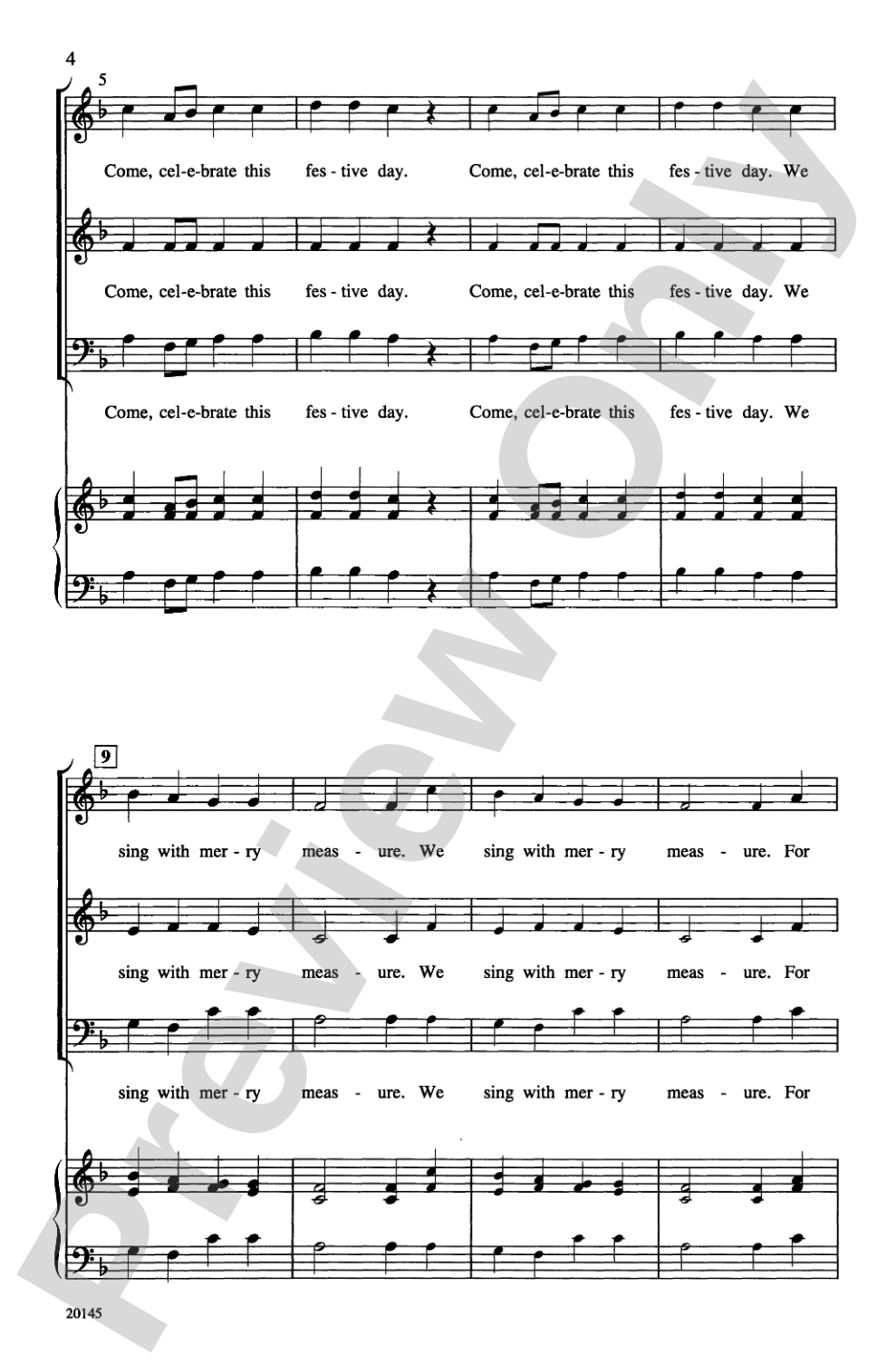
This trio of fresh, new, madrigals from Jay Althouse is a valuable addition to the choral repertoire of 3-part and SSA choirs. And at $1.85, it's quite a value. The first is in a traditional madrigal style, with a "fa la la" section and features and echo chorus. The second is lush and lovely, homophonic in nature, with a thought-provoking text. The third is up-tempo and includes an optional hand drum: it could be used as a processional or at a madrigal dinner. Use any or all of the three for concerts, contests, and adjudications.


Three New Madrigals: 3-Part Mixed, a cappella Choral Octavo isn't in MakeMusic Cloud just yet...but it could be. Let us know you'd like to see it, and you'll help shape what comes next. In the meantime, start a free trial and dive into thousands of interactive titles your students can play along with today.
Request This Title
Tell us you want it.
Start Your Free Trial
Explore everything that's ready to play right now.
Sample Audio
1
Audio File
--:--
0:00
0:00
Sample Video
No sample videos found.
Additional Details
Series:
Alfred Archive Edition: Alfred Choral Designs
Publisher:
Alfred Music
Page Count:
16
SKU:
00-PO-0002880
More about this title
About the Composer: Jay Althouse

Jay Althouse holds degrees in Music Education and Music from Indiana University of Pennsylvania, where he was later honored as a Distinguished Alumnus. His career spans both the publishing and composing worlds: he spent eight years managing rights and licenses for a major educational music publisher and served on the Executive Board of the Music Publishers Association of America.
As a composer, Althouse has established himself as a prolific voice in choral music, with over 800 published works performed regularly across English-speaking countries. Beyond composing, he has co-created children's musicals with his wife Sally K. Albrecht, edited widely-used vocal collections including Folk Songs for Solo Singers, and authored influential classroom resources such as Ready to Read Music and One-Page Composer Bios. His choral composition "I Hear America Singing," written with Albrecht, was performed by the San Francisco Girls and Boys Choirs at President Obama's 2009 Inauguration. Althouse is a member of ASCAP and a regular recipient of its Special Award, and he currently serves on the National Advisory Board of the Folk Art Society of America.
Why we love this
Althouse delivers three distinct madrigals that work as standalone pieces or a complementary set, giving you programming flexibility without sacrificing musical substance. The variety across the set is genuinely useful: a traditional "fa la la" madrigal with echo effects, a lush homophonic setting with deeper text, and a rhythmic processional option. At this price point, the combination of pedagogical value, performance versatility, and choral craftsmanship is hard to match.
What to expect
This set spans genuine madrigal tradition to modern expression. You'll encounter the playful syllabic choral writing and echo-response textures of Renaissance convention in the first piece, shift into the sustained sonorities and lyrical phrasing of the second, then land on a spirited, rhythmically alert closer that could enliven a formal concert or energize a dinner event. The progression feels designed to showcase your singers' range rather than exhaust a single mood.
Who it's for
These madrigals suit 3-part mixed and SSA choirs at the secondary and community level. The collection works equally well for groups preparing festival or contest repertoire and those seeking fresh concert material.
How to get the most out of it
- Balance the echo effects in the first madrigal by positioning singers slightly apart if your concert space allows it; this creates the spatial interplay the composition invites without requiring a separate ensemble
- In the second piece, shape the homophonic phrases by thinking in longer musical lines rather than resting between sections; this sustains the lush quality the text requires
- For the third madrigal, if using the optional hand drum, let one singer manage the percussion so the other voices remain free to project; the drum accents rhythm rather than carries the line
How to use it
Program all three as a madrigal triptych to frame a concert section, or select individual pieces to complement larger thematic programs. The third madrigal's processional energy makes it particularly effective as an opening or closing number, while the first two work well in the body of a concert where you want to demonstrate textural contrast.
Skills your students will build
- Madrigal style conventions including echo effects and syllabic text setting
- Ensemble balance in a cappella contexts without instrumental support
- Phrase shaping across homophonic textures
- Rhythmic precision when performing with optional percussion accompaniment
- Range and flexibility moving between traditional and contemporary choral idioms within a single set