Three Moods Sheet Music Preview

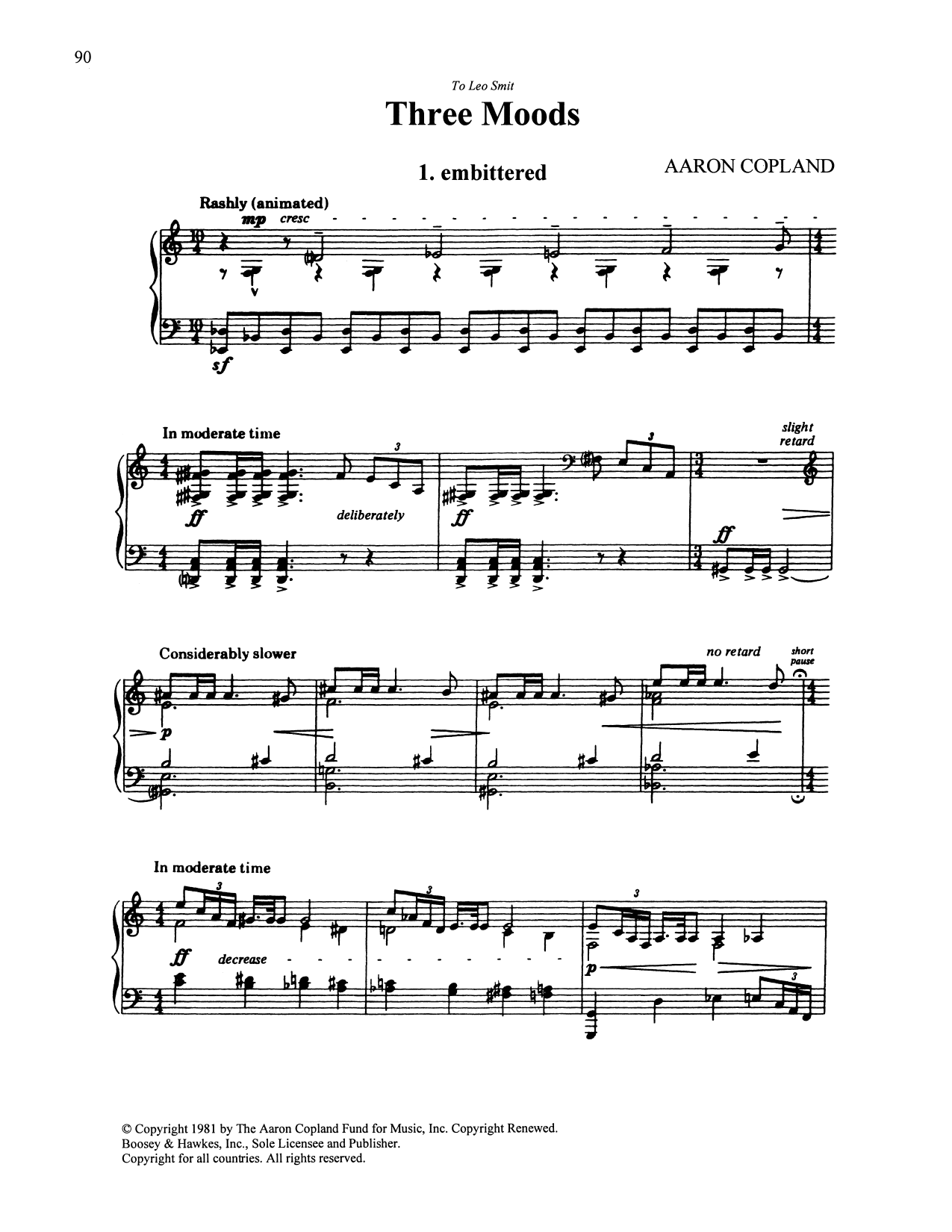
Three Moods: Piano Solo

By Aaron Copland

Item: 35-DS01979713

Digital Download
$5.99
One moment…
Description

Discover MakeMusic Cloud: thousands of interactive titles your students can play along with today.

Sample Audio
No sample audio found.
Sample Video
Additional Details
Publisher: Hal Leonard
Page Count: 7
SKU: 35-DS01979713

More about this title

About the Composer: Aaron Copland

Aaron Copland (1900–1990) shaped American classical music by drawing directly from folk traditions, hymns, and the rhythmic energy of the nation itself. His gift for orchestration translated powerfully to the piano, where he explored intimate character pieces alongside monumental works, always maintaining that clarity and directness that made him one of the most performed American composers in the twentieth century.

Copland's piano writing balances technical demands with emotional accessibility. He believed music should speak clearly to its listeners, and his solo keyboard works reflect this philosophy, often built on simple melodic ideas that reveal their sophistication through harmonic exploration and structural logic rather than virtuosic display.

Why we love this

Copland's three distinct character pieces give pianists a compact vehicle for exploring contrasting textures and moods without requiring a substantial commitment of rehearsal time. The work showcases his signature ability to build complex harmonic language from straightforward thematic material, making it rewarding for intermediate to advanced students who are ready to engage with twentieth-century American idiom.

What to expect

Three distinct emotional landscapes unfold across these pages. Each mood carries its own harmonic flavor and textural approach, inviting the pianist to inhabit different expressive worlds while maintaining the directness and clarity that defines Copland's musical voice.

Who it's for

Pianists working toward artistic independence, typically at the late intermediate or early advanced level. These pieces serve equally well for students exploring American classical repertoire or those seeking character miniatures suitable for recitals and competitions.

How to get the most out of it

  • Let each mood establish its own sound world rather than rushing between sections; take the transitions as opportunities to reset your touch and adjust the pedal carefully.
  • Pay close attention to the harmonic colors Copland creates through ostinato figures and countermelody; these often carry as much weight as the main line.
  • Approach the rhythmic elements with precision even when the overall character feels relaxed; Copland's seemingly simple surfaces depend on exact timing underneath.

How to use it

Sequence this work on a recital alongside other twentieth-century American pieces to build a themed program, or feature one movement as a palette cleanser between heavier works. The modest page count makes it ideal for student competitions where variety and contrast strengthen a program.

Skills your students will build

  • Reading and executing Copland's characteristic harmonic language and voice leading
  • Controlling tone color and pedal technique to distinguish contrasting moods
  • Balancing accompaniment figures with melodic content
  • Navigating twentieth-century American keyboard textures and idioms

You May Also Like