
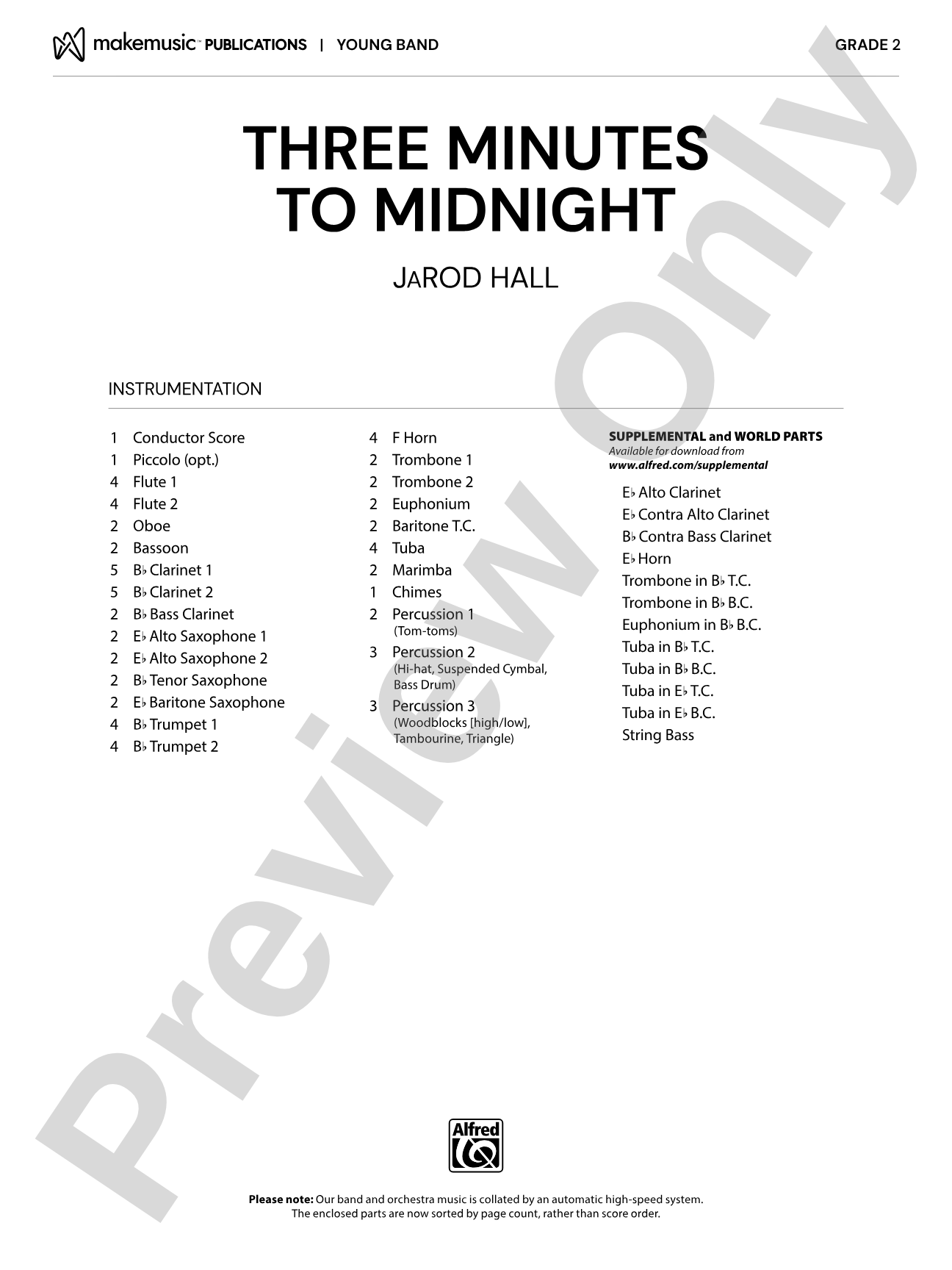
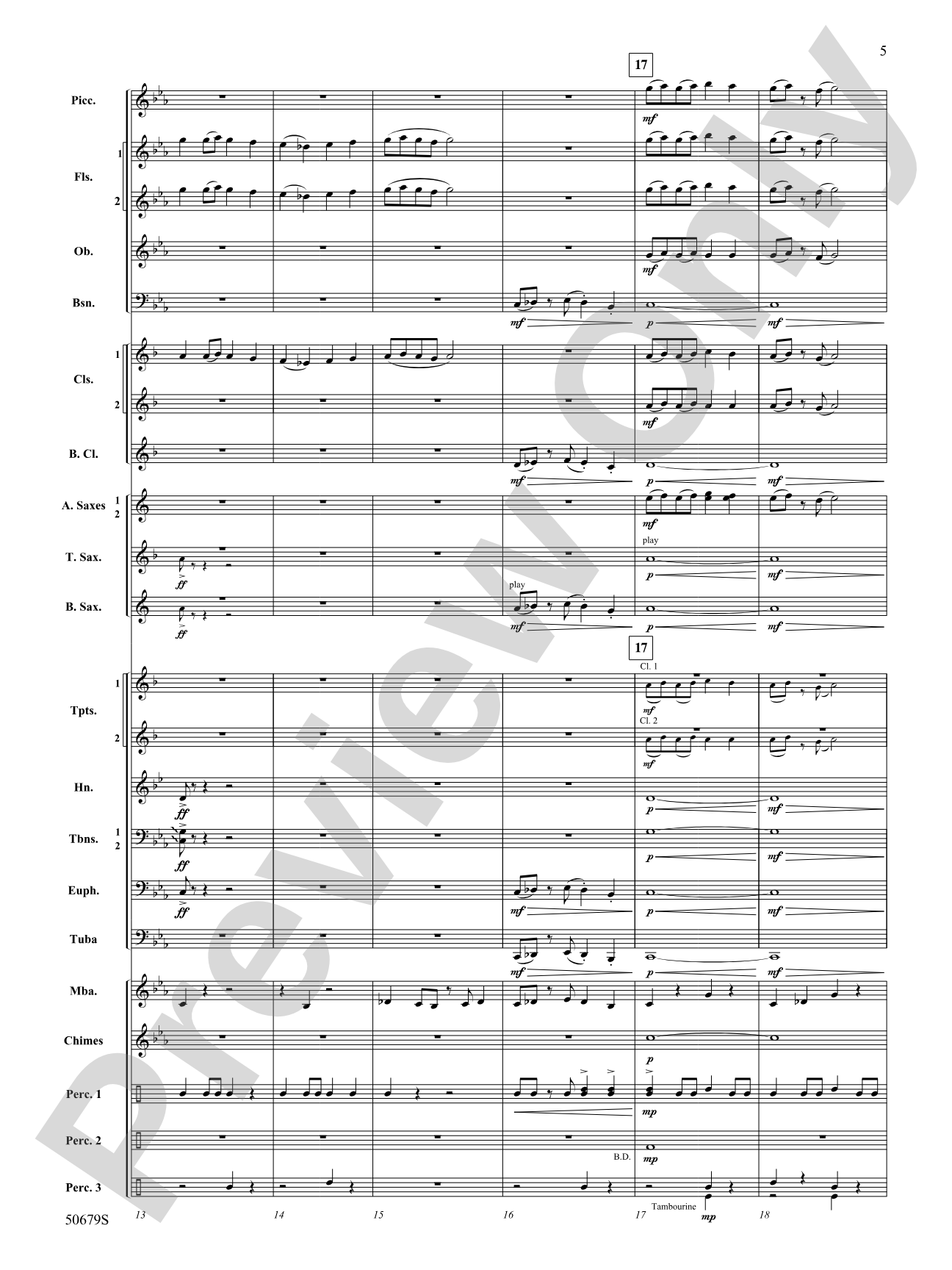
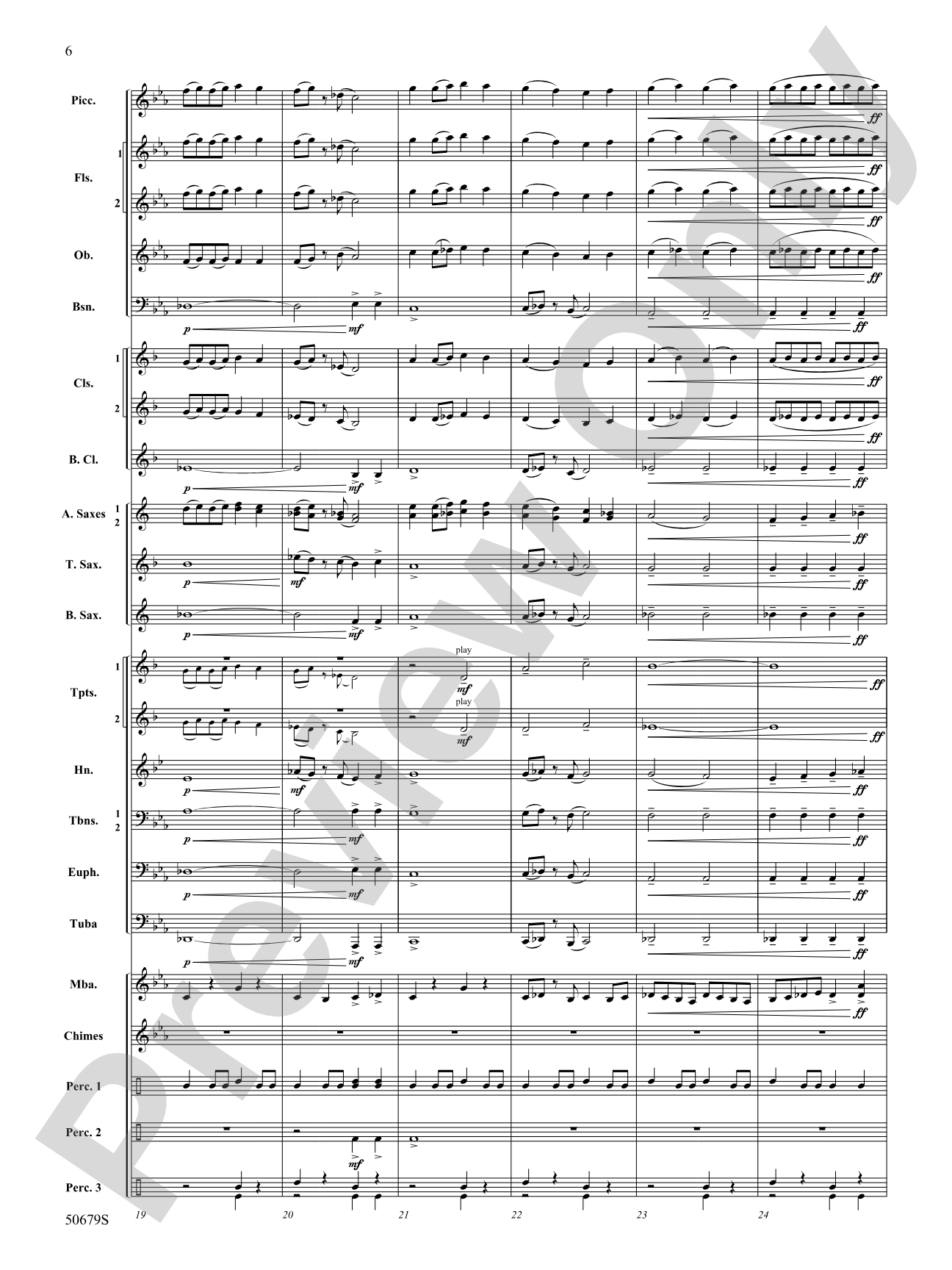
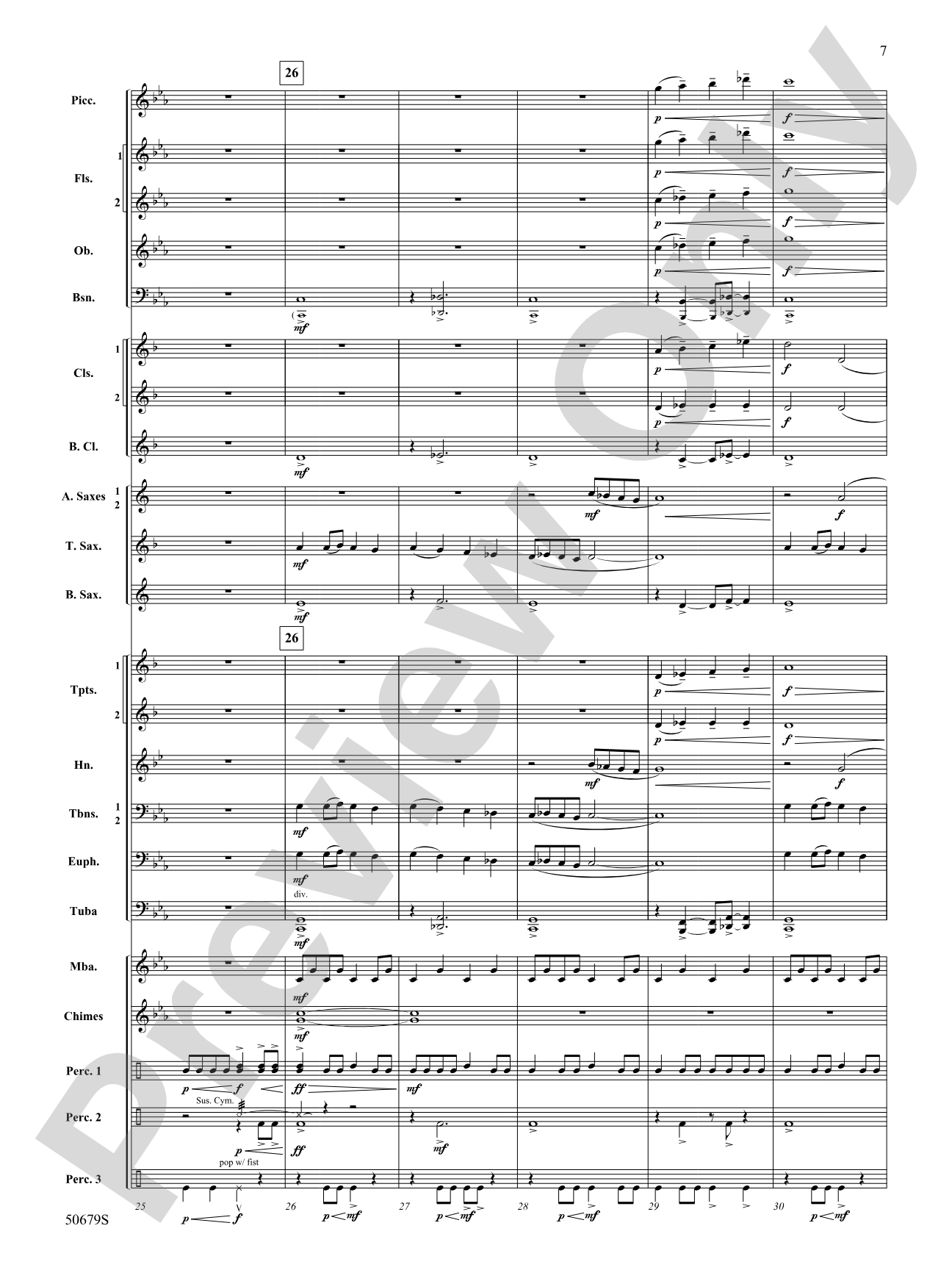
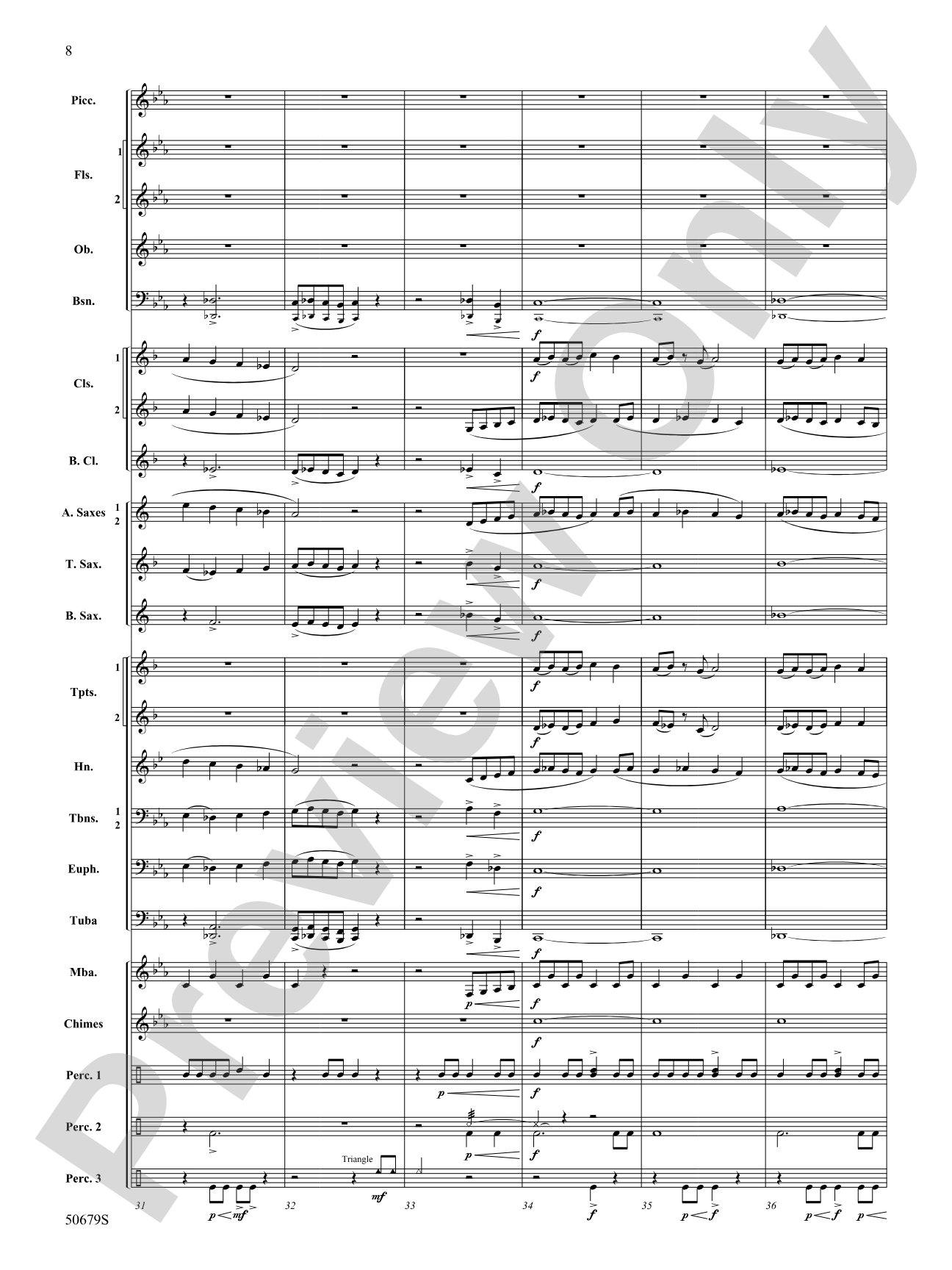
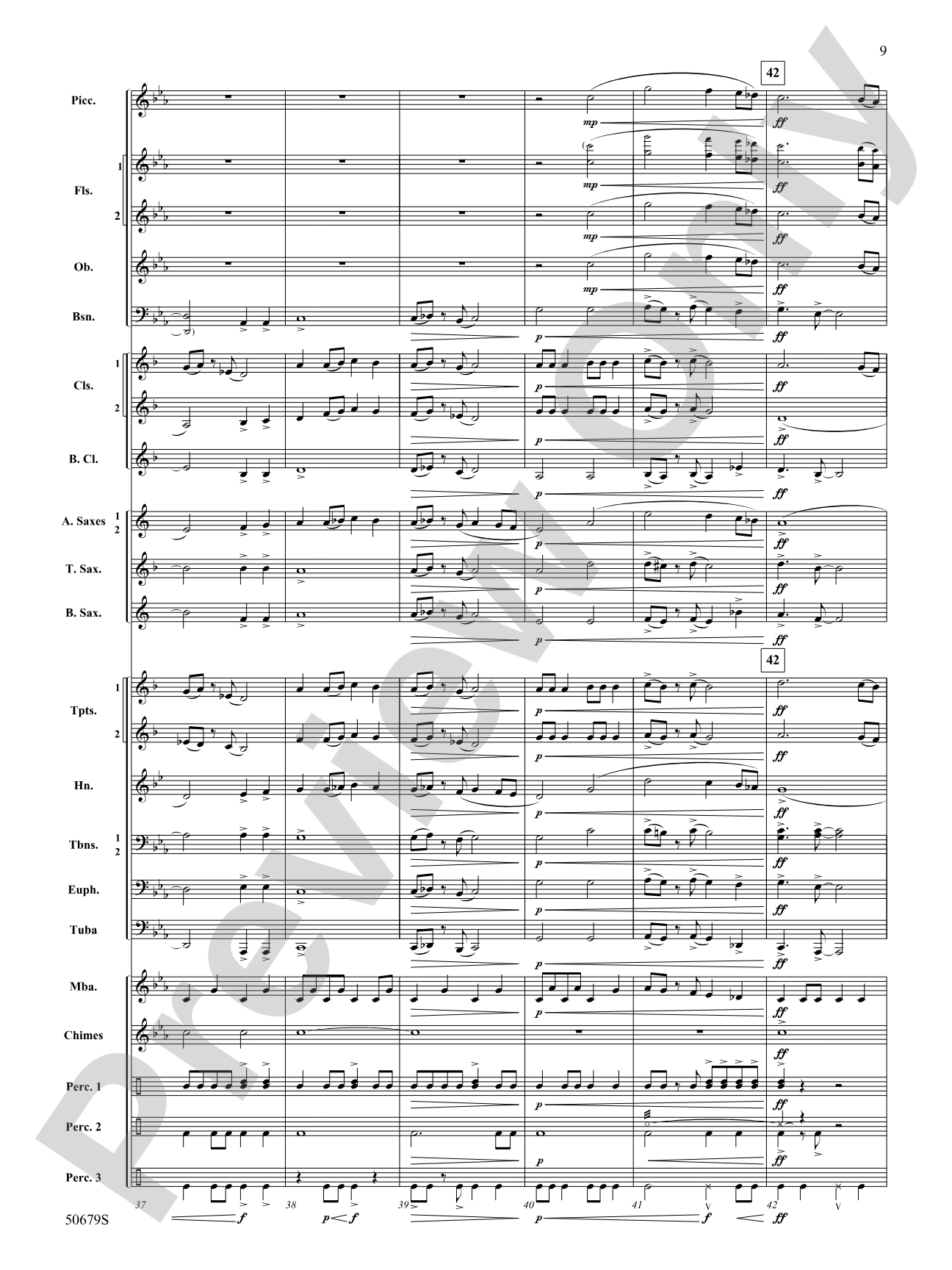
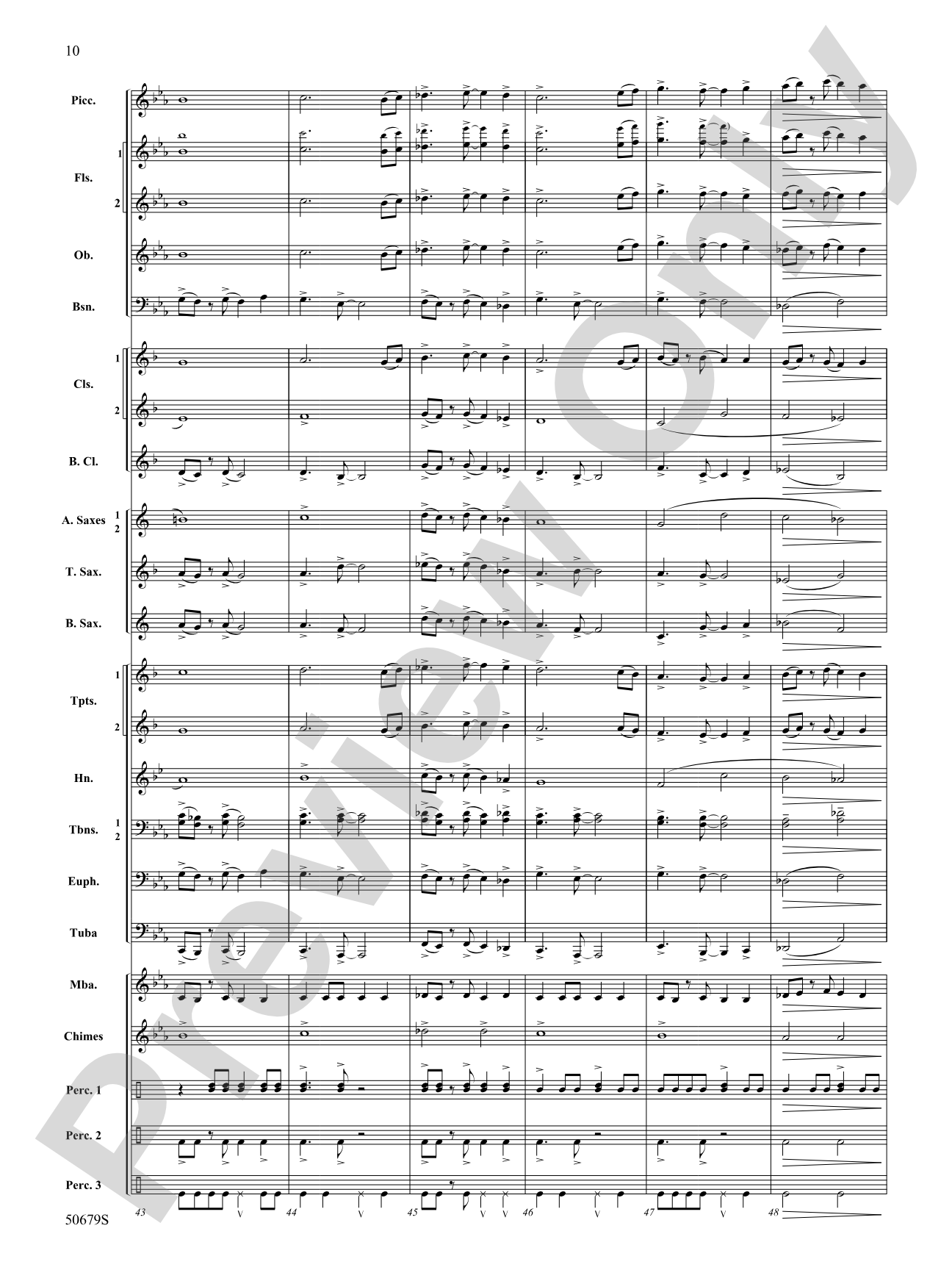
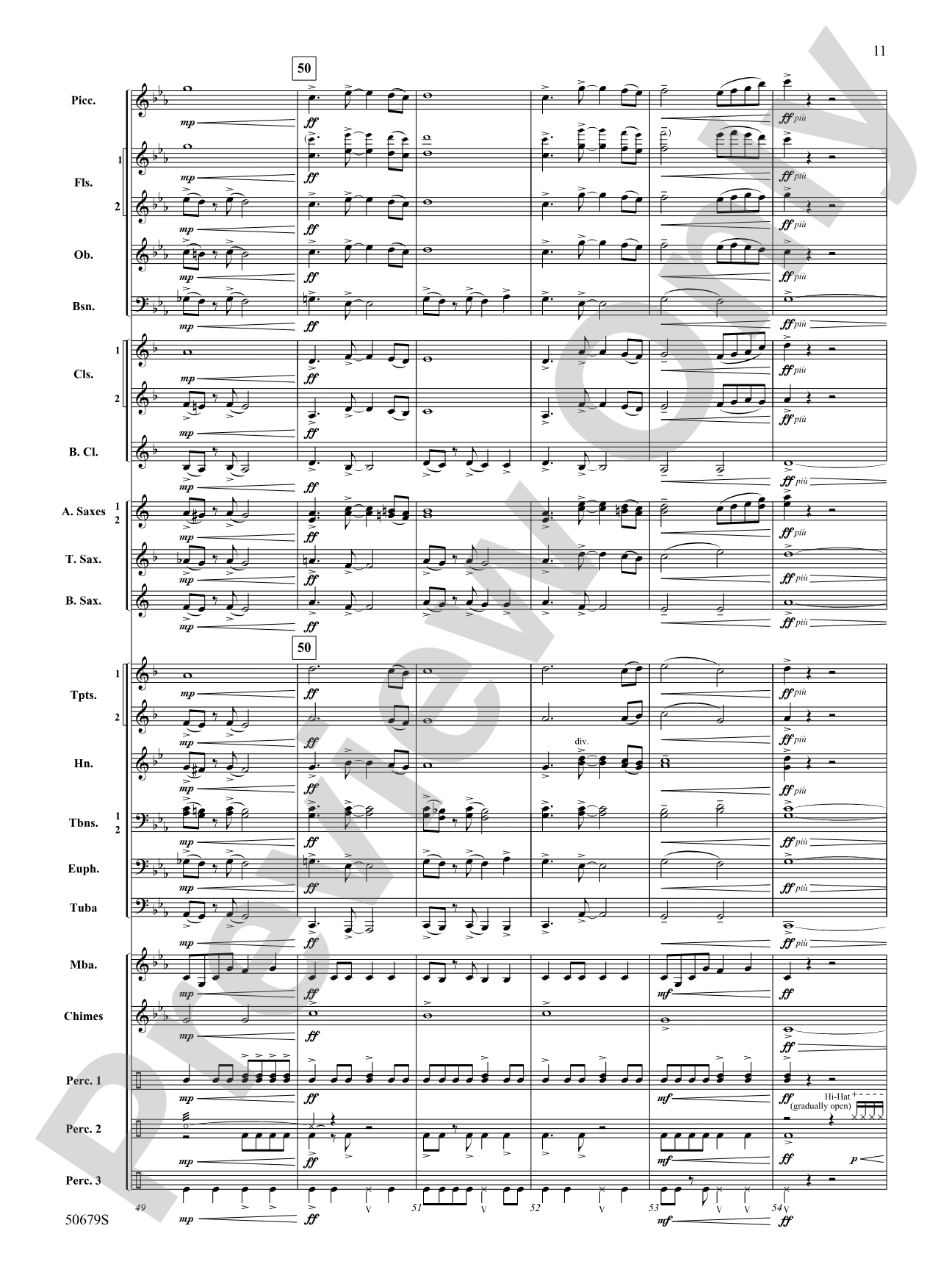
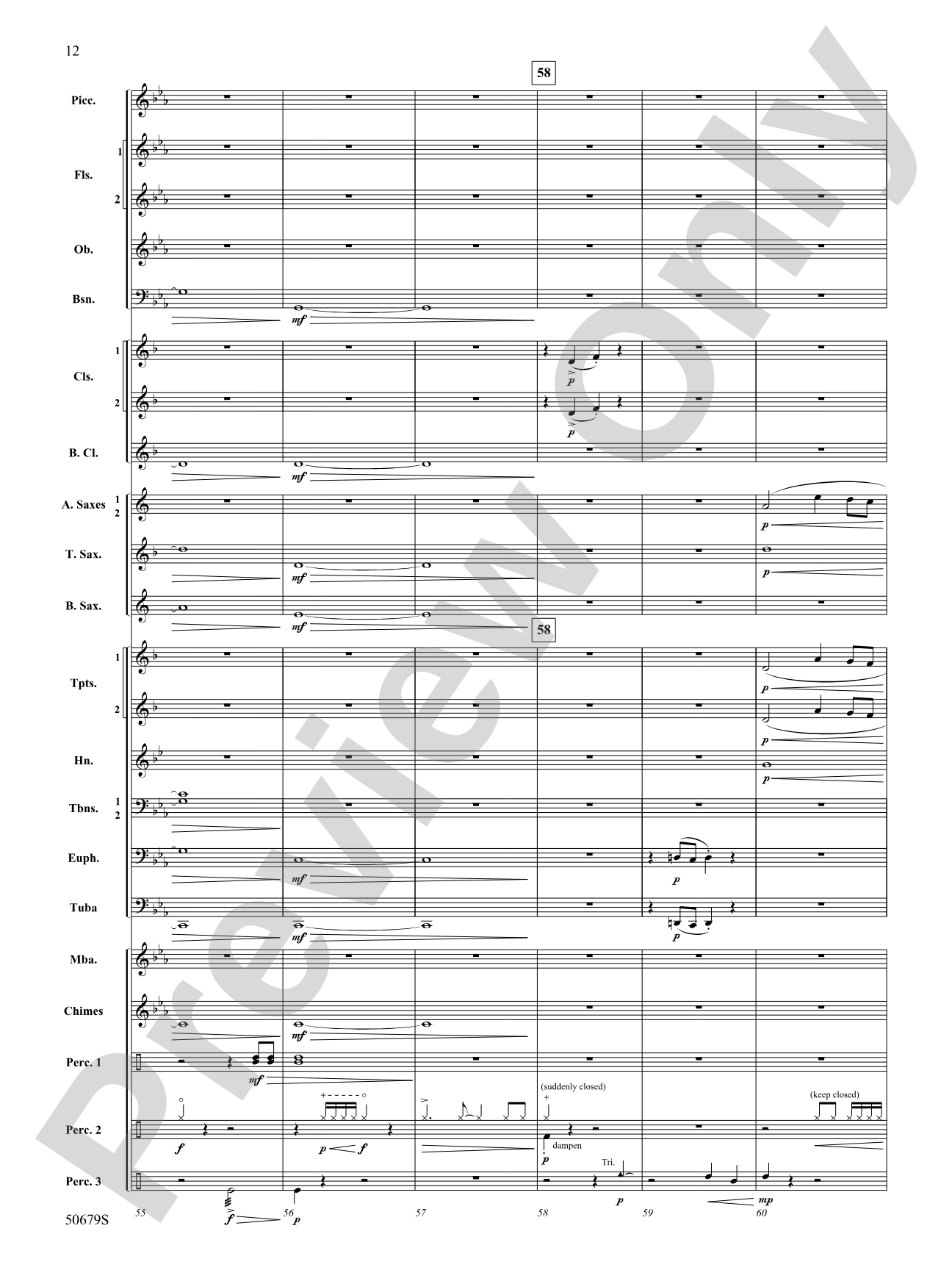
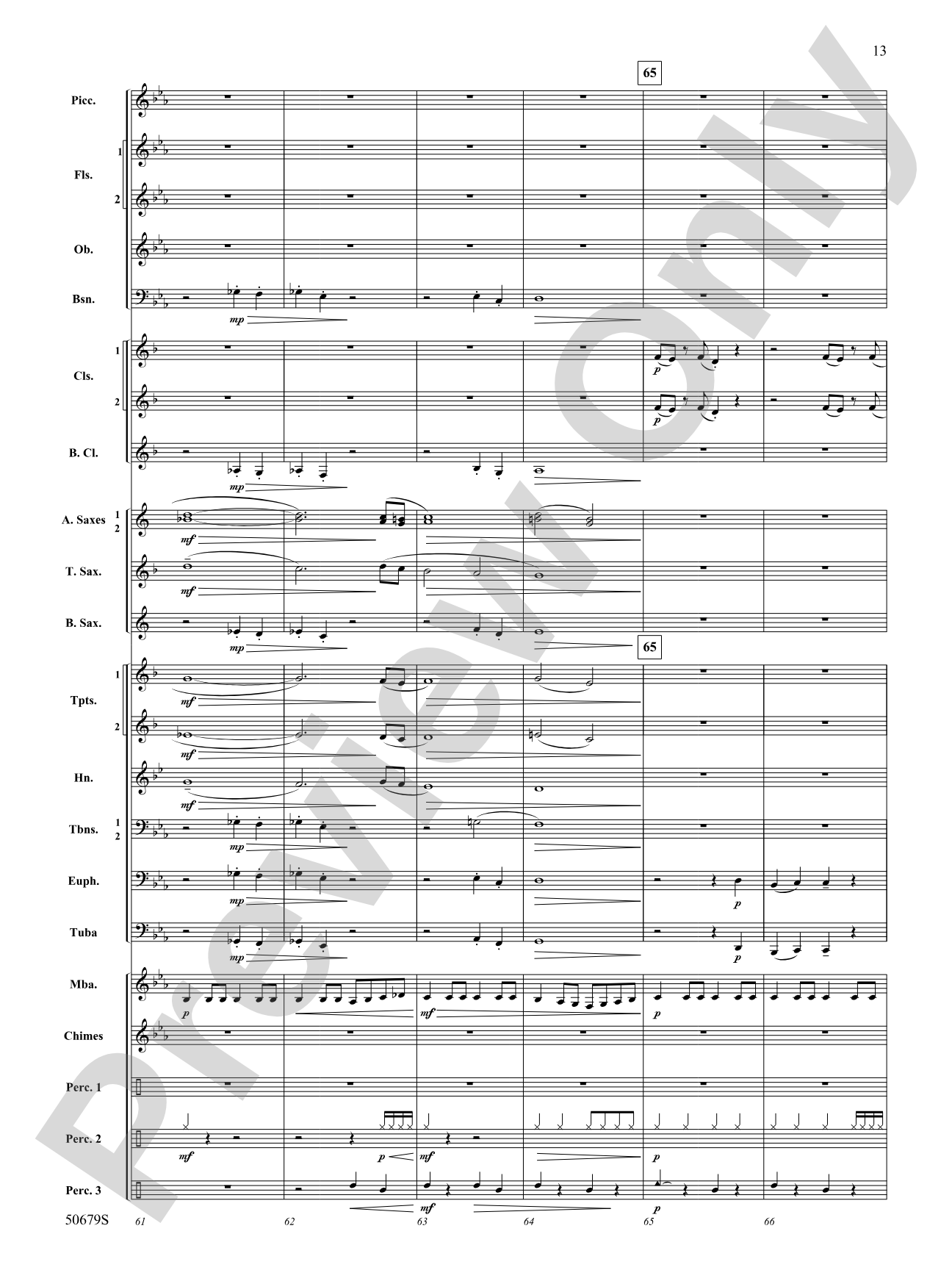
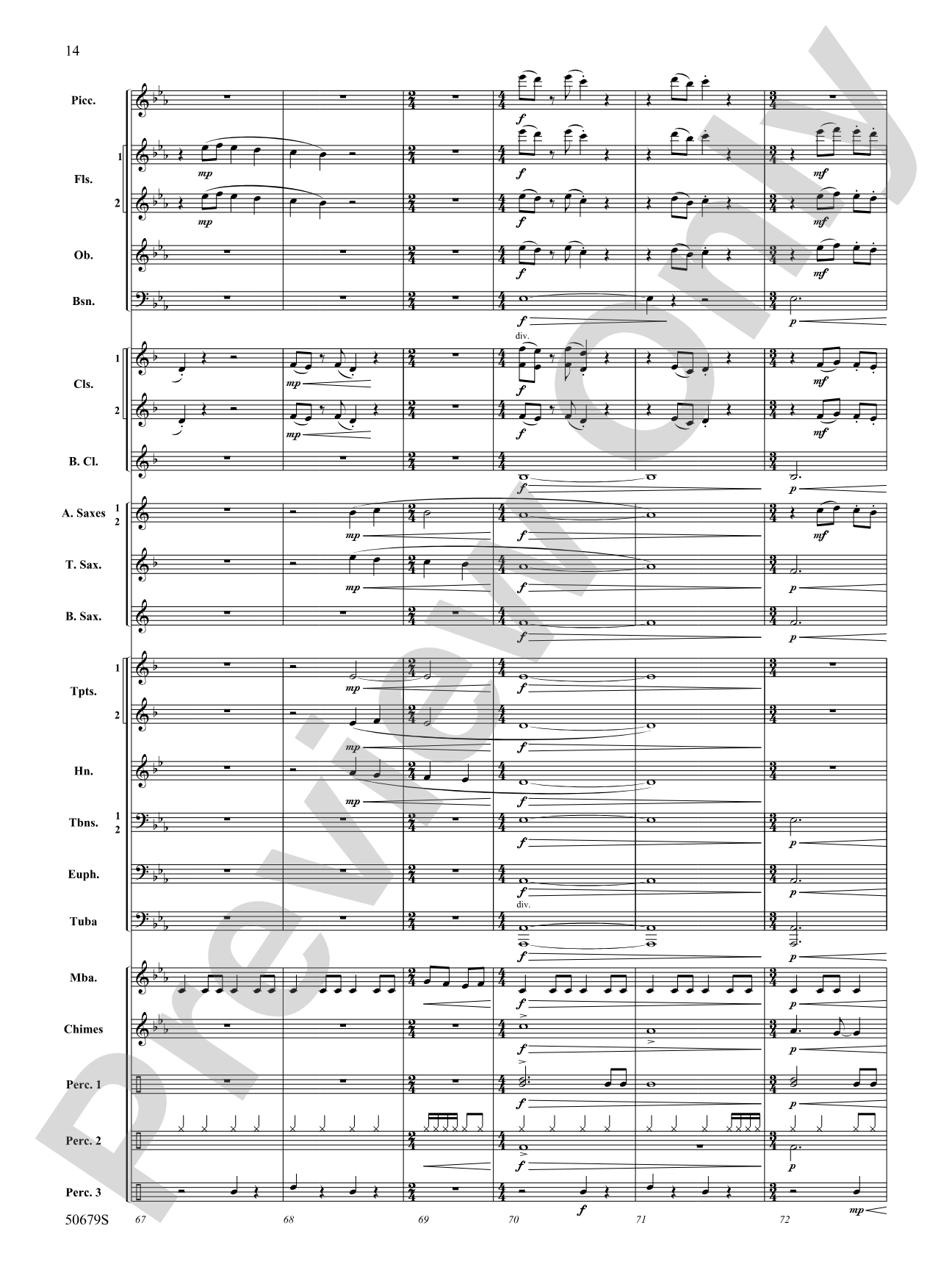
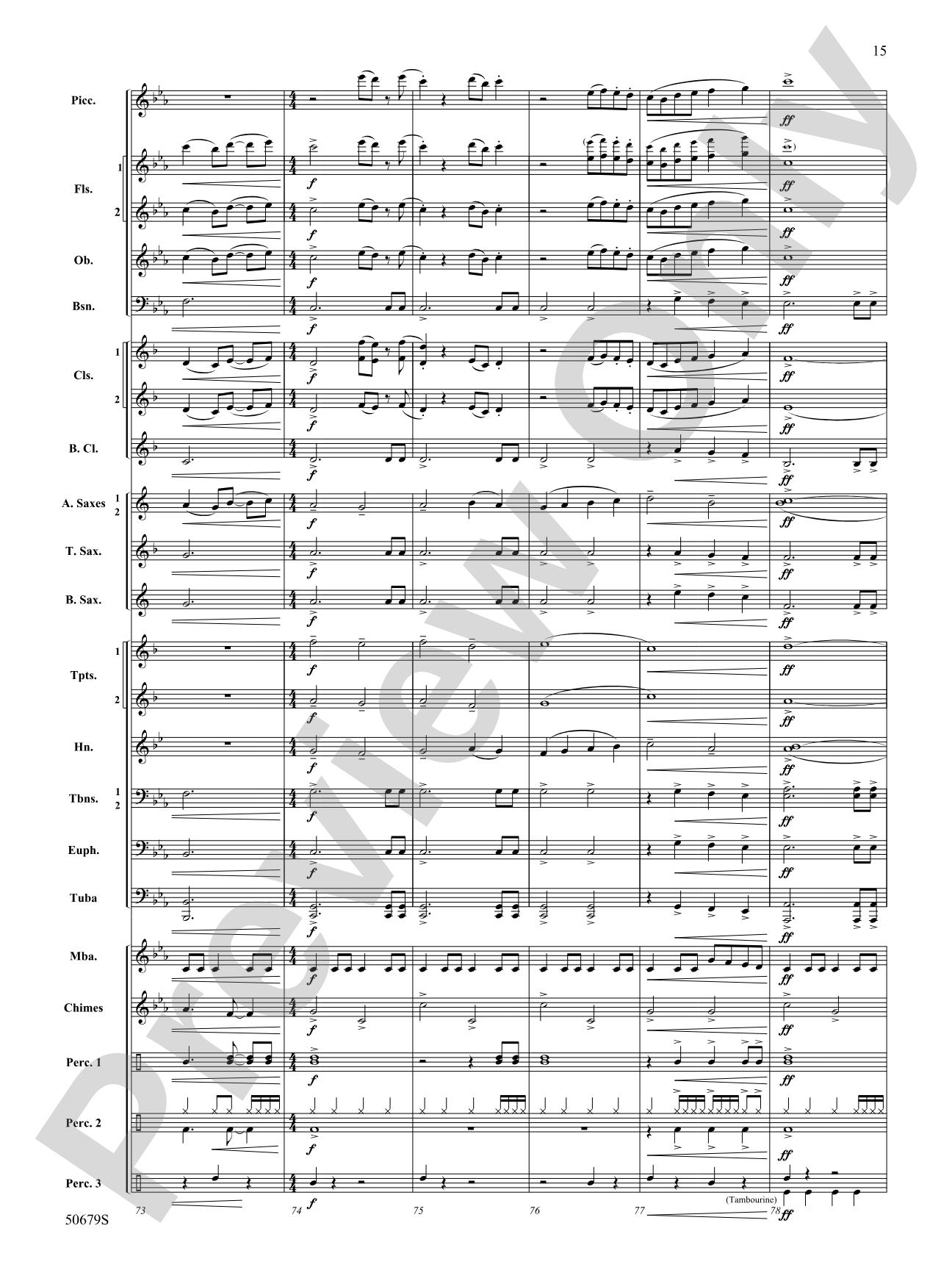
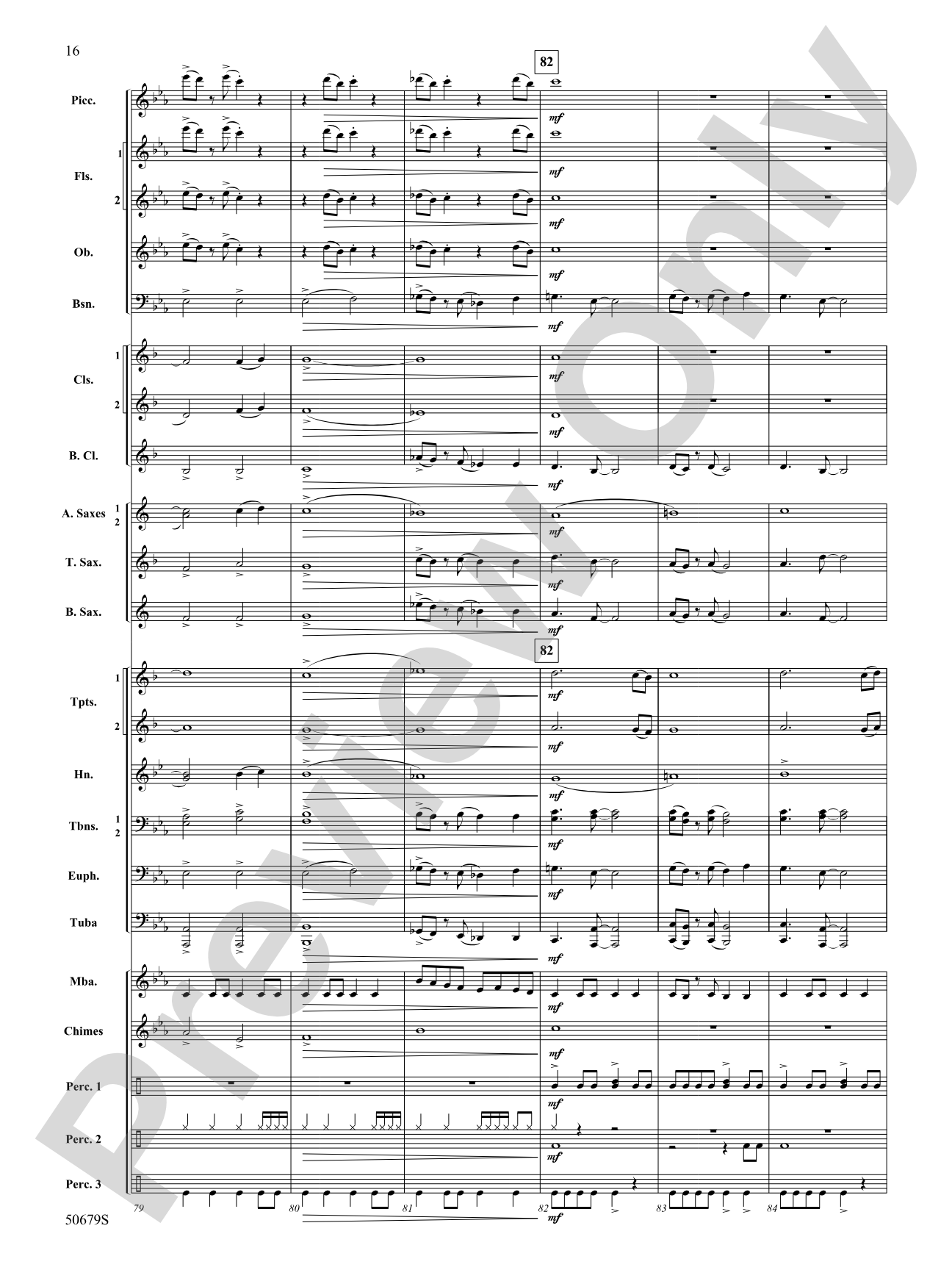
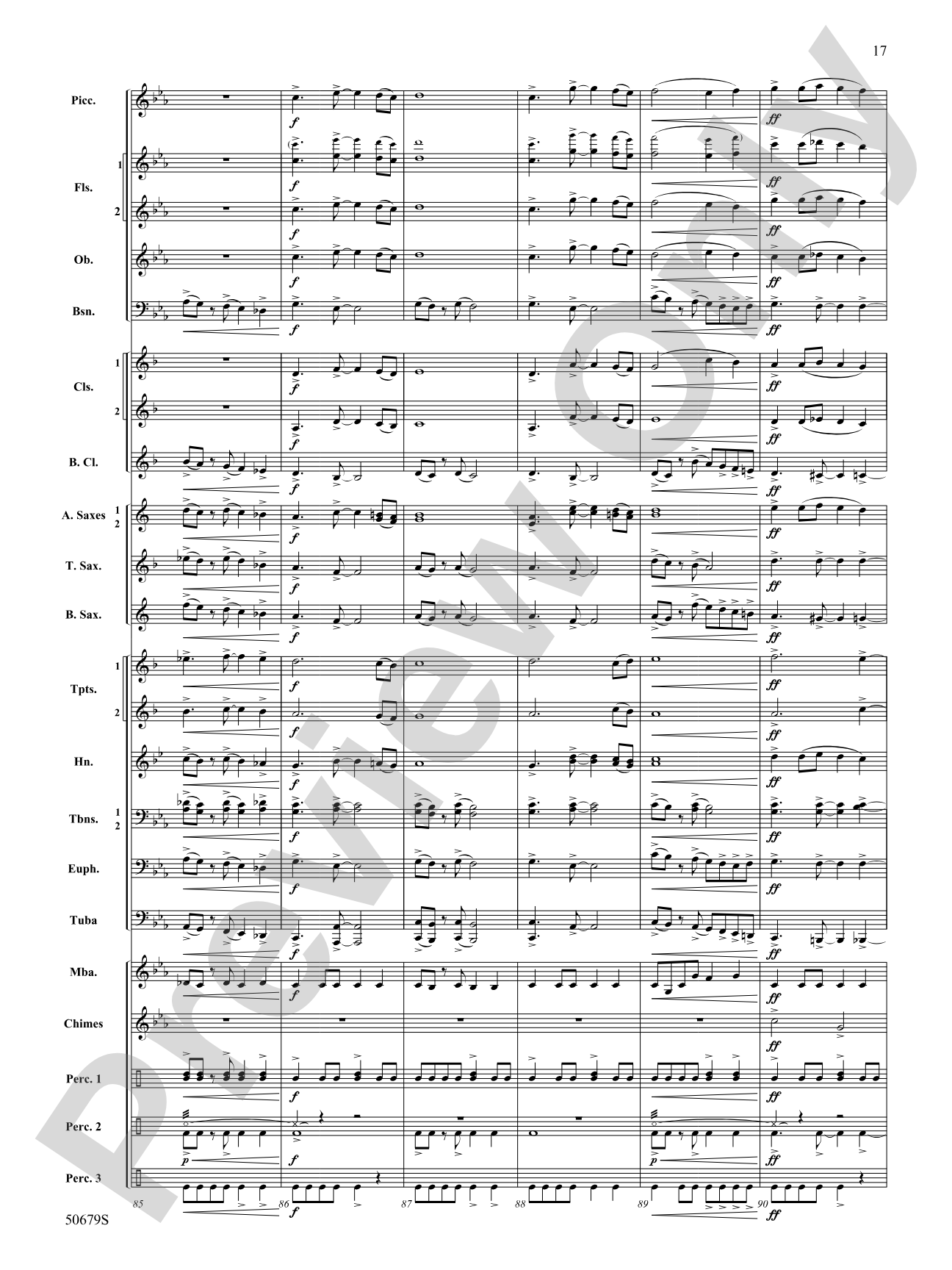
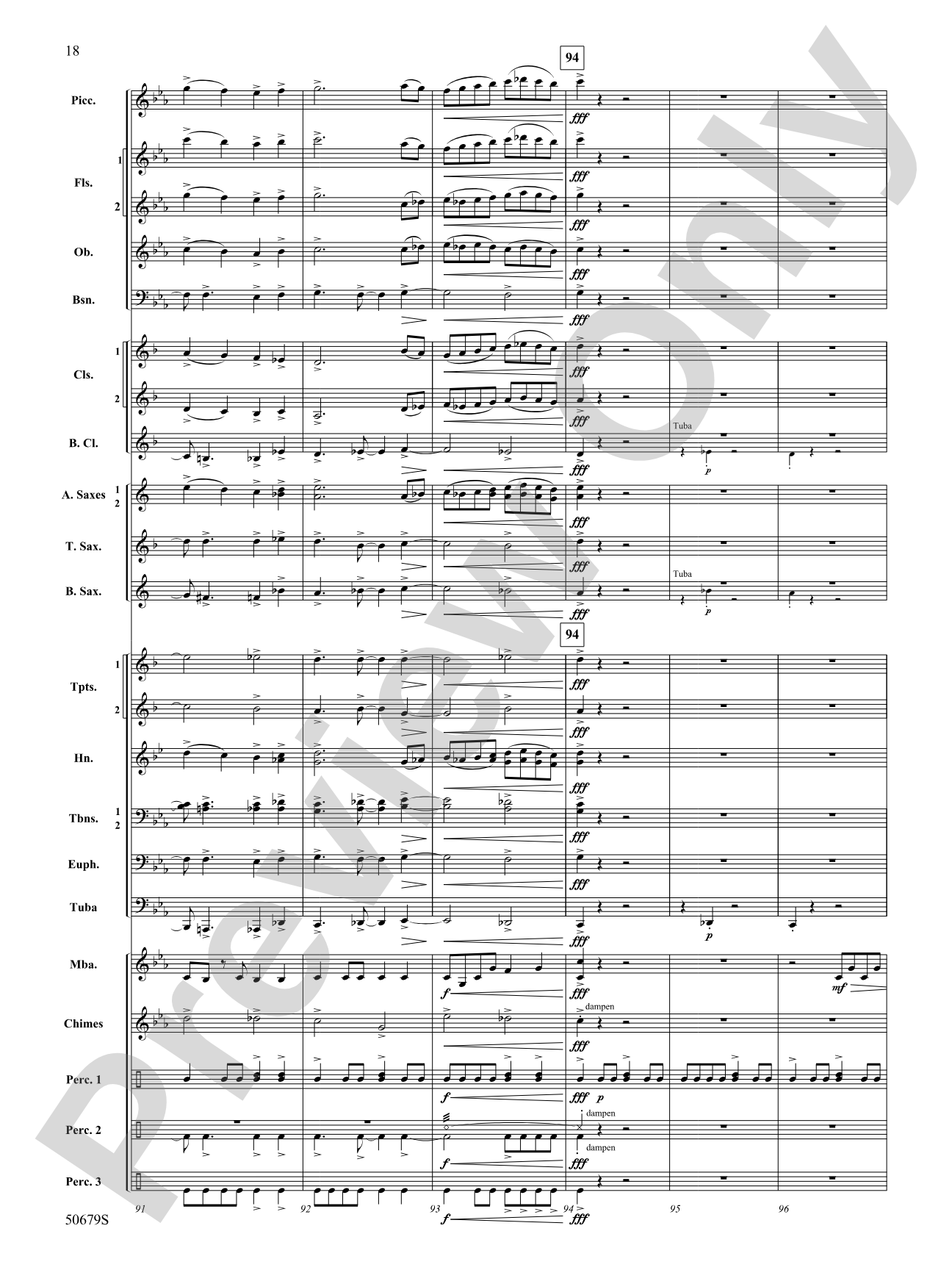
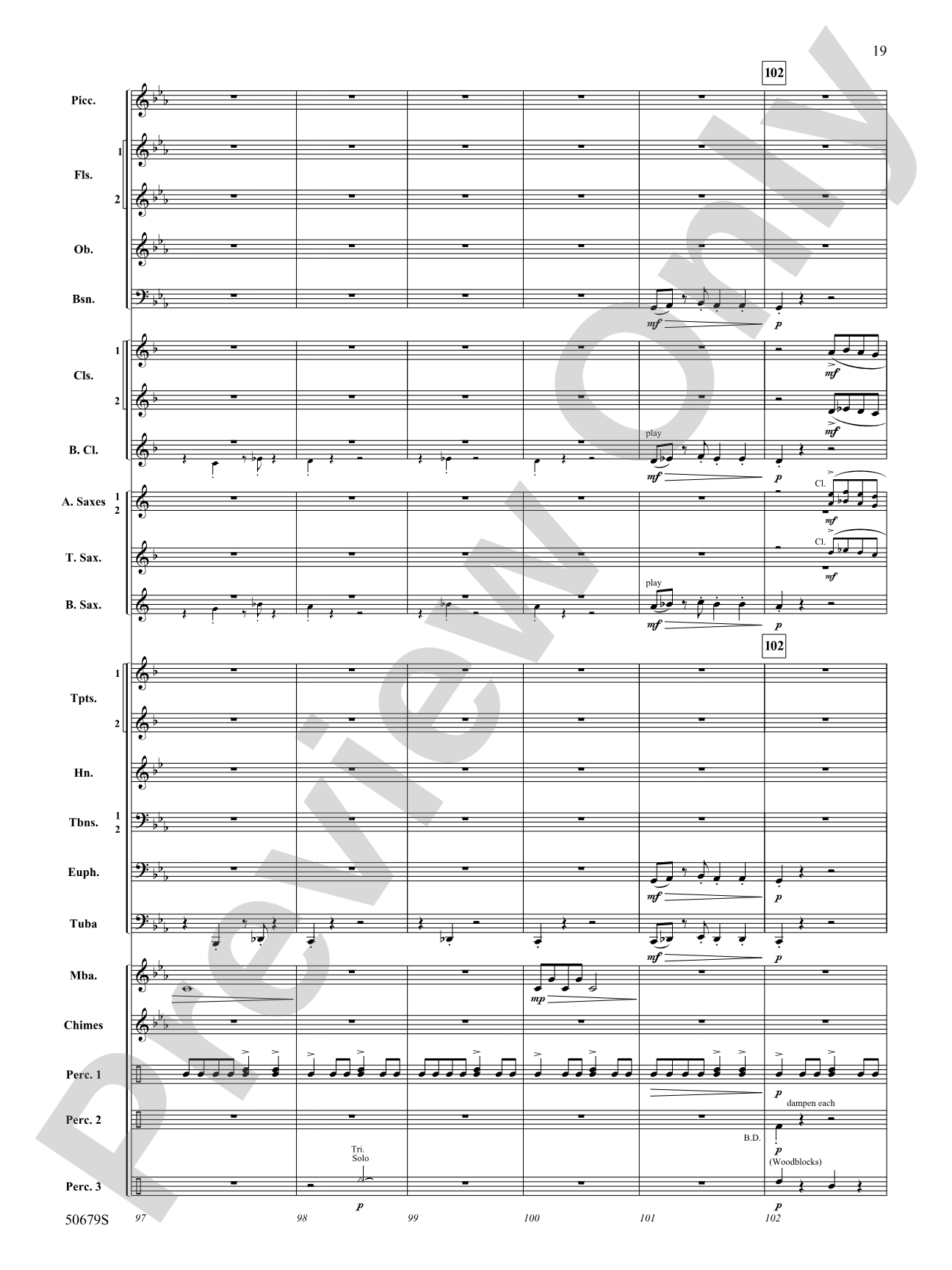
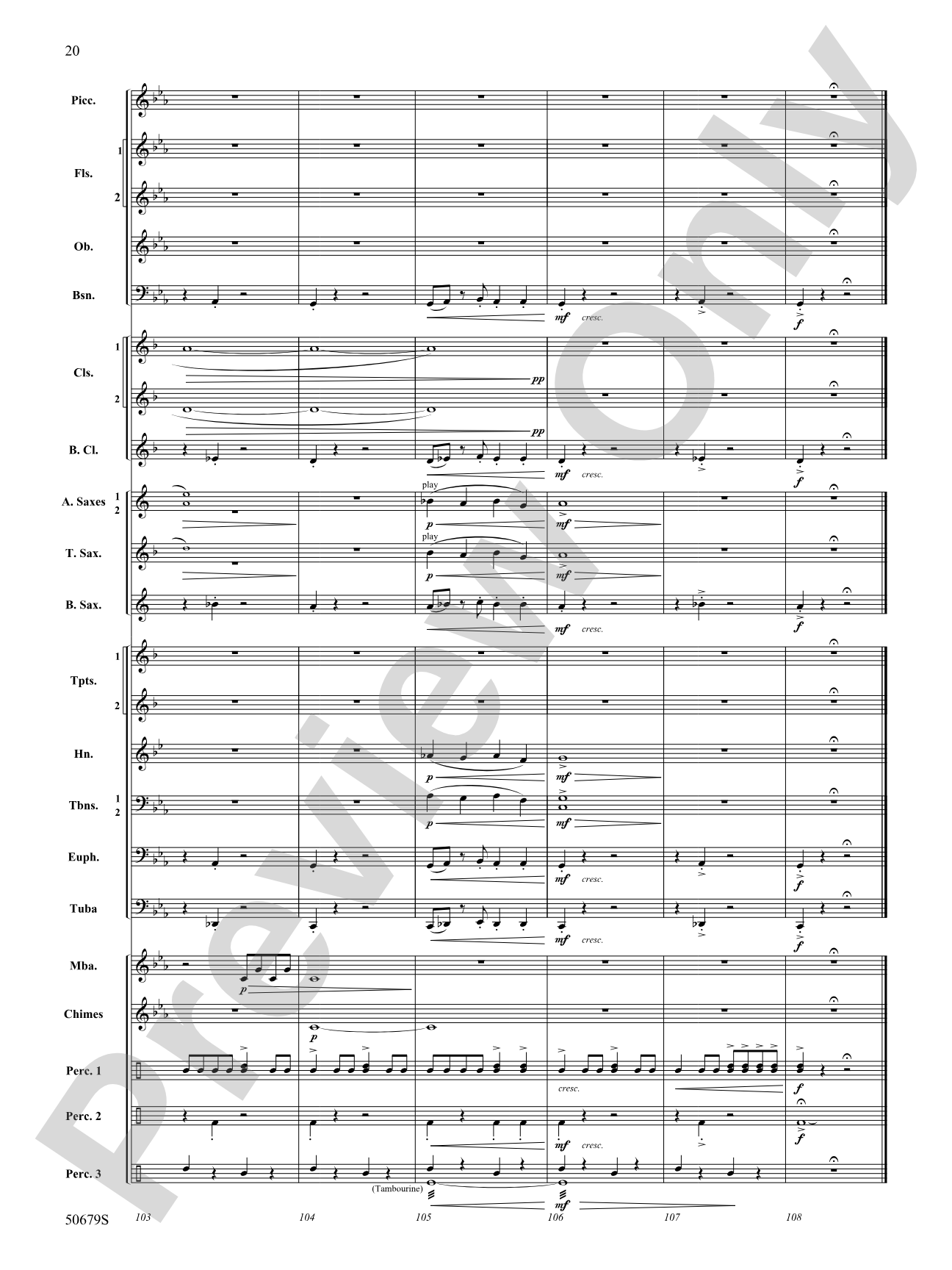

Three Minutes to Midnight: Concert Band Conductor Score & Parts
By JaRod Hall
Grade: 2
Item: 00-PK-0008782

$70.00
One moment…
Description
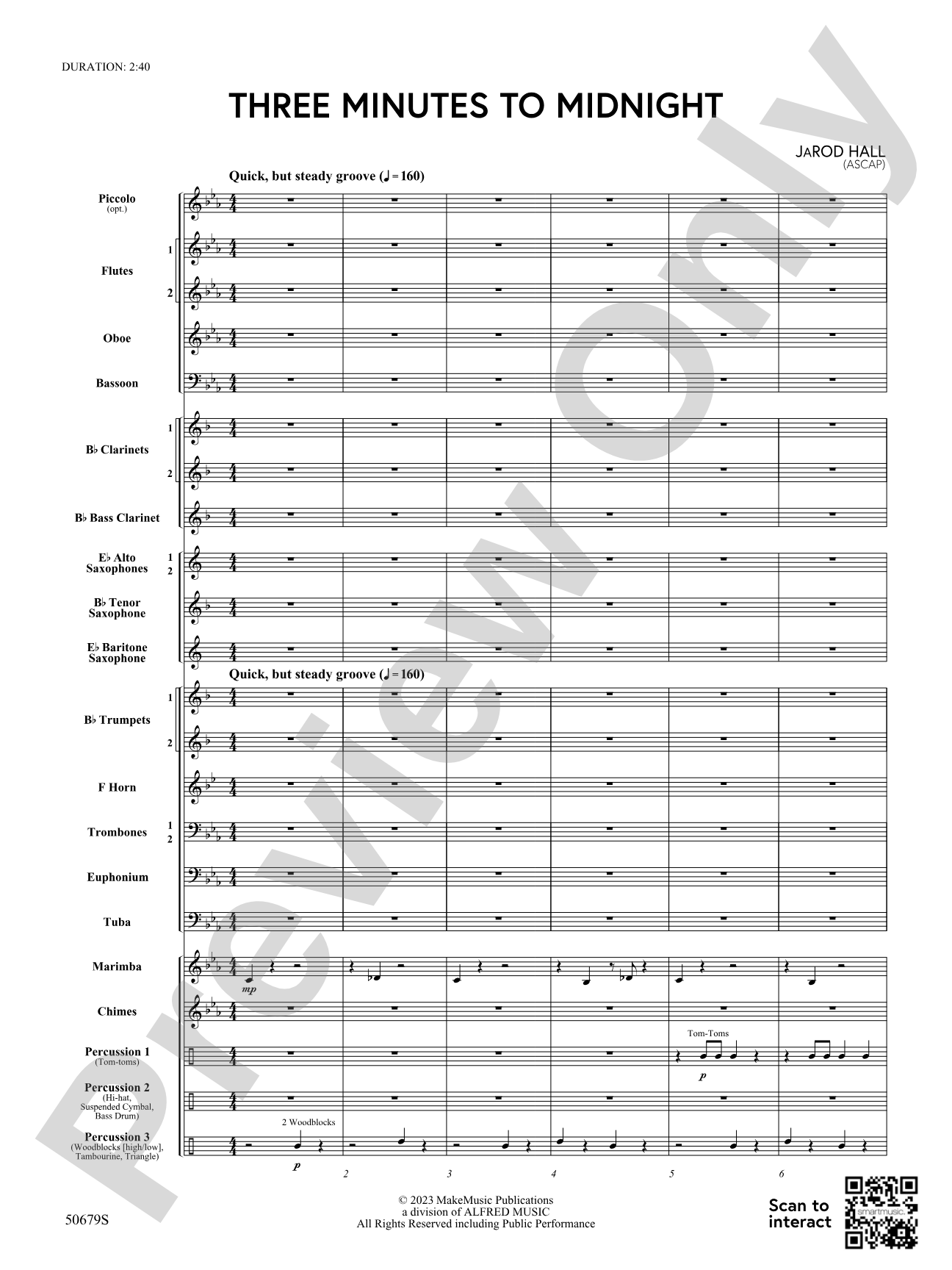
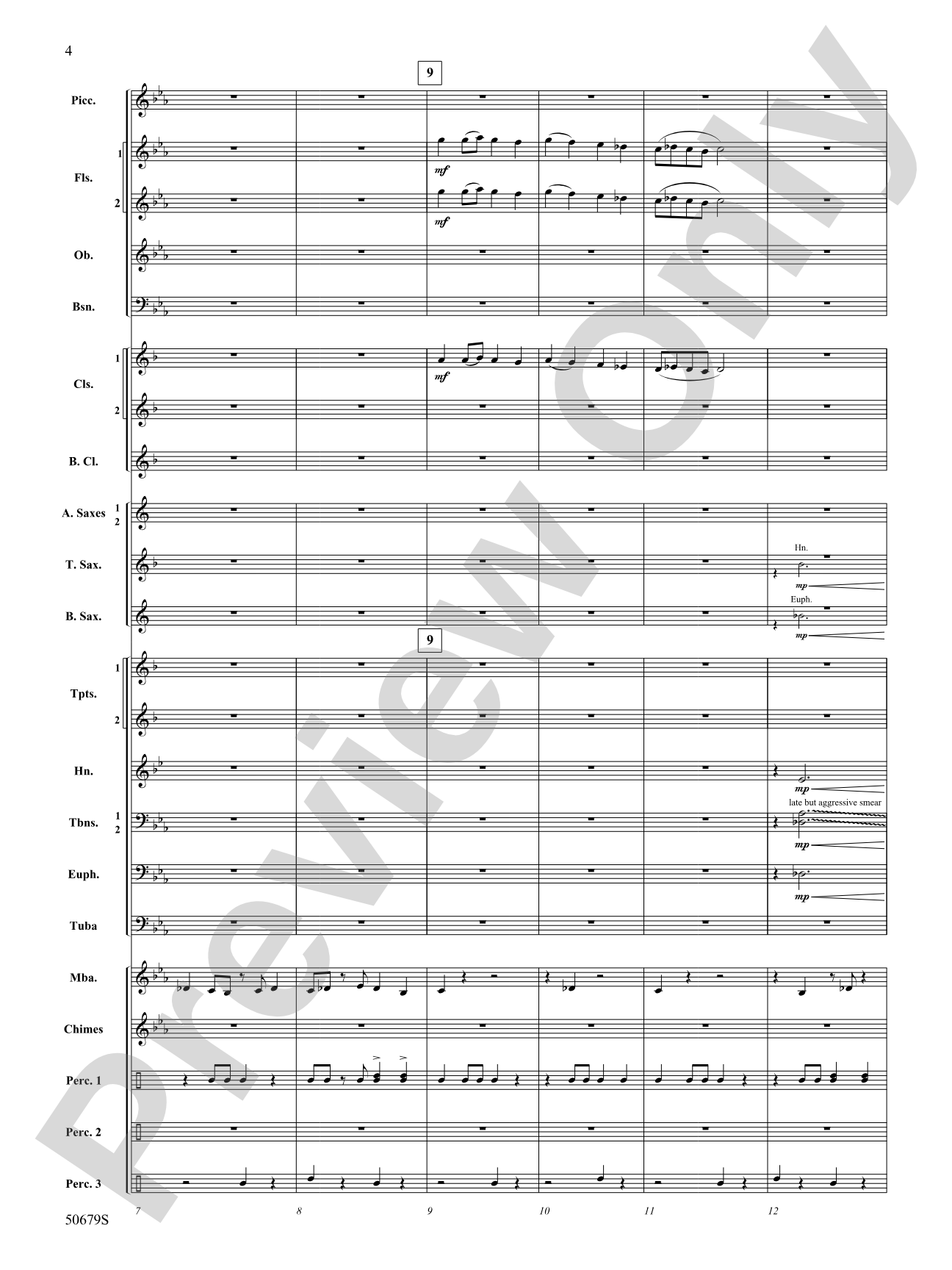
It's a race against the clock in this unique musical countdown that keeps listeners on the edge of their seats. Three Minutes to Midnight includes moments of eerie apprehension, which increase in tension as they build into heavy, raucous statements with great intensity. The Dies Irae theme pops in and out of the texture, introducing a sinister motif that indicates something much darker. Unique and colorful, this work exemplifies the creative genius of composer JaRod Hall! (2:40)


Don't just read it, hear it, play along with it, and watch your students grow with it. In MakeMusic Cloud, Three Minutes to Midnight: Concert Band Conductor Score & Parts comes alive with professional accompaniment, adjustable tempo, and built-in practice tools that turn solo practice into real progress.
Open in the Player
Jump straight in and assign it today.
Start Your Free Trial
Open this title and explore the full library in minutes.
Sample Audio
1
Audio File
--:--
0:00
0:00
Sample Video
Additional Details
Series:
MakeMusic Young Band
Publisher:
MakeMusic Publications
SKU:
00-PK-0008782
More about this title
About the Composer: JaRod Hall

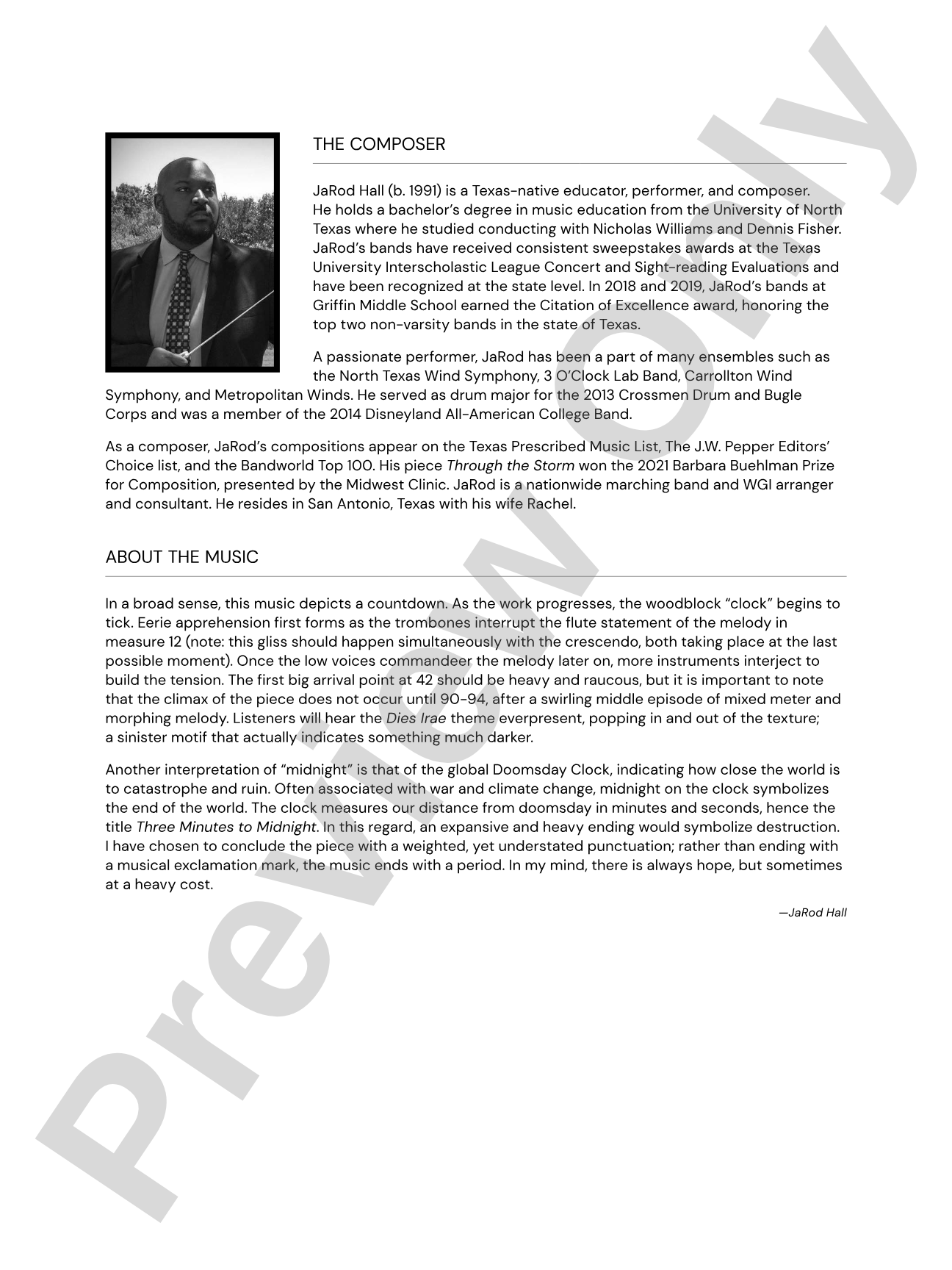
JaRod Hall brings a distinctive voice to contemporary band literature shaped by dual expertise in composition and ensemble direction. Born in 1991, he earned degrees in music education from the University of North Texas and composition from Texas State University, studying conducting with Dr. Nicholas Williams and Dr. Caroline Beatty while developing his compositional craft under Dr. Michael Ippolito and Dr. Jack Wilds. As a tubist and trombonist, he has performed with ensembles ranging from the North Texas Wind Symphony to the 2014 Disneyland All-American College Band, and he was selected as a four-year Texas All-State Band member, achieving principal status in jazz bass trombone.
Hall's eight years directing bands in Texas public schools demonstrate his commitment to student achievement and musical excellence. His ensembles earned consistent sweepstakes recognition at the University Interscholastic League evaluations, and in 2018, his non-varsity band at Griffin Middle School became the first in Frisco ISD history to receive the state-level Citation of Excellence. His compositions have earned substantial recognition, appearing on the Texas Prescribed Music List, the J.W. Pepper Editors' Choice list, and the Bandworld Top 100. His grade 2 work "Through the Storm" received the 2021 Barbara Buehlman Prize, and his brass composition "Silver Fanfare" won the 2020 Dallas Winds Call for Fanfares.
Why we love this
Hall constructs genuine dramatic arc within an accessible grade 2 frame, refusing to simplify the tension that makes a musical countdown work. The Dies Irae motif threading through the texture gives students a recognizable anchor while building increasingly sophisticated textures around it, making this ideal for bands ready to program something conceptually mature without excessive technical demands.
What to expect
Three Minutes to Midnight pulls listeners into a mounting sense of dread, beginning with sparse, unsettling textures that gradually swell into relentless, driving statements. The recurring Dies Irae theme acts as a dark reminder throughout, evoking the tension of a countdown where each moment brings something closer to an inevitable reckoning.
Who it's for
Grade 2 concert bands with solid fundamentals in dynamic control and sectional independence will find this work engaging and achievable. Ensembles preparing for festival or contest programming need a piece that commands attention through concept and arrangement rather than virtuosic display, and this delivers that in spades.
How to get the most out of it
- Shape the gradual acceleration toward the climax by monitoring tempo stability in the early sections; small, consistent adjustments in dynamics and articulation create the illusion of quickening intensity without rushing the underlying beat.
- Balance the Dies Irae theme carefully when it emerges within fuller textures so that listeners register the "sinister motif" rather than experiencing it as buried counterpoint.
- Use the dramatic contrast between the eerie, apprehensive passages and the heavy statements as your primary expressive tool; resist the urge to sustain intensity uniformly across the entire work.
How to use it
Open a concert with this piece to establish immediate dramatic engagement, or position it as a centerpiece that divides lighter material from your program's closing selections. The 2 minutes and 40 seconds runtime makes it ideal for festival schedules where impact matters as much as duration.
Skills your students will build
- Maintaining ensemble cohesion during gradual dynamic crescendos
- Executing precise articulation changes to reinforce harmonic and thematic shifts
- Recognizing and responding to recurring thematic motifs (Dies Irae) within evolving textures
- Interpreting programmatic content through musical expression