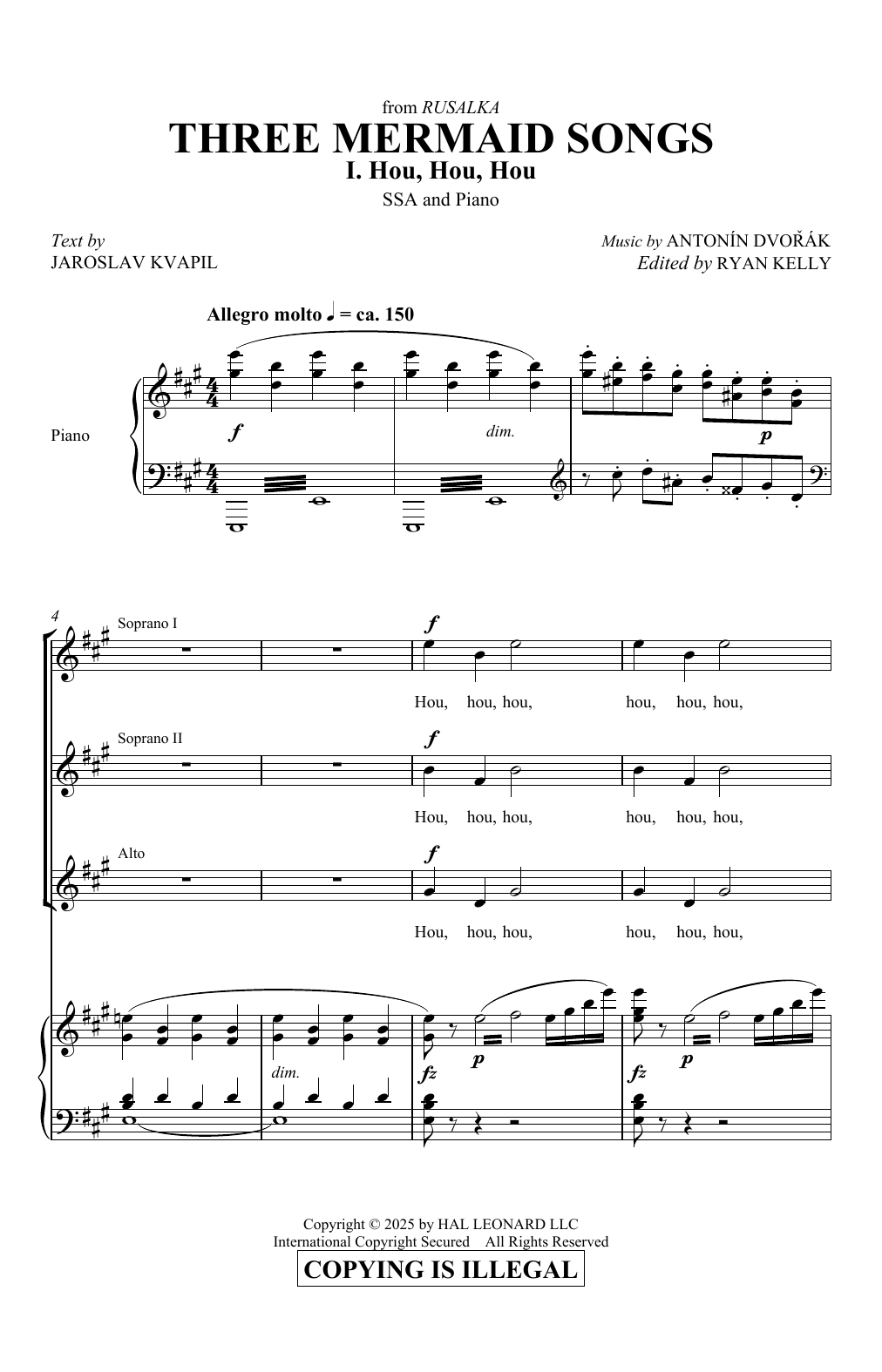
Three Mermaid Songs (from Rusalka) Sheet Music Preview

Three Mermaid Songs (from Rusalka): SSA Choral Octavo

By Antonín Dvorák / By Jaroslov Kvapil / Edited by Ryan Kelly

Item: 35-DS01682694

Digital Download
$4.25
Description

Three Mermaid Songs (from Rusalka): SSA Choral Octavo isn't in MakeMusic Cloud just yet...but it could be. Let us know you'd like to see it, and you'll help shape what comes next. In the meantime, start a free trial and dive into thousands of interactive titles your students can play along with today.

Sample Audio
No sample audio found.
Sample Video
Additional Details
Publisher: Hal Leonard
Page Count: 38
SKU: 35-DS01682694

More about this title

About the Composer: Antonín Dvorák

Antonín Dvořák (1841-1904) stands as one of the nineteenth century's most prolific and versatile composers, equally comfortable writing symphonies, chamber music, and opera. A Czech nationalist who drew deeply from folk traditions, Dvořák became the first composer from Central Europe to achieve international prominence at this scale, touring extensively and later serving as director of the National Conservatory in New York.

Rusalka, his fairy-tale opera composed in 1900, remains his most performed theatrical work. The opera tells the story of a water nymph's impossible love for a human prince, and Dvořák's score captures both the supernatural world's ethereal beauty and the emotional devastation of mortal longing. These three mermaid songs are among the work's most haunting moments, showcasing his gift for lyrical melody and harmonic subtlety.

Why we love this

Extracting operatic material for choir transforms what students might never otherwise encounter into repertoire that feels both sophisticated and singable. These three songs let singers inhabit a complete dramatic arc without requiring full operatic training, and the SSA voicing keeps the textures transparent enough for younger or developing choirs to manage the emotional weight without getting buried in complexity.

What to expect

Dvořák's water music carries an otherworldly quality that hovers between yearning and melancholy. The orchestration shimmers with impressionistic touches while the vocal lines carry sweeping, almost Romantic intensity that builds from introspection to passionate declaration. These are songs about longing sung by voices not quite of this world.

Who it's for

Advanced high school choirs, college and university ensembles, and semi-professional groups looking to expand their connection to opera literature without tackling a full stage production. This works equally well for choirs seeking concert repertoire with genuine dramatic weight and artistic depth.

How to get the most out of it

  • Shape each song as a complete narrative moment rather than three separate pieces. The arc from one to the next creates cumulative impact, so vary your tempos and dynamic profiles consciously between them.
  • Pay close attention to Dvořák's harmonic language, which often moves through unexpected colors. Let suspended chords and chromatic voice leading breathe rather than rushing through them.
  • Balance the soprano line's soaring quality against the inner voices, which carry important harmonic and textural information. A soprano-dominant sound will flatten the orchestral richness Dvořák built into these arrangements.
  • Consider the texts carefully. Even without staging, small dramatic choices in phrasing and vocal color will help singers embody the mermaid's perspective and make the performance resonate.

How to use it

Build a concert around themes of myth and transformation, pairing these songs with other operatic excerpts or programmatic choral works. They also fit beautifully as a thematic unit within a larger pops or holiday concert that explores world cultures and storytelling traditions. The substantial page count and dramatic coherence suggest positioning them as a major work rather than filler between lighter selections.

Skills your students will build

  • Singing sustained legit lines with controlled vibrato and vocal stamina
  • Navigating chromatic voice leading and unexpected harmonic progressions
  • Balancing blend across SSA voicing while maintaining textural clarity
  • Interpreting text expressively and embodying character perspective within instrumental arrangement
  • Reading and executing dynamic and tempo nuance in operatic context

You May Also Like