
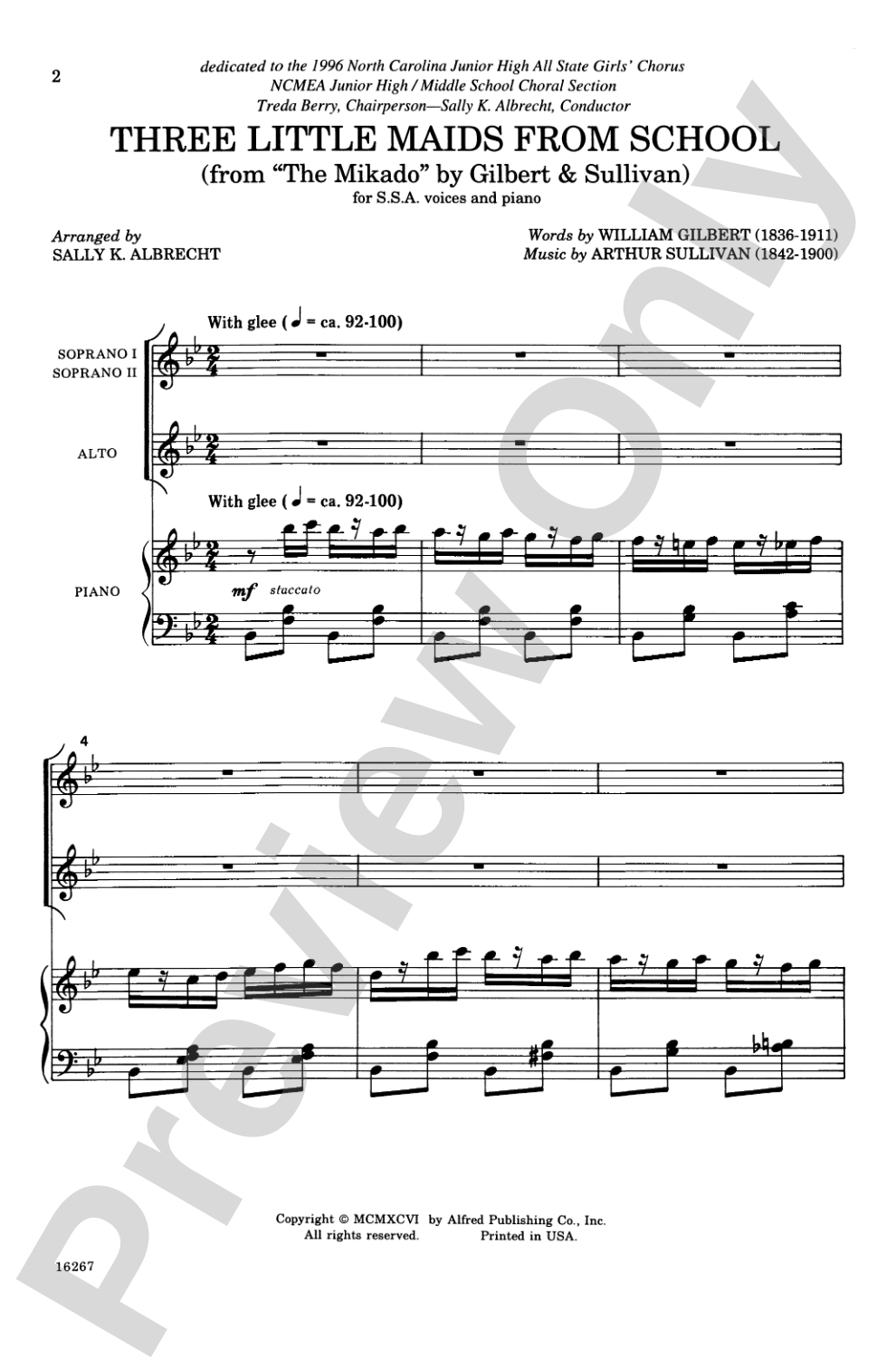
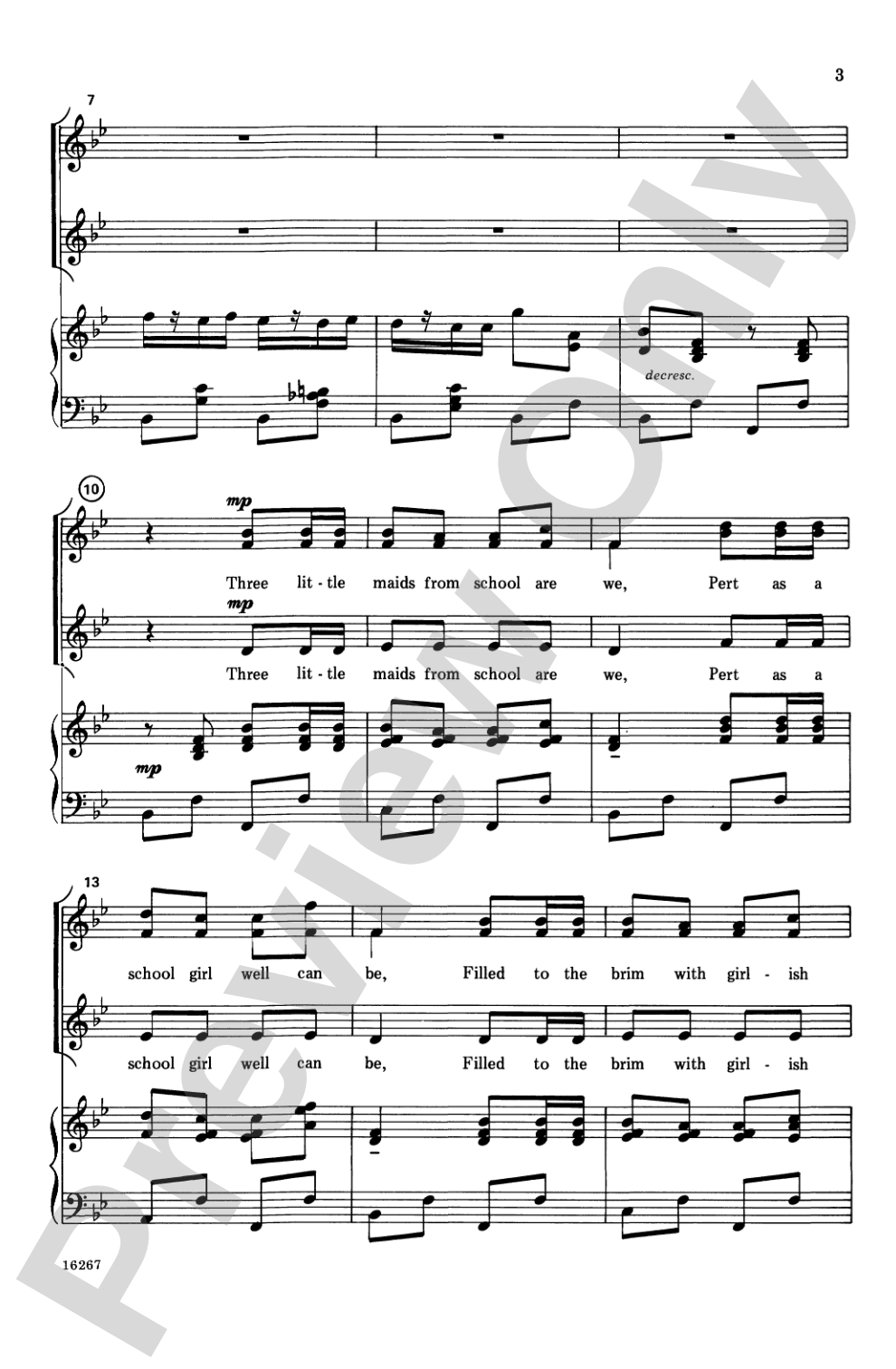
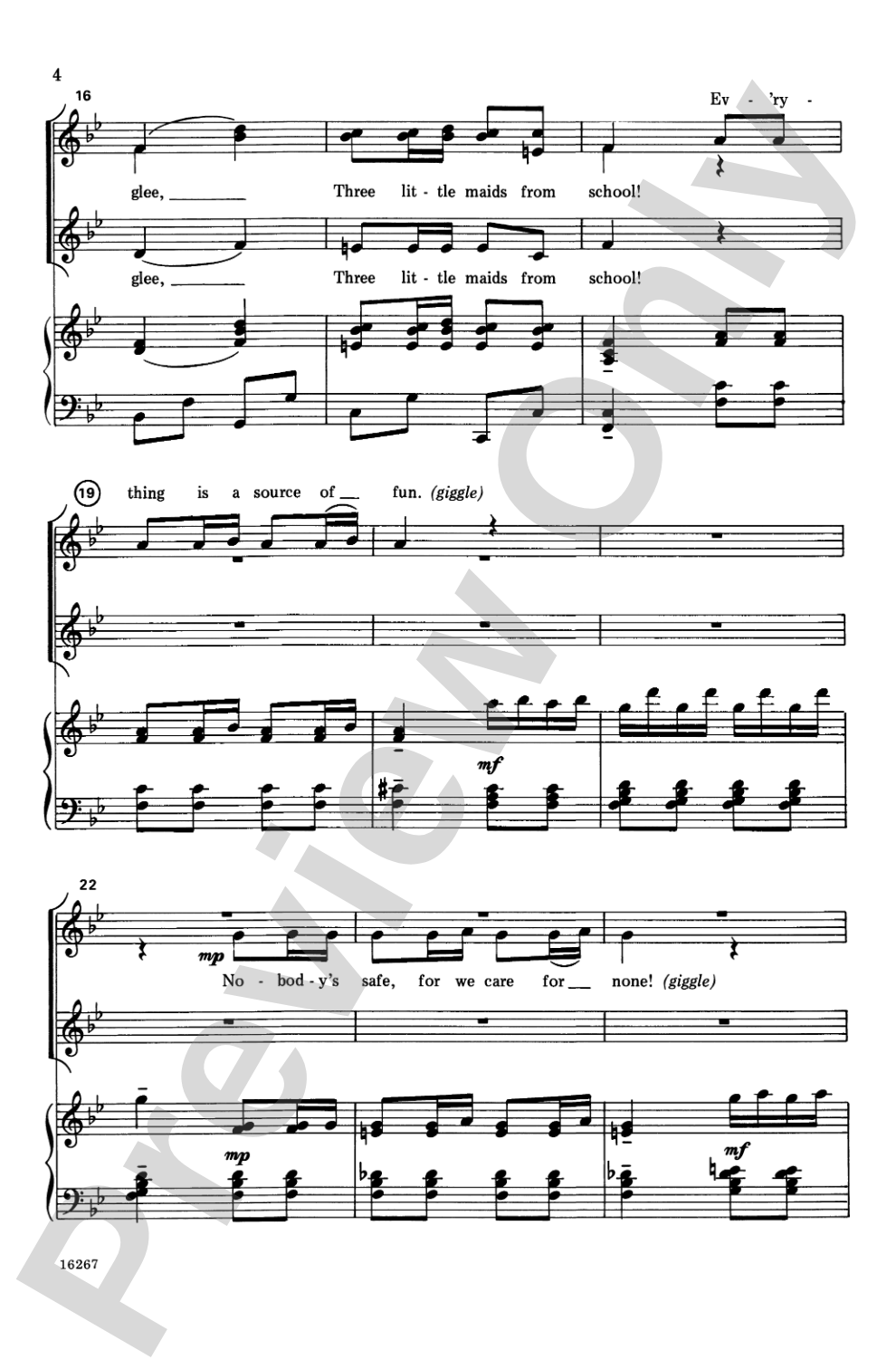

Three Little Maids from School (from The Mikado): SSA Choral Octavo
Music by William S. Gilbert and Arthur S. Sullivan / arr. Sally K. Albrecht
Item: 00-PO-0003124
$2.05
Minimum order quantity: 20 copies
Pickup currently not available
Related Items
Three Little Maids from School (from The Mikado): SSA Choral Octavo |
$2.05
|
View |
Description
A great SSA arrangement for women's ensembles! Each voice part gets a chance to sing the melody. Straightforward, full-sounding choral arranging. Includes historical notes and background information. Optional staging suggestions with fans featured on alfred.com.


Three Little Maids from School (from The Mikado): SSA Choral Octavo isn't in MakeMusic Cloud just yet...but it could be. Let us know you'd like to see it, and you'll help shape what comes next. In the meantime, start a free trial and dive into thousands of interactive titles your students can play along with today.
Request This Title
Tell us you want it.
Start Your Free Trial
Explore everything that's ready to play right now.
Sample Audio
1
Audio File
--:--
0:00
0:00
Sample Video
No sample videos found.
Additional Details
Series:
Alfred Archive Edition: Alfred Choral Designs
Publisher:
Alfred Music
Page Count:
12
SKU:
00-PO-0003124
More about this title
About the Composer: William S. Gilbert
William S. Gilbert (1836-1911) was an English dramatist and librettist whose partnership with composer Arthur Sullivan created the foundation of English comic opera. Gilbert's gift for witty, satirical lyrics and clever rhyme schemes brought social commentary to musical theater while maintaining broad accessibility. His work remains central to choral repertoire because the melodies are memorable, the humor transcends time, and the texts invite expressive, character-driven singing from performers at every level.
Gilbert's legacy in music education extends beyond his famous operas. His ability to balance humor with musical craftsmanship means that arrangers can extract standalone numbers like "Three Little Maids from School" and create satisfying concert pieces that engage audiences while building singers' confidence and musicality.
Why we love this
Albrecht's arrangement gives all three voice parts genuine melodic material, so every singer feels heard rather than relegated to accompaniment duty. The straightforward harmonic language lets ensembles focus on characterization and blend without wrestling with complex part-writing, and the optional staging suggestions with fans provide a natural entry point for directors who want to move beyond a concert-only presentation.
What to expect
Playful, bright, and infectious. The melody bounces with mischievous energy, and the text delivers comedy through rapid-fire phrasing and clever internal rhymes. The full, three-part sonority feels both rich and buoyant, creating a sense of theatrical confidence rather than weightiness.
Who it's for
This arrangement serves SSA ensembles (high school, college, community choirs, and women's music programs) who want to tackle a beloved Gilbert and Sullivan number without the demands of a full operatic score. Singers at developing-to-intermediate levels will find the vocal range and part-writing accessible, while the theatrical context invites genuine musical characterization.
How to get the most out of it
- Bring out the humor in the text by shaping phrases for clarity and keeping articulation crisp; the wit lands when audiences can hear every syllable.
- Balance the three voices so each melody line cuts through during its moment of prominence, then blend evenly when all three sing together.
- Use the staging suggestions as a springboard rather than a requirement; even simple synchronized fan gestures can enhance character without overwhelming rehearsal time.
- Lock the harmonic foundation by having each section practice their part independently first, then layer parts gradually to build listening skills and confidence.
How to use it
This is an ideal concert opener or closer for a program focused on musical theater, British music, or music from operetta. It also works beautifully on spring or end-of-year concerts where you want something that delights audiences and showcases your ensemble's personality. The 12-page length and straightforward arranging mean you can prepare it alongside heavier repertoire without overextending rehearsal focus.
Skills your students will build
- Singing rapid text and diction in English opera style
- Balancing melody and harmony in a three-part texture
- Character work and dramatic expression in a secular, comedic context
- Blending three distinct voice parts into unified ensemble sound
- Responding to staging and movement while maintaining vocal control