
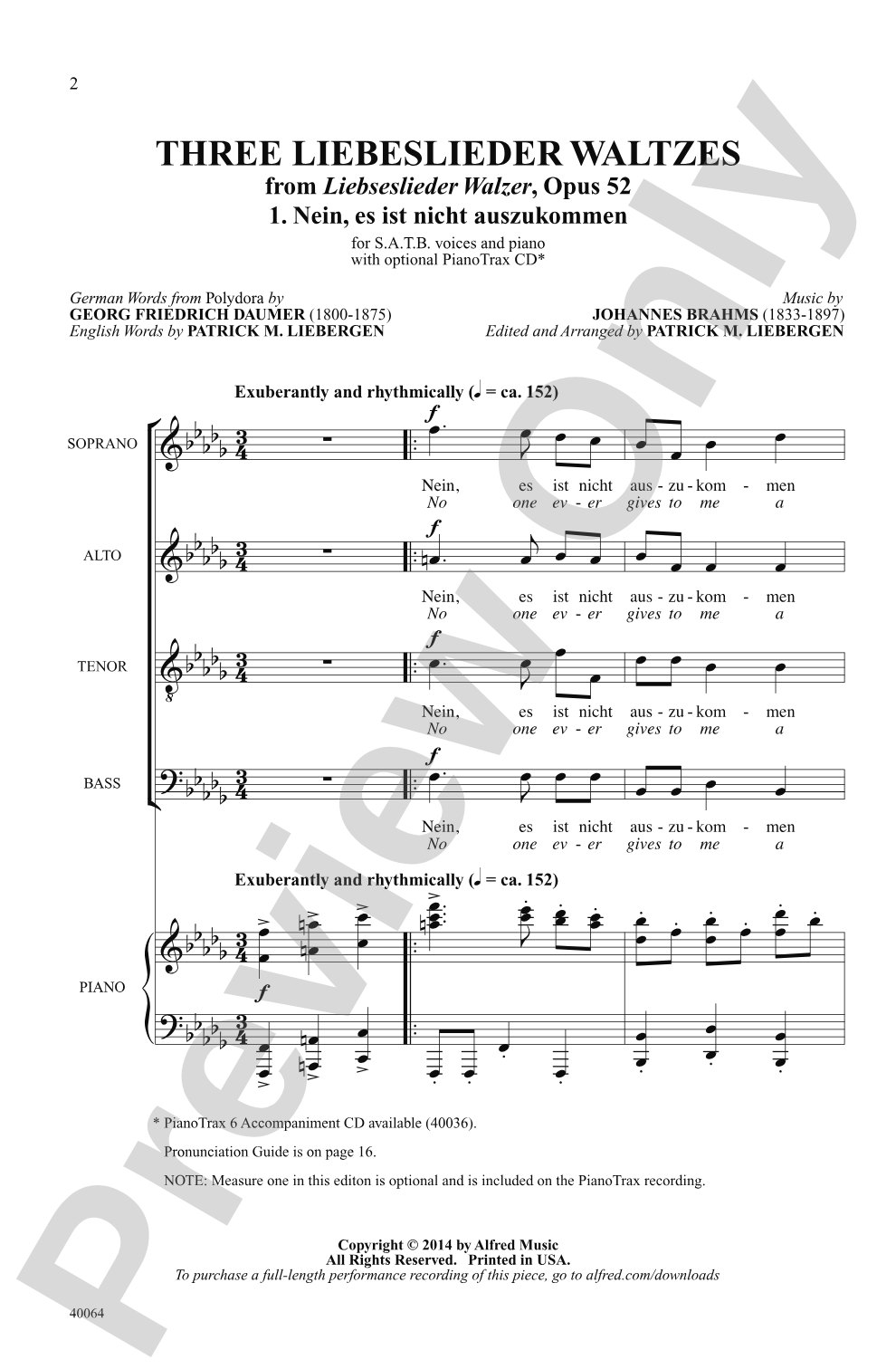

Three Liebeslieder Waltzes (from Liebeslieder Walzer, Opus 52): SATB Choral Octavo
Words from Polydora by Georg Friedrich Daumer, music by Johannes Brahms / ed. and arr. Patrick M. Liebergen
Item: 00-PO-0001776
$1.95
Minimum order quantity: 20 copies
Pickup currently not available
Description
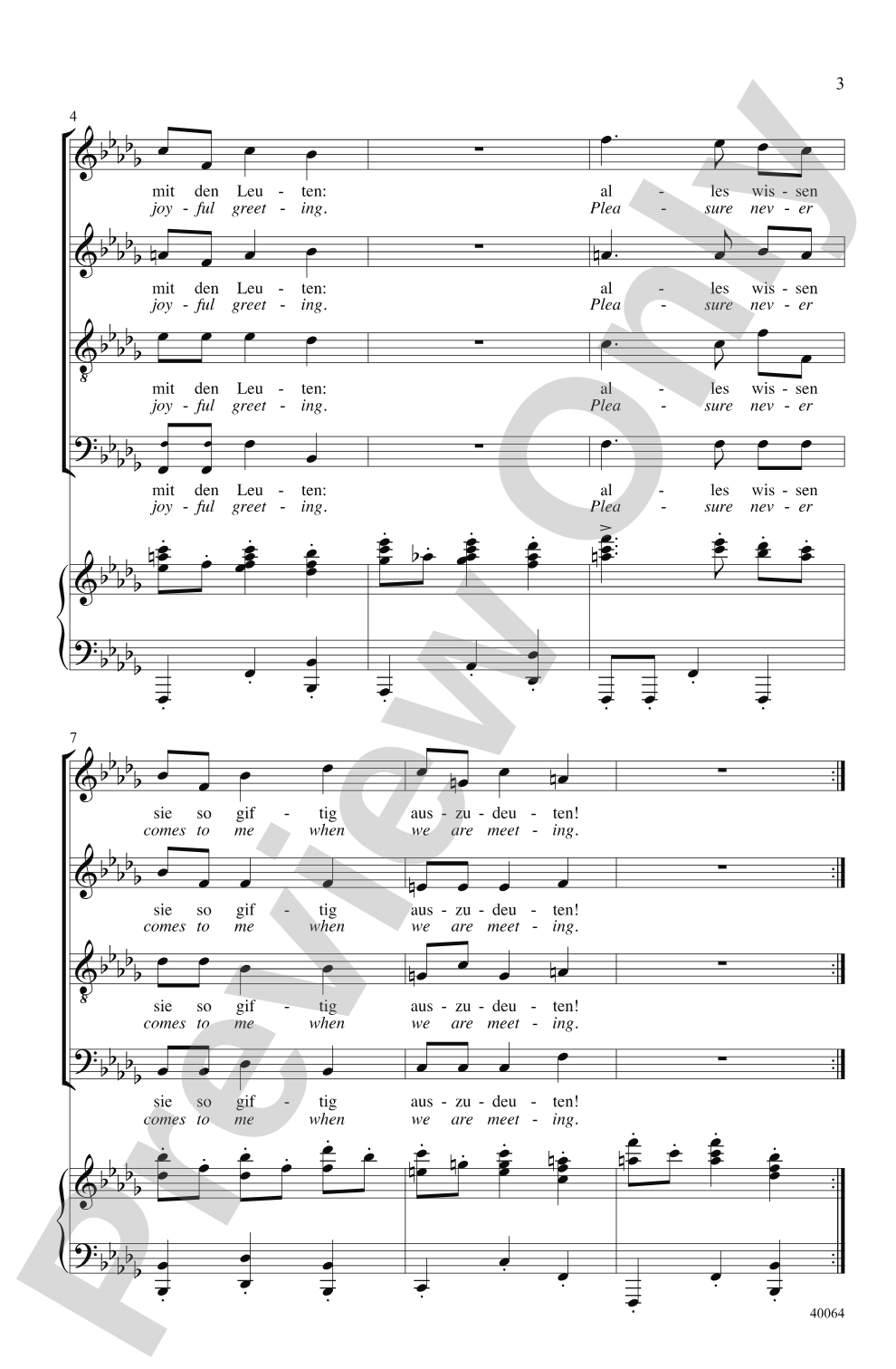
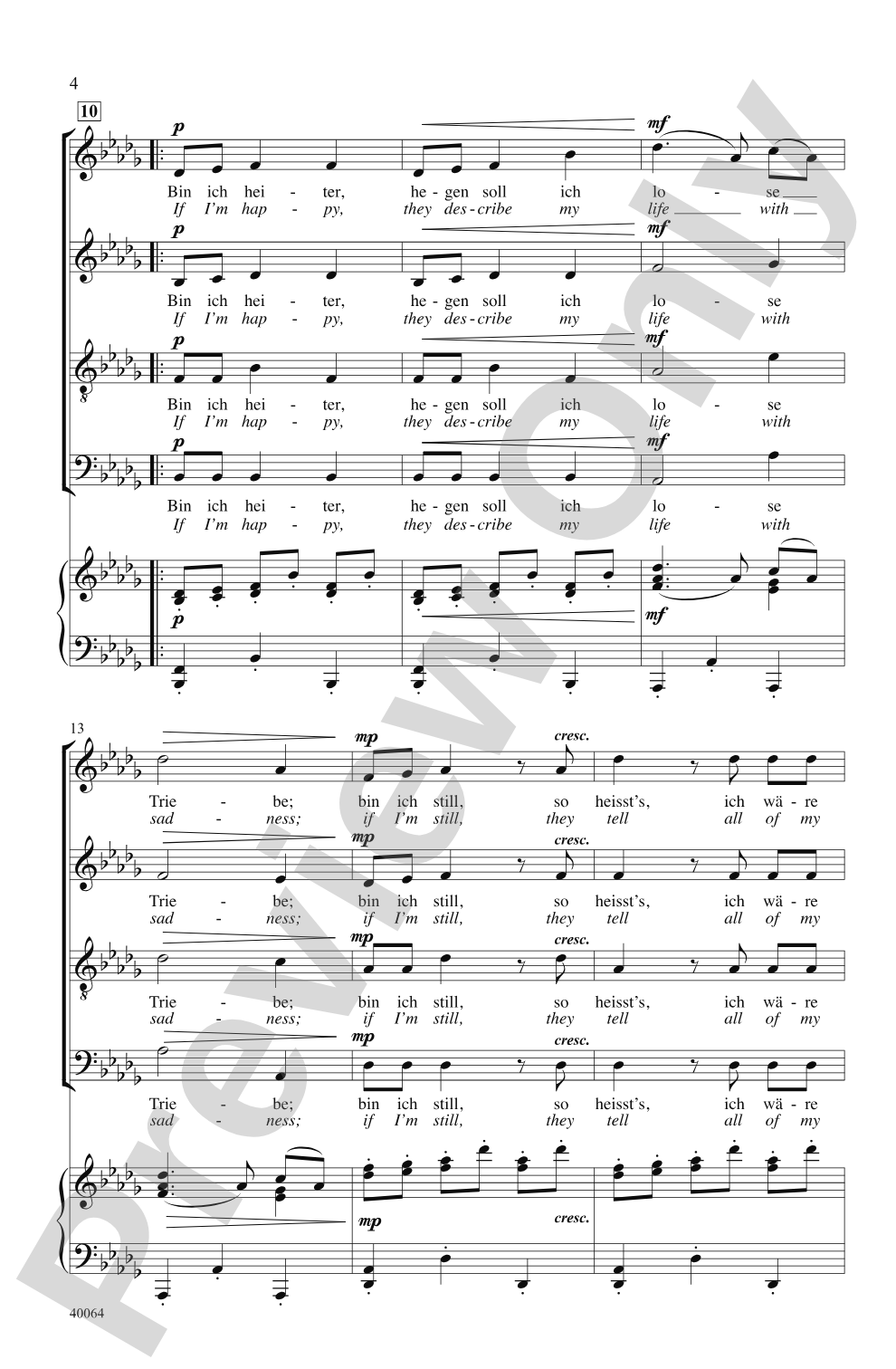
Perform one, two, or all three of these carefully selected movements from one of Brahms' most famous choral works. The original four-hand piano part has been condensed for a single player, while maintaining the integrity of the Romantic era accompaniment. Well-suited for choirs of distinction.


Three Liebeslieder Waltzes (from Liebeslieder Walzer, Opus 52): SATB Choral Octavo isn't in MakeMusic Cloud just yet...but it could be. Let us know you'd like to see it, and you'll help shape what comes next. In the meantime, start a free trial and dive into thousands of interactive titles your students can play along with today.
Request This Title
Tell us you want it.
Start Your Free Trial
Explore everything that's ready to play right now.
Sample Audio
1
1 Three Liebeslieder Waltzes - 1
--:--
2
2 Three Liebeslieder Waltzes - 2
--:--
3
3 Three Liebeslieder Waltzes - 3
--:--
1 Three Liebeslieder Waltzes - 1
0:00
0:00
Sample Video
No sample videos found.
Additional Details
Series:
Alfred Choral Designs
Publisher:
Alfred Music
Page Count:
16
SKU:
00-PO-0001776
More about this title
About the Composer: Johannes Brahms
Johannes Brahms (1833-1897) stands as one of the nineteenth century's most consequential composers, bridging Romantic expression with Classical formal rigor. His choral works span sacred and secular genres; the Liebeslieder Walzer represents his gift for transforming simple song forms into emotionally nuanced ensemble experiences that reward both singers and listeners with warmth, sophistication, and memorable melodic invention.
Why we love this
Brahms' Liebeslieder Walzer occupies a special place in the choral canon: it's sophisticated enough to showcase a choir's artistry, yet the waltz idiom makes it accessible and genuinely enjoyable to perform. This arrangement respects the elegance of Brahms' original piano writing while freeing you from needing two pianists, making a masterwork that felt out of reach suddenly practical for ambitious community and collegiate choirs.
What to expect
These waltzes shimmer with nostalgic warmth and courtly grace. The harmonic language glows with Brahms' signature richness, and the interplay of voices creates an intimate dance floor feeling even in full four-part harmony. There's an underlying sweetness that never tips into sentimentality.
Who it's for
Choirs with solid musicianship and steady intonation will find these movements rewarding; they're ideal for groups competing in festivals or preparing a concert centered on Romantic choral gems. Singers should be comfortable with independent melodic lines and text expression in German.
How to get the most out of it
- Shape each phrase as a dancer would shape a waltz line; the beauty lies in gently swelling and receding through natural rubato rather than mechanical phrasing.
- Balance the text clarity with the lilt of the waltz meter; articulate consonants cleanly but let vowels sing across the three-beat pulse.
- Coordinate with your pianist on pedal; the condensed accompaniment relies on sympathetic resonance to evoke the original four-hand texture, so rehearse transitions together.
- Work the soprano and alto lines separately in early rehearsals to establish the lyrical independence Brahms expects from upper voices before full-section blend.
How to use it
Program these as a triptych to showcase choral versatility within a single work, or select individual movements to anchor a Romantic era set alongside Schubert or Mendelssohn. The movable difficulty and optional use of one, two, or all three selections lets you scale the programming to your timeline and ensemble depth.
Skills your students will build
- Singing independent melodic lines while maintaining harmonic awareness
- Shaping phrase arcs and managing rubato within a metric framework
- Clarity of German text with musical legibility
- Ensemble blend across closely voiced SATB writing
- Collaborative musicianship with piano accompaniment