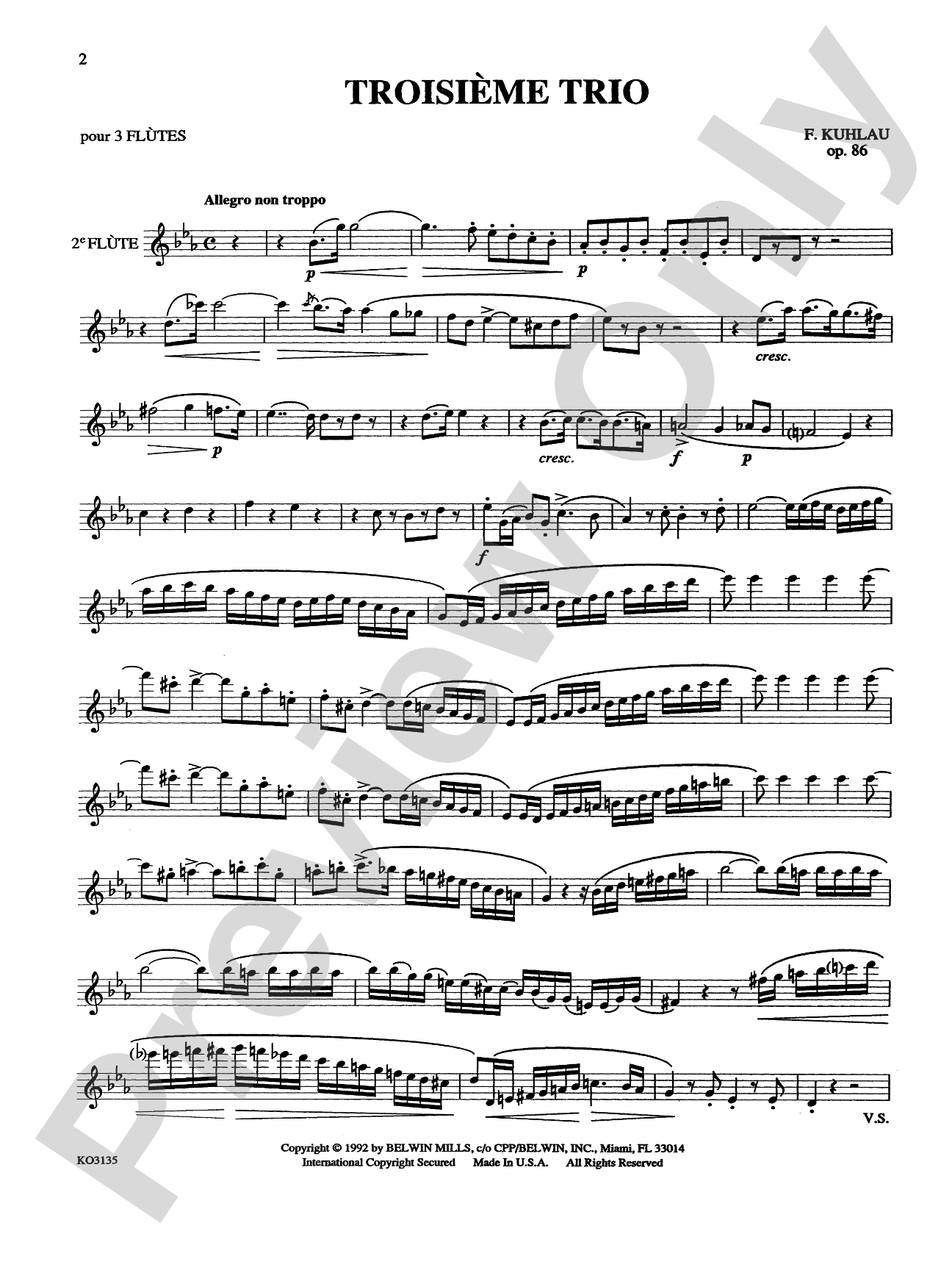
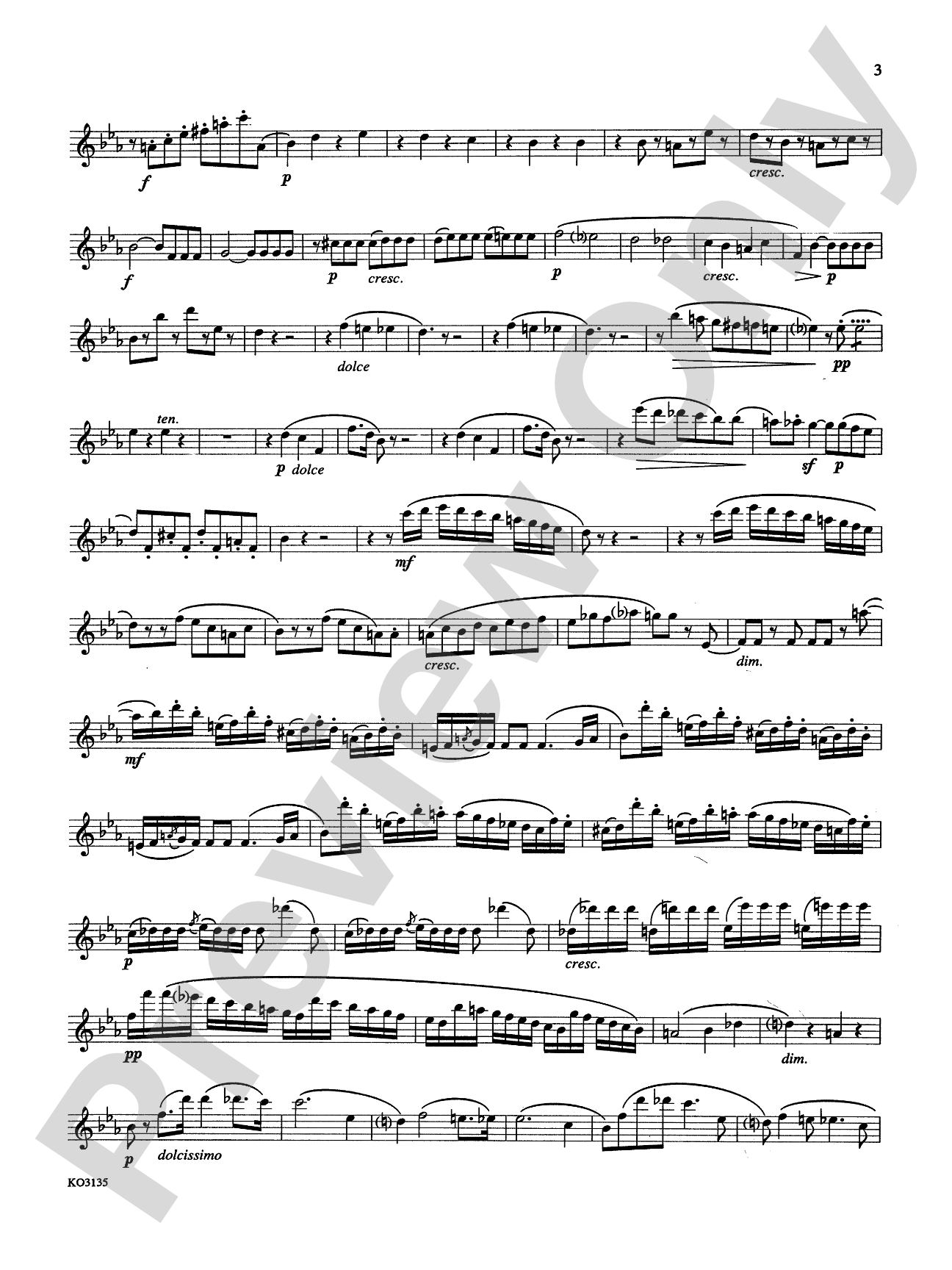
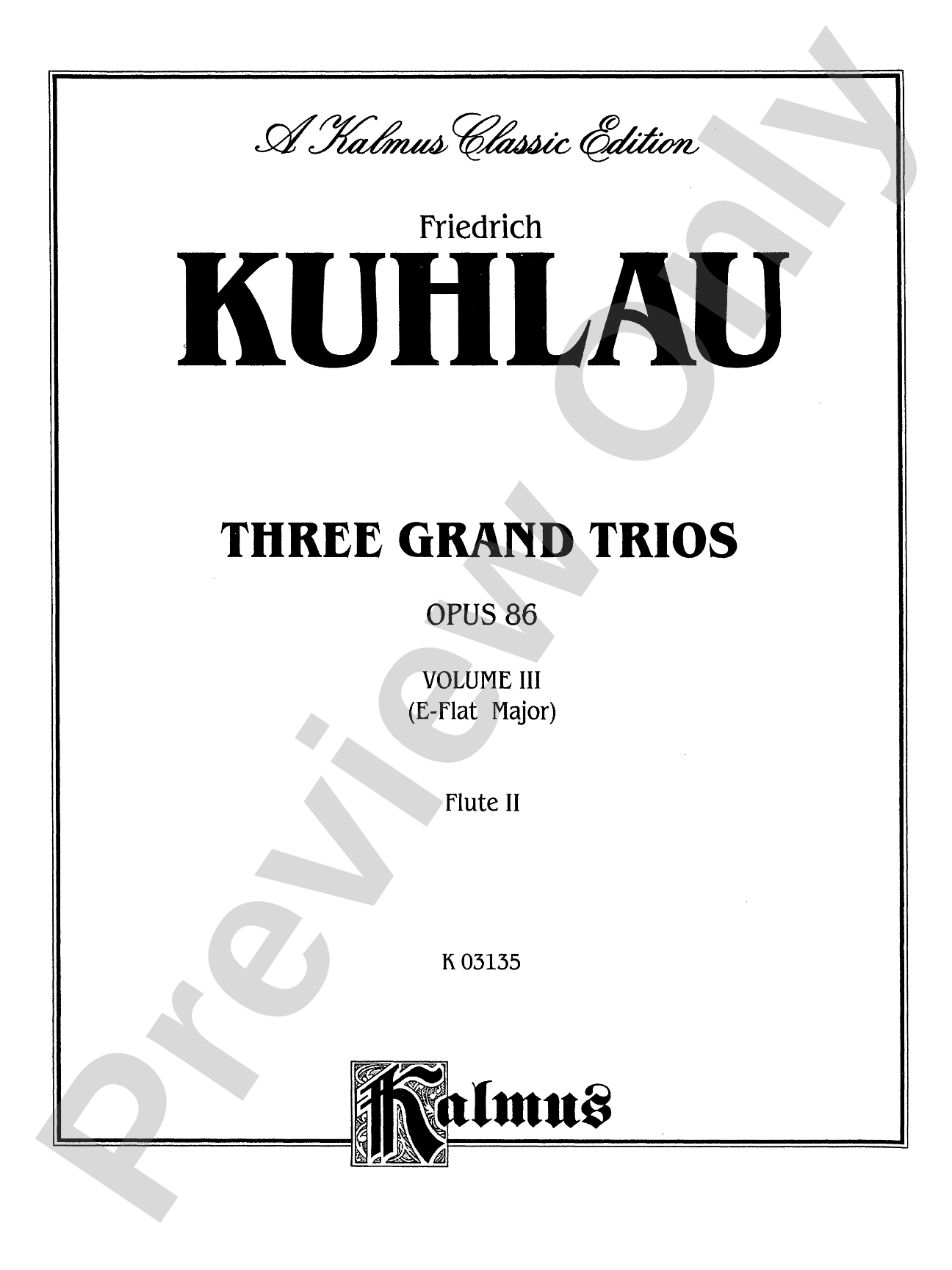
Three Grand Trios, Op. 86: 2nd Flute Sheet Music Preview

Three Grand Trios, Op. 86: 2nd Flute

By Daniel Friedrich Kuhlau

Item: 00-PC-0002505_F2

Digital Download
$3.00
Description
A collection of trios, for Flute, composed by Daniel Friedrich Kuhlau.

Don't just read it, hear it, play along with it, and watch your students grow with it. In MakeMusic Cloud, Three Grand Trios, Op. 86: 2nd Flute comes alive with professional accompaniment, adjustable tempo, and built-in practice tools that turn solo practice into real progress.

Sample Audio
No sample audio found.
Sample Video
Additional Details
Series: Kalmus Edition
Publisher: Alfred Music
Page Count: 36
SKU: 00-PC-0002505_F2

More about this title

About the Composer: Daniel Friedrich Kuhlau

Daniel Friedrich Kuhlau (1786–1835) was a Danish-German composer and flutist whose chamber works became central to the Classical flute repertoire. He studied in Hamburg and later settled in Copenhagen, where he composed prolifically for his own instrument and became known for writing idiomatically for the flute with both technical brilliance and lyrical grace.

Why we love this

Kuhlau's Op. 86 trios sit at the sweet spot between accessibility and musicianship: the writing is elegant and manageable for advancing students, yet the compositional craft rewards repeated rehearsal and careful attention to phrasing. These are chamber works that teach ensemble listening without requiring virtuosic athleticism, making them ideal for building a culture of collaboration in your program.

What to expect

Graceful and conversational, with the warmth of the Classical era filtered through Kuhlau's natural gift for the flute's lyrical voice. Each trio unfolds with melodic generosity and structural clarity, inviting the player to explore the expressive possibilities within a refined musical language.

Who it's for

Flutists in the intermediate to early advanced range (roughly grades 4–6) who are ready to engage with multi-movement chamber repertoire. These trios work equally well for private studio students working toward recital repertoire or young chamber ensembles preparing for informal school performances.

How to get the most out of it

  • Balance the flute line with its partners by thinking of yourself as one voice in conversation rather than the featured soloist; the trio texture demands equality of voice.
  • Shape phrases through subtle dynamic shaping rather than dramatic contrasts; the Classical idiom favors gradual arcs that let melodic content emerge naturally.
  • Establish a stable tempo in opening rehearsals and maintain it across all three movements to build confidence in ensemble cohesion before refining interpretation.
  • Address intonation across the trio early and often, particularly in passages where the flute sits above its companions; the high register can drift sharp under the pressure of ensemble balance.

How to use it

Feature these trios in chamber recital or informal concert settings where ensemble performance can shine without the scale of a full band or orchestra. They also serve as excellent repertoire for flute ensemble festivals or competitions that value Romantic-era chamber writing.

Skills your students will build

  • Ensemble listening and balance within a three-voice texture
  • Phrasing and rubato in the Classical style
  • Intonation management across multiple octaves and dynamic levels
  • Interpretation of Classical formal structures (sonata, rondo, variations)
  • Music reading across extended passages without frequent rests

You May Also Like