Three Fantasies - Piano Solo Sheet Music Preview

Three Fantasies - Piano Solo: Piano

By William Bergsma

Level: Advanced

Item: 00-PB-0000711

Digital Download
$6.99
Description
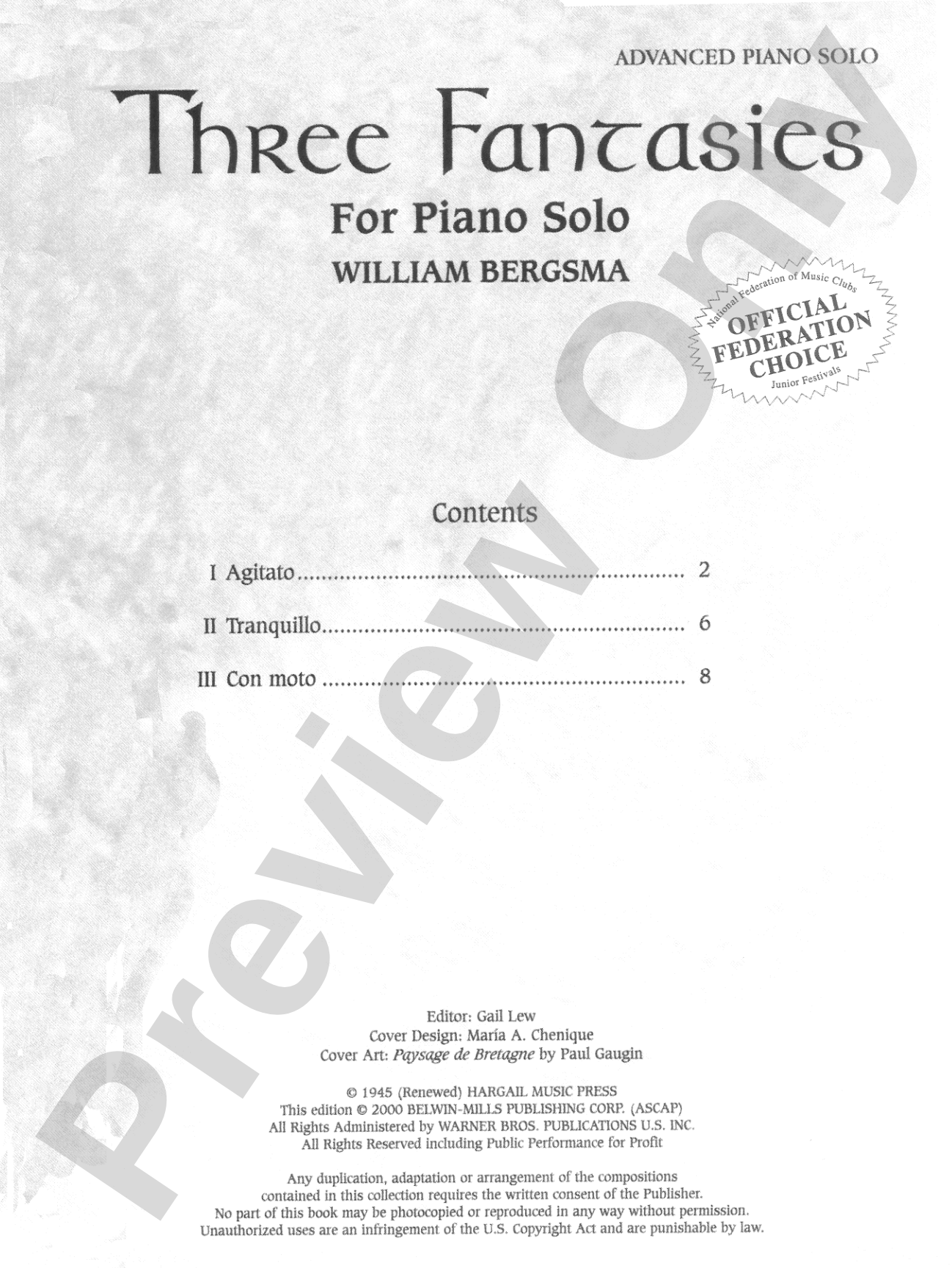
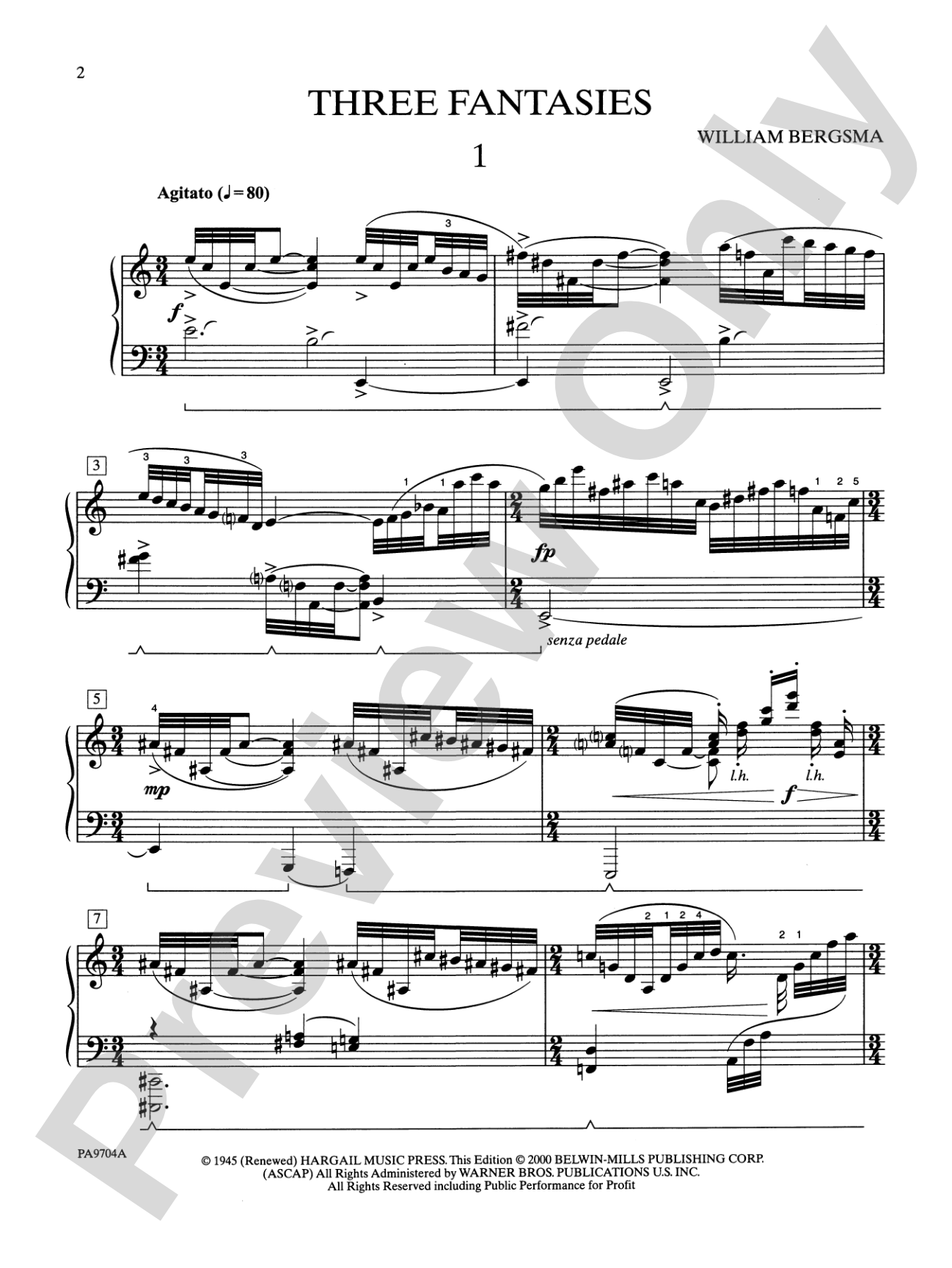
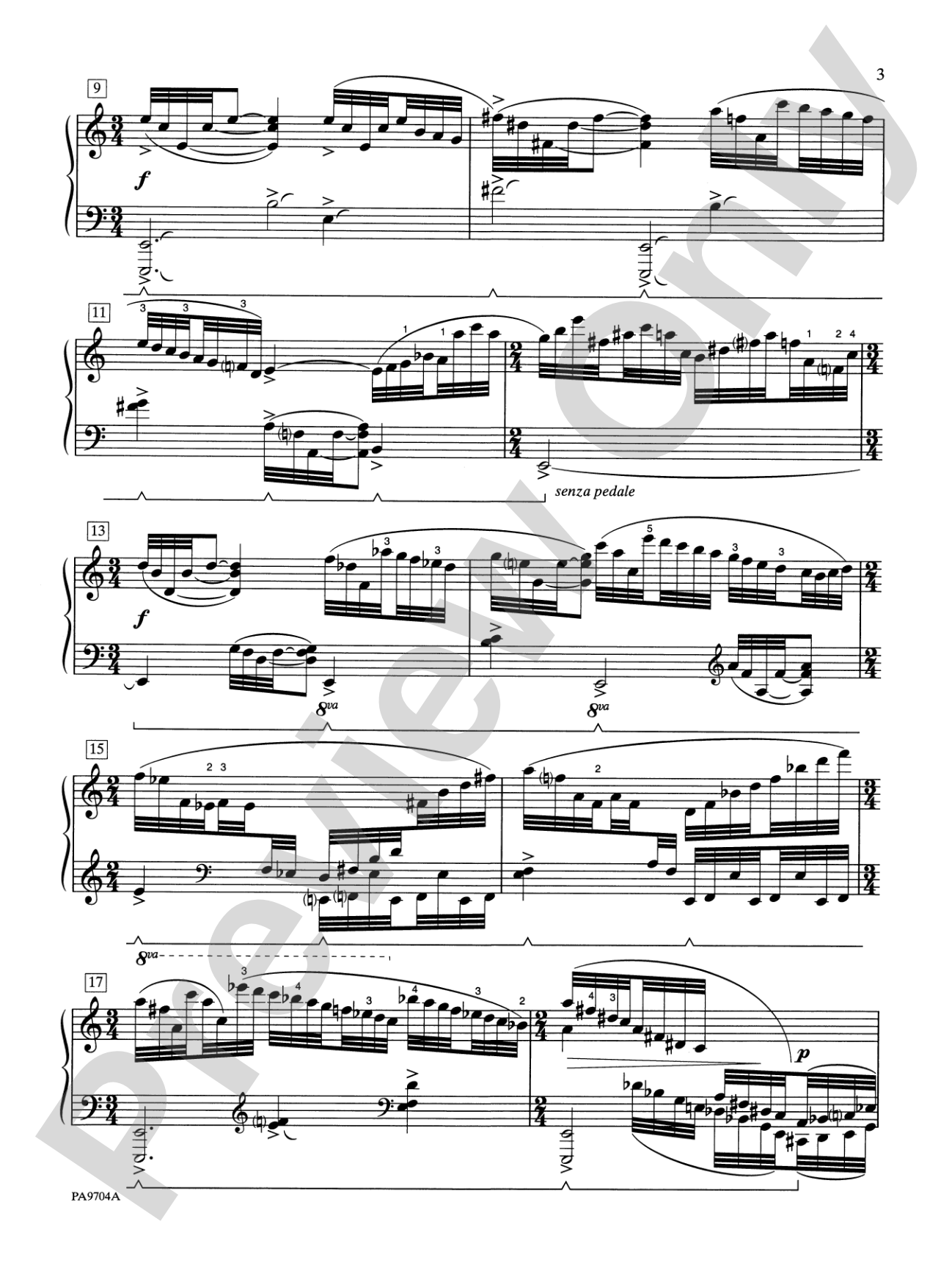
These Three Fantasies are thoroughly contemporary in style, personal in expression, and stimulating in the use of musical material. These solos provide interesting and innovative program material for recitals at the advanced level. #1 Agitato features an agitated opening with bass pedal tones. #2 Tranquillo uses a relaxed melody over pizzicato basses. #3 Con moto is an energetic rondo in perpetual motion. Bergsma's style involves dissonant counterpoint infused with a strong lyric quality. Fantasie No. 1 "Agitato" is a Federation Festivals 2016-2020 selection. A Federation Festivals 2020-2024 selection.

Three Fantasies - Piano Solo: Piano isn't in MakeMusic Cloud just yet...but it could be. Let us know you'd like to see it, and you'll help shape what comes next. In the meantime, start a free trial and dive into thousands of interactive titles your students can play along with today.

Sample Audio
No sample audio found.
Sample Video
Additional Details
Publisher: Alfred Music
Page Count: 16
SKU: 00-PB-0000711

More about this title

About the Composer: William Bergsma

William Bergsma (1921-1994) was an American composer whose career spanned classical, film, and educational music. His compositional voice merged modernist techniques with lyrical sensibility, making his work accessible without sacrificing musical substance. Bergsma taught at the University of Washington for decades and contributed significantly to the repertoire for concert pianists and student performers seeking serious contemporary material.

Why we love this

Bergsma gives advanced pianists three contrasting character pieces that refuse to be mere salon entertainment. Each fantasy has a clear identity and genuine compositional substance; they're vehicle-pieces that respect the intelligence of both performer and listener. The dissonant counterpoint never overwhelms the lyricism underneath, which means students develop real facility with modern harmony while playing music that actually sings.

What to expect

These pieces occupy contemporary concert-hall idiom without becoming austere or academic. The first fantasy churns with nervous energy; the second unfolds in contemplative simplicity; the third drives forward in relentless, propulsive rhythmic cycles. Throughout, a lyric undercurrent persists beneath the modernist surface, creating pieces that are intellectually engaging and emotionally present.

Who it's for

Advanced pianists preparing recital programs and seeking substantive contemporary repertoire beyond Romantic or early-modern standards. Students working toward festival competitions (both pieces appear on Federation Festivals selections) and those comfortable with dissonant harmony and structural clarity.

How to get the most out of it

  • In Fantasie No. 1, establish the agitated character through rhythmic precision and clarity in the bass pedal tones; resist the urge to rush despite the restless energy.
  • For Fantasie No. 2, distinguish the relaxed melody from the pizzicato accompaniment by controlling tone color and dynamic layering rather than relying on tempo variation.
  • Treat Fantasie No. 3 as a perpetual-motion study; maintain evenness in the rondo sections while shaping the contrasting episodes with clear phrase architecture.

How to use it

Program all three together as a substantial contemporary suite, or select individual fantasies as standalone recital pieces that anchor a program around 20th-century American composers. The contrast in character and tempo makes any of the three effective as programming relief between Romantic or Classical works.

Skills your students will build

  • Dissonant counterpoint and contemporary harmonic language
  • Pedal control and color differentiation across modern textures
  • Rhythmic precision and perpetual-motion figuration management
  • Lyrical expression within non-tonal harmonic contexts
  • Structural navigation of fantasy form and rondo architecture

You May Also Like