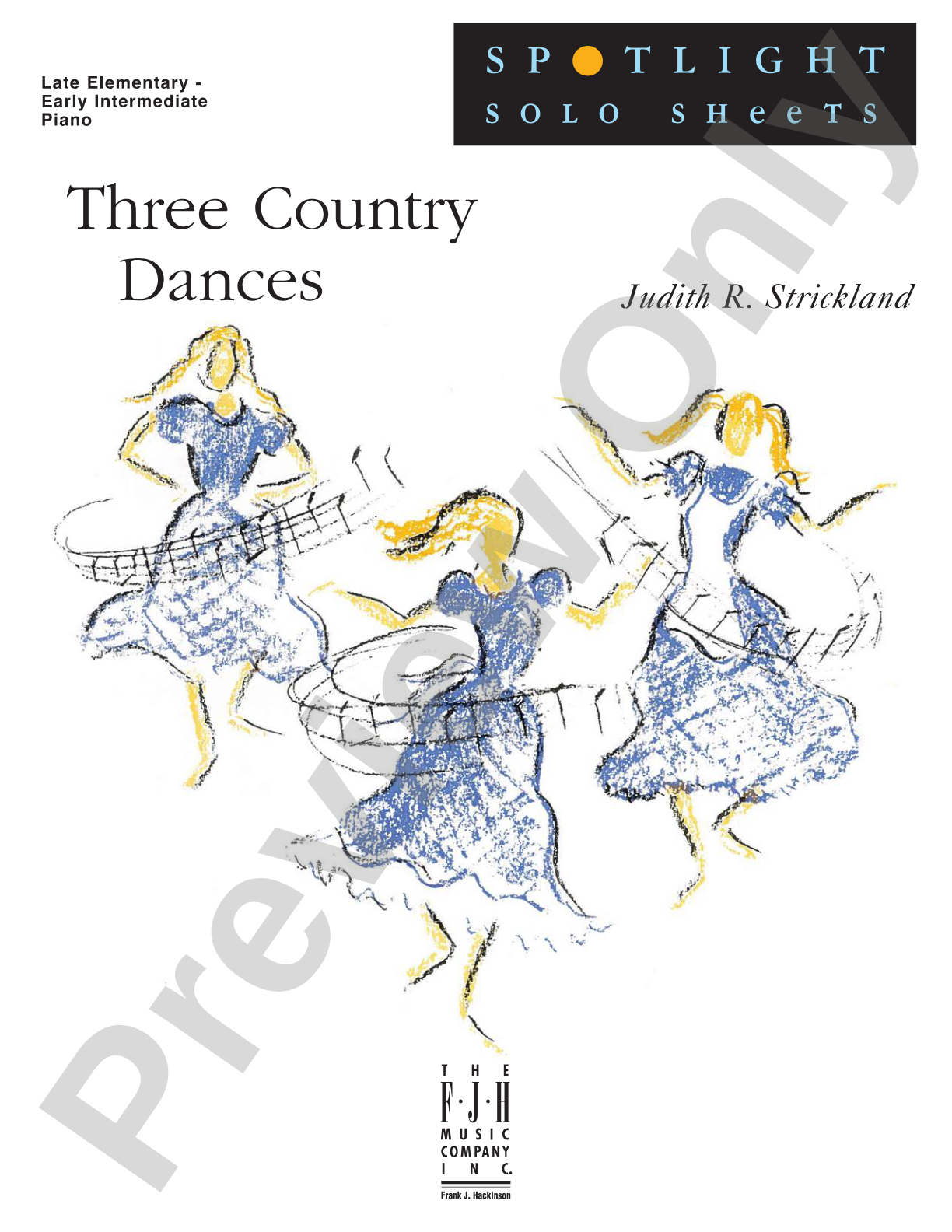
These pieces will prepare students for the easier dances of Beethoven and Haydn. All melodies are written in the key of C in 5-finger positions with a few easy crossovers.
Discover MakeMusic Cloud: thousands of interactive titles your students can play along with today.
Strickland understands what early elementary pianists actually need: a clear scaffolding into the Classical dance forms that will show up in every standard repertoire list. Rather than jumping straight to Beethoven and Haydn, students get three properly written country dances in a single, manageable key that let them internalize the genre's rhythmic and formal patterns at their own level.
What to expect
Graceful and purposeful. Each dance has the gentle elegance of 18th-century court music, yet the writing remains refreshingly straightforward. There's a real sense of refinement here, even in simplicity.
Who it's for
Early elementary piano students ready to explore Classical forms and composers. These pieces work best for pianists who have solid five-finger position technique and are beginning to understand phrase structure and basic harmonic movement.
How to get the most out of it
Shape the melodic phrases even at a slow tempo. Country dances rely on clear phrasing and character, not speed, so students should focus on articulation and dynamic contour from the start.
Keep the pulse steady and dance-like. Resist the urge to rush; these pieces should feel grounded and graceful, not hurried.
Maintain consistent hand position throughout the five-finger patterns. This builds the muscle memory that makes the crossovers smooth and controlled.
How to use it
Use these as stepping stones within a Classical unit. Students can perform one or all three at a recital as a group or individually, then progress directly to the original Beethoven and Haydn pieces they've been preparing for. They also pair well with beginning theory or history lessons exploring dance forms.
Skills your students will build
Five-finger position and hand independence
Smooth hand position shifts and crossovers in C major
Phrase recognition and shaping in dance forms
Basic understanding of Classical dance structure
Reading and performing with consistent pulse and phrasing
You May Also Like
Scan to Complete Your Purchase
Use your phone's camera to scan the code below
You'll log in on your phone and the order will be added to your account