Three Chorale Preludes: Timpani Sheet Music Preview

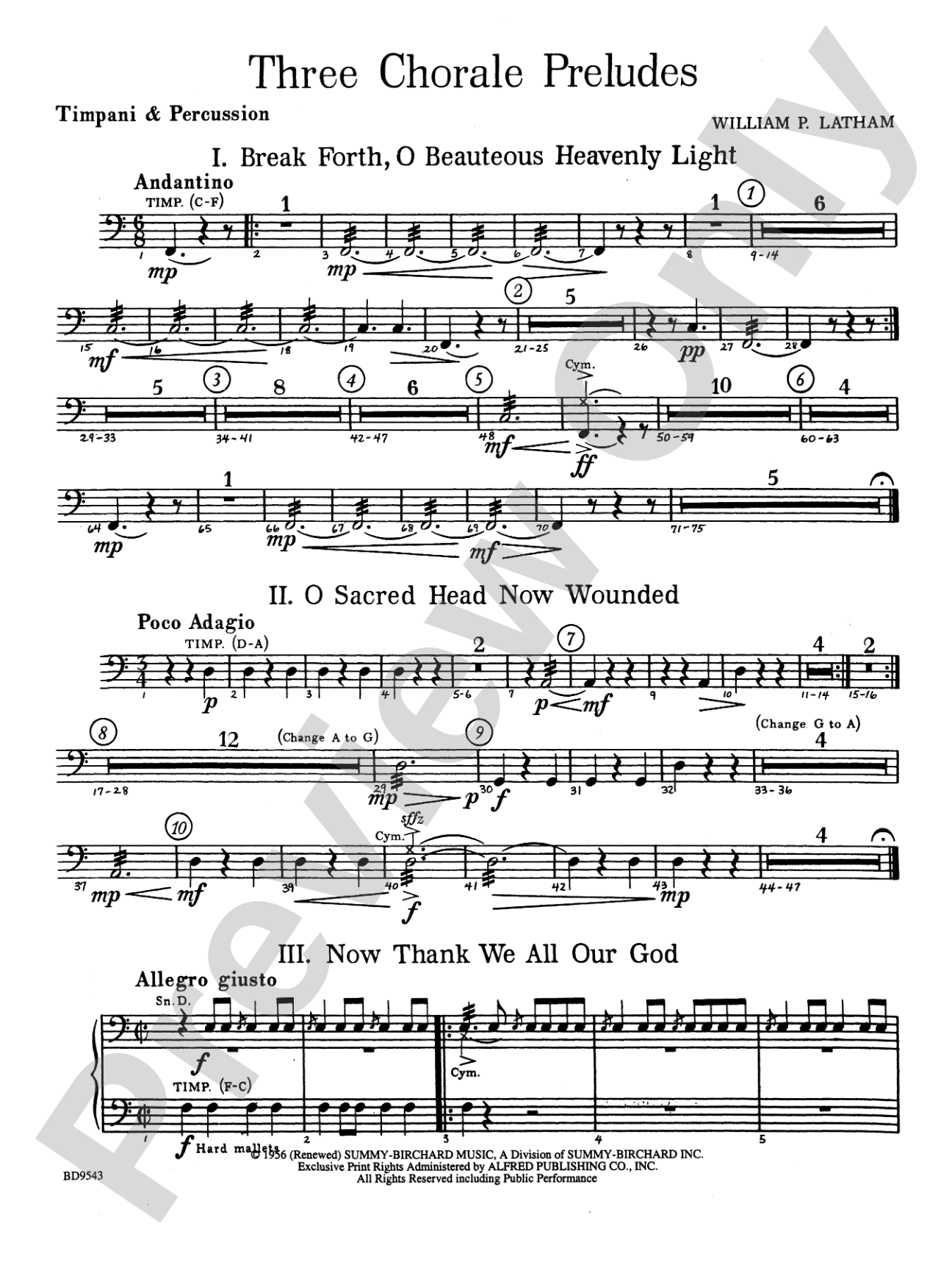
Three Chorale Preludes: Timpani

By William P. Latham

Grade: 4 (Medium)

Item: 00-PC-0014649_TMP

Digital Download
$3.00
Description
Three Chorale Preludes epitomizes the perfect teaching piece and performance work. Although based on familiar chorale melodies, the work is an original. Each prelude reflects contrasting tempi and textures, and although each one stands alone, the overall emotional effect is heightened with a continuous performance of all three. Every player of a band instrument should experience this work. (8:14) This title is available in MakeMusic Cloud and Music Prodigy. This title is available in MakeMusic Cloud.

Don't just read it, hear it, play along with it, and watch your students grow with it. In MakeMusic Cloud, Three Chorale Preludes: Timpani comes alive with professional accompaniment, adjustable tempo, and built-in practice tools that turn solo practice into real progress.

Sample Audio
0:00
0:00
Sample Video
Additional Details
Series: Belwin Classic Band
Publisher: Alfred Music
Page Count: 258
SKU: 00-PC-0014649_TMP

More about this title

About the Composer: William P. Latham

William P. Latham (1917-1999) was a prolific American composer and educator whose output spanned symphonic band, orchestra, and chamber music. His career was defined by an instinct for what works on the concert stage: music that engages both performers and audiences without sacrificing musical substance. Latham's pieces for band became staples in the repertoire precisely because he understood the capabilities and limitations of student ensembles and wrote with genuine craftsmanship.

Why we love this

Latham anchors this work in recognizable chorale material but composes around it rather than merely arranging, giving your band something that feels both accessible and genuinely original. The three-movement arc allows you to program a substantial, emotionally complete concert piece without committing to a lengthy single work, and the contrasting textures ensure no section sits idle for long.

What to expect

A meditation on familiar spiritual material filtered through a twentieth-century compositional lens. Each prelude opens a different emotional door: the first introspective, the second unfolding with warmth, the third gathering toward affirmation. The work respects the tradition it draws from while sounding completely contemporary.

Who it's for

Concert bands at Grade 4 with enough musicality to sustain lyrical playing and enough technical security to handle the textural writing without losing focus. This is ideal for directors seeking a substantial contest or festival piece that also works as a teaching tool for all sections.

How to get the most out of it

  • Balance the chorale melodies clearly against the accompanying textures. These are not buried hymn tunes; the familiar material should sing through the harmonic fabric.
  • Treat the three preludes as a single arc even if your program places them consecutively. The emotional effect builds across all three, so tempo relationships and pacing between movements matter as much as the playing within each one.
  • Let the distinctive character of each prelude's texture guide your ensemble's approach. The contrast between movements is deliberate and should shape how individual sections commit to their role in each section.

How to use it

Anchor a concert around this as your centerpiece, or use it as a sophisticated stand-alone contest entry that showcases maturity and musicianship. The eight-minute duration and three-part structure make it equally valuable as a closer or as part of a thematic program pairing it with other spiritual or chorale-based works.

Skills your students will build

  • Sustaining lyrical lines through harmonic texture without doubling or unbalancing voices
  • Hearing and performing music that privileges emotional continuity over sectional showcases
  • Responding to contrasting textures and tempi within a unified work
  • Performing original composition based on traditional material rather than direct arrangement
  • Ensemble balance and independence of part within homophonic and contrapuntal sections

You May Also Like