
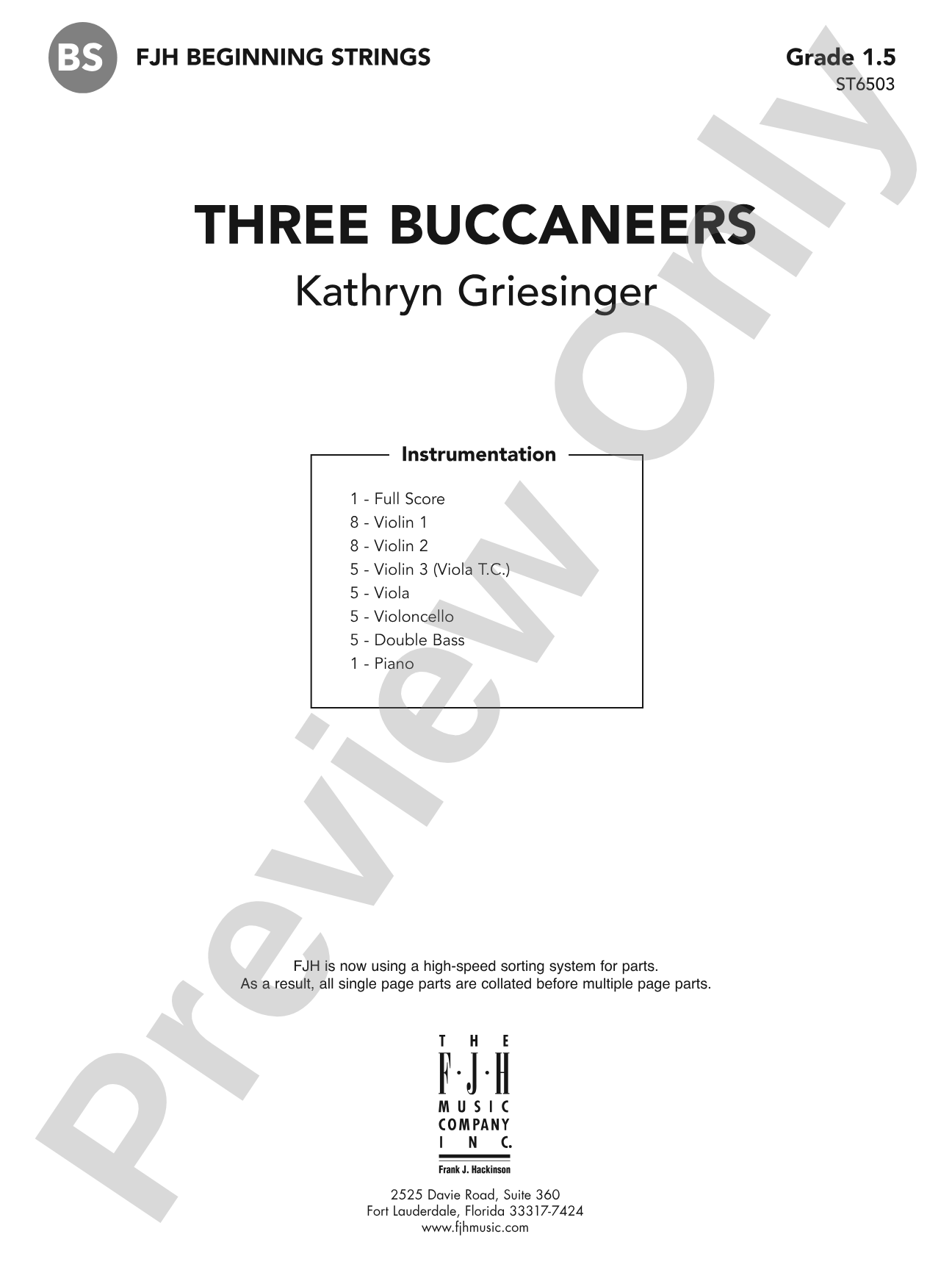
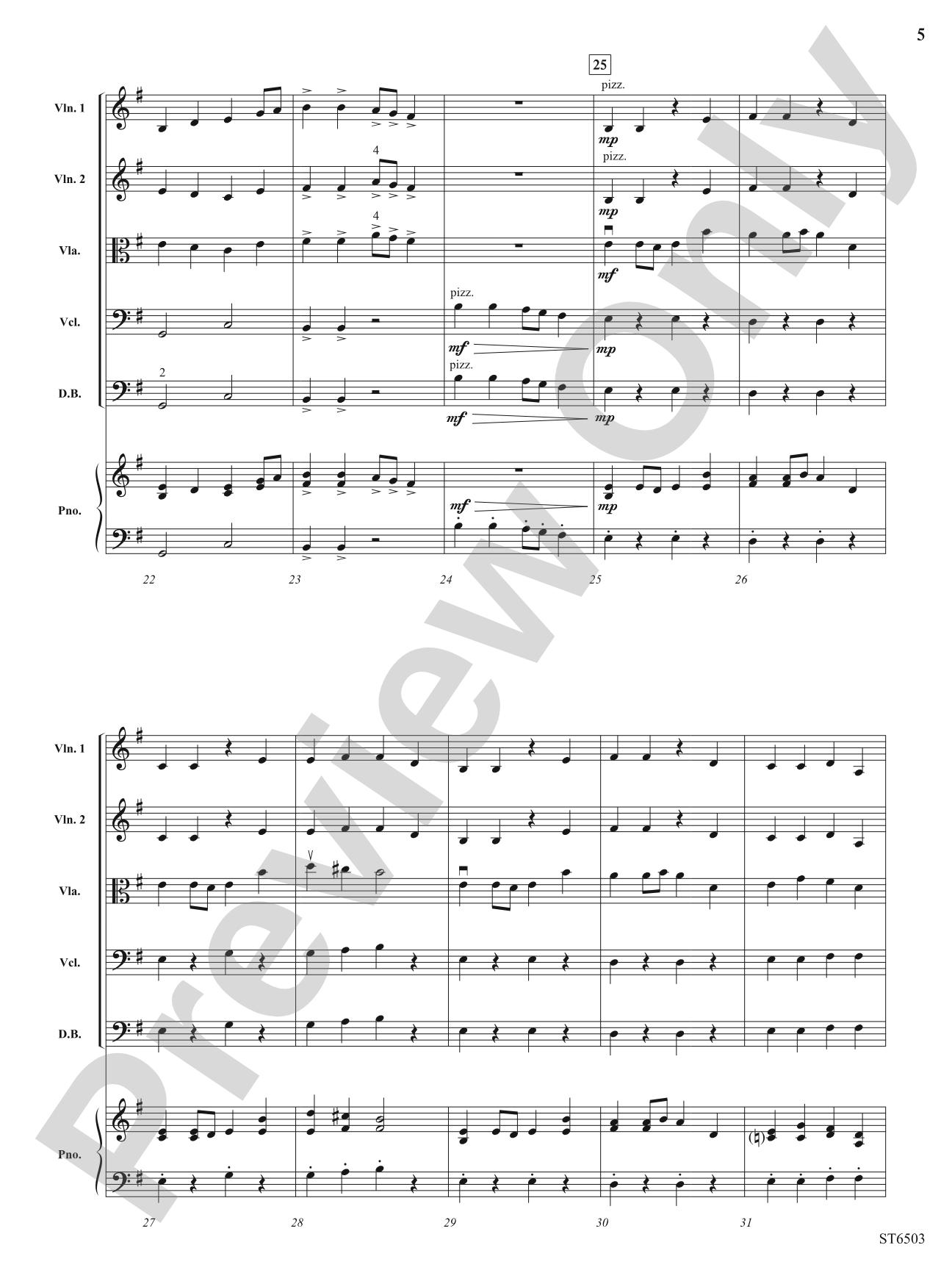
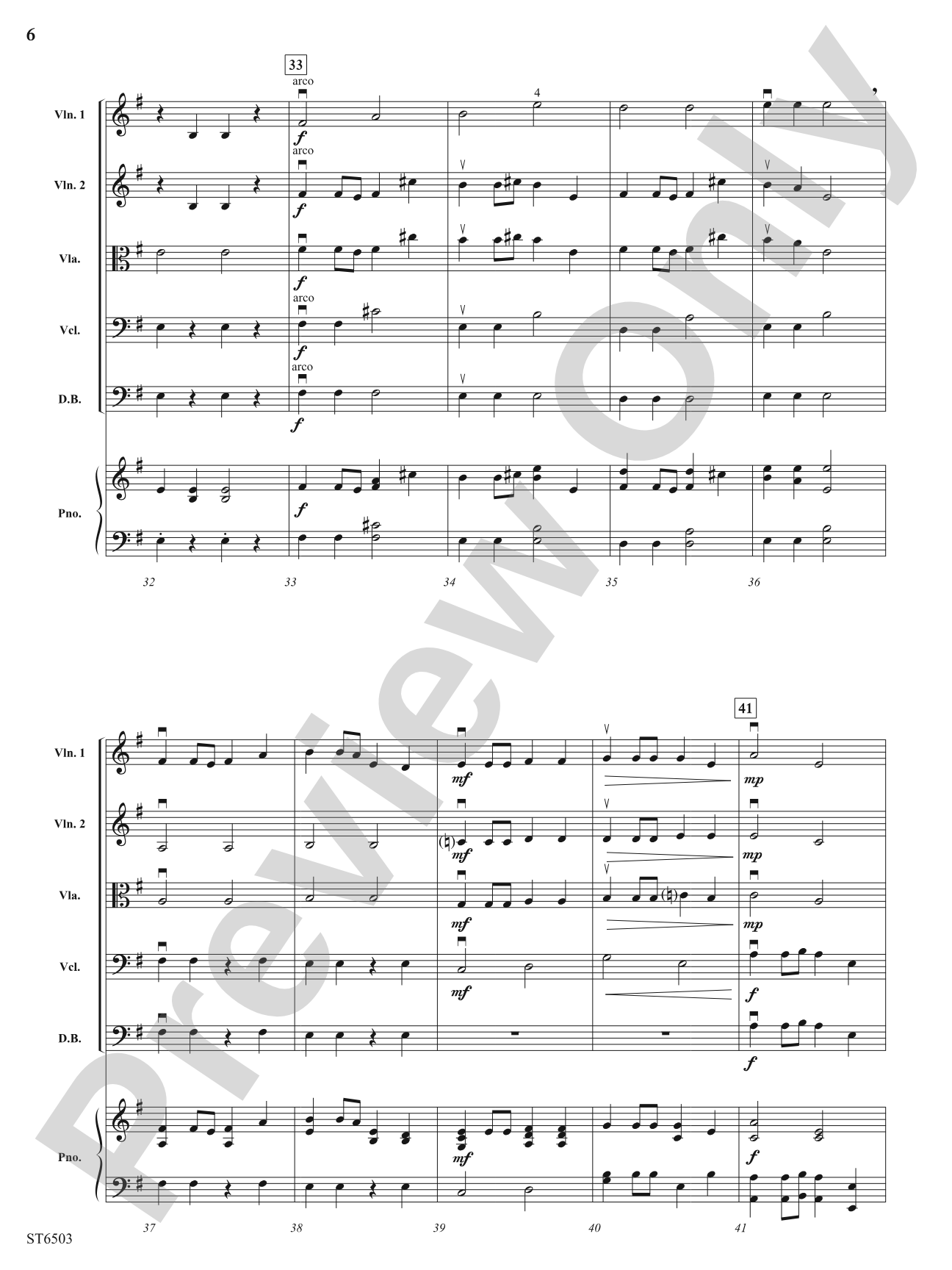
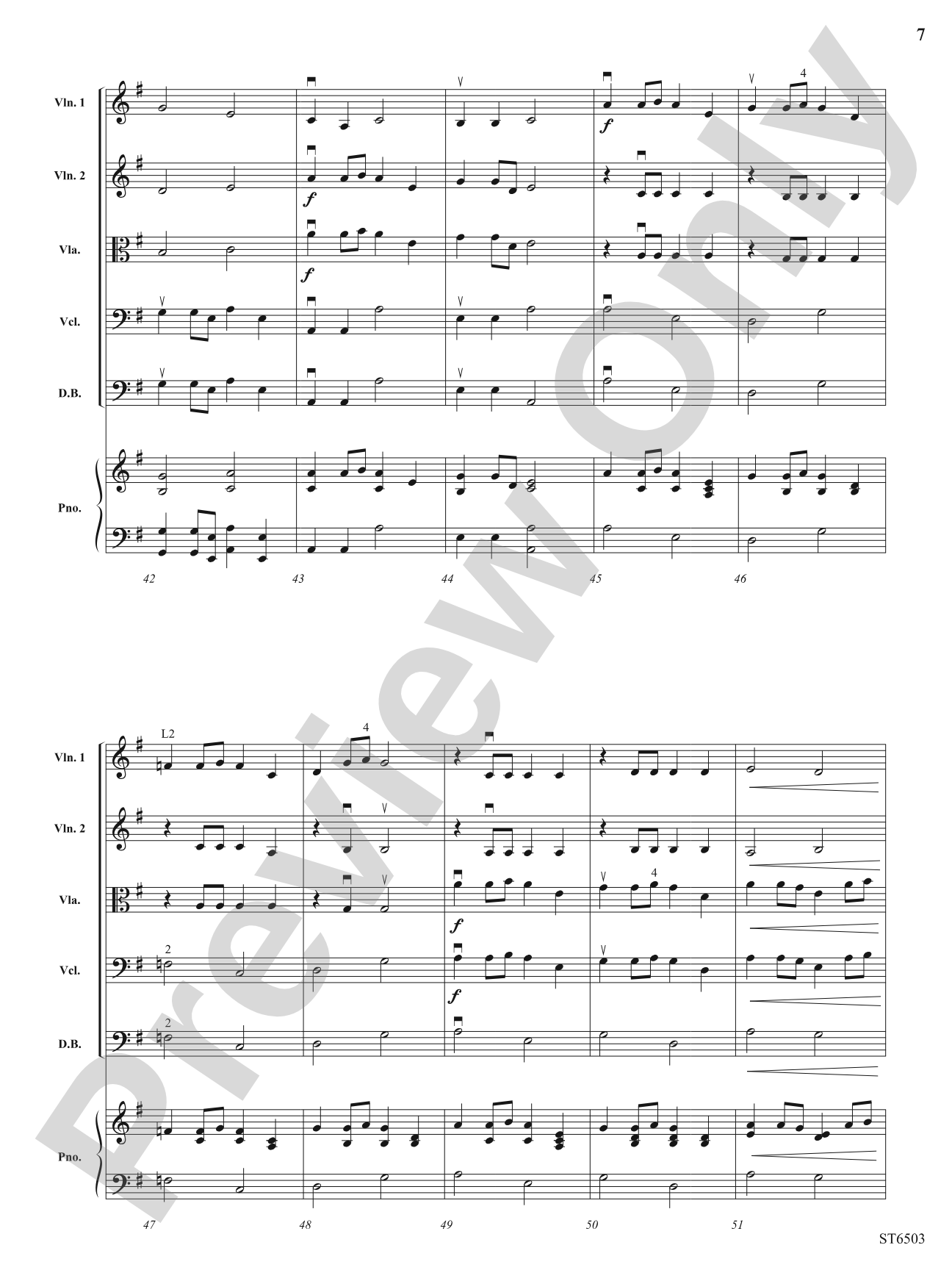
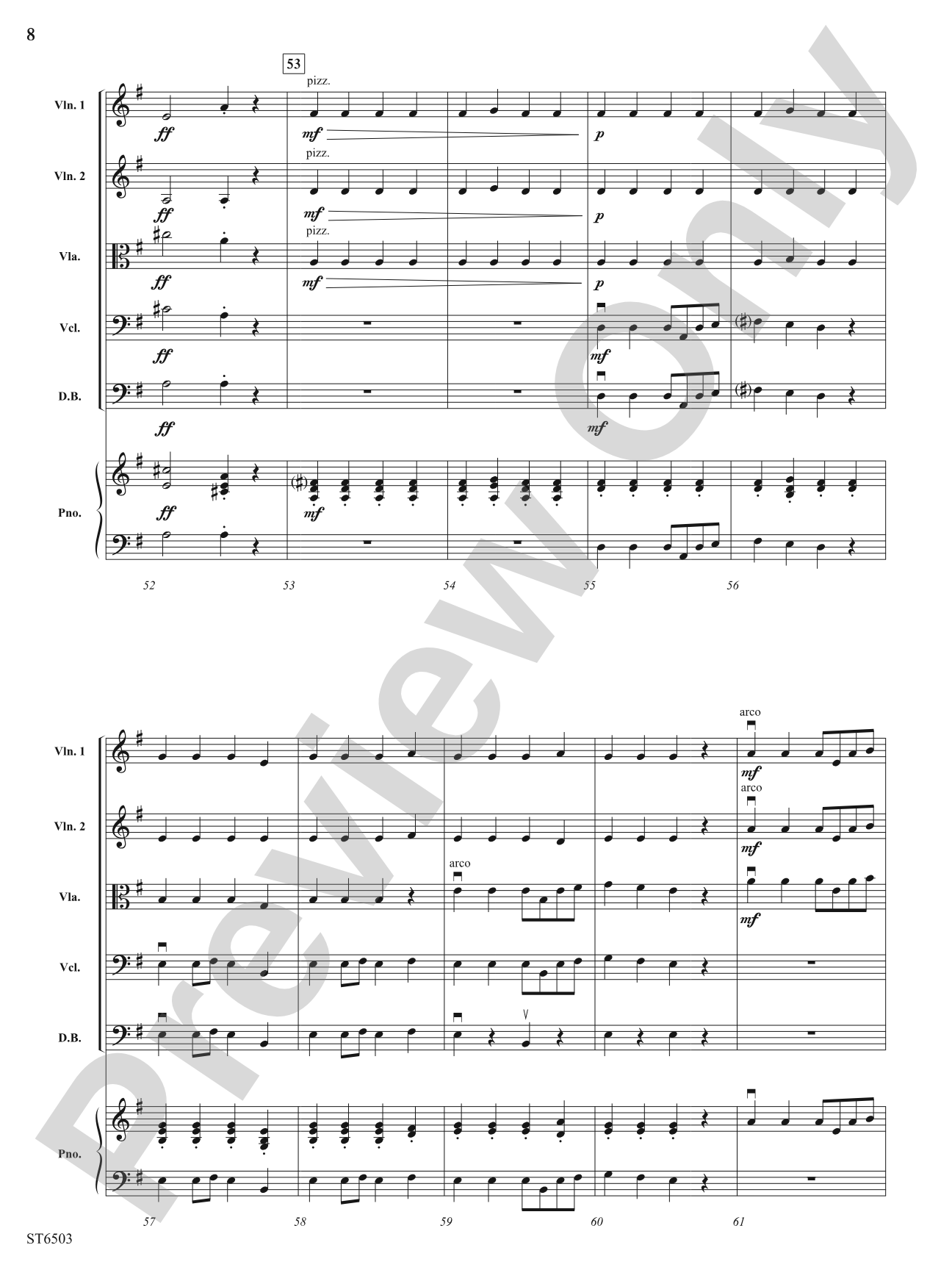

Three Buccaneers: String Orchestra Conductor Score & Parts
By Kathryn Griesinger
Grade: 1.5
Item: 98-DST6503
$50.00
Pickup currently not available
Buy Extra Parts (Digital PDF Download)
| Product | Price | Quantity |
|---|---|---|
| Three Buccaneers: Score | $6.00 | |
| Three Buccaneers: Violin 1 | $7.00 | |
| Three Buccaneers: Violin 2 | $7.00 | |
| Three Buccaneers: Violin 3 (Viola T.C.) | $7.00 | |
| Three Buccaneers: Viola | $7.00 | |
| Three Buccaneers: Violoncello | $7.00 | |
| Three Buccaneers: Double Bass | $7.00 | |
| Three Buccaneers: Piano | $7.00 |
Parts Added to Cart!
Description
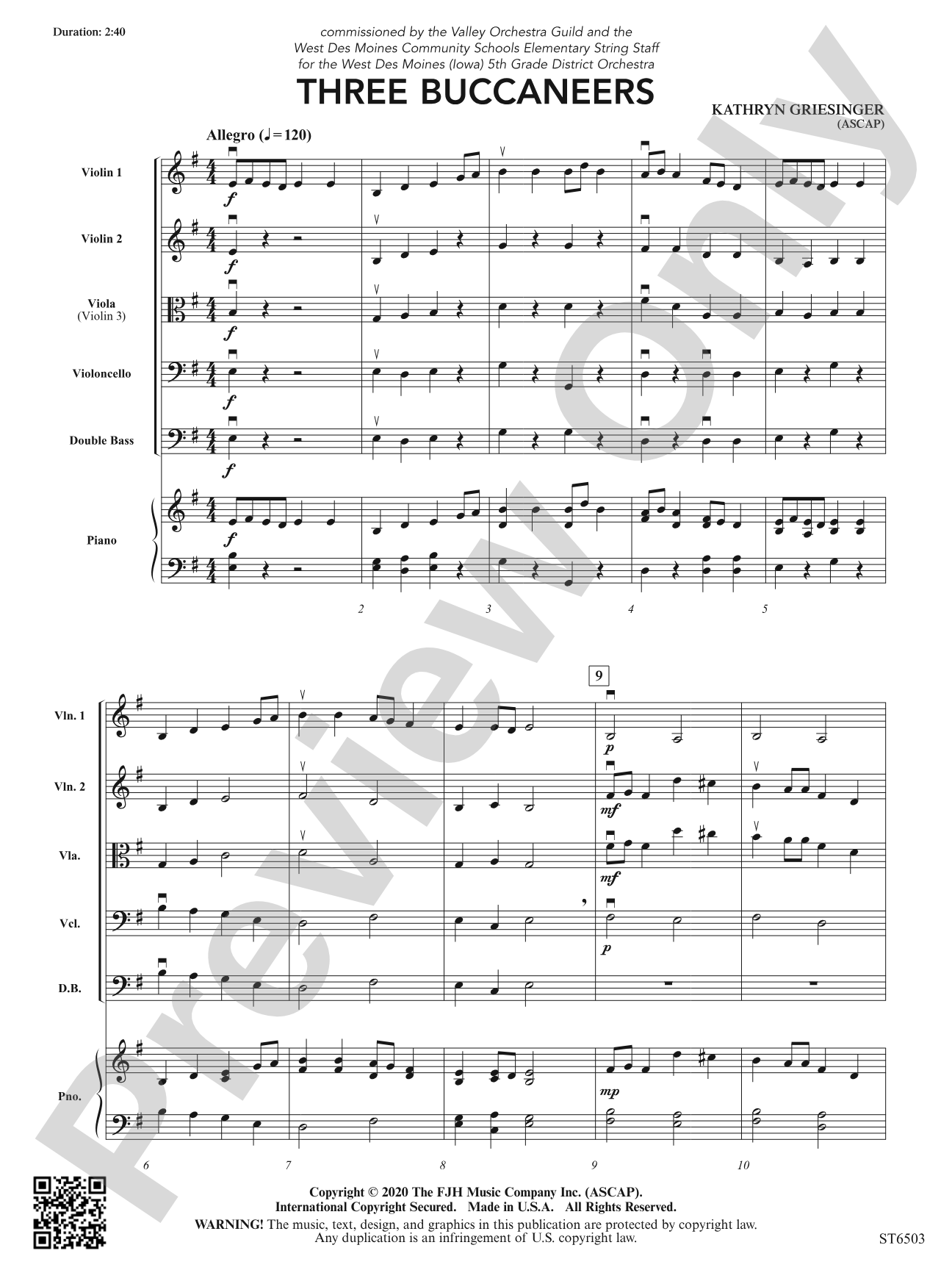
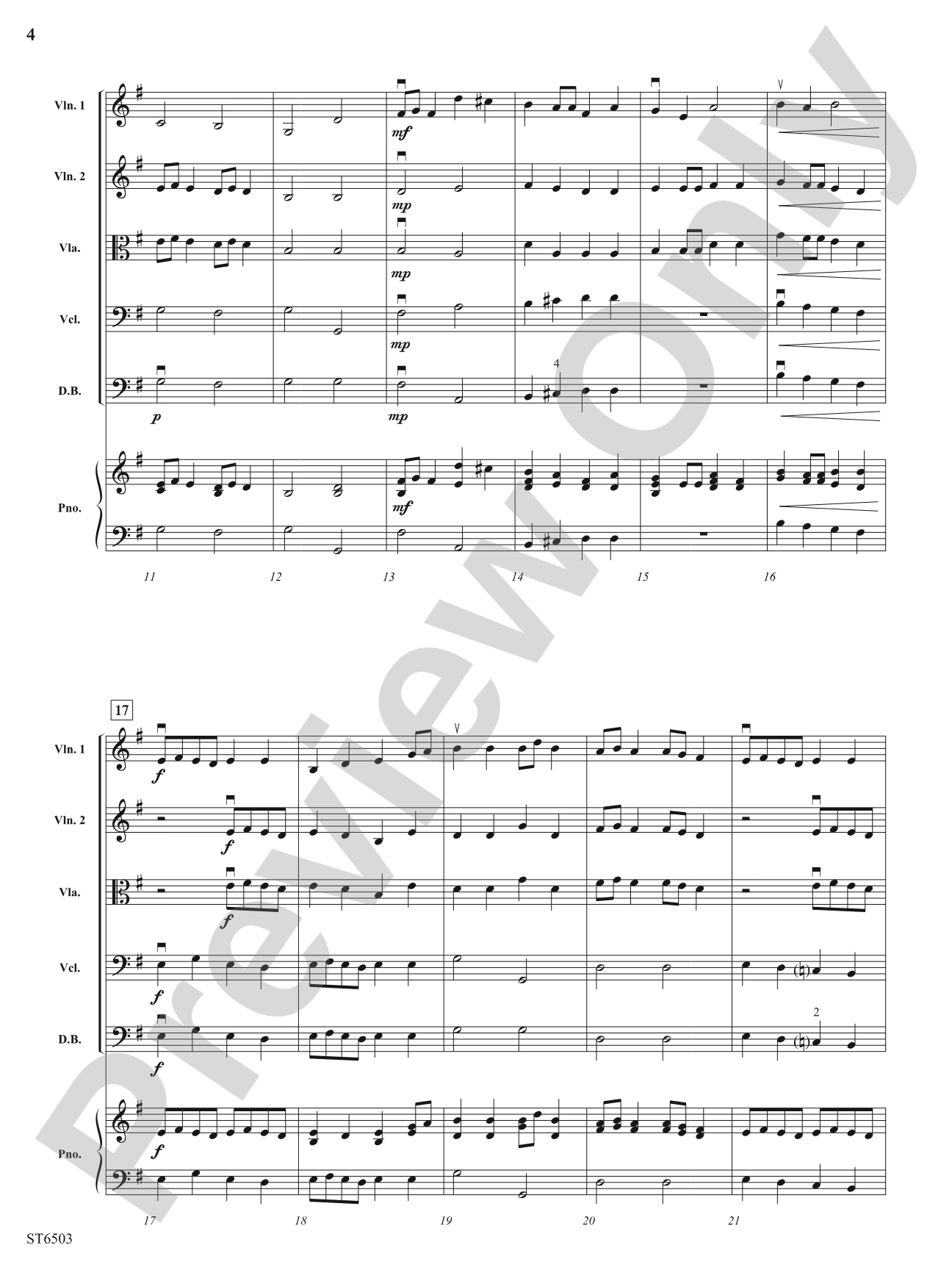
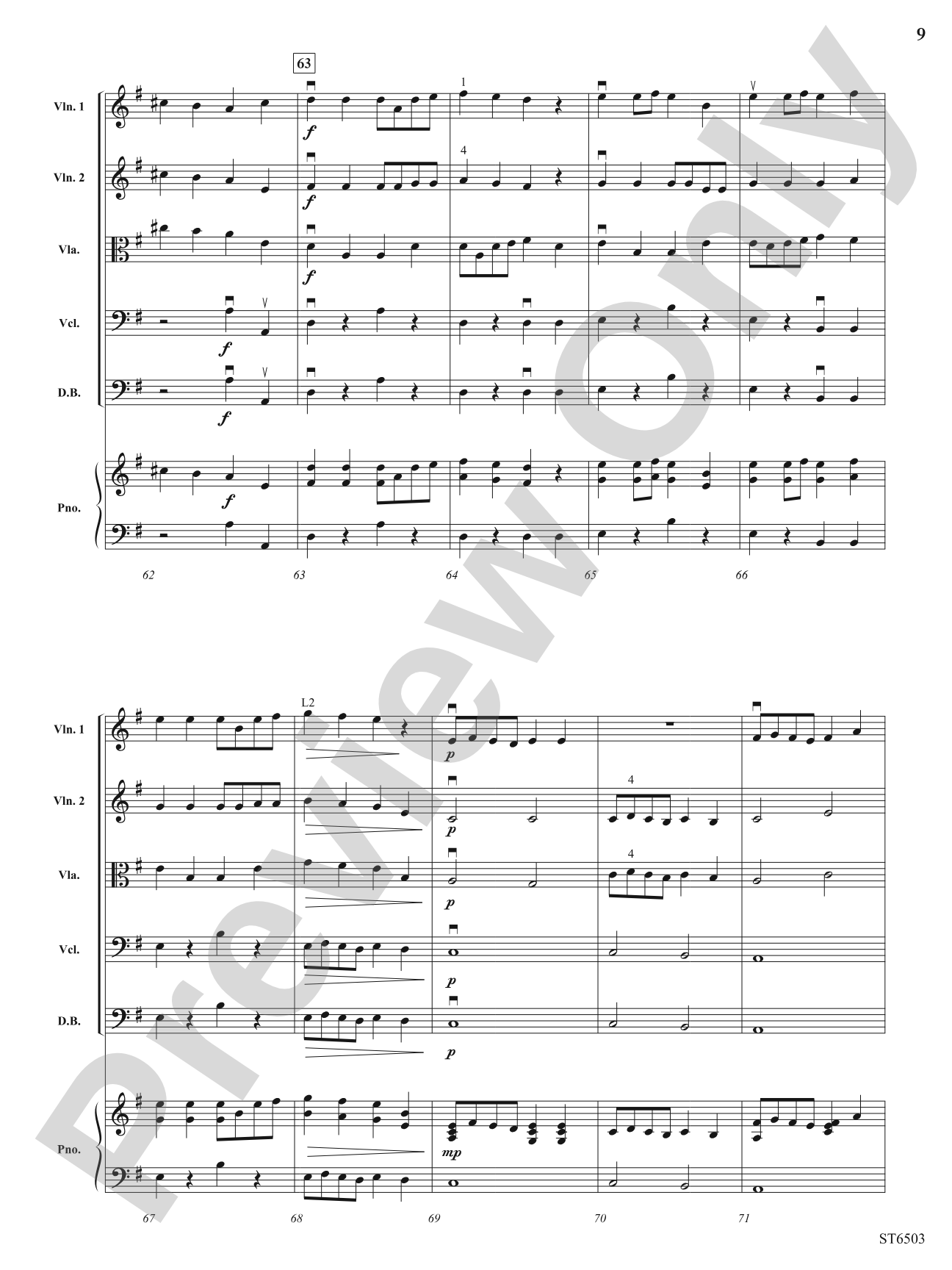
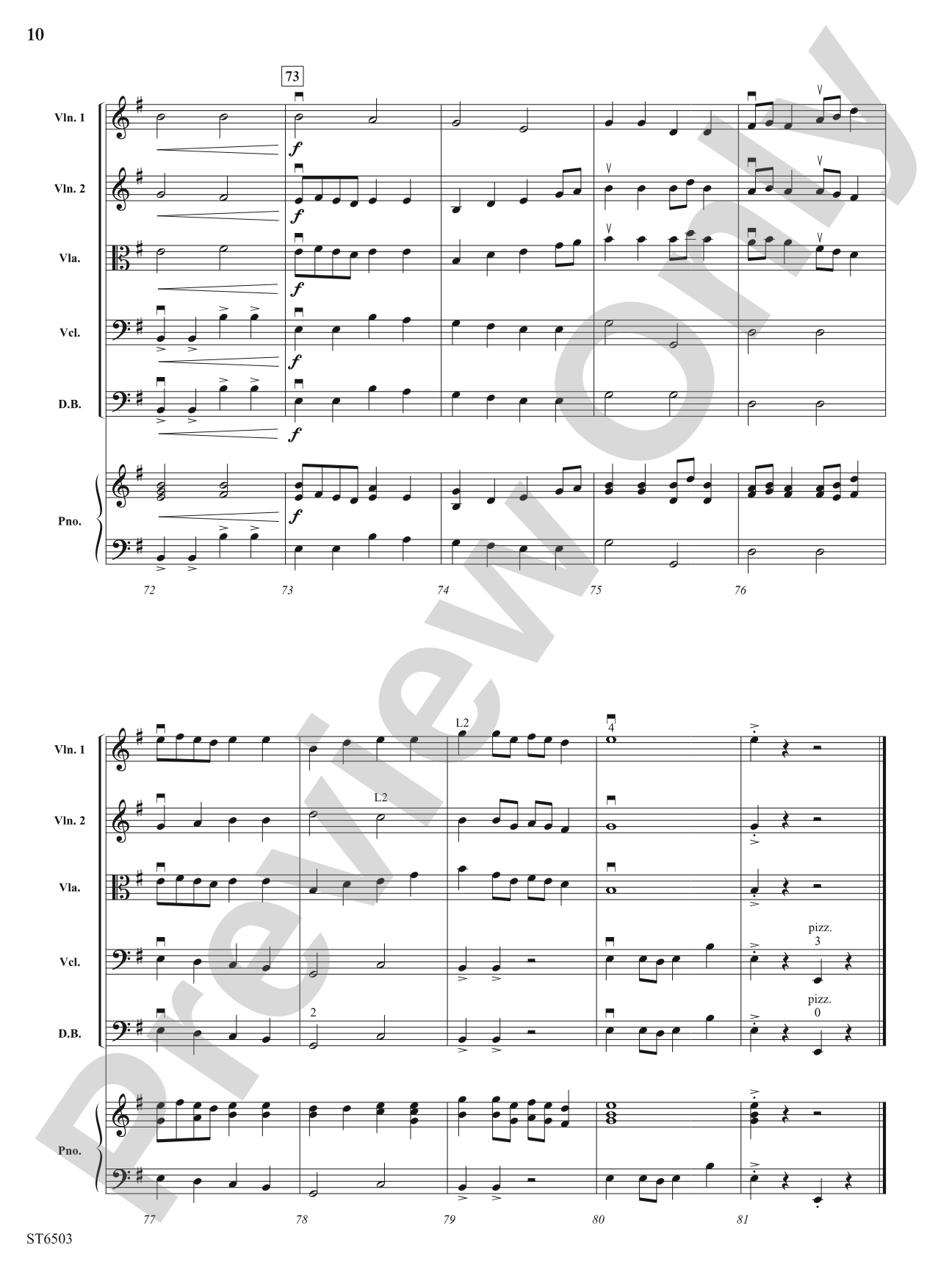
Feature every section of your orchestra in this swashbuckling piece! Three distinct "pirate" themes are given to the violins, violas, and cellos/basses to allow all players a chance to shine. All seafaring melodies stay in first position with minimal low-two finger patterns and lots of doubling for a big, full sound. Each section takes an adventurous turn into new tonalities before joining forces at the end for a triumphant finale!


Three Buccaneers: String Orchestra Conductor Score & Parts isn't in MakeMusic Cloud just yet...but it could be. Let us know you'd like to see it, and you'll help shape what comes next. In the meantime, start a free trial and dive into thousands of interactive titles your students can play along with today.
Request This Title
Tell us you want it.
Start Your Free Trial
Explore everything that's ready to play right now.
Sample Audio
1
Audio File
--:--
0:00
0:00
Sample Video
Additional Details
Series:
FJH Beginning Strings
Publisher:
The FJH Music Company, Inc.
SKU:
98-DST6503
More about this title
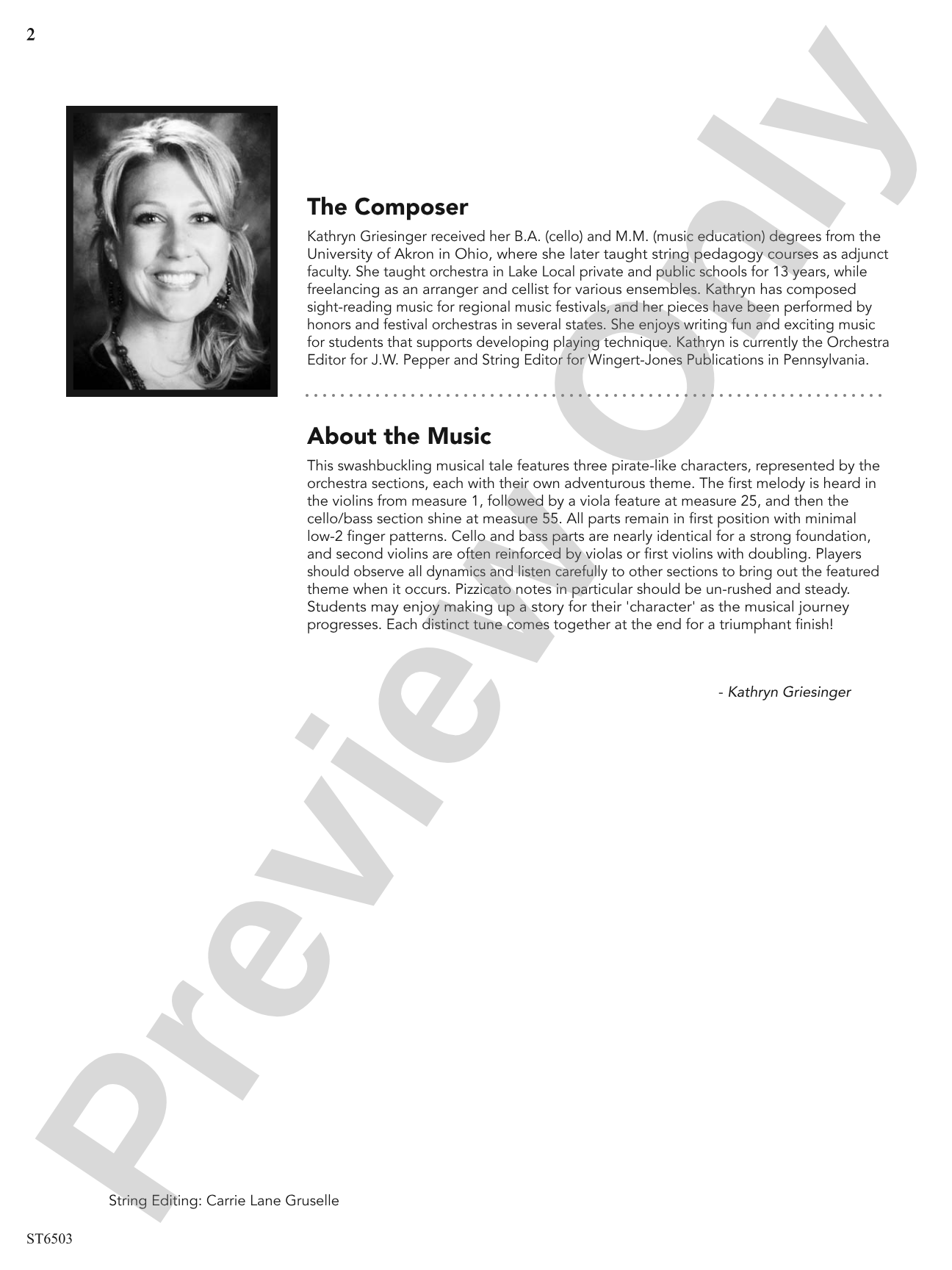
About the Composer: Kathryn Griesinger
Kathryn Griesinger has built a reputation for writing accessible, engaging string orchestra literature that respects young players' technical limitations while refusing to compromise on musicality. Her work in the FJH Beginning Strings series demonstrates a deep understanding of how to distribute musical interest across an ensemble so that every section feels genuinely featured rather than relegated to accompaniment.
Why we love this
Griesinger balances the practical constraints of early string players with genuine musical engagement. Each section gets its own character arc and melodic spotlight, turning what could be a utilitarian exercise into a piece that students actually want to play. The adventure narrative and key modulations keep early ensembles engaged while staying firmly rooted in what young players can execute confidently.
What to expect
High adventure on a manageable scale. The swashbuckling narrative unfolds through clean, singable melodies that stay within comfortable technical reach, and the orchestration suggests a full, seafaring soundscape even as individual parts remain straightforward. When all sections come together at the finish, the doubling creates a rich, triumphant swell that rewards every player's contribution.
Who it's for
Beginning string orchestras and school ensembles at the Grade 1.5 level who need a piece with clear sectional roles and confidence-building design. Students thrive when they know their part carries the melody, and this piece delivers that payoff for violins, violas, and the lower strings equally.
How to get the most out of it
- Balance the three main themes so that violins, violas, and cellos/basses each register clearly when presenting their material. Mark dynamic levels in your score to track who carries the lead in each section.
- Coordinate the transitions into new tonalities with extra rehearsal time. Mark the key changes prominently in all parts and have each section practice their shift independently before running sections together.
- Build the finale's triumphant quality by increasing the tempo slightly as all sections converge. The doubling creates natural fullness, so focus on rhythmic precision rather than dynamic weight to maintain clarity.
- Emphasize the first-position fingering in early rehearsals so students develop consistent intonation without reaching into unfamiliar positions. This foundation makes the tonal shifts feel fresh rather than precarious.
How to use it
Program this as a festival or contest entry that showcases balanced ensemble sound and sectional independence without requiring advanced technique. It also works well as a spring or end-of-year concert closer, where its narrative arc and celebratory finale leave audiences and students with a sense of accomplishment.
Skills your students will build
- Playing melodic material in first position with consistent intonation
- Transitioning between tonal areas (playing in different keys within one piece)
- Sectional independence and awareness of when to balance foreground and background roles
- Reading and executing minimal low-two finger patterns
- Ensemble blend and balance when doubling with other sections