Three Blind Mice: Piano Digital Sheet Music

Three Blind Mice: Piano Digital Sheet Music

Jim Brickman, Traditional

Item: 00-PS-0004968

Digital Download
$3.99
Description

Three Blind Mice: Piano Digital Sheet Music isn't in MakeMusic Cloud just yet...but it could be. Let us know you'd like to see it, and you'll help shape what comes next. In the meantime, start a free trial and dive into thousands of interactive titles your students can play along with today.

Sample Audio
No sample audio found.
Sample Video
Additional Details
SKU: 00-PS-0004968

More about this title

About the Artist: Jim Brickman

Jim Brickman

Jim Brickman stands among the most commercially successful solo pianists in contemporary music, known for crafting introspective melodies that connect directly with listeners. His approach to composition centers on emotional authenticity: he builds pieces around the idea that music should accompany life's defining moments, whether celebratory, reflective, or tender.

Brickman's artistry extends beyond the recording studio into electrifying live performances that have fundamentally shifted how audiences engage with instrumental piano music. His compositions balance technical sophistication with immediate accessibility, creating work that speaks to both trained musicians and those discovering instrumental music for the first time.

Why we love this

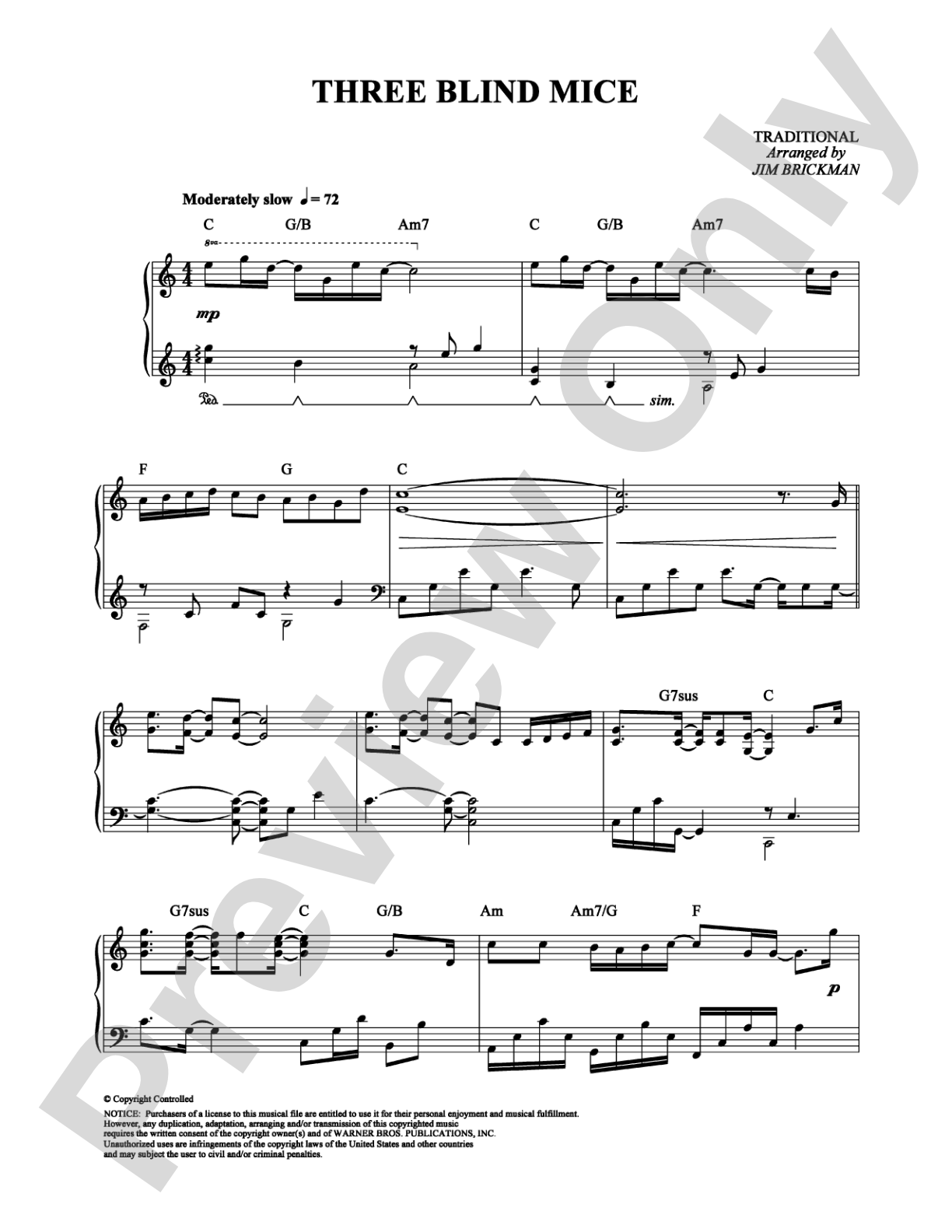
Brickman's reimagining of this familiar melody transforms a nursery rhyme into something contemplative and genuinely moving. The arrangement respects the tune we all know while infusing it with the harmonic sophistication and emotional depth that define his adult contemporary style, making it a conversation starter about how a simple melody can be treated at multiple levels of artistic maturity.

What to expect

Nostalgic yet refined, the piece invites listeners into a moment of recognition that quickly deepens into something more introspective. Brickman's harmonic language gives the simplicity genuine warmth, creating space for reflection rather than cuteness or irony.

Who it's for

Adult pianists and performers preparing recital programs that explore contemporary approaches to standard melodies will find this a thoughtful choice. Piano teachers working with intermediate-advanced students can use this to discuss arranging philosophy and how context transforms familiar material.

How to get the most out of it

  • Shape the melody with the same care you'd give a Brickman original; resist the urge to play it straight or nostalgic. The arrangement warrants genuine interpretive choices in phrasing and dynamics.
  • Pay attention to the harmonic movement underneath the familiar tune. Let those supporting voices guide your pedaling choices rather than relying on automatic muscle memory.
  • Approach the accompaniment pattern with textural awareness. The foundation matters as much as the melody, so listen to how the two interact rather than treating them as separate layers.

How to use it

Include this in a mixed recital program where you want to create an emotional pivot point, bridging between more formal classical work and audience-centered contemporary pieces. It works particularly well as an encore that demonstrates how tradition and modern sensibility can coexist.

Skills your students will build

  • Interpreting familiar melodies through unfamiliar harmonic contexts
  • Balancing nostalgic resonance with artistic sophistication
  • Reading and executing contemporary piano notation and harmonic structures
  • Pedaling with attention to harmonic color rather than automatic timing

You May Also Like