Three American Portraits Cover Image

Three American Portraits: Brass Duo & Ensemble, Quintet, Conductor Score & Parts

$40.00 USD
Sale price  $40.00 USD Regular price 
Skip to product information
Three American Portraits Cover Image

Three American Portraits: Brass Duo & Ensemble, Quintet, Conductor Score & Parts

By Bruce Broughton

Item: 36-BSMCHM111

$40.00
Shipped

One moment…

Description
Commissioned by Westwind Brass. Contents: Napolean Hill; Calvin Coolidge; William Tecumseh Sherman. Includes preface and composer biography. Bruce Broughton is one of the United States' most outstanding composers of concert and film music, winning seven Emmy awards over his career so far. His music is notable for its wonderful rich harmonies, flowing melodies, and rhythmic vitality.

Three American Portraits: Brass Duo & Ensemble, Quintet, Conductor Score & Parts isn't in MakeMusic Cloud just yet...but it could be. Let us know you'd like to see it, and you'll help shape what comes next. In the meantime, start a free trial and dive into thousands of interactive titles your students can play along with today.

Sample Pages

No sample pages found.

Sample Audio
No sample audio found.
Sample Video
Additional Details
Series: Black Squirrel Music - LudwigMasters
Publisher: Keiser Productions, Inc.
ISBN10: 8-89-270459-1
ISBN13: 979-8-89-270459-5
UPC: 659359640513
SKU: 36-BSMCHM111
Instrumentation: Brass Quintet

More about this title

About the Composer: Bruce Broughton
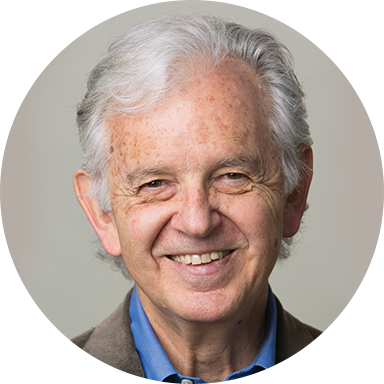
Bruce Broughton

Bruce Broughton has shaped American entertainment across multiple mediums for decades. His film scores include Silverado, Tombstone, The Rescuers Down Under, and Miracle on 34th Street, while his television work spans from Steven Spielberg's Tiny Toon Adventures and JAG to Seth MacFarlane's The Orville. He has received ten Emmy Awards, an Oscar nomination, a Grammy nomination, and twenty-three Emmy nominations across his career.

Beyond screen music, Broughton has established himself as a significant concert composer. Major American orchestras including the Cleveland Orchestra, Chicago Symphony, and Los Angeles Chamber Orchestra have performed his concert works. He serves as a Board member of ASCAP and has held leadership roles in the Academy of Television Arts and Sciences, the Academy of Motion Picture Arts and Sciences, and as founding member and past president of The Society of Composers and Lyricists.

Why we love this

Broughton's three-movement quintet demonstrates why a film composer's sensibility translates so naturally to chamber brass writing. Each portrait emerges with distinctive character and colorful harmonic language, yet the writing never feels verbose or oversized for five players. The score rewards both ensemble cohesion and individual voices, making it equally compelling for university quintets and advanced high school groups seeking substantial concert material with genuine musical substance.

What to expect

Three distinct sonic characters unfold across this suite. Broughton's signature rich harmonies and rhythmic vitality give each portrait its own personality, from stately to reflective to energetic. The writing feels spacious and generous, allowing the intimate acoustics of brass quintet to reveal sophisticated harmonic movement without crowding or bombast.

Who it's for

Brass quintets working at the college level or advanced high school ensembles ready for chamber repertoire with genuine compositional substance. This work suits groups seeking concert material that showcases American compositional voices and rewards careful attention to harmonic color and melodic phrasing.

How to get the most out of it

  • Shape each movement as a character study rather than a display piece; Broughton's harmonic language demands careful balance between inner voices and outer melody lines to let the harmonies speak clearly.
  • Establish the tempo relationships between movements beforehand so transitions feel inevitable rather than abrupt.
  • Lean into the lyrical passages with generous breath space; Broughton's flowing melodic writing can sound rushed if the ensemble treats it as mere connective tissue between climactic moments.
  • Use the conductor score to clarify how doublings and voicing support the harmonic color at key moments, particularly where the quintet divides into smaller units.

How to use it

Pair this in a concert celebrating American composers or national themes. The three-movement structure works beautifully as a standalone chamber work or as a centerpiece in a program of twentieth-century American brass music, bridging concert and film music traditions.

Skills your students will build

  • Balancing multiple simultaneous melodic lines within a five-player ensemble
  • Realizing harmonic color through careful voice leading and dynamic control
  • Coordinating breathing and phrasing across diverse rhythmic profiles
  • Responding to chamber rehearsal scores that reveal compositional architecture beyond individual parts

You May Also Like