
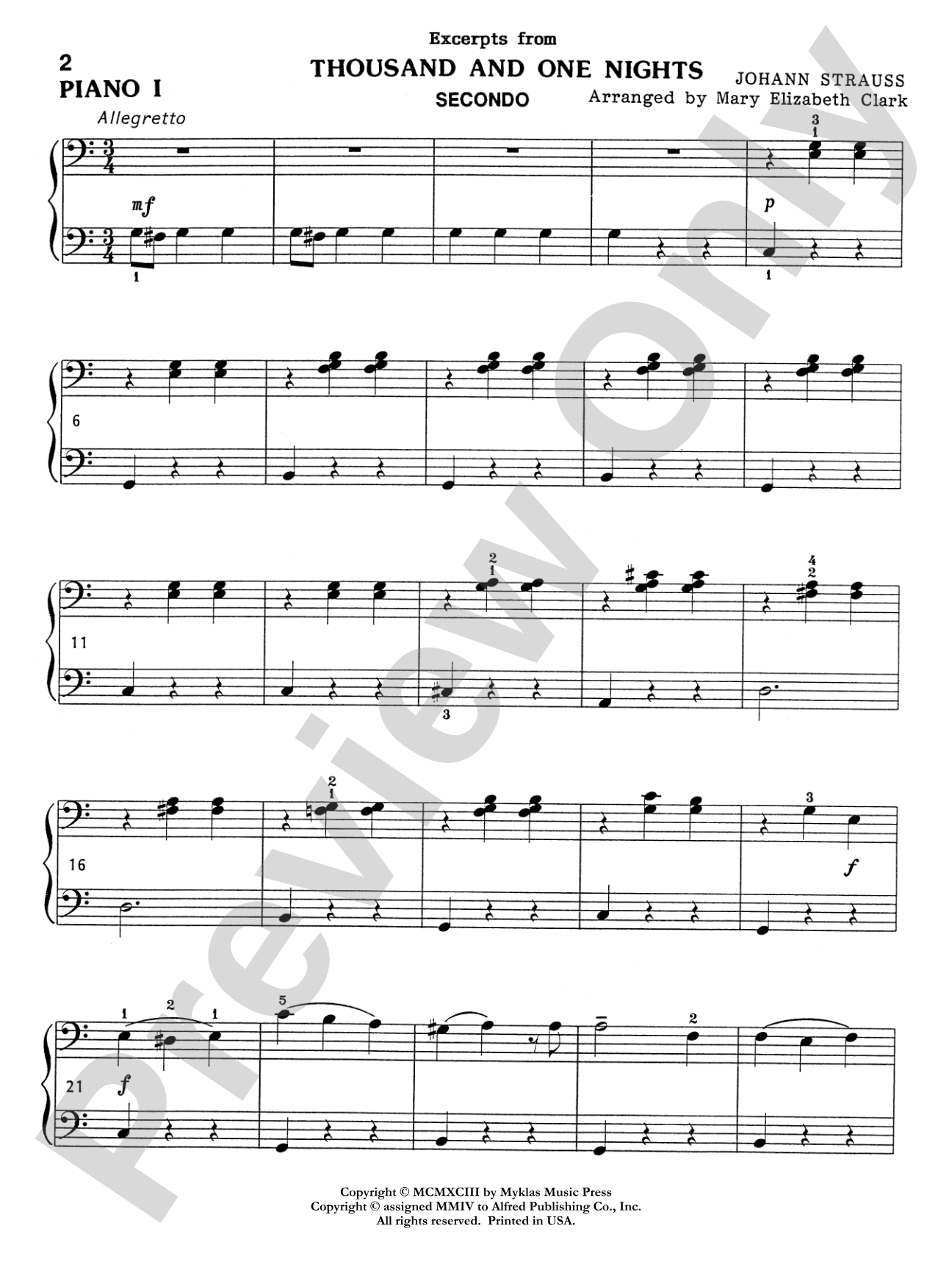
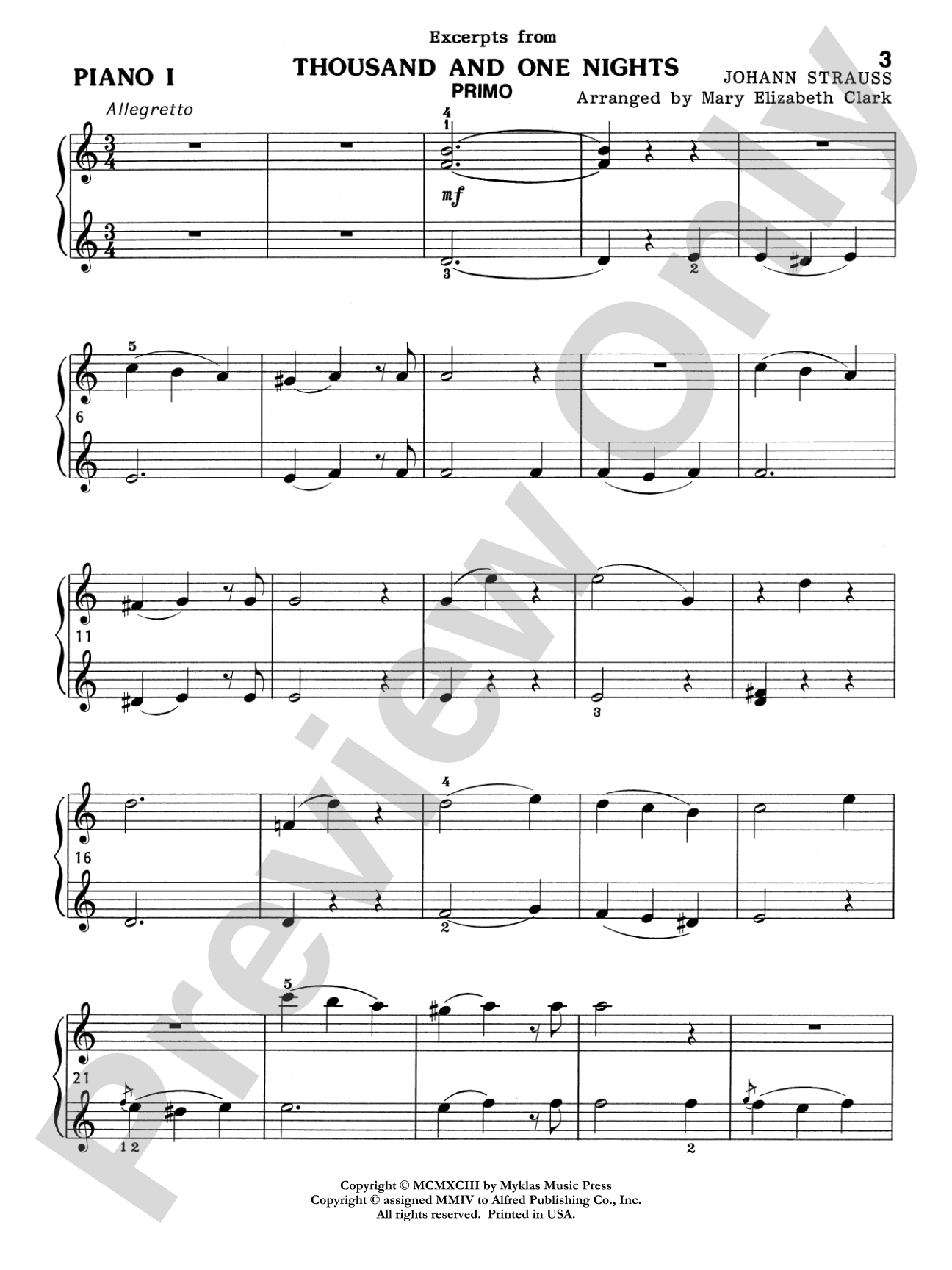
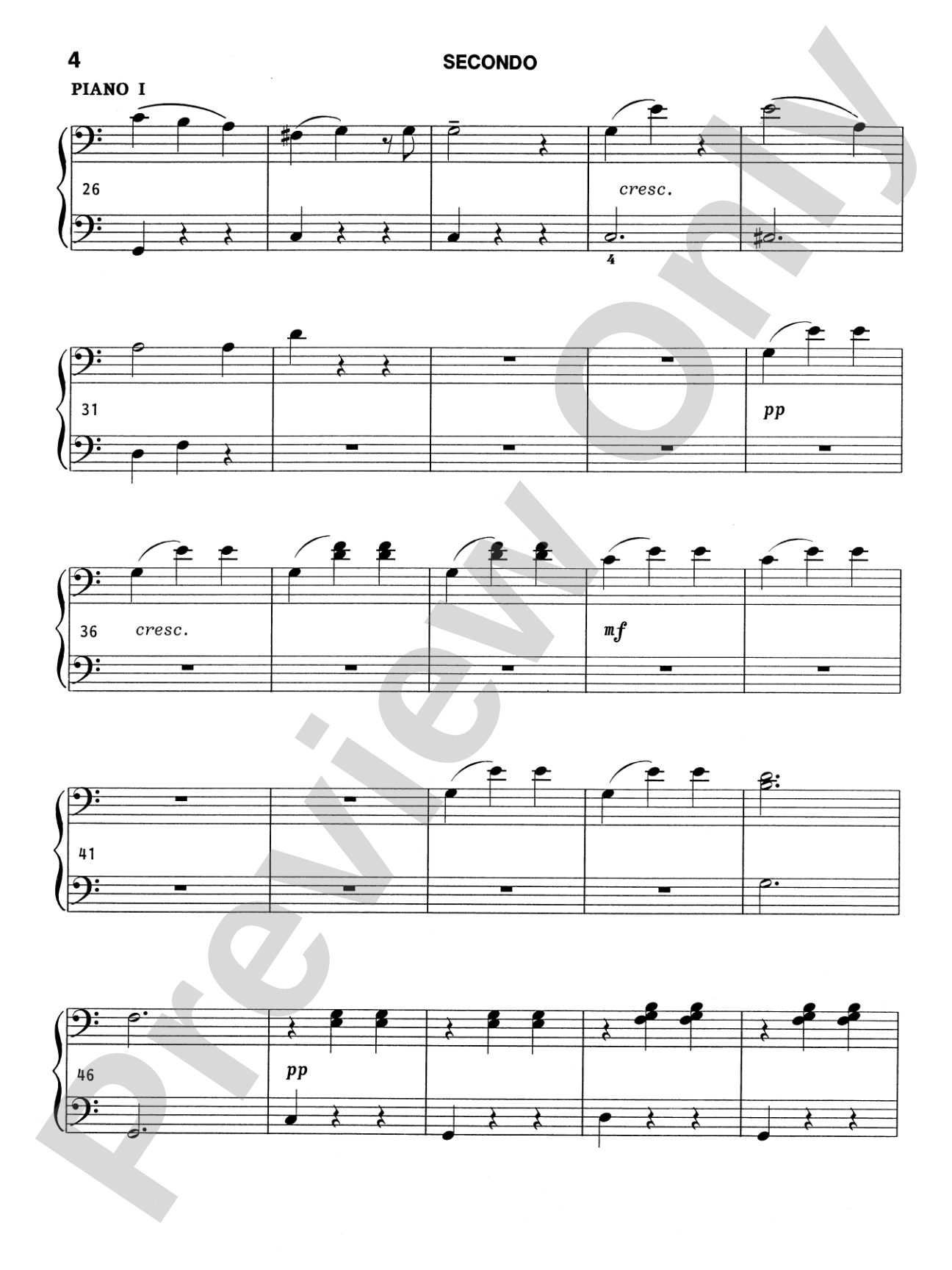

Thousand and One Nights - Piano Quartet (2 Pianos, 8 Hands): Piano
By Johann Strauss / arr. Mary Elizabeth Clark
Level: Late Elementary
Item: 00-PB-0000700

$8.95
Pickup currently not available
Related Items
Thousand and One Nights: Piano Quartet (2 Pianos, 8 Hands) Sheet (2 copies included) |
$8.95
|
View |
Description
Johann Strauss Jr. began his career as a theatre composer in 1871 with "Indigo and the Forty Thieves," which was re-worked eventually into the operetta, "Thousand and One Nights," which debuted in 1906. It met with high acclaim as “an oriental operetta of dream interpretation, a sumptuous ballet spectacular with songs." This arrangement for 2 pianos and 4 performers is within the technical reach of late elementary level pianists. Two parts (piano 1 and piano 2) are included. A Federation Festivals 2024-2028 selection.


Don't just read it, hear it, play along with it, and watch your students grow with it. In MakeMusic Cloud, Thousand and One Nights - Piano Quartet (2 Pianos, 8 Hands): Piano comes alive with professional accompaniment, adjustable tempo, and built-in practice tools that turn solo practice into real progress.
Open in the Player
Jump straight in and assign it today.
Start Your Free Trial
Open this title and explore the full library in minutes.
Sample Audio
No sample audio found.
Sample Video
No sample videos found.
Additional Details
Publisher:
Alfred Music
Page Count:
16
SKU:
00-PB-0000700
More about this title
About the Composer: Johann Strauss
Johann Strauss Jr. (1825-1899) inherited his father's mantle as Vienna's preeminent dance composer and expanded it dramatically. While celebrated for his waltzes and polkas, Strauss proved himself a gifted operetta composer as well, blending the orchestral brilliance of his instrumental works with theatrical storytelling and memorable melody.
Strauss composed "Indigo and the Forty Thieves" as a theatre work in 1871, then later reworked and expanded the material into the operetta "Thousand and One Nights," which premiered in 1906 near the end of his life. The operetta captures his signature style: lyrical themes, infectious rhythms, and the golden-age Viennese sound that defined an era of European musical culture.
Why we love this
Mary Elizabeth Clark's arrangement opens Strauss's operetta music to young ensemble players without sacrificing the elegance and sweep that make Strauss essential repertoire. Four pianists sharing two instruments creates a natural collaborative dynamic while keeping the technical demands reasonable for late elementary students, making this both accessible and genuinely fun to perform together.
What to expect
Lush, elegant, and theatrical. The music evokes the romantic orientalism of Strauss's operetta world, with sweeping melodies and shimmering accompaniments that create an impression far grander than the ensemble size suggests. The four-hand texture blooms with warmth and movement.
Who it's for
This arrangement suits ensembles ready to tackle multi-piano chamber repertoire without requiring advanced technical skills. Late elementary pianists gain meaningful experience with ensemble playing, score awareness, and the rewards of collaborative musicianship while performing a recognized masterwork.
How to get the most out of it
- Balance the melodic line between Piano 1 and Piano 2 so the primary theme remains clear even when accompanied by flowing sixteenth-note figures or harmonic support from the other instrument.
- Practice the coordination between players on the same piano first, establishing a steady tempo and physical comfort with the shared bench before running sections with both pianos together.
- Bring out the waltz character through subtle rhythmic lilt rather than exaggeration; Strauss's elegance comes from refinement, not overstatement.
- Allow the rich harmonic colors to emerge naturally through clear pedal work on both pianos, particularly during the more lyrical passages that feature sustained chords.
How to use it
Feature this as part of a piano ensemble showcase or a concert celebrating Viennese masters at an accessible level. It also pairs naturally with other late elementary ensemble pieces in a chamber music recital, or serves as a gateway performance piece for pianists preparing to explore Strauss's full operetta catalogue.
Skills your students will build
- Ensemble balance and blend across two pianos
- Reading and maintaining tempo independence while listening to another performer
- Pedal control for sustained harmonic color
- Phrasing in a dialogue between accompanying and leading voices
- Managing shared bench space and coordinating hand positions with another pianist