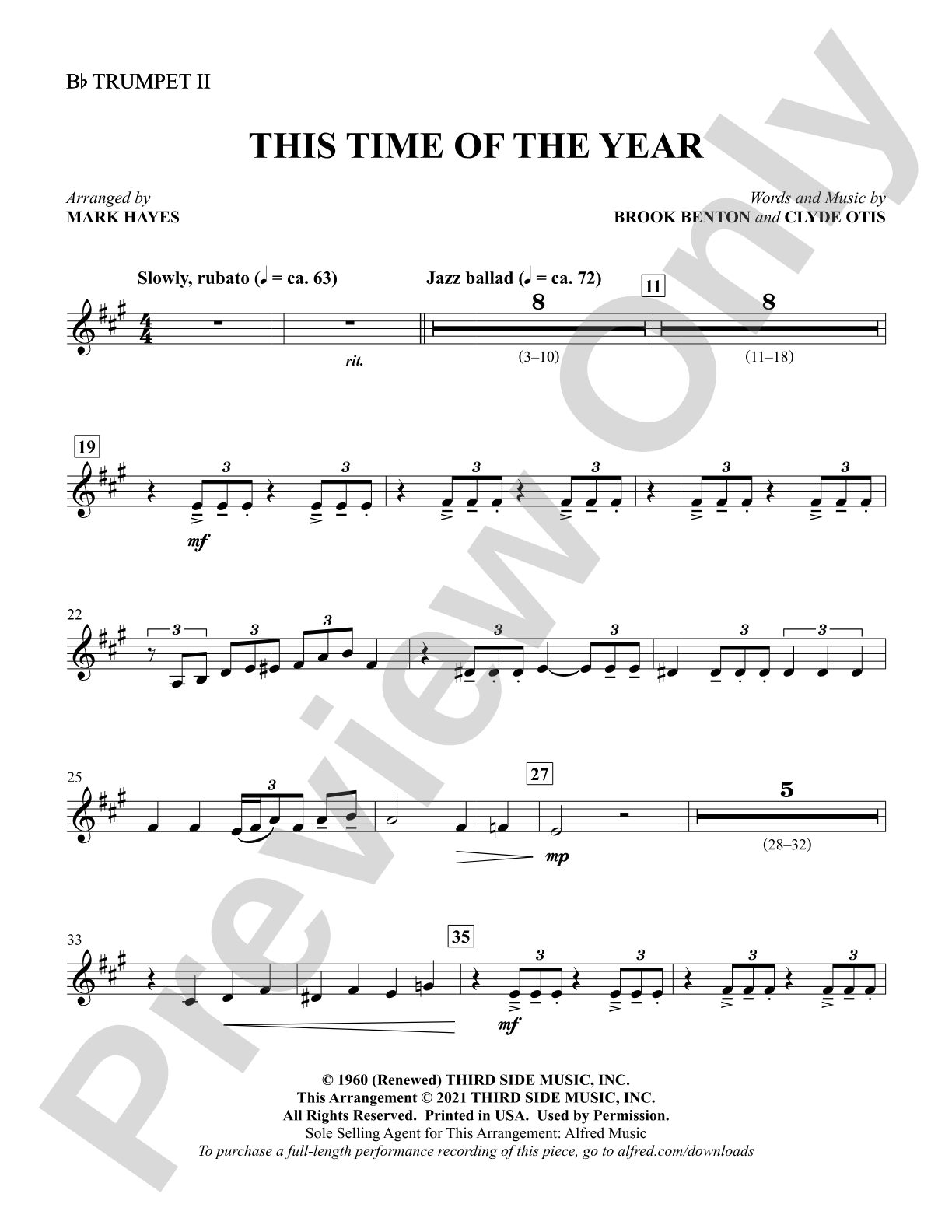
This Time of the Year: 2nd B-flat Trumpet Sheet Music Preview

This Time of the Year: 2nd B-flat Trumpet

Words and music by Brook Benton and Clyde Otis / arr. Mark Hayes

Item: 00-PC-0018918_T2

Digital Download
$3.00
Description
African-American musicians Brook Benton and Clyde Otis collaborated on this bluesy ballad in 1959. Since then, the enduring piece has been recorded by iconic artists such as Etta James and Ray Charles. Verses present sentimental snapshots of Christmases past, and a crooner melody paints a warm holiday portrait. "Santa Claus is on his way, loads of joy on his sleigh, this time of the year, when Christmas is near."

This Time of the Year: 2nd B-flat Trumpet isn't in MakeMusic Cloud just yet...but it could be. Let us know you'd like to see it, and you'll help shape what comes next. In the meantime, start a free trial and dive into thousands of interactive titles your students can play along with today.

Sample Audio
0:00
0:00
Sample Video
Additional Details
Series: Alfred Pop Choral Series
Publisher: Alfred Music
SKU: 00-PC-0018918_T2

More about this title

About the Composer: Brook Benton

Brook Benton (1931-1988) was a vocalist, songwriter, and bandleader who bridged R&B, pop, and jazz styles during the 1950s and 1960s. He co-wrote "This Time of the Year" with Clyde Otis, establishing himself as a composer of emotional ballads that resonated across multiple genres and audiences. His work remains a cornerstone of American popular song and continues to be recorded by artists across generations.

Why we love this

Mark Hayes's arrangement captures the soulful warmth of the original while keeping the vocal lines singable and rewarding for mixed choirs. The piece balances nostalgic sentiment with bluesy sophistication, making it ideal for holiday concerts that want substance alongside festivity. Your singers will connect with the conversational storytelling in the verses and the broad, generous melody that invites expressive singing.

What to expect

Bittersweet and reflective, the piece invites listeners into a specific moment of remembrance. The bluesy undertones give the melody a lived-in quality, while the warm harmonic palette creates an atmosphere of nostalgia without sentimentality. You're not singing about a generic holiday; you're sharing intimate recollections of Christmases past, framed by the promise of joy still arriving.

Who it's for

This arrangement works beautifully for mixed choirs at the intermediate to advanced level who want holiday repertoire with genuine musical substance. It's also ideal for jazz choirs, pop ensembles, or any group comfortable with R&B and jazz inflections. The piece appeals equally to directors seeking a program-opener that sets a sophisticated tone or a closer that lingers warmly in the audience's memory.

How to get the most out of it

  • Shape the verses as intimate snapshots rather than grand declarations; the strength lies in conversational warmth and specific memory, not volume or drama.
  • Lean into the bluesy character with subtle rhythmic flexibility in the crooner melody; straight time can rob the piece of its essential character.
  • Balance the harmonic richness in the chords without letting inner parts overwhelm the lyrical top line; clarity matters more than blend in this style.
  • Consider how the recorded accompaniment sits in your performance space; the jazz ensemble sound requires room to breathe and will color the entire acoustical picture.

How to use it

Position this in a holiday concert where you want to shift from celebratory energy into reflective territory, perhaps after more upbeat selections. Its jazz idiom and sophisticated harmony make it an excellent bridge between traditional carols and contemporary pop choral repertoire. It also works well as a concert-closer that sends audiences out with warmth rather than bombast.

Skills your students will build

  • Singing with jazz phrasing and rhythmic flexibility
  • Balancing bluesy inflection with clear diction
  • Managing harmonic independence in jazz voicings
  • Interpreting lyrical subtext and emotional nuance
  • Responding to and blending with jazz accompaniment

You May Also Like