This Other Spring Sheet Music Preview

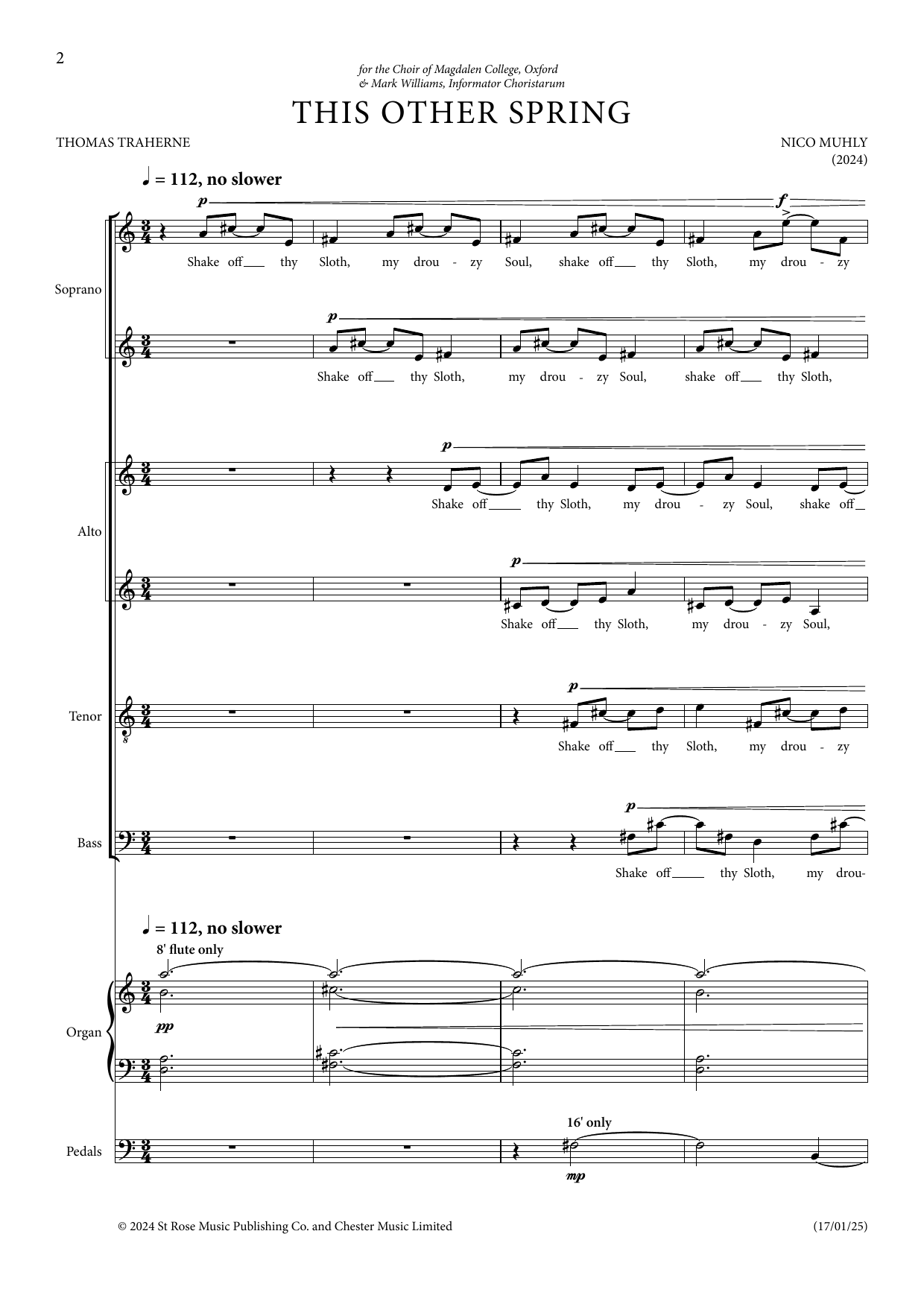
This Other Spring: SATB Choral Octavo

By Nico Muhly

Item: 35-DS01607337

Digital Download
$5.95
Description

This Other Spring: SATB Choral Octavo isn't in MakeMusic Cloud just yet...but it could be. Let us know you'd like to see it, and you'll help shape what comes next. In the meantime, start a free trial and dive into thousands of interactive titles your students can play along with today.

Sample Audio
No sample audio found.
Sample Video
Additional Details
Publisher: Hal Leonard
Page Count: 22
SKU: 35-DS01607337

More about this title

About the Composer: Nico Muhly

Nico Muhly is an American composer whose catalog spans opera, orchestral works, film scores, and choral music. He studied at Columbia University and the Juilliard School, and his work consistently bridges contemporary classical composition with accessible, deeply human expression. His choral writing has earned particular recognition for its lyrical gift and technical craftsmanship.

Why we love this

Muhly writes choral lines that feel natural to sing while maintaining compositional sophistication. This piece rewards singers who commit to its harmonic language and gives them genuinely beautiful material to perform, which builds enthusiasm across all four parts.

What to expect

The piece unfolds with gentle introspection, creating intimate moments within a full choral texture. Muhly's orchestration of voices produces both transparency and richness, inviting listeners into a soundworld that feels both modern and timeless.

Who it's for

This octavo suits advanced high school choirs and collegiate ensembles comfortable with contemporary harmonic language and rhythmic independence. Directors programming concert works beyond traditional standards will find this a substantial addition to mixed voice repertoire.

How to get the most out of it

  • Establish the harmonic language early in rehearsal by isolating chords vertically before running sections horizontally; Muhly's progressions demand precise intonation from each voice.
  • Shape phrases with attention to text underlay rather than bar lines; the emotional weight sits in how words land, not in metronomic regularity.
  • Record sectional rehearsals and have singers listen to their own voice part in context; hearing yourself within the harmonic texture builds confidence in exposed writing.

How to use it

Pair this with other contemporary works for a concert exploring how living composers approach the voice, or program it on a thematic concert about renewal and observation. Its 22 pages make it a centerpiece rather than filler.

Skills your students will build

  • Singing contemporary harmonic language with secure intonation
  • Independence in part singing across sustained and moving lines
  • Phrase shaping informed by text rather than bar structure
  • Collaboration in creating unified harmonic blend

You May Also Like