
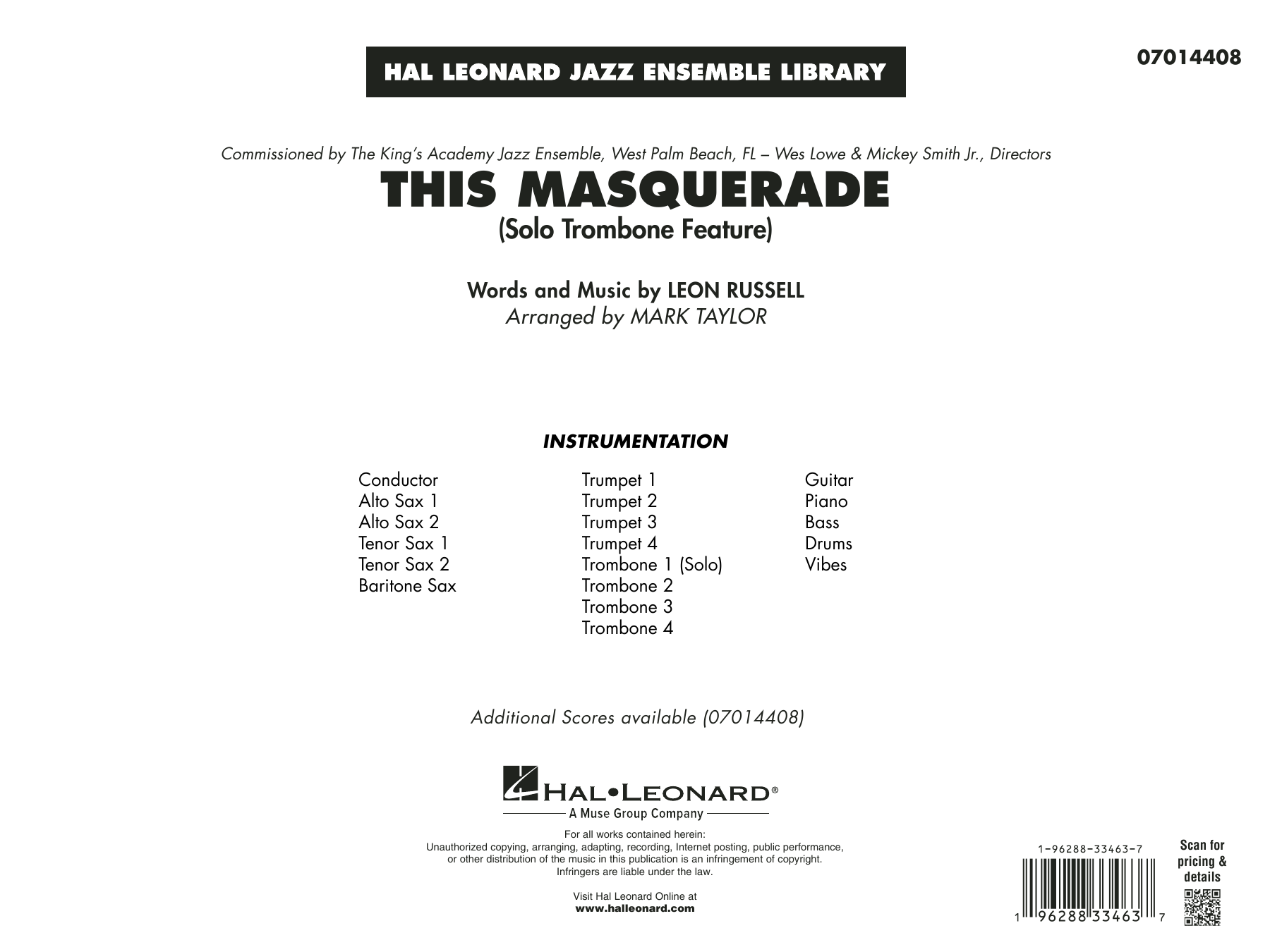

This Masquerade (arr. Mark Taylor): Jazz Ensemble Conductor Score & Parts
By Leon Russell / Arranged by Mark Taylor
Grade: 4
Item: 35-PK01696945
$55.00
Pickup currently not available
Buy Extra Parts (Digital PDF Download)
Parts Added to Cart!
Description
This fresh bossa setting of the classic #1 hit by Leon Russell prominently features your lead trombone player as a soloist as well as the sax section. The solo section cleverly breaks into a double-time feel samba then transitions back for the ending. Lead trumpet plays high Bb and Lead Bone plays high G.


This Masquerade (arr. Mark Taylor): Jazz Ensemble Conductor Score & Parts isn't in MakeMusic Cloud just yet...but it could be. Let us know you'd like to see it, and you'll help shape what comes next. In the meantime, start a free trial and dive into thousands of interactive titles your students can play along with today.
Request This Title
Tell us you want it.
Start Your Free Trial
Explore everything that's ready to play right now.
Sample Audio
No sample audio found.
Sample Video
No sample videos found.
Additional Details
Publisher:
Hal Leonard
SKU:
35-PK01696945
More about this title
About the Composer: Leon Russell
Leon Russell was an American singer, songwriter, and multi-instrumentalist who became a central figure in 1970s rock and soul music. A prolific composer and session musician, Russell wrote songs that bridged rock, country, and R&B, earning him the nickname "Master of Space and Time" for his inventive production work and genre-blending approach.
Russell's "This Masquerade" became one of his signature compositions, reaching number one on the Billboard Hot 100 when covered by George Benson in 1976. The song's sophisticated harmonic structure and soulful melodic contour have made it a favorite for jazz reinterpretations and educational ensembles seeking material with genuine artistic depth.
Why we love this
Mark Taylor's bossa setting transforms a soul standard into an ensemble vehicle that actually showcases your strong section players. The lead trombone solo gives that player meaningful spotlight time with a lyrical melody, while the sax section gets their moment too. The arrangement's structural sophistication (the double-time samba section breaks the expected groove and keeps musicians engaged beyond simple head-solo-head formats.
What to expect
Sophisticated and approachable at once. The bossa rhythm creates an elegant, layered texture while the melody remains singable and memorable. When the samba break hits mid-solo, the arrangement shifts into open energy and contemporary flair, then settles back into the groove's cool restraint for a satisfying close.
Who it's for
This arrangement suits Grade 4 jazz ensembles with capable soloists and a solid understanding of swing and Latin feels. You'll get the most from groups that can balance section playing with spotlight moments and navigate style shifts smoothly.
How to get the most out of it
- Find the pocket in the bossa rhythm during the A section by locking the kick drum and bass line first; once that groove locks, the ensemble's comping will settle naturally on top.
- Bring out the trombone soloist's entrance clearly in the solo section; the lead bone needs space to sit into the groove rather than rushing against the rhythm section.
- Approach the double-time samba transition as a distinct musical moment, not a speed increase. Rebalance dynamics and articulation to let the energy shift feel intentional rather than chaotic.
- Shape the ending by gradually pulling back the ensemble swell once you return from the samba, leaving room for the soloist to voice the final melodic figures with warmth.
How to use it
Anchor a jazz or pop standards concert with this. It pairs naturally with other bossa or Latin-influenced jazz pieces and gives soloists legitimate feature moments that audiences enjoy. The style and accessibility also make it strong for jazz festivals or community performances alongside more traditional swing repertoire.
Skills your students will build
- Distinguishing and executing bossa nova rhythm patterns
- Balancing section blend while supporting featured soloists
- Executing double-time feel and tempo relationships during style shifts
- Phrasing and articulation in Latin jazz idiom
- Reading high register demands in lead trumpet and lead trombone parts