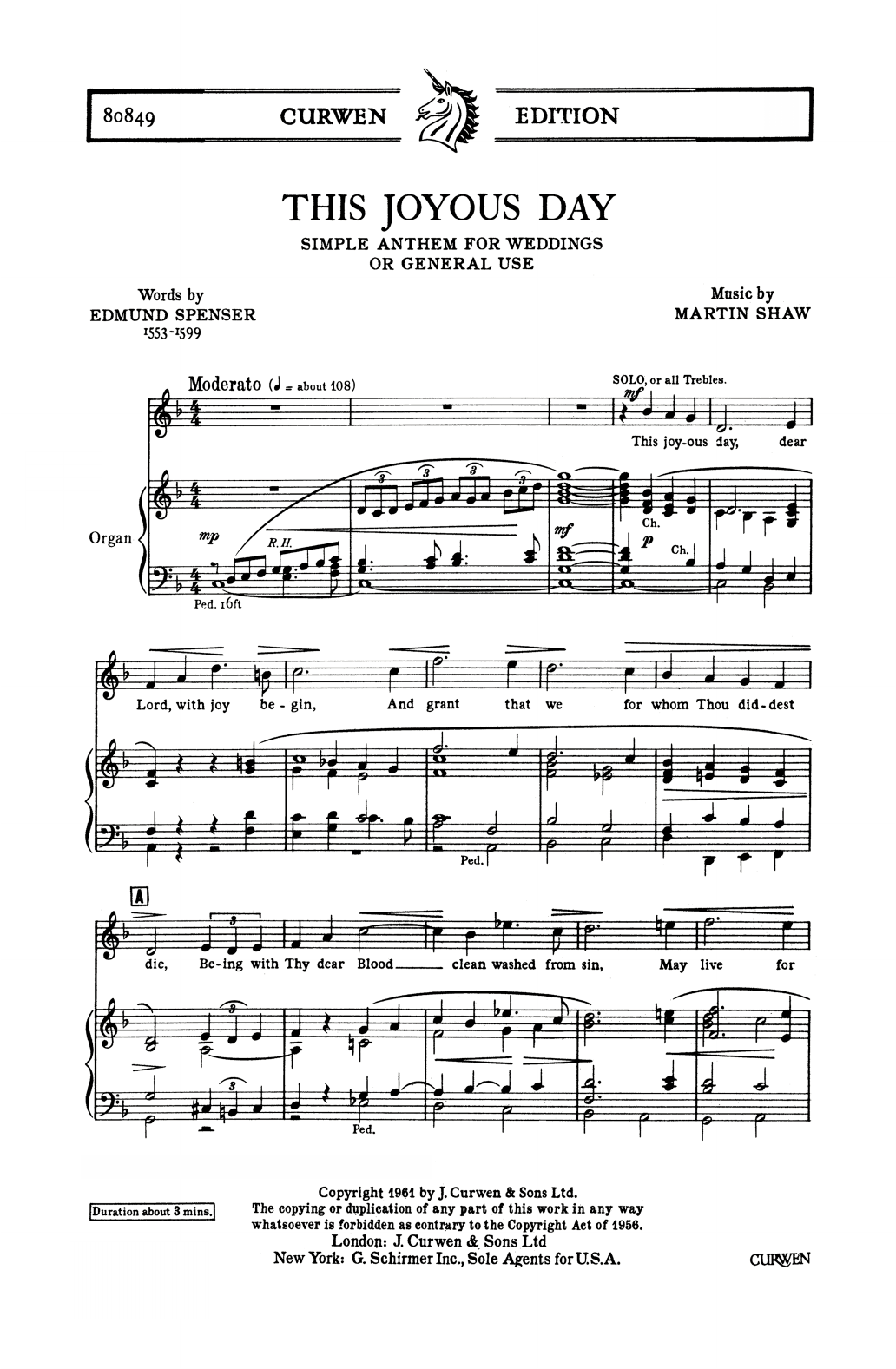
This Joyous Day: Mixed Choral Octavo

By Martin Shaw

Item: 35-DS01095289

Digital Download
$3.25
Description

This Joyous Day: Mixed Choral Octavo isn't in MakeMusic Cloud just yet...but it could be. Let us know you'd like to see it, and you'll help shape what comes next. In the meantime, start a free trial and dive into thousands of interactive titles your students can play along with today.

Sample Audio
No sample audio found.
Sample Video
Additional Details
Publisher: Hal Leonard
Page Count: 4
SKU: 35-DS01095289

More about this title

About the Composer: Martin Shaw

Martin Shaw (1876-1958) was a British composer, conductor, and organist whose prolific output shaped the choral landscape of early 20th-century England. He composed hundreds of vocal works, from intimate partsongs to large-scale choral works, and served as conductor and organist at St. Mary, Primrose Hill in London for decades. Shaw had a gift for writing accessible yet artistically rewarding music that elevated everyday texts and occasions into moments of genuine musical substance.

Why we love this

Shaw's setting captures pure jubilation without sentimentality, giving your choir a festive piece that sits naturally for mixed voices and doesn't demand virtuosic showboating. The straightforward four-page format makes it manageable for rehearsal schedules while the harmonic clarity keeps singers engaged in real voice leading rather than filler parts.

What to expect

Warmth and genuine celebration mark this setting. The harmonic language is secure and grounded, creating a sense of occasion without theatrical excess. Singers experience the satisfaction of blending into something cohesive that sounds both polished and heartfelt.

Who it's for

Mixed choirs seeking concert repertoire that radiates genuineness and joy. Programs benefit from this piece whether you're building a secular concert, preparing a spring festival set, or looking for accessible music that doesn't compromise artistic integrity.

How to get the most out of it

  • Emphasize the text clarity by rehearsing diction separately before layering it into the harmonic framework; Shaw's writing reveals its architecture when words land precisely.
  • Balance the sonority across all four voice parts rather than letting sopranos dominate; the jubilance comes from unified resonance, not brightness alone.
  • Shape phrases with gentle dynamic curves rather than flat delivery; even brief sections benefit from intentional rises and falls that reflect the emotional trajectory of the text.

How to use it

Position this as a lighter moment in a concert sequence, especially effective mid-program where its brightness refreshes the listener's ear after heavier fare. It also works beautifully as a closing piece when you want audiences to leave with genuine warmth rather than dramatic intensity.

Skills your students will build

  • Balancing four-part harmonic texture within a secular choral context
  • Ensemble blend and unified vowel formation across voice parts
  • Text projection and diction clarity in English language repertoire
  • Phrasing and dynamic shaping in shorter, contained musical structures

You May Also Like