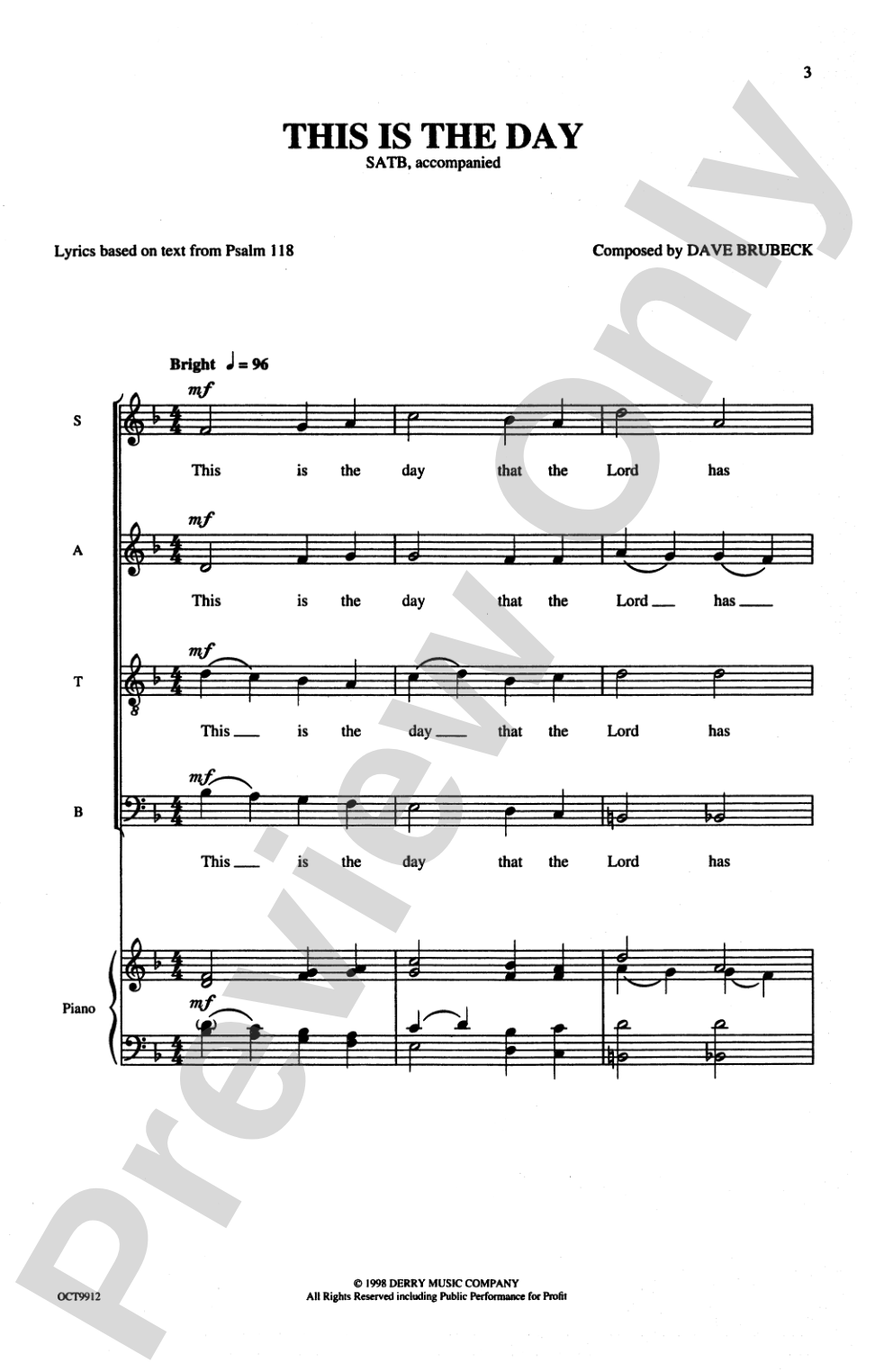
This Is the Day Sheet Music Preview

This Is the Day: SATB Choral Octavo

By Dave Brubeck

Item: 00-PO-0005158

Digital Download
$2.25

Minimum order quantity: 20 copies

Description

This Is the Day: SATB Choral Octavo isn't in MakeMusic Cloud just yet...but it could be. Let us know you'd like to see it, and you'll help shape what comes next. In the meantime, start a free trial and dive into thousands of interactive titles your students can play along with today.

Sample Audio
No sample audio found.
Sample Video
Additional Details
Series: Lawson-Gould: The Dave Brubeck Series
Publisher: Alfred Music
Page Count: 8
SKU: 00-PO-0005158

More about this title

About the Composer: Dave Brubeck

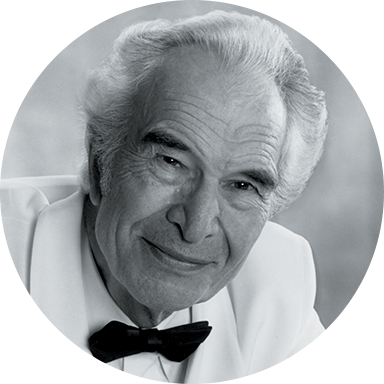
Dave Brubeck

Dave Brubeck built his legacy across two distinct musical worlds. As a jazz pianist, he pioneered cool jazz and became an international ambassador for the genre, but he was equally committed to large-scale classical composition. His studies with Darius Milhaud at Mills College shaped a compositional voice that seamlessly wove jazz language, classical structure, and spiritual depth together. Works like his mass To Hope! and oratorios The Voice of the Holy Spirit and Beloved Son have been performed by major orchestras and cathedral choirs worldwide, proving his skill extended far beyond the jazz standard.

Brubeck's influence extended beyond music into social progress. He played a pivotal role in breaking racial barriers during the mid-20th century at a time when integration in the arts was far from guaranteed. His honors reflect this comprehensive impact: a Grammy Lifetime Achievement Award for jazz, a Presidential Medal of the Arts from President Clinton, and induction into the American Classical Music Hall of Fame in 2003. He remained a performing artist and composer throughout his career, demonstrating that jazz and classical traditions need not exist in opposition.

Why we love this

Brubeck's sacred choral writing combines the harmonic sophistication of his jazz recordings with the reverence of classical liturgical tradition. This piece gives your choir access to a major American composer's voice in an intimate, achievable eight-page format. Directors appreciate how his melodic lines sing naturally while maintaining compositional integrity and spiritual weight.

What to expect

The piece inhabits a space between the contemplative and the energized. Brubeck's harmonic palette creates moments of gentle introspection alongside passages that lift with quiet celebration, all unified by a clear spiritual intention.

Who it's for

This octavo suits intermediate to advanced SATB choirs seeking meaningful sacred repertoire beyond standard hymnal fare. Singers with some experience reading jazz-influenced harmonies will engage most fully, though a director's clear preparation makes it accessible to developing ensembles.

How to get the most out of it

  • Study the jazz-influenced harmonic language separately from the text. The harmonic progressions may sit differently than traditional hymns, so let singers hear how chords move before worrying about words and breathing.
  • Honor the underlying swing feel without making it rhythmically loose. Even in sacred context, Brubeck's writing carries rhythmic vitality; precision and lift go hand in hand here.
  • Attend to the balance between parts. With Brubeck's sophisticated voicing, one weak section part can obscure the harmonic intent; ensure each voice line carries equal commitment.

How to use it

Program this as a centerpiece in a concert exploring American sacred music, or pair it with other Brubeck choral works if your community knows his jazz reputation and would appreciate discovering his classical output. It works equally well in a worship setting where your congregation values contemporary voices speaking to timeless texts.

Skills your students will build

  • Reading jazz-influenced harmonic progressions (seventh chords, chromatic voice leading)
  • Balancing independent melodic lines within a harmonic texture
  • Maintaining rhythmic precision and swing feel in a sacred context
  • Blend and intonation in four-part SATB writing with extended harmonies

You May Also Like