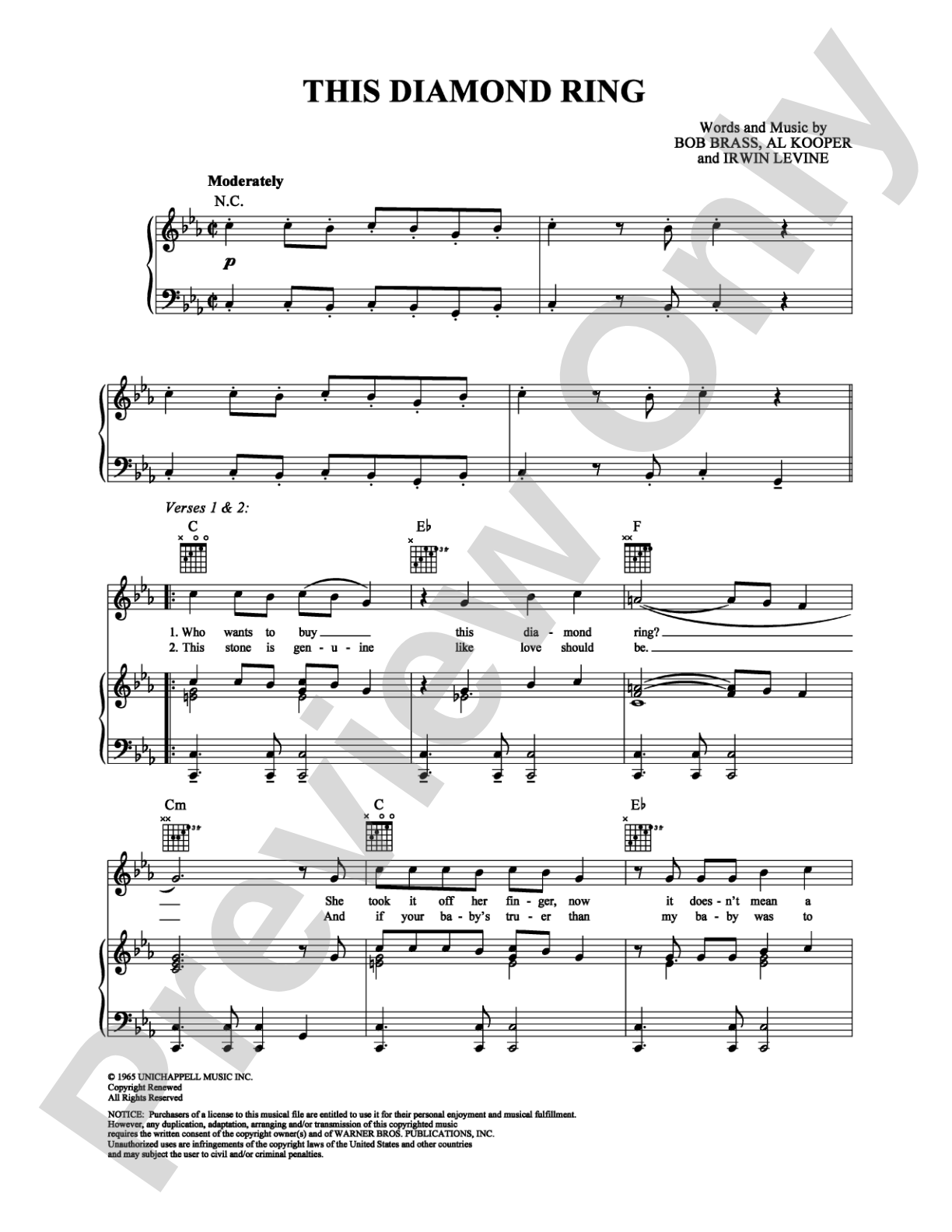
This Diamond Ring: Piano/Vocal/Chords Digital Sheet Music

This Diamond Ring: Piano/Vocal/Chords Digital Sheet Music

Gary Lewis, The Playboys, Irwin Levine, Bob Brass, Al Kooper

Item: 00-PS-0001149

Digital Download
$3.99
Description

This Diamond Ring: Piano/Vocal/Chords Digital Sheet Music isn't in MakeMusic Cloud just yet...but it could be. Let us know you'd like to see it, and you'll help shape what comes next. In the meantime, start a free trial and dive into thousands of interactive titles your students can play along with today.

Sample Audio
No sample audio found.
Sample Video
Additional Details
SKU: 00-PS-0001149

More about this title

About the Artist: Gary Lewis

Gary Lewis led The Playboys to mainstream success in the mid-1960s with a string of radio hits that defined the pop rock sound of the era. His vocal delivery combined youthful charm with genuine musicality, making songs accessible to both teen audiences and adult listeners. Lewis remained active in music and performance for decades, becoming a fixture on the oldies circuit and touring extensively throughout his career.

Why we love this

This 1965 chart-topper sits perfectly at the intersection of pop accessibility and solid musicianship. The chord progression and melodic phrasing teach voice students how to phrase within a commercial pop idiom while maintaining musical integrity, and pianists get to explore the interplay between vocal melody and rhythmic accompaniment that defines the era's best pop writing.

What to expect

Buoyant and optimistic, with a melodic hook that immediately lodges itself in the ear. The arrangement sits comfortably in a bright, uncomplicated harmonic world, and the rhythm section gives the song its propulsive, feel-good character despite the simplicity of its construction.

Who it's for

Vocalists exploring the pop rock repertoire of the 1960s and pianists looking to accompany singers in this style. It works equally well for students interested in music history and the development of popular music, or for performers building a recital program that includes mid-century pop standards.

How to get the most out of it

  • Pay attention to the swing of the eighth notes in the accompaniment; this isn't straight sixteenth-note pop but something closer to a lazy shuffle that gives the groove its character
  • Let the vocal melody sit naturally above the piano part rather than forcing rhythmic precision; the song thrives on a conversational, almost spoken-sung quality in the verses
  • Balance the piano's rhythmic foundation with space for the vocal line to breathe, especially in the chorus where the melody carries the emotional weight

How to use it

Pair this with other 1960s pop hits to create a themed recital segment on the rise of rock and pop music. It also works as an accessible introduction to accompanying repertoire for pianists, and vocalists can use it to study how commercial melody writing balances catchiness with genuine musicality.

Skills your students will build

  • Reading piano/vocal scores with chord symbols
  • Accompanying a vocalist while maintaining rhythmic independence
  • Understanding swing feel and groove in 1960s pop idioms
  • Phrasing pop melody with natural, conversational inflection

You May Also Like