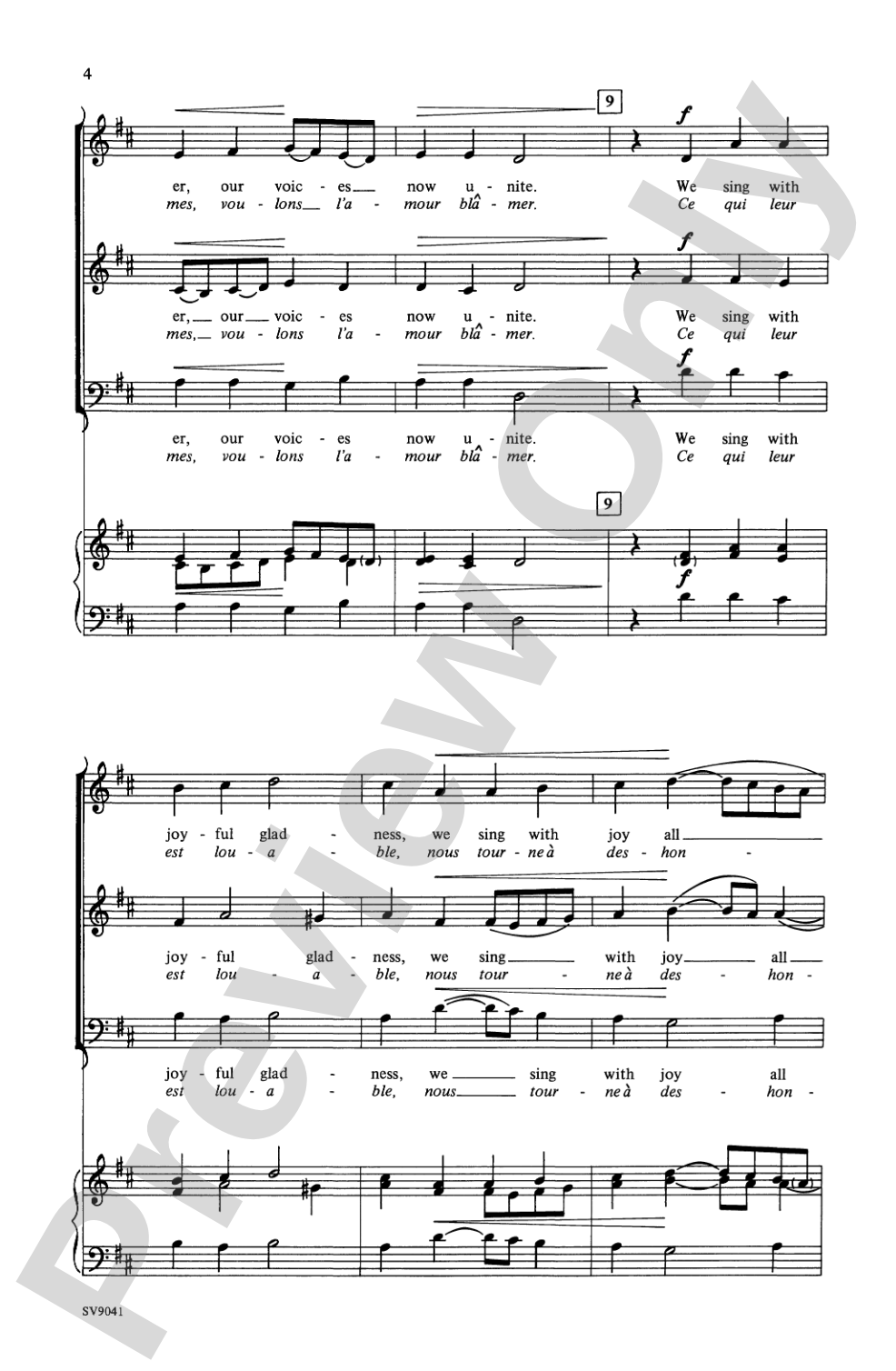
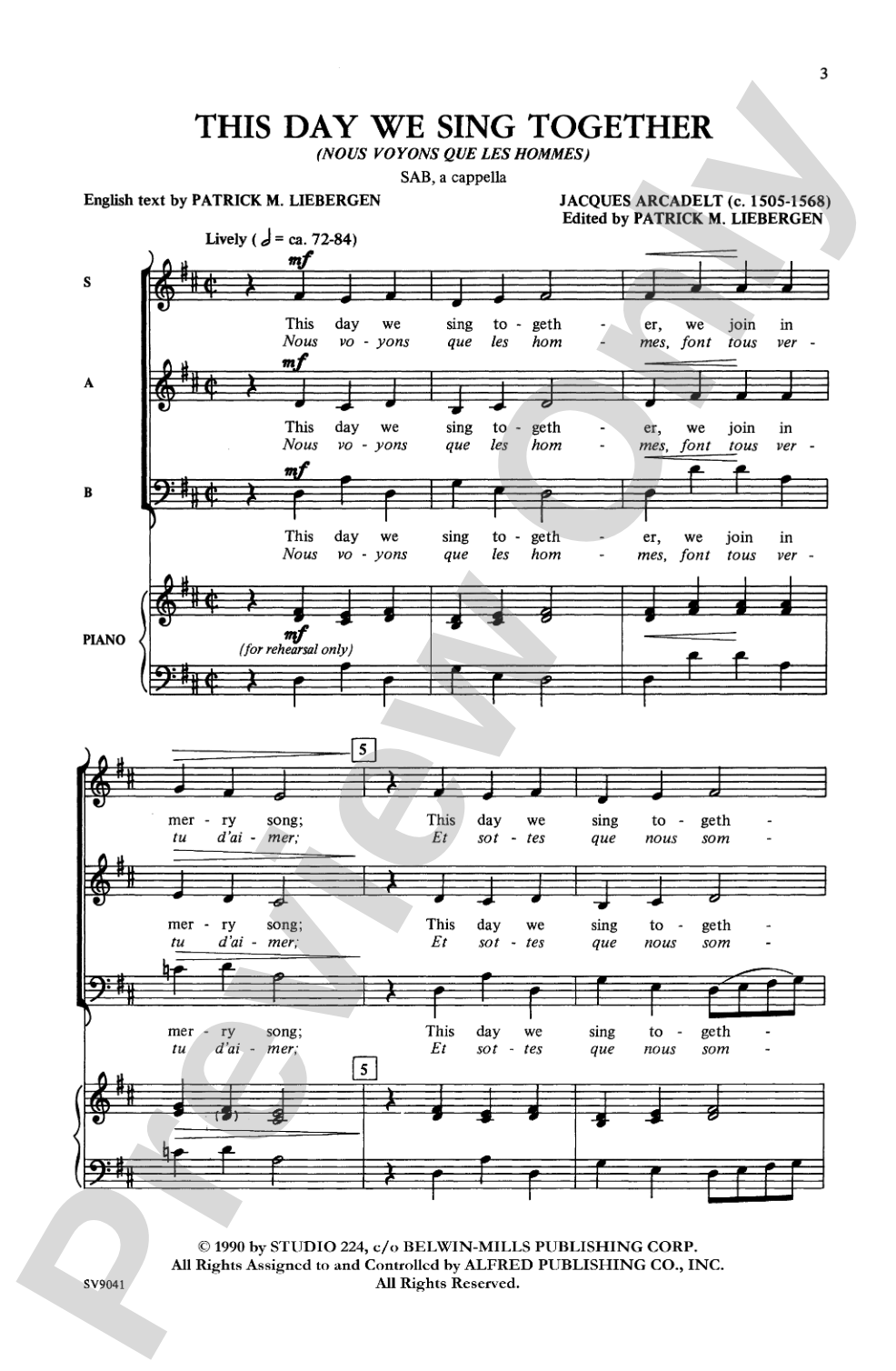
This Day We Sing Together (Nous Voyons Que Les Hommes) Sheet Music Preview

This Day We Sing Together (Nous Voyons Que Les Hommes): SAB, a cappella Choral Octavo

By Jacob Arcadelt / ed. Patrick M. Liebergen

Item: 00-PO-0005216

Digital Download
$2.25

Minimum order quantity: 20 copies

Description

This Day We Sing Together (Nous Voyons Que Les Hommes): SAB, a cappella Choral Octavo isn't in MakeMusic Cloud just yet...but it could be. Let us know you'd like to see it, and you'll help shape what comes next. In the meantime, start a free trial and dive into thousands of interactive titles your students can play along with today.

Sample Audio
No sample audio found.
Sample Video
Additional Details
Series: Alfred Archive Edition: Studio PR Catalog
Publisher: Alfred Music
Page Count: 8
SKU: 00-PO-0005216

More about this title

About the Composer: Jacob Arcadelt

Jacob Arcadelt (c. 1507-1568) was a Franco-Flemish composer whose secular vocal music shaped the sound of the Renaissance. Active in Italy for much of his career, he became known for madrigals and chansons that balanced textural clarity with emotional directness. His works remain central to choral education because they demonstrate how Renaissance polyphony can serve both technical instruction and genuine artistic expression.

Arcadelt's secular pieces are particularly valued in ensemble settings because they avoid the complexity of liturgical counterpoint while maintaining sophisticated voice leading. His melodies are singable, his harmonies transparent, and his structures memorable. For choirs building Renaissance literacy, his catalog offers immediate access to a major historical voice.

Why we love this

This arrangement brings a Renaissance masterwork within reach of intermediate choirs without diluting its artistry. The SAB voicing preserves Arcadelt's essential harmonic language and melodic beauty while keeping ranges comfortable and parts singable for developing musicians. Directors who want to program early music without overwhelming rehearsal time will find this edition both musically legitimate and practically sound.

What to expect

There's an unforced dignity to this piece. The voices move without artifice, the text sits naturally on the phrases, and the overall effect is lyrical without being sentimental. Singing it feels like joining a conversation among equals, each voice essential to the texture and meaning.

Who it's for

This octavo works well for intermediate to advanced mixed choirs with some Renaissance experience. Singers should be confident enough in part independence to hear their line as melodic rather than harmonic filler. It suits festival programming, sacred concert contexts, and choirs building a Renaissance set.

How to get the most out of it

  • Treat the three parts as independent melodic lines rather than harmonic blocks. Each voice should sing with the phrasing and weight of a solo line, creating transparency even in sustained passages.
  • Balance sopranos and altos carefully in opening statements, as the melody often shifts between upper voices. Neither part should dominate.
  • Shape phrases toward strong syllables in the text rather than pushing through to cadences. Renaissance phrase structure often rewards gentle, natural breath placement.
  • Keep articulation consistent across all three parts. A cappella singing without accompaniment requires precision in attacks and releases to maintain ensemble cohesion.

How to use it

Pair this with other Renaissance secular works to build a themed set, or use it as a bridge piece between contemporary music and liturgical polyphony. Its moderate length (8 pages) and a cappella format make it ideal for concert finales or festival showcases where you want to demonstrate ensemble maturity without extended rehearsal investment.

Skills your students will build

  • Reading Renaissance polyphony and voice independence
  • Sustaining independent melodic lines in a cappella texture
  • Shaping Renaissance phrasing with natural text alignment
  • Tuning triadic harmony without instrumental support
  • Balancing multiple simultaneous melodic lines

You May Also Like