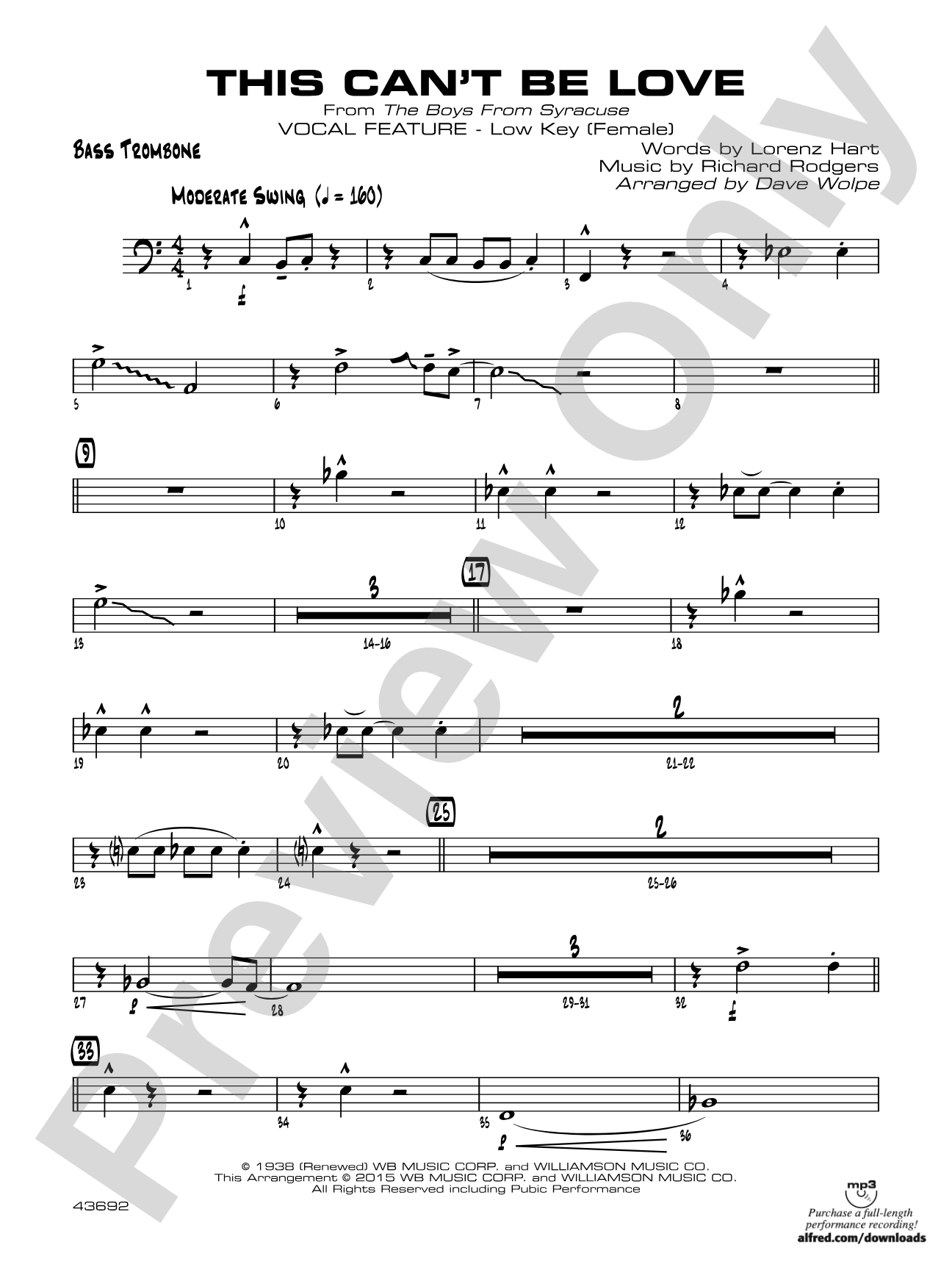
This Can't Be Love: Bass Trombone Sheet Music Preview

This Can't Be Love: Bass Trombone

Words by Lorenz Hart, music by Richard Rodgers / arr. Dave Wolpe

Grade: 3.5 (Medium)

Item: 00-PC-0016824_BTN

Digital Download
$3.00
Description
"This Can't Be Love" is a medium swing vocal and big band chart arranged in two keys---high and low. The lead trumpet range is to written high B above the staff and there is a written-out tenor solo. The vocal range for the low key is low F-sharp below middle C to A second space. The high key range is from B natural below middle C to D fourth line treble clef. (2:06)

Don't just read it, hear it, play along with it, and watch your students grow with it. In MakeMusic Cloud, This Can't Be Love: Bass Trombone comes alive with professional accompaniment, adjustable tempo, and built-in practice tools that turn solo practice into real progress.

Sample Audio
0:00
0:00
Sample Video
Additional Details
Series: Jazz Vocal Series
Publisher: Alfred Music
Page Count: 82
SKU: 00-PC-0016824_BTN

More about this title

About the Composer: Richard Rodgers

Richard Rodgers (1902–1979) shaped the American musical theater landscape across five decades, creating melodies that became standards in jazz, concert, and popular repertoires. His gifts for lyrical writing and harmonic sophistication made his work endlessly adaptable; this arrangement of "This Can't Be Love" demonstrates how a tune born from "The Boys from Syracuse" retains its elegance whether swung by a big band or stripped to its harmonic essentials.

Why we love this

Dave Wolpe's arrangement captures the sophisticated interplay that made mid-century jazz vocals shine: the ensemble sits back, responds, and swells at exactly the right moments while the soloist remains the focal point. Offering both high and low keys means you can cast the piece across your program without transposing on the fly, and the written-out tenor solo gives your section a melodic feature that elevates ensemble playing beyond accompaniment.

What to expect

Charming and swinging, with a warmth that comes from Rodgers' gift for memorable melody. The tune unfolds like a conversation between vocalist and band, playful and romantic without ever becoming saccharine. You'll feel the influence of 1940s vocal jazz throughout the arrangement—sophisticated harmony, responsive ensemble writing, and plenty of room for personality.

Who it's for

Jazz ensemble directors seeking a vocal feature that showcases both soloists and section playing without demanding excessive ranges or technical demands. This works equally well for high school jazz bands with accomplished singers and college-level ensembles looking for a tasteful addition to a concert or competition set.

How to get the most out of it

  • Balance the vocal melody against the ensemble carefully in the opening chorus; the band should support rather than compete, even when harmonic activity increases.
  • The tenor solo benefits from space and clarity. Ensure the rhythm section locks in, then let that soloist breathe without the ensemble filling every gap.
  • Pay attention to the lead trumpet's high passages (written B and above). These moments should feel effortless, not strained; rehearse with the vocalist to nail ensemble articulation and release points.
  • Anchor the swing feel through the rhythm section first. Once the drummer, bassist, and pianist are grooving together, the rest of the ensemble will sit naturally in the pocket.

How to use it

Pair this with other Jazz Vocal Series charts to build a themed set, or plant it mid-concert to refresh the energy with a sophisticated vocal feature. The dual-key option makes it ideal for mixed-voice jazz programs where you might feature a different soloist on the high key later in the season. Its moderate length (2:06) and Grade 3.5 difficulty fit comfortably into jazz festivals and informal concerts where polish matters more than flashiness.

Skills your students will build

  • Medium swing feel and ensemble cohesion in a vocal-led arrangement
  • Balancing section accompaniment with solo prominence
  • Reading and executing written-out solos (tenor feature) with style
  • Melodic phrasing and harmonic listening through responsorial ensemble writing
  • Managing high register demands (lead trumpet to written B) with control

You May Also Like