
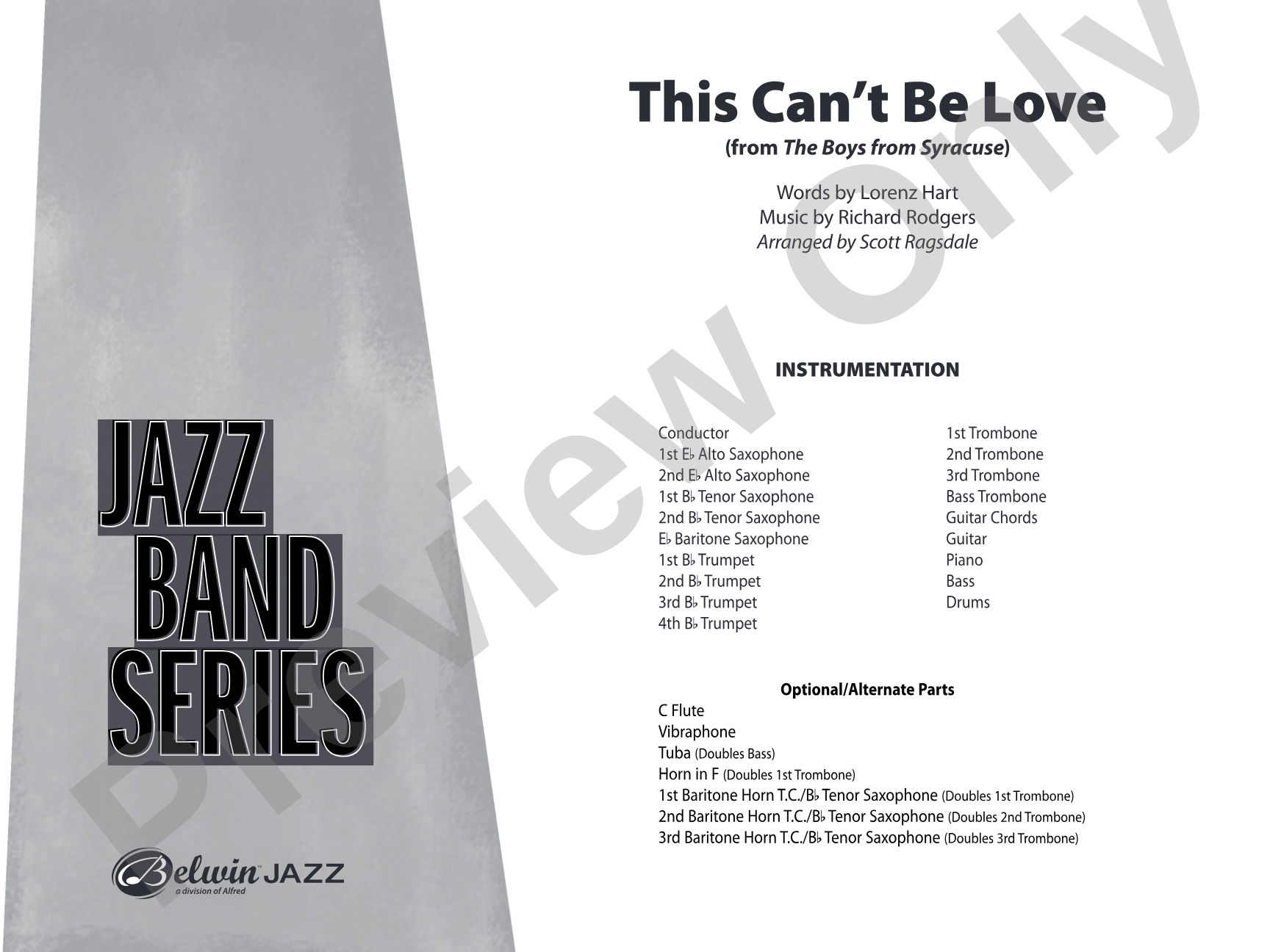
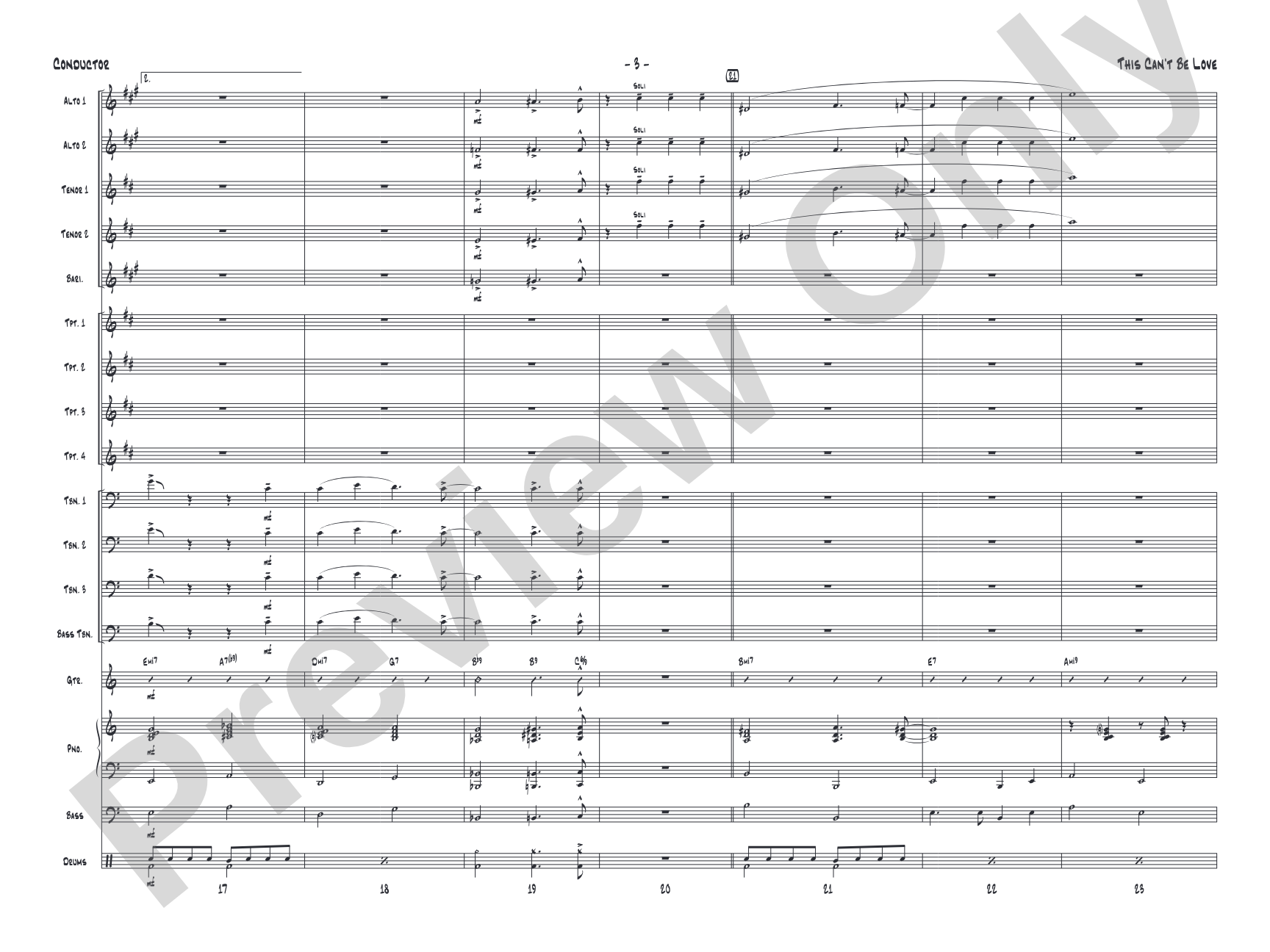
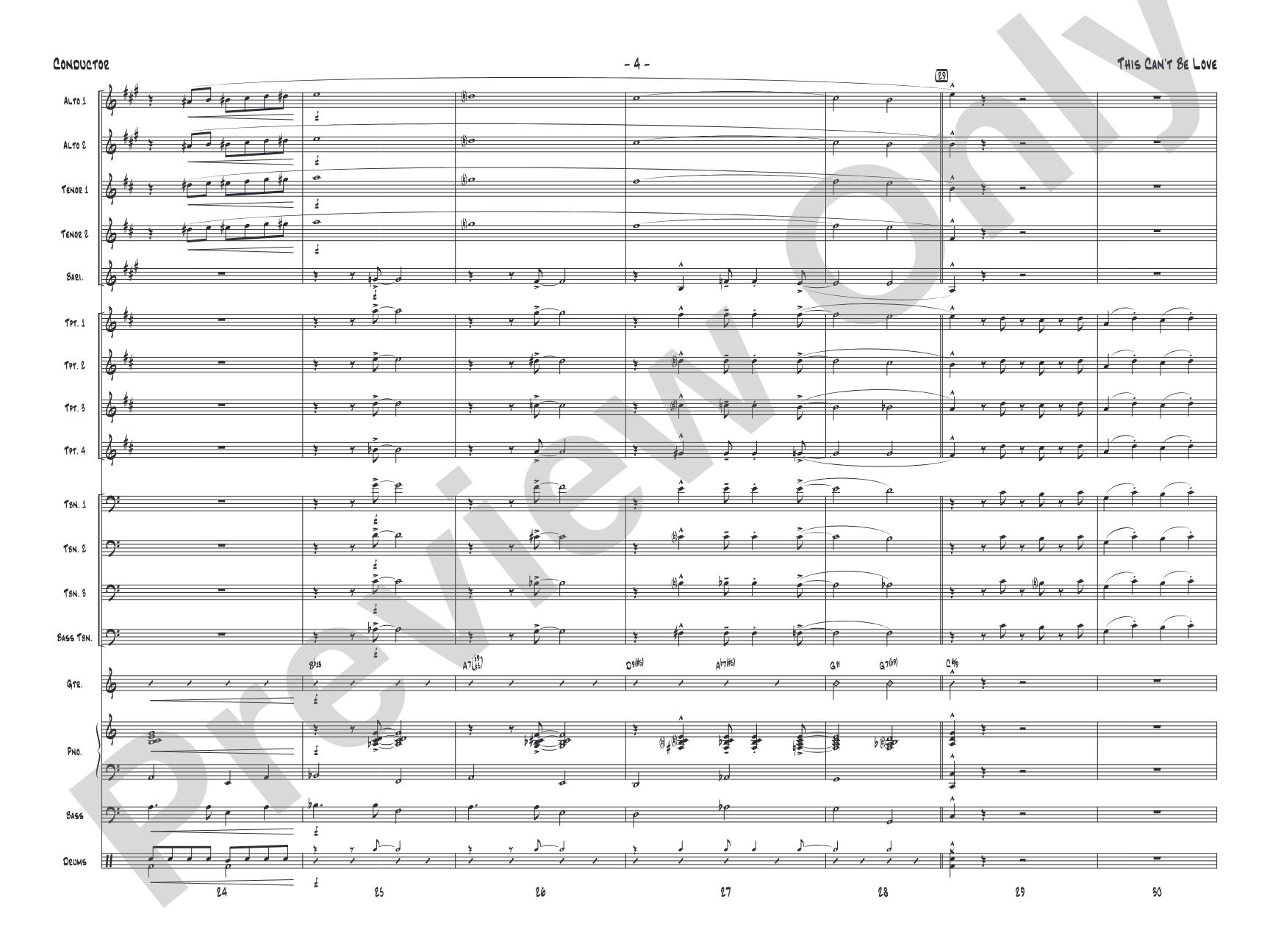
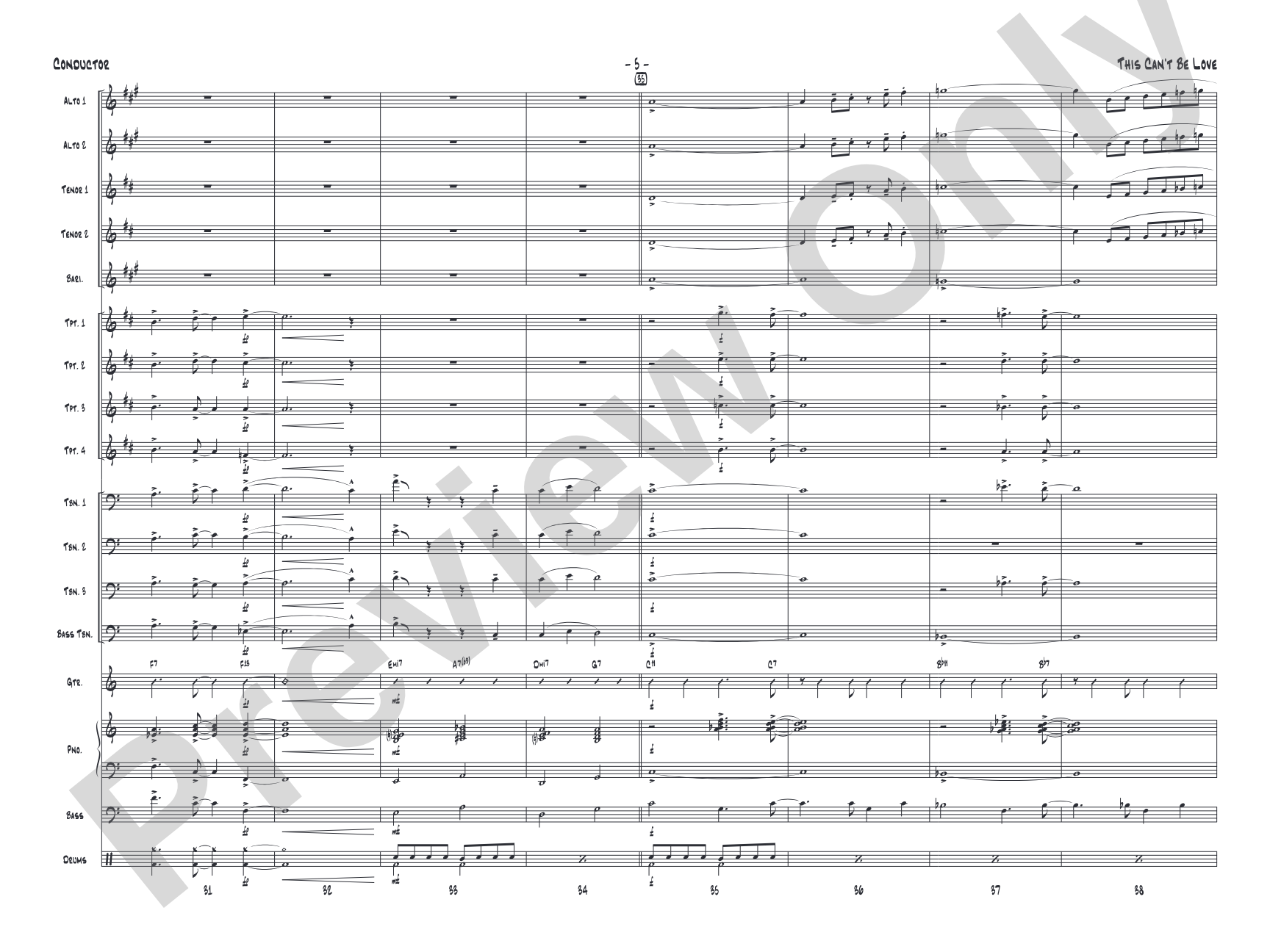
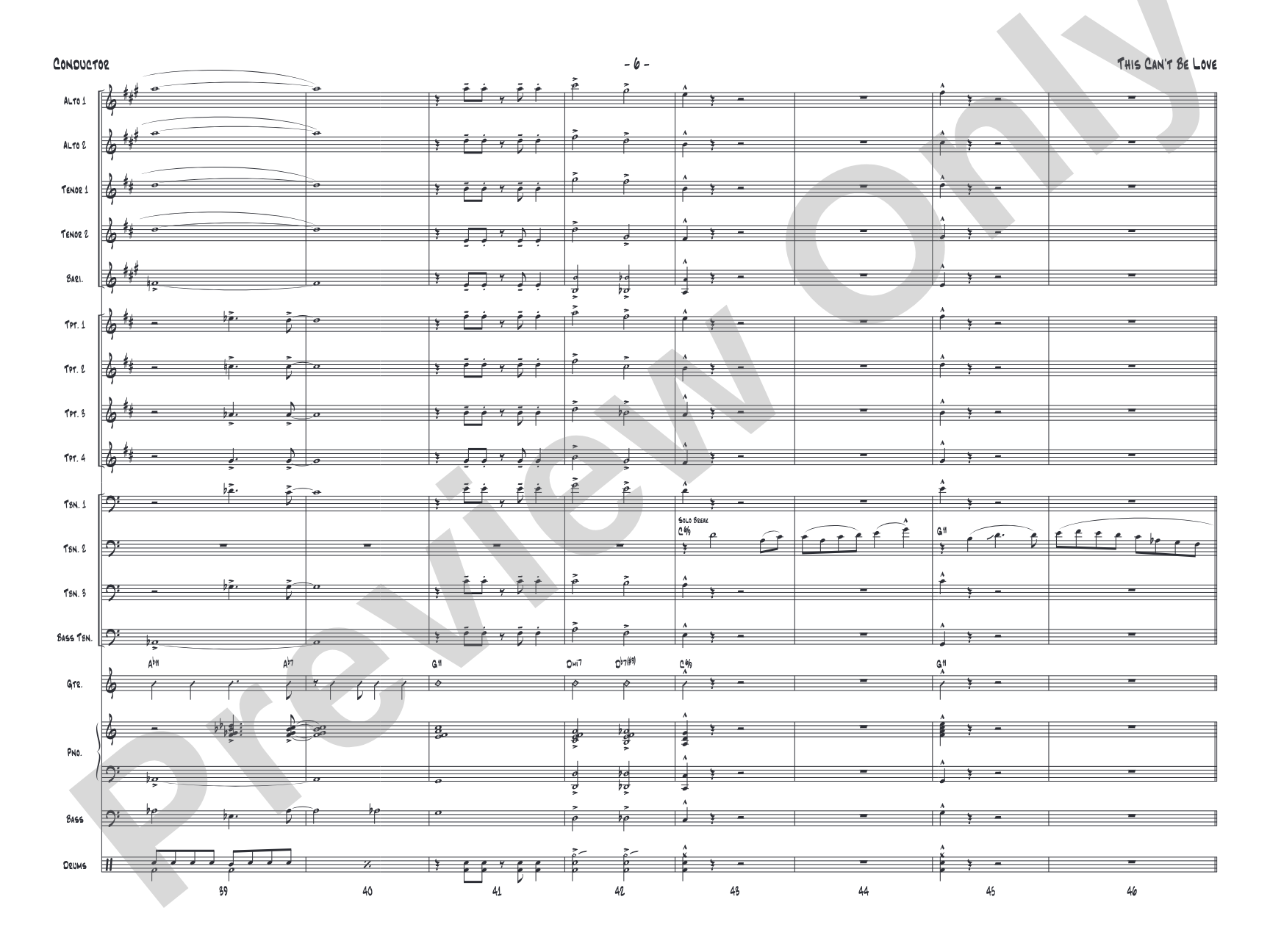
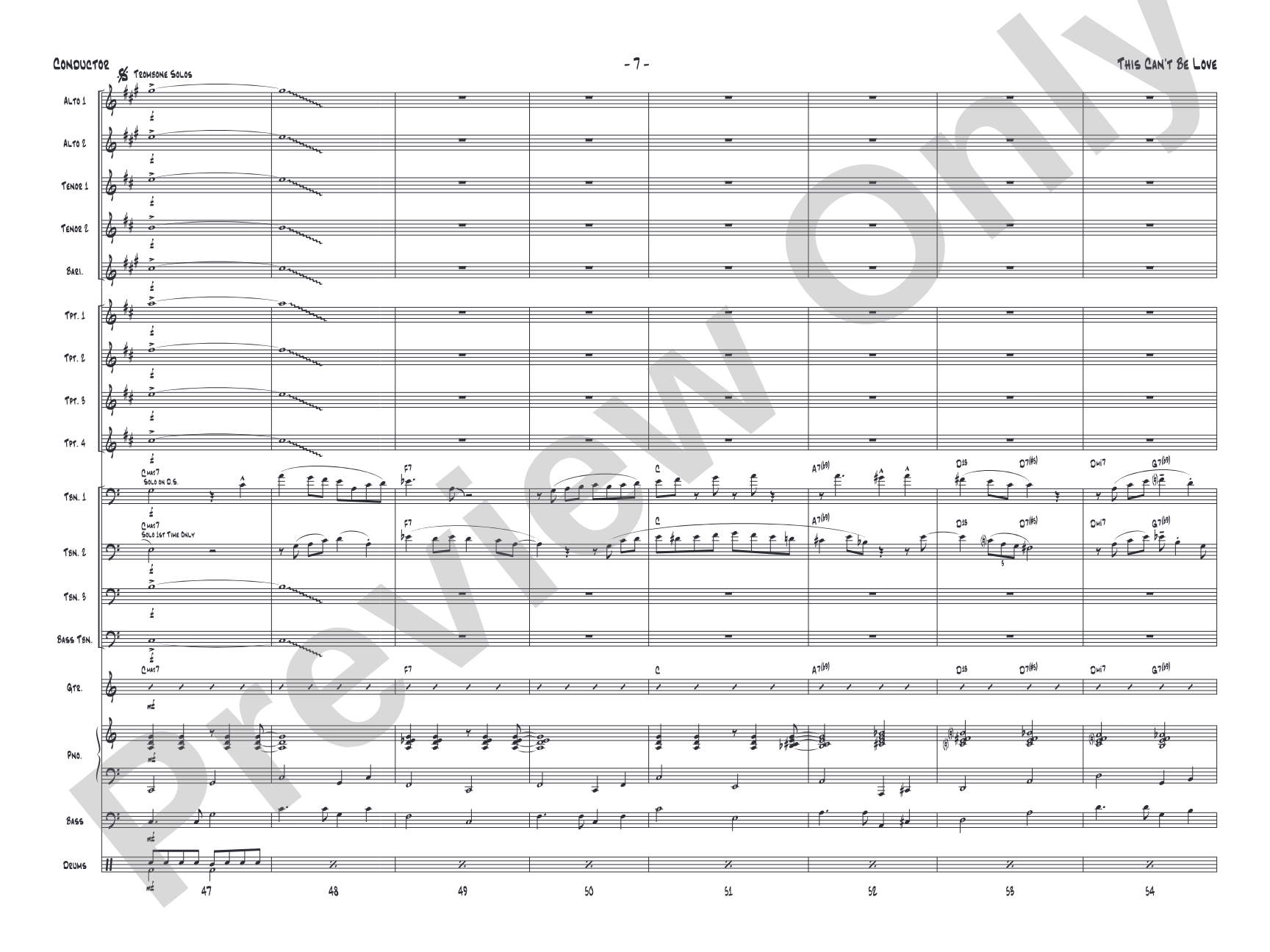
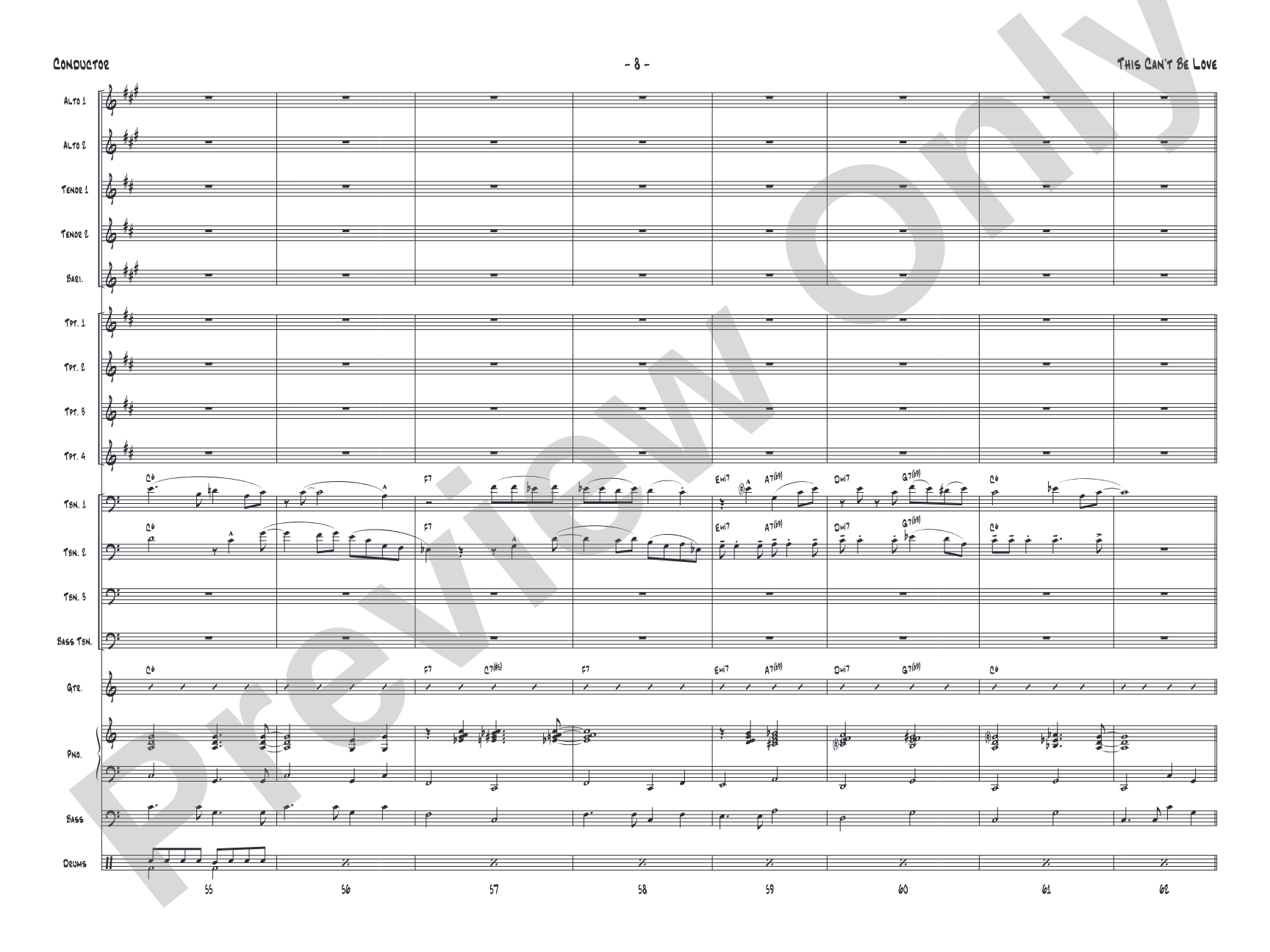
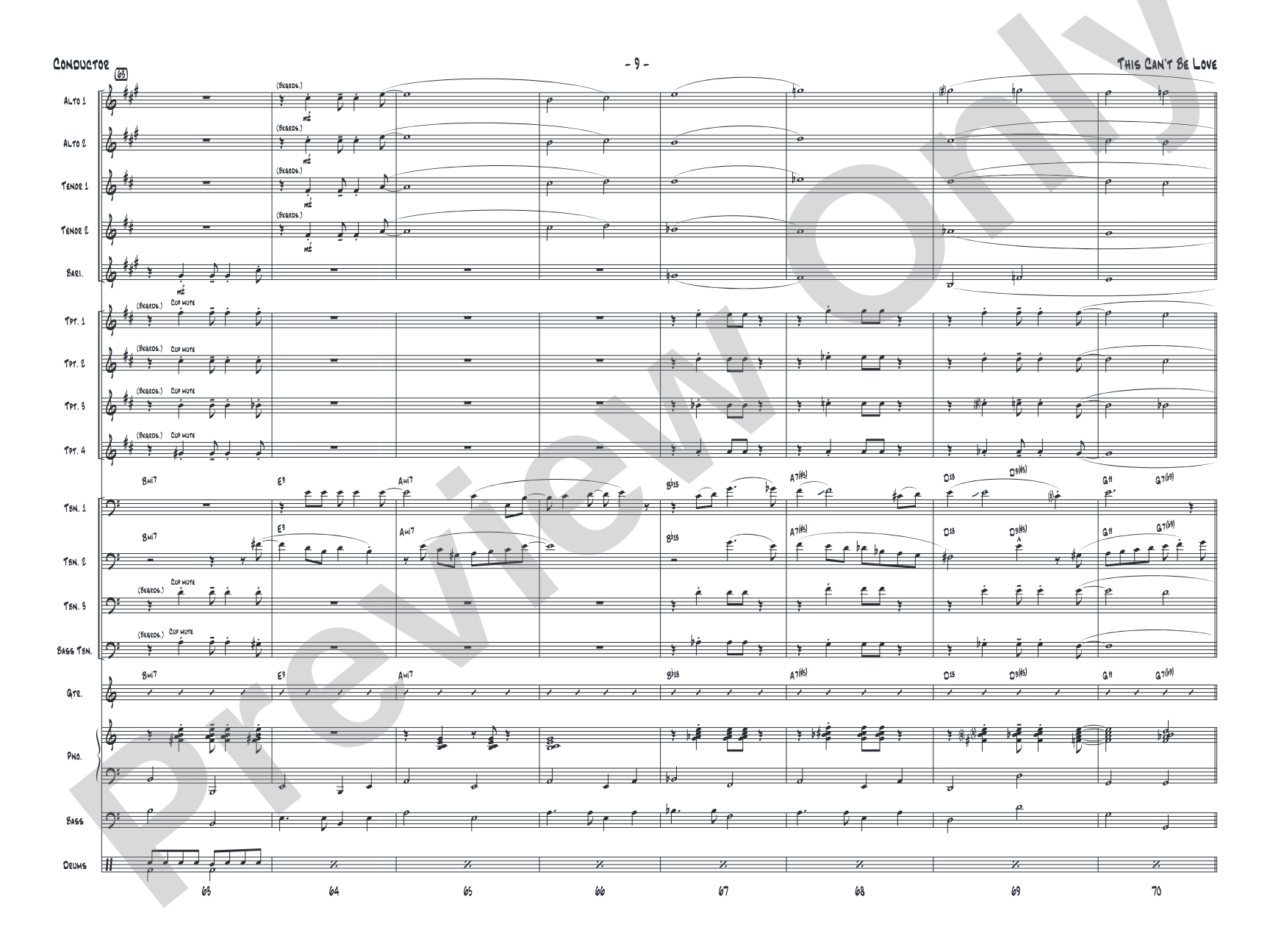
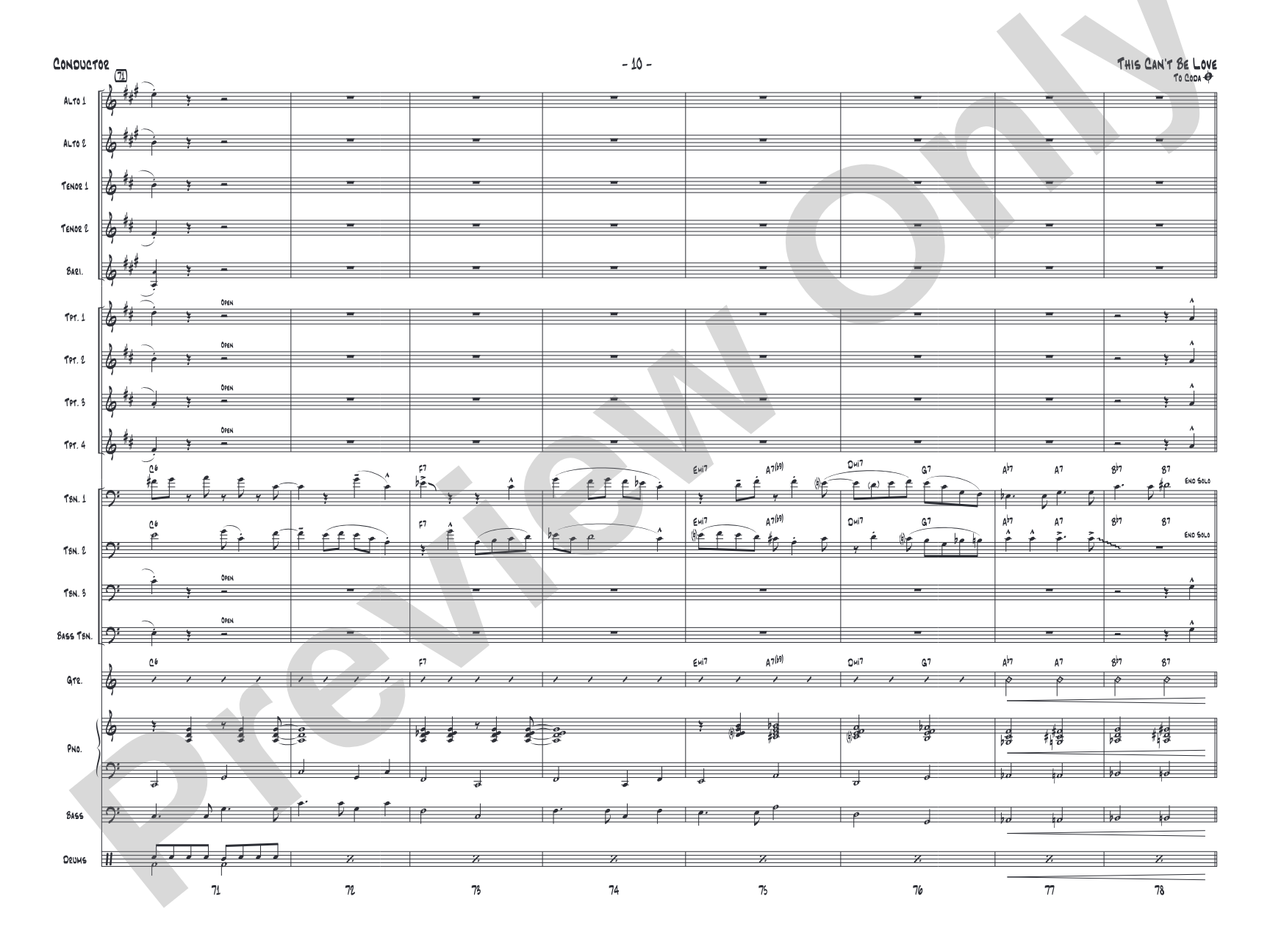
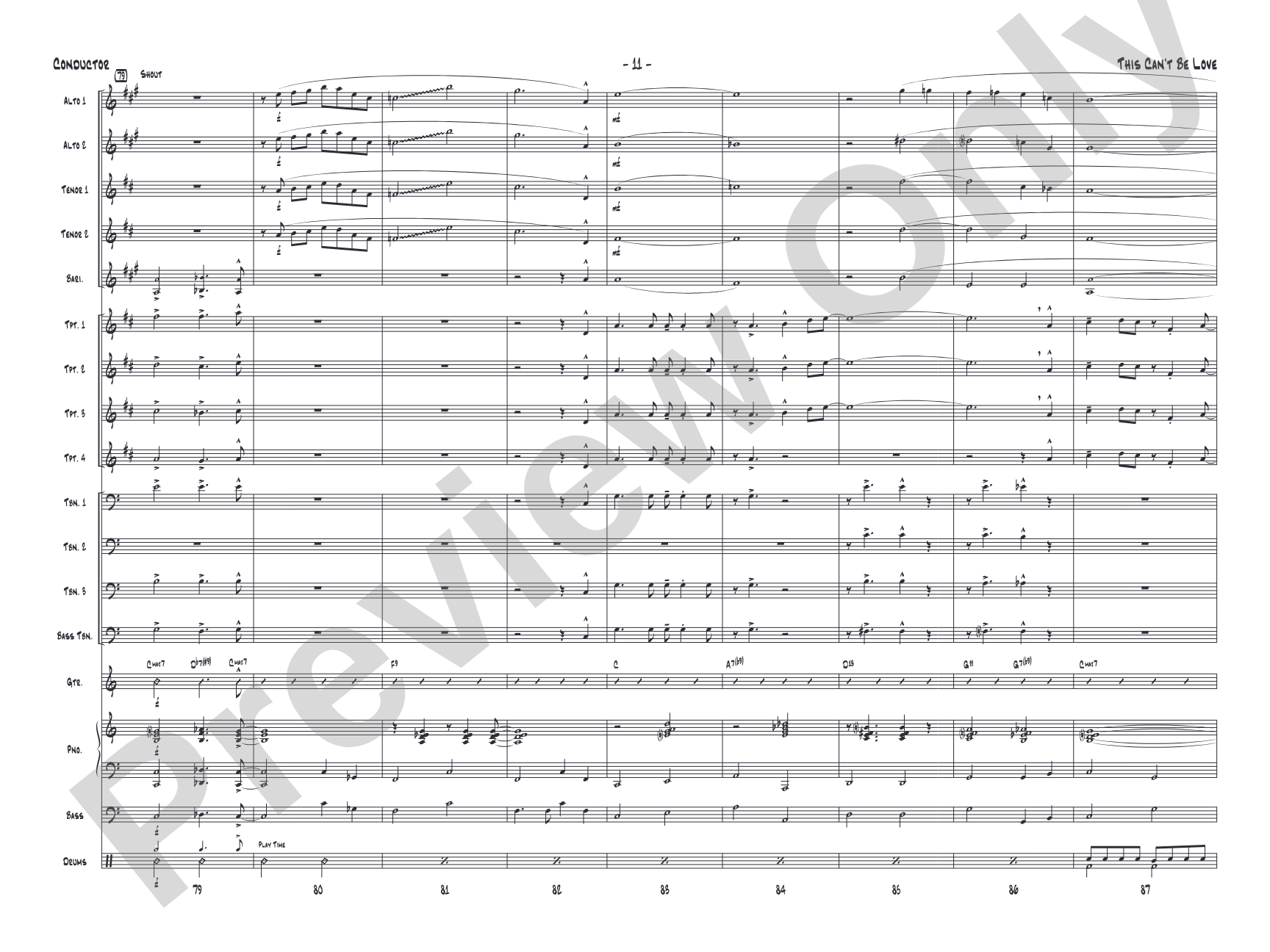
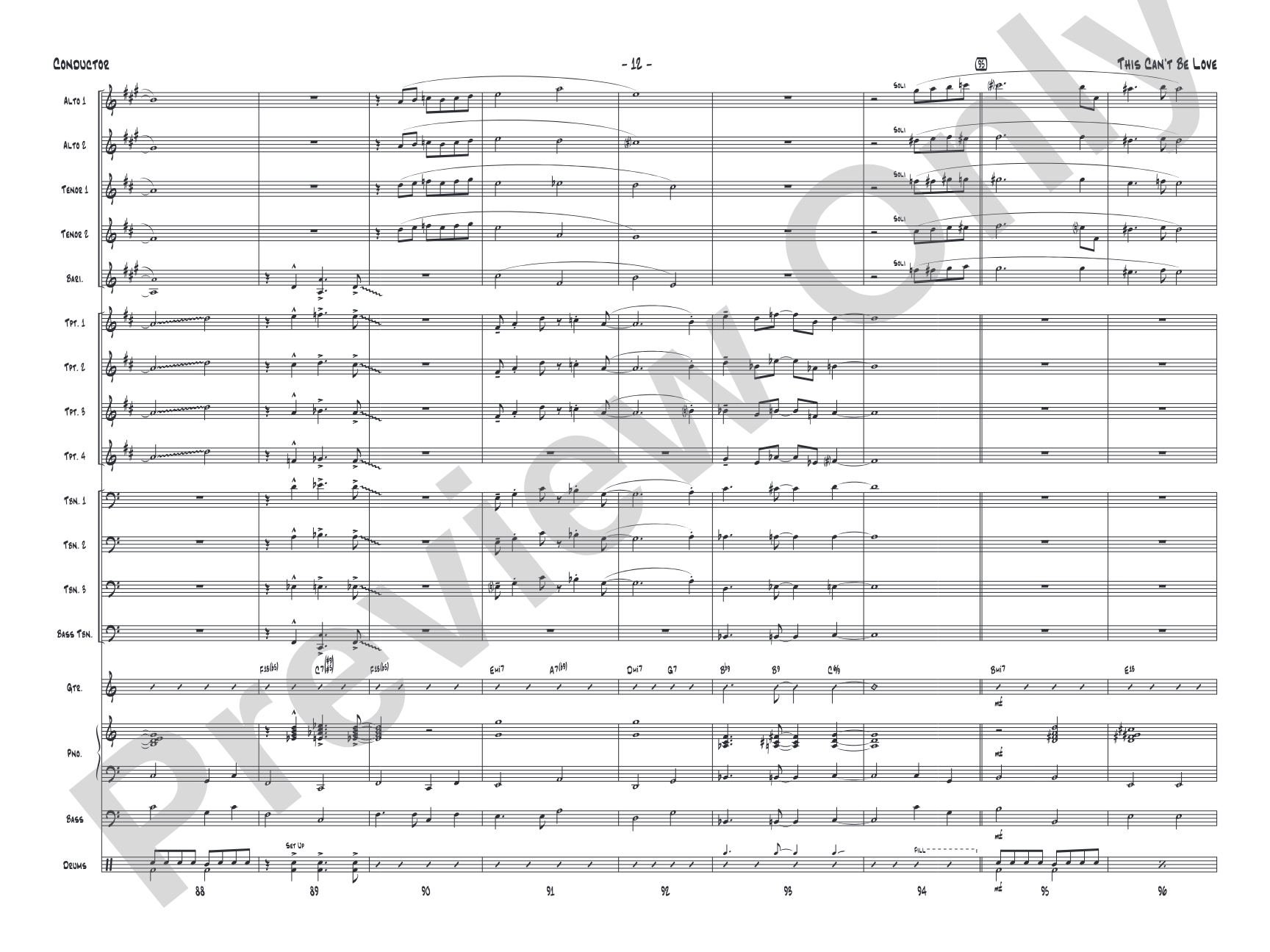
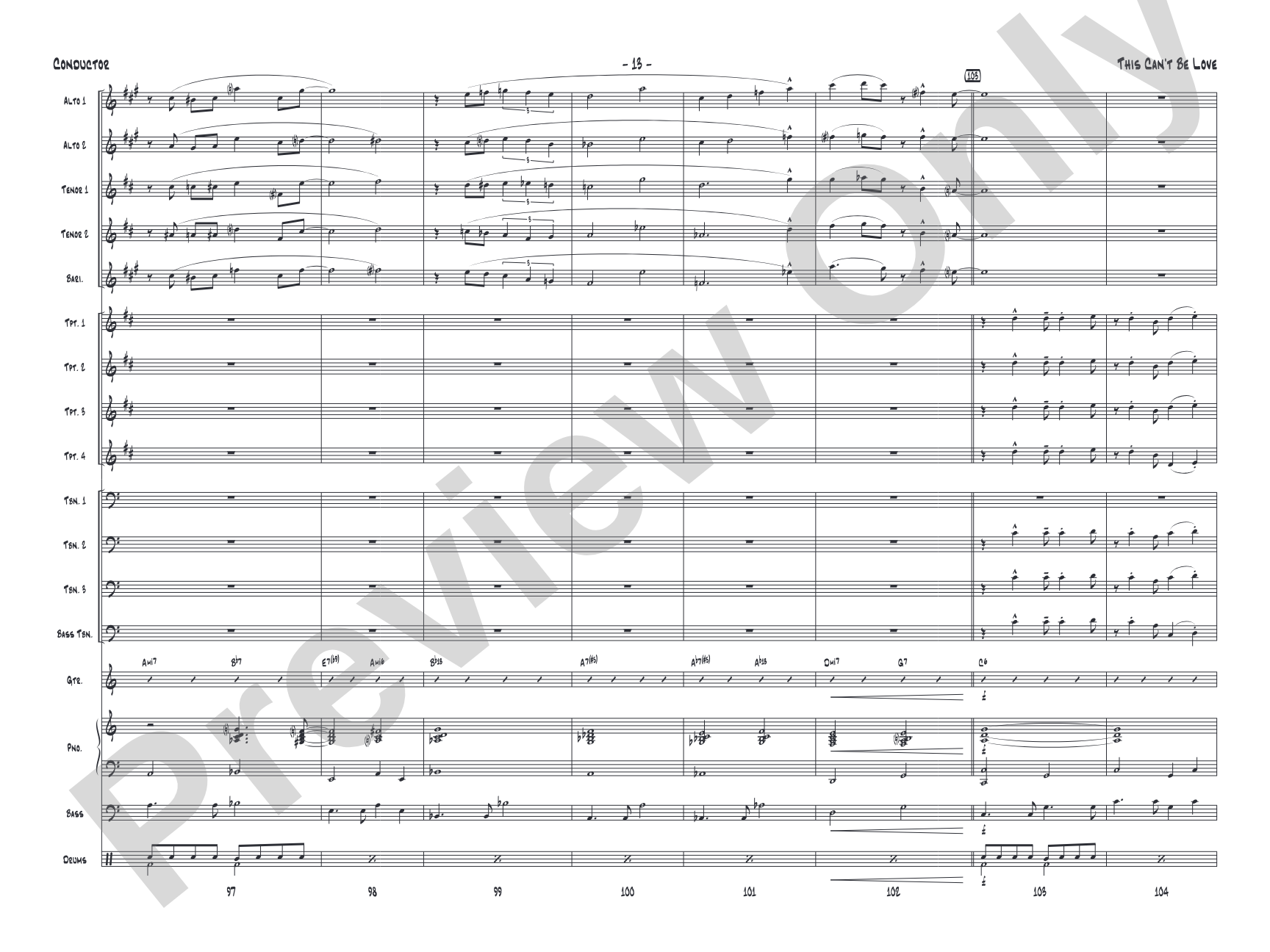
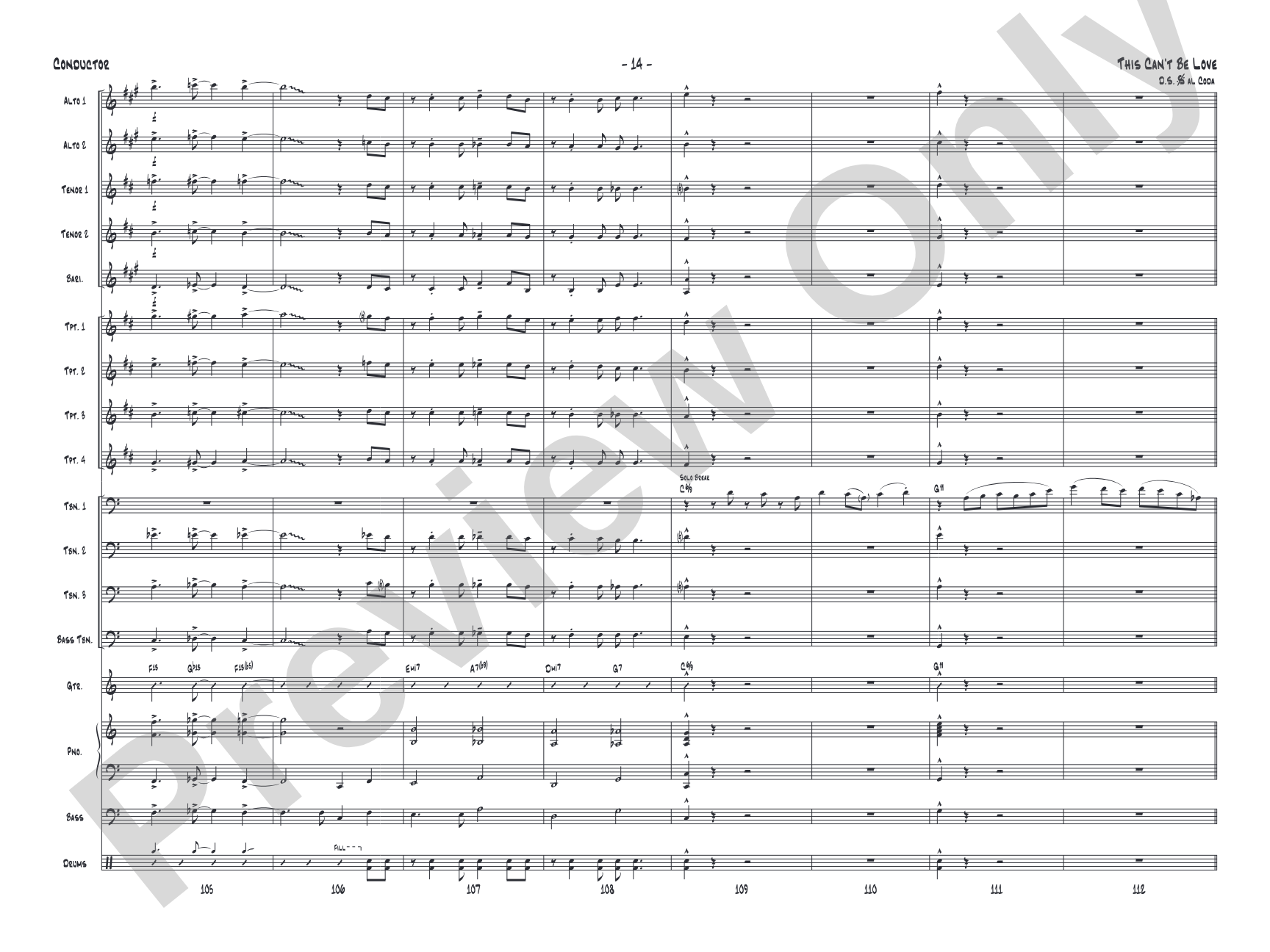
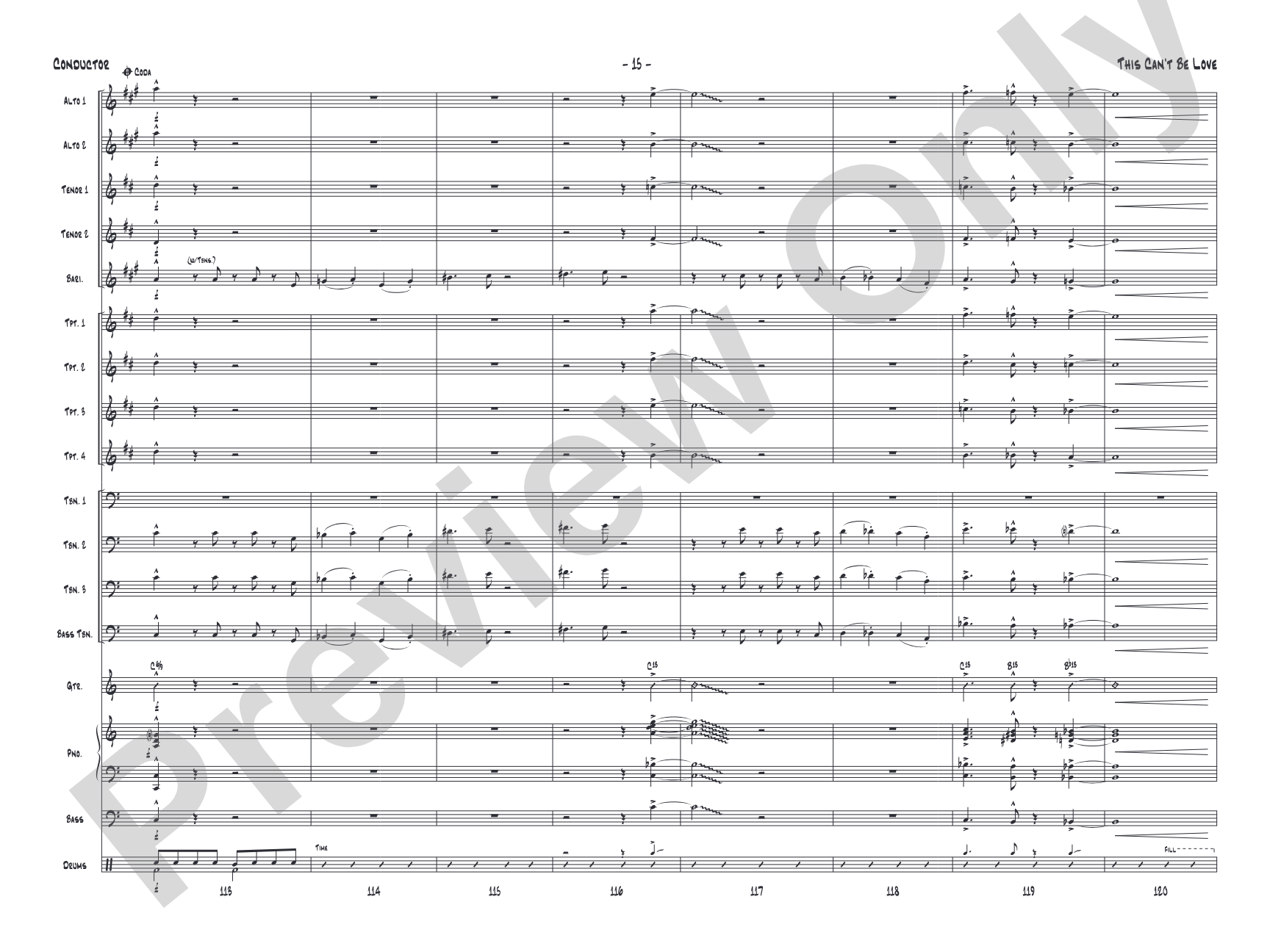
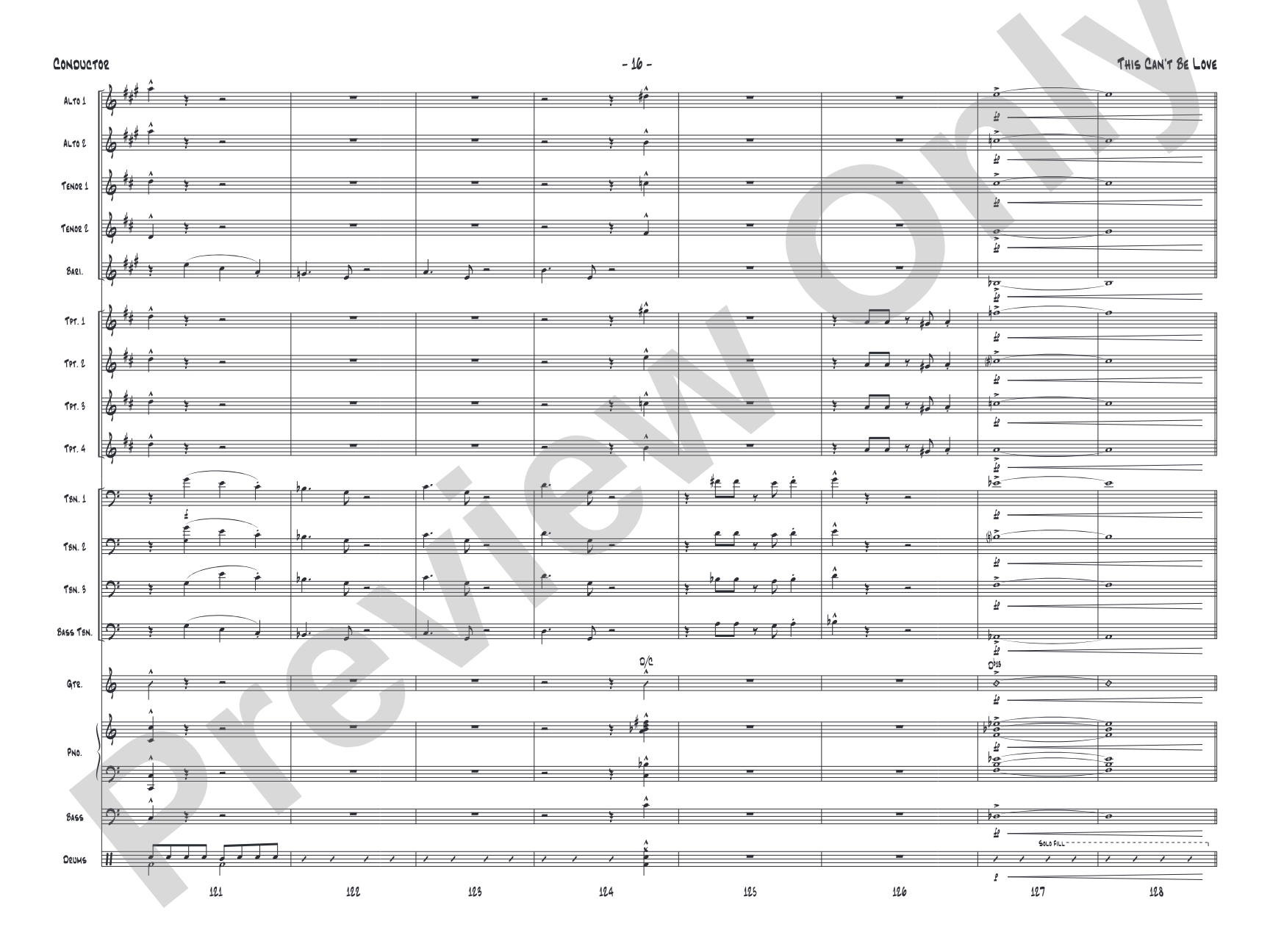
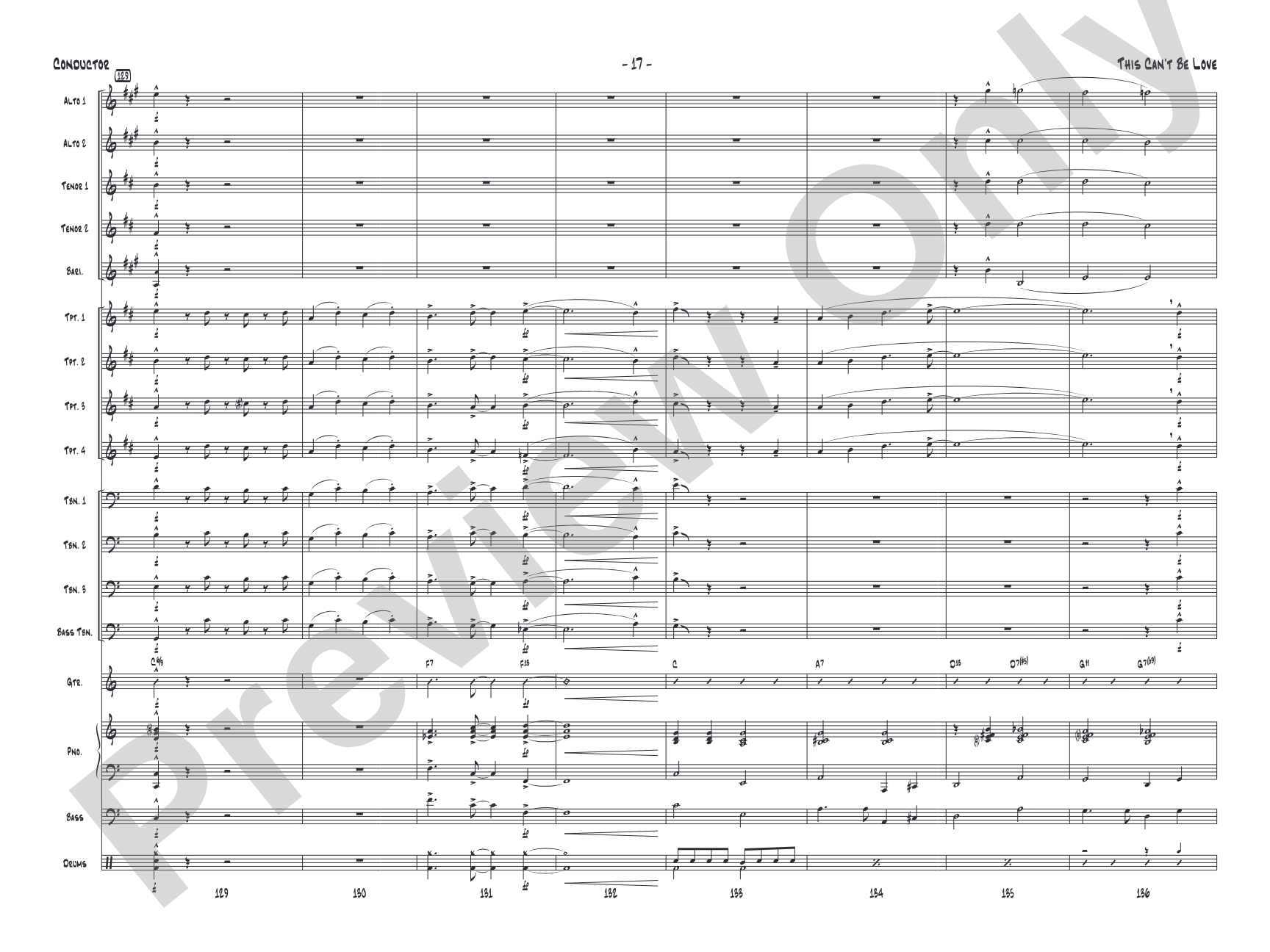
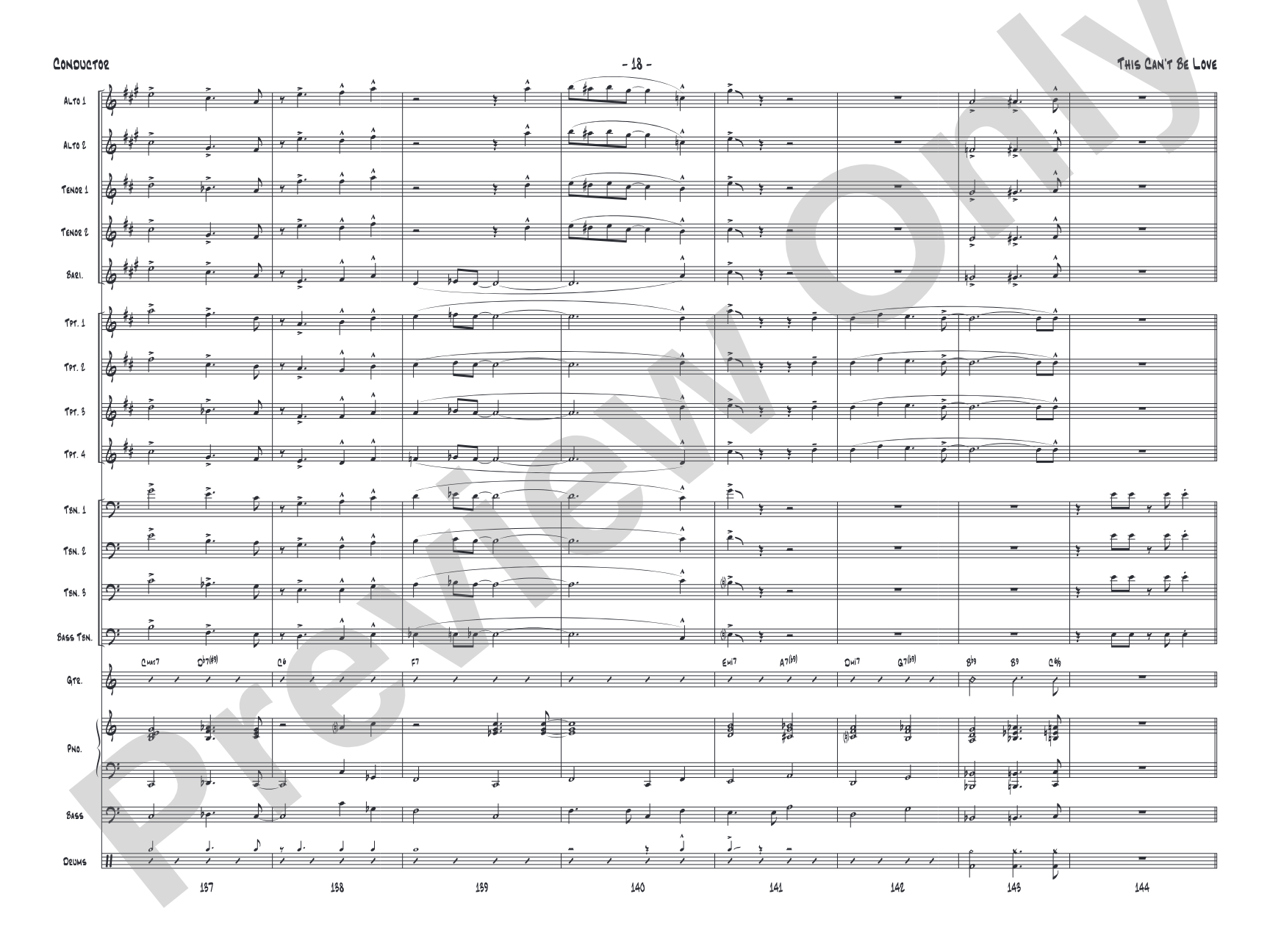
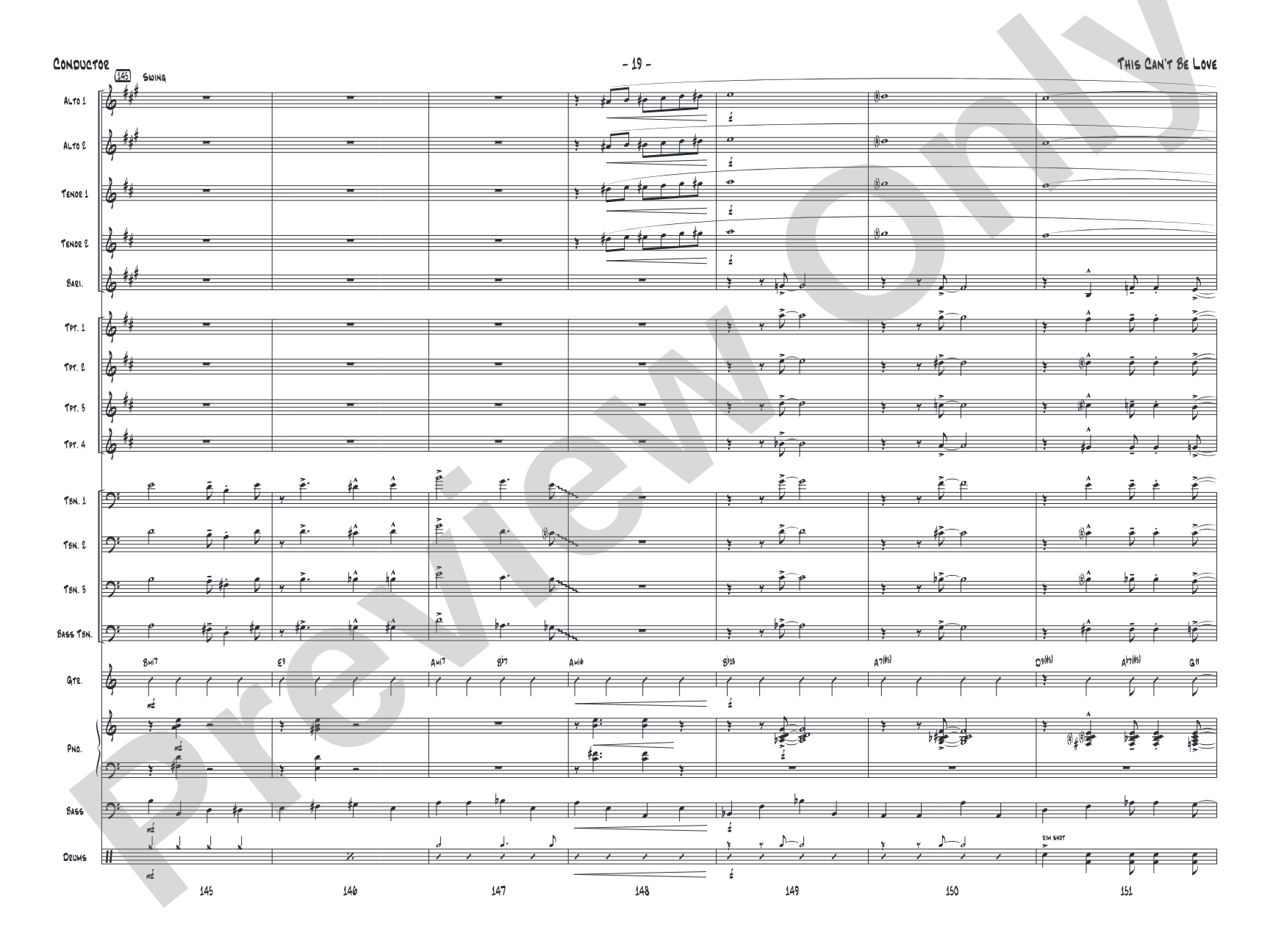
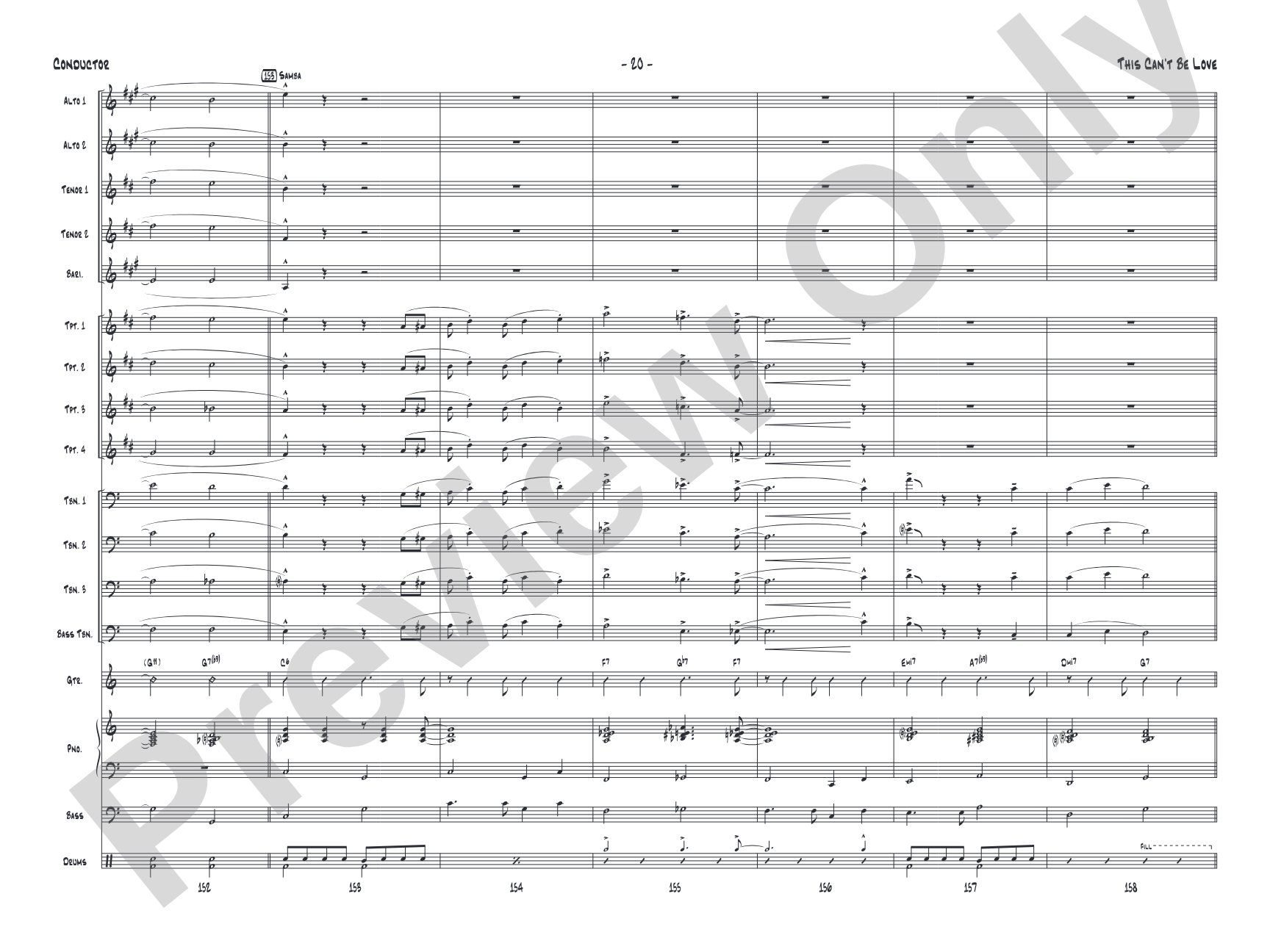
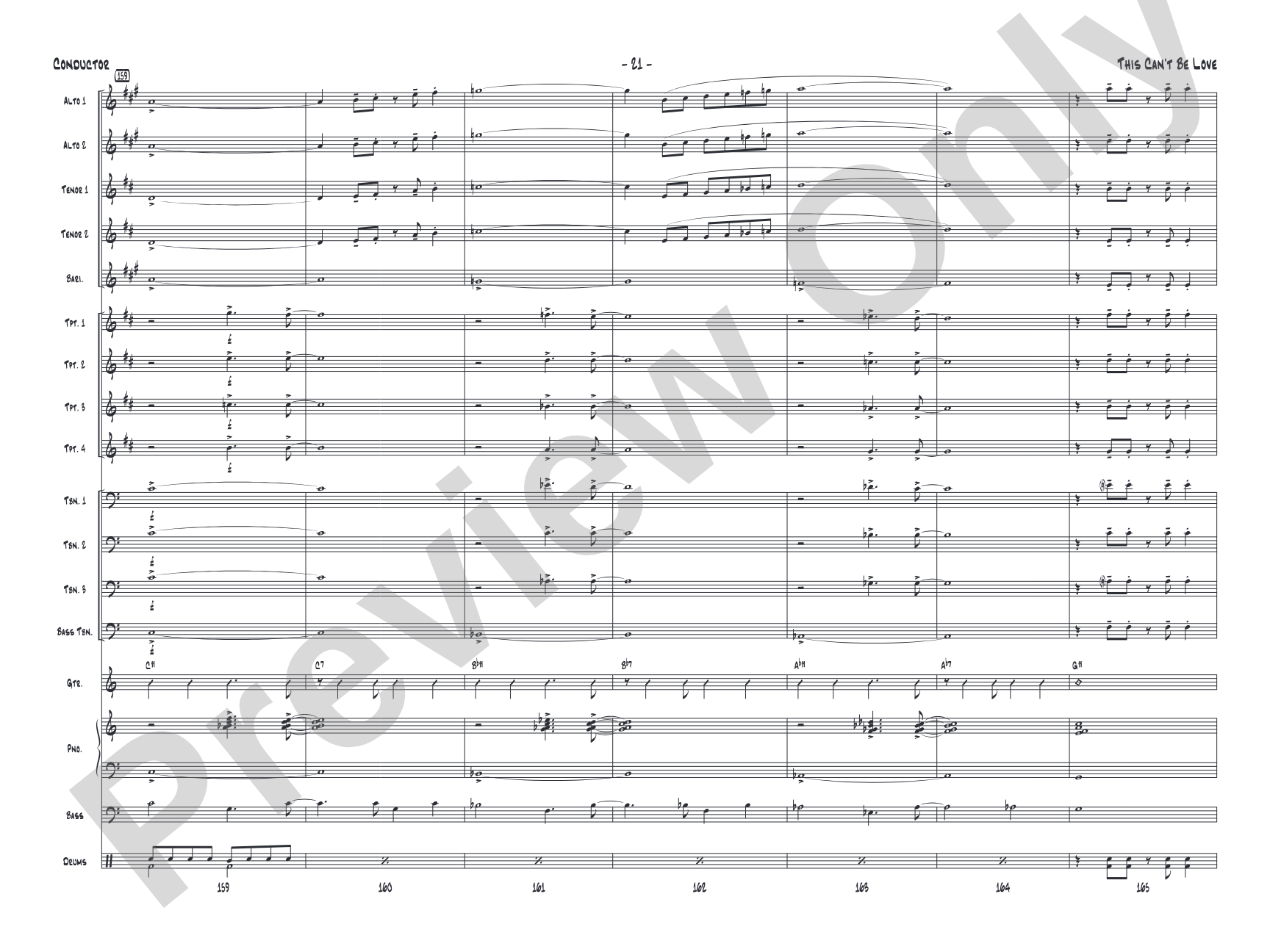
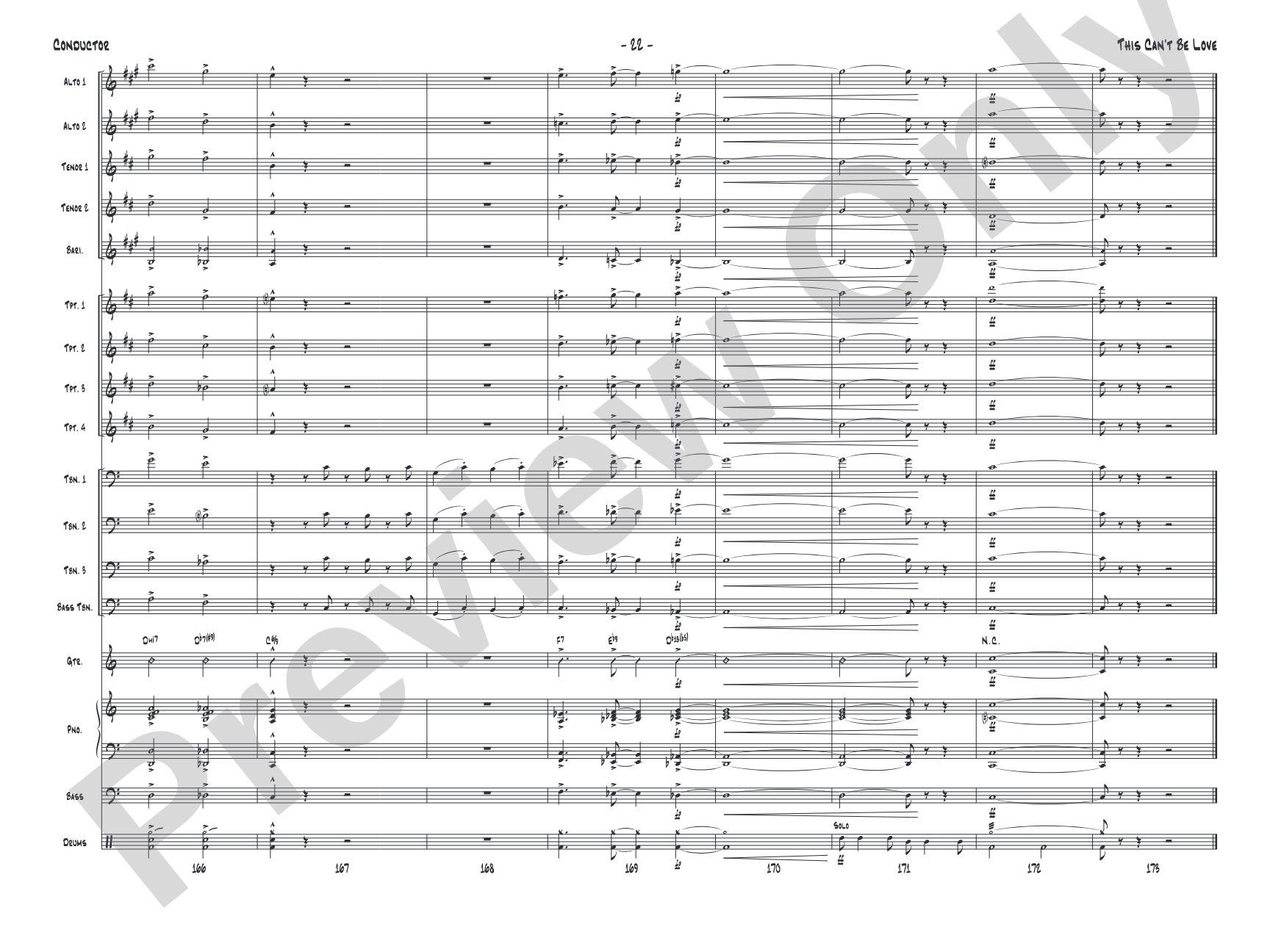

This Can't Be Love: Jazz Ensemble Conductor Score & Parts
from The Boys from Syracuse
Words by Lorenz Hart, music by Richard Rodgers / arr. Scott Ragsdale
Grade: 3.5 (Medium)
Item: 00-PK-0007462

$52.00
One moment…
Description
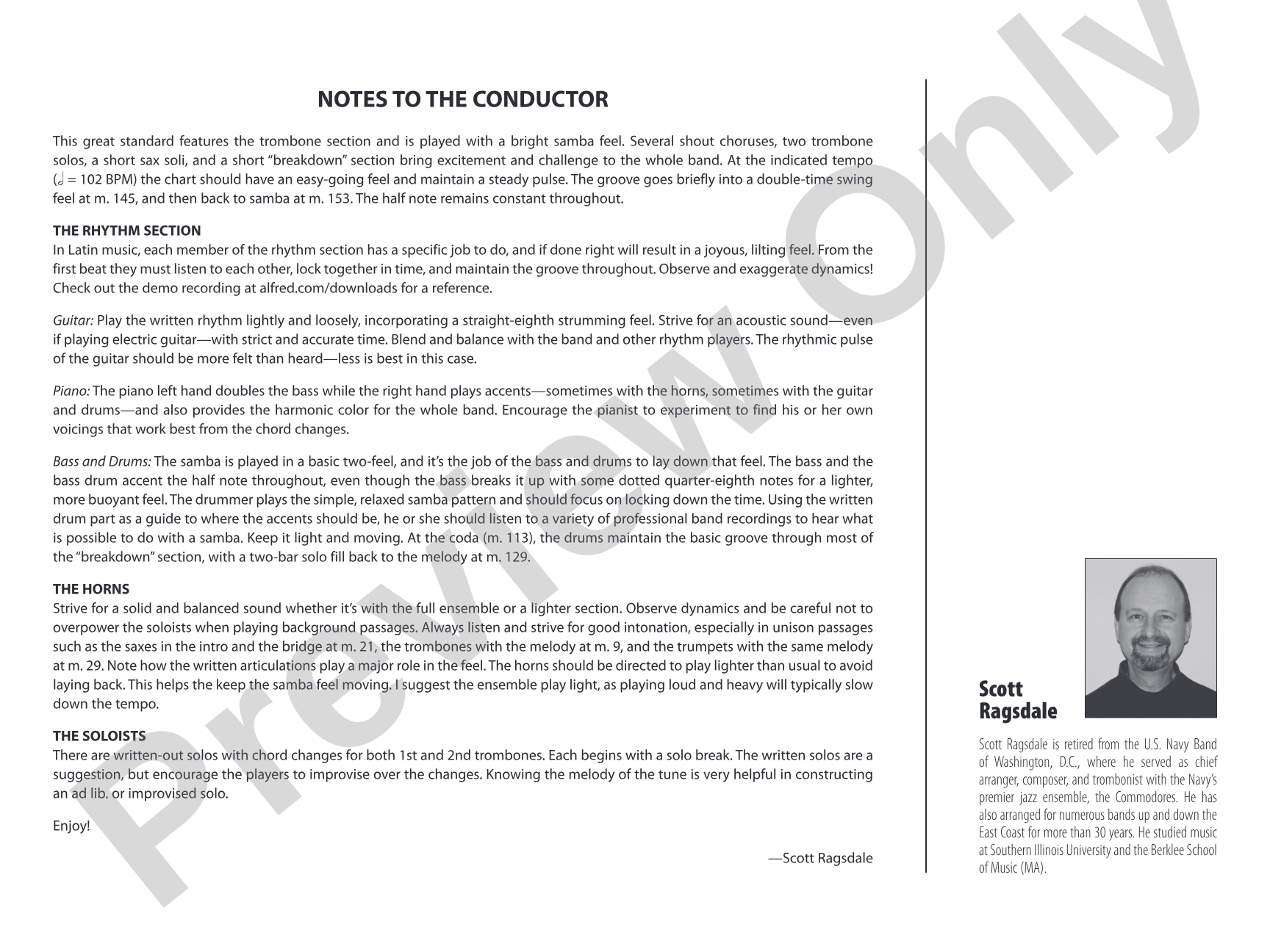
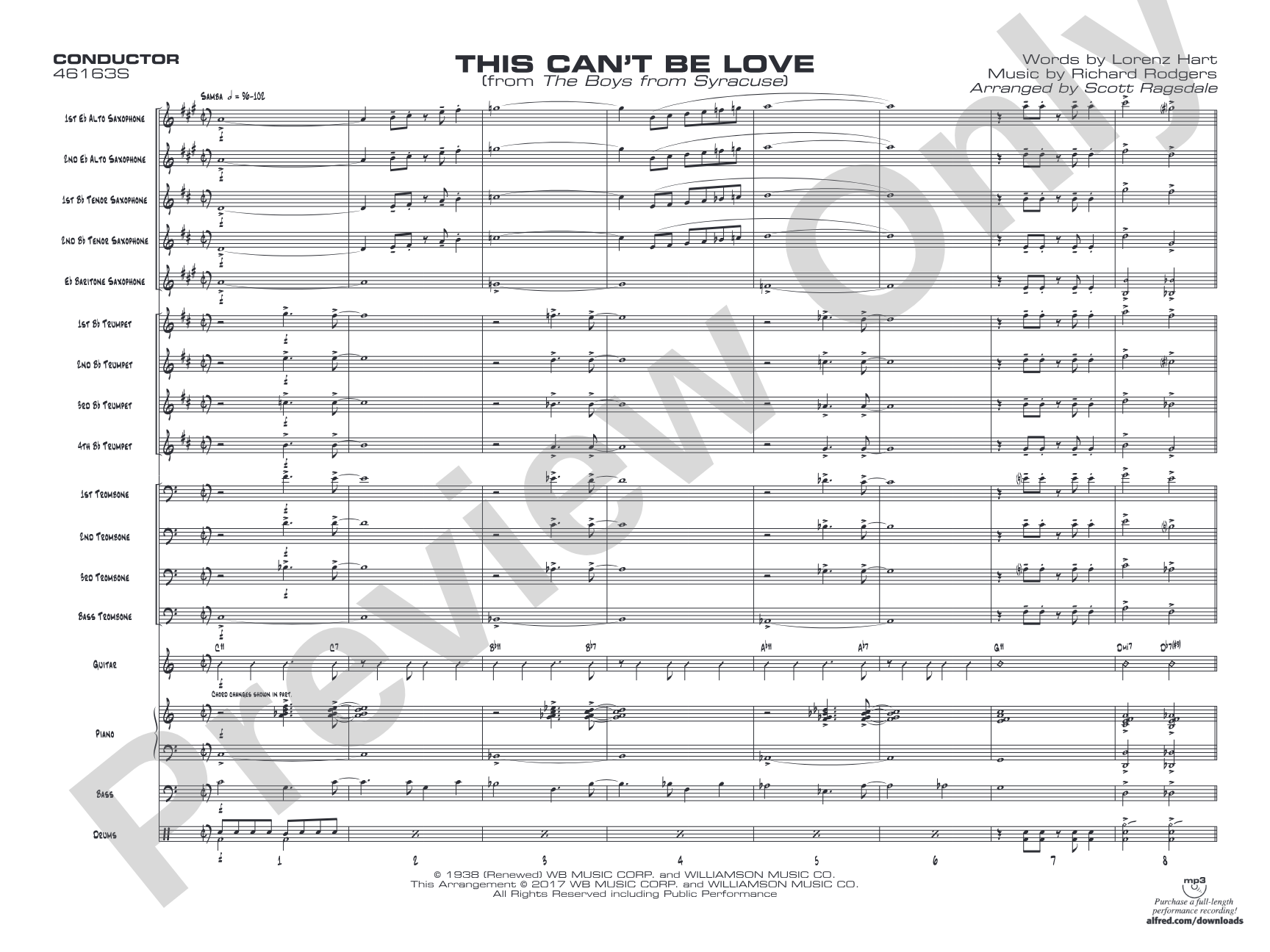
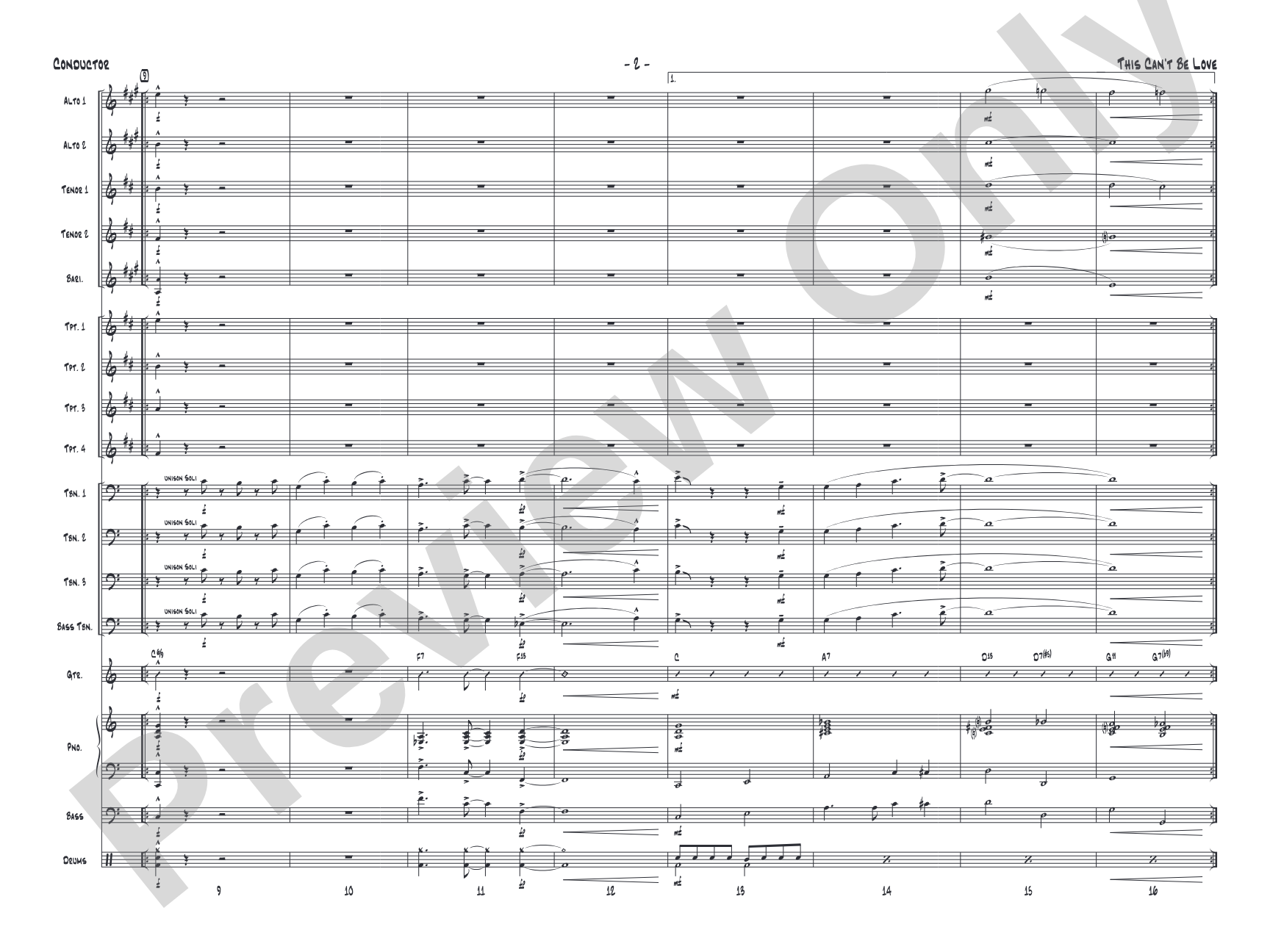
This hot samba is played around 190--200 BPM. The trombones grab the melody and are featured throughout with written suggested solos for 'bones 1 and 2. Lead trumpet range is to written A above the staff and the usual optional parts to include vibes. (4:20)


Don't just read it, hear it, play along with it, and watch your students grow with it. In MakeMusic Cloud, This Can't Be Love: Jazz Ensemble Conductor Score & Parts comes alive with professional accompaniment, adjustable tempo, and built-in practice tools that turn solo practice into real progress.
Open in the Player
Jump straight in and assign it today.
Start Your Free Trial
Open this title and explore the full library in minutes.
Sample Audio
1
Audio File
--:--
0:00
0:00
Sample Video
Additional Details
Series:
Jazz Band Series
Publisher:
Alfred Music
Page Count:
102
SKU:
00-PK-0007462
More about this title
About the Composer: Richard Rodgers
Richard Rodgers (1902-1979) shaped American musical theater across five decades, composing for stage and screen with a gift for melody that made complex harmonies feel inevitable. His collaboration with lyricist Oscar Hammerstein II produced some of the most performed works in the repertoire, from Oklahoma! to The Sound of Music, and his influence extends far beyond Broadway into jazz standards, film scores, and educational music.
Why we love this
Scott Ragsdale's arrangement captures the swagger of a Rodgers standard while giving your ensemble real solo space. The trombone writing is inventive and idiomatic, the suggested solos are playable and rewarding, and the samba groove sits perfectly at Grade 3.5 for groups that want to sound professional without overreaching.
What to expect
Infectious and driving. The samba pulse keeps the ensemble moving forward while the trombone voice brings a warm, hornlike character to a Rodgers standard. There's both sophistication and fun here, not a novelty piece, but definitely one that makes audiences move.
Who it's for
Jazz ensembles at the intermediate level, particularly groups ready to program contest or festival repertoire with confidence. The Grade 3.5 level works well for high school jazz bands and advanced middle school ensembles that have solid section blend and can handle written solos without oversimplifying.
How to get the most out of it
- Lock the samba rhythm early in rehearsals. The groove needs to feel inevitable, not imposed; spend time on the clave pattern and let the ensemble feel it collectively before layering melody.
- Balance the trombone melody against the ensemble. These bones need to be heard with clarity, but they're not screaming over the band; think warm and buoyant rather than forced.
- Shape the suggested solos with personality. Ragsdale's framework gives improvisers room to breathe; encourage your 'bones players to find their own phrasing while staying grounded in the harmonic structure.
- Keep the tempo conversational at 190-200 BPM. This is fast enough to feel current but not so quick that articulation becomes muddy or the ensemble loses precision.
How to use it
Slot this into the second or third piece of a set when you want to shift energy and showcase your trombone section. It pairs well with straight-ahead swing numbers or contemporary jazz works; audiences respond immediately to the accessibility of Rodgers' tune, and judges appreciate the clarity of the arrangement and the musicianship it demands.
Skills your students will build
- Playing samba rhythm accurately and maintaining groove consistency
- Reading and executing written solo sections with appropriate stylistic nuance
- Balancing melody and accompaniment in a jazz context
- Navigating upper register demands (lead trumpet to written A above staff)
- Articulation clarity at moderately fast tempos (190-200 BPM)