
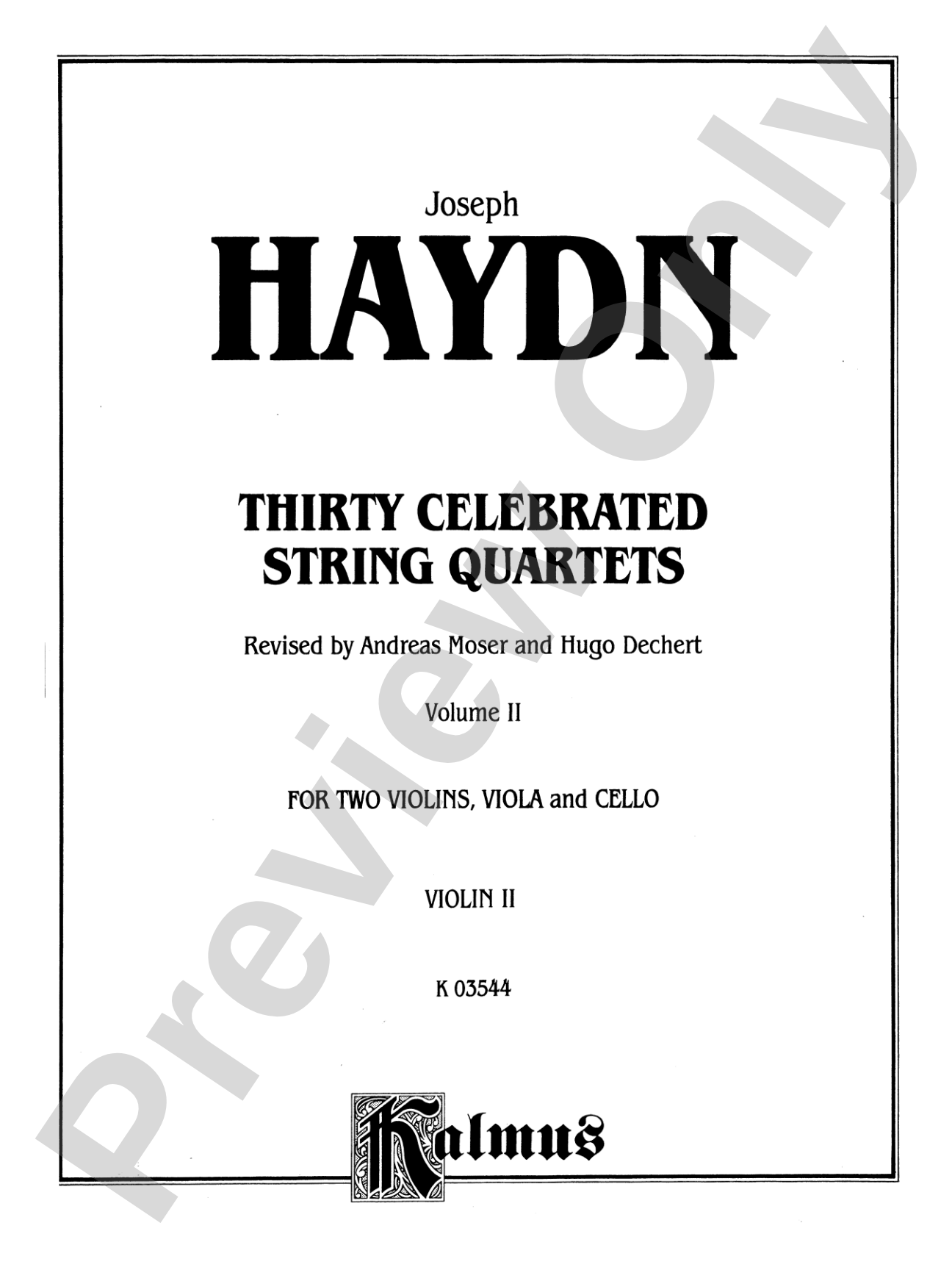
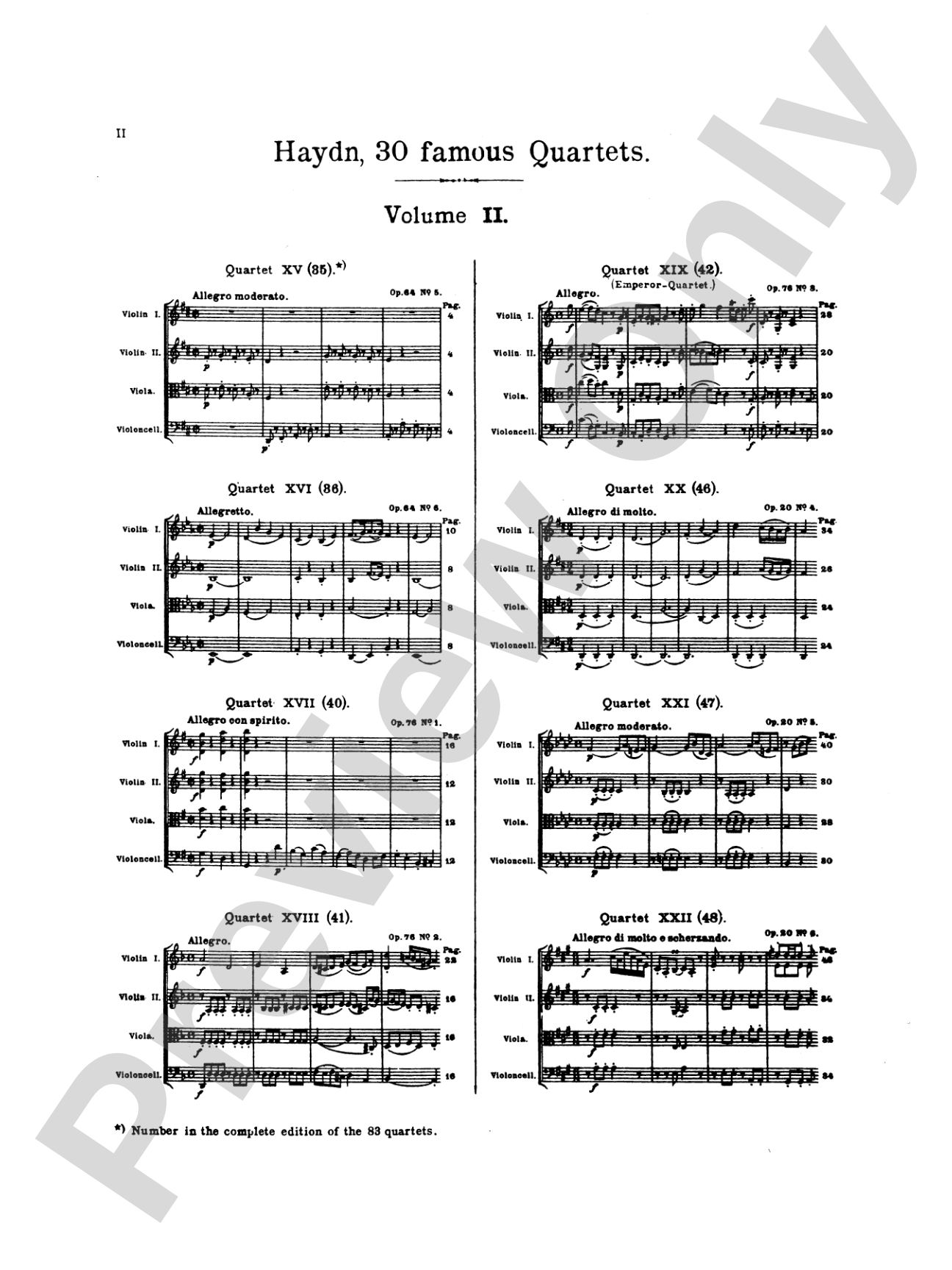
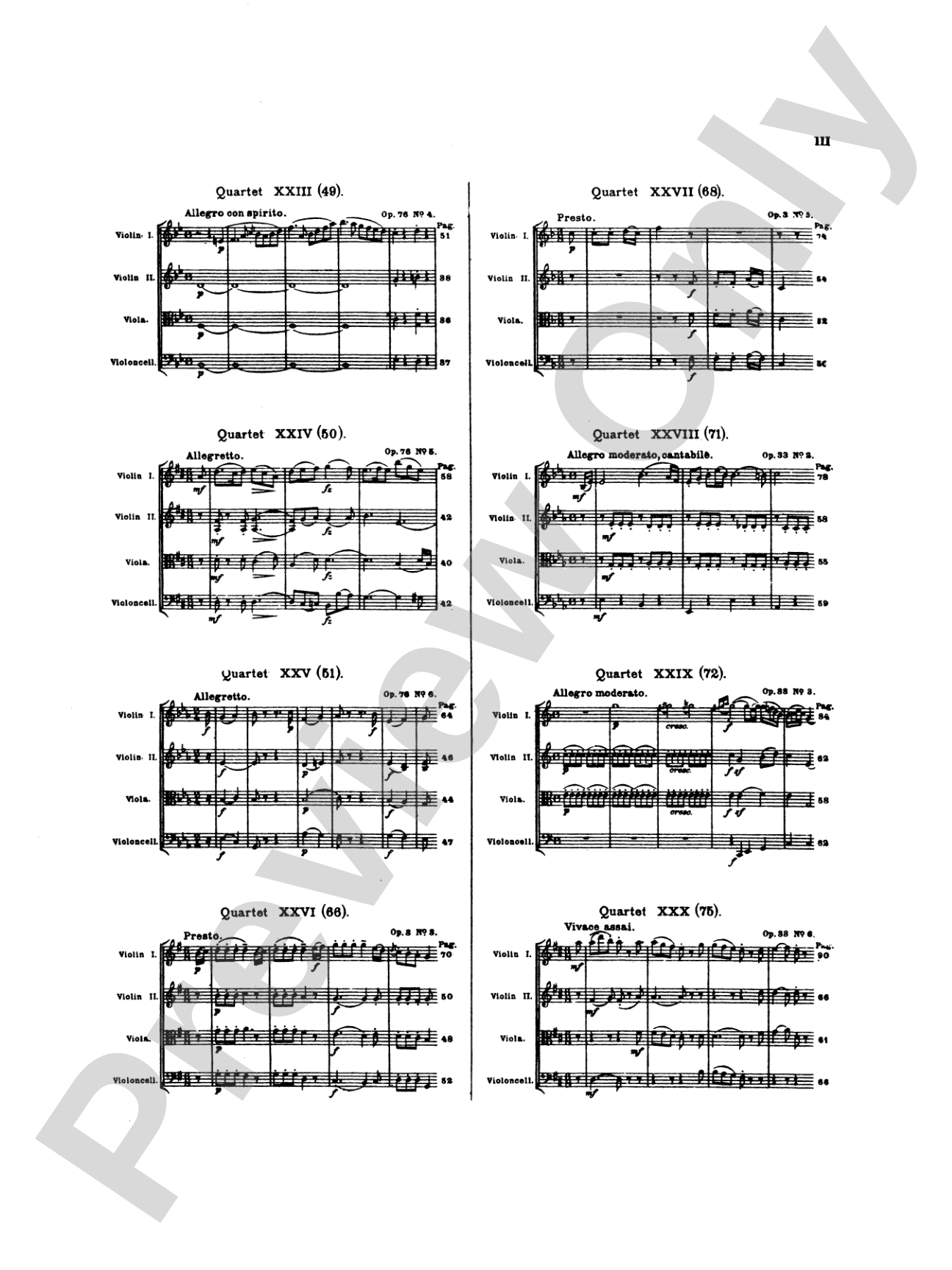
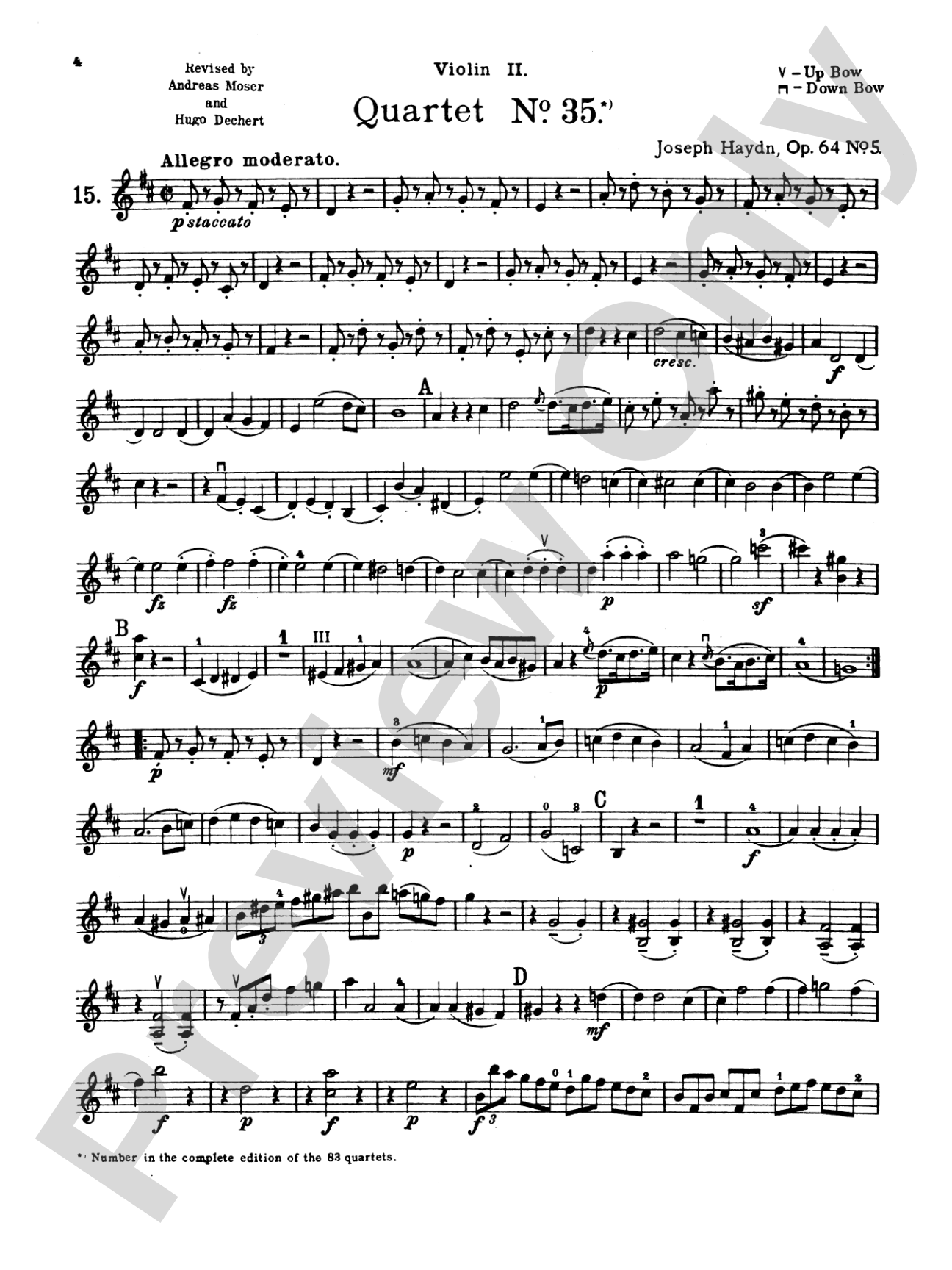
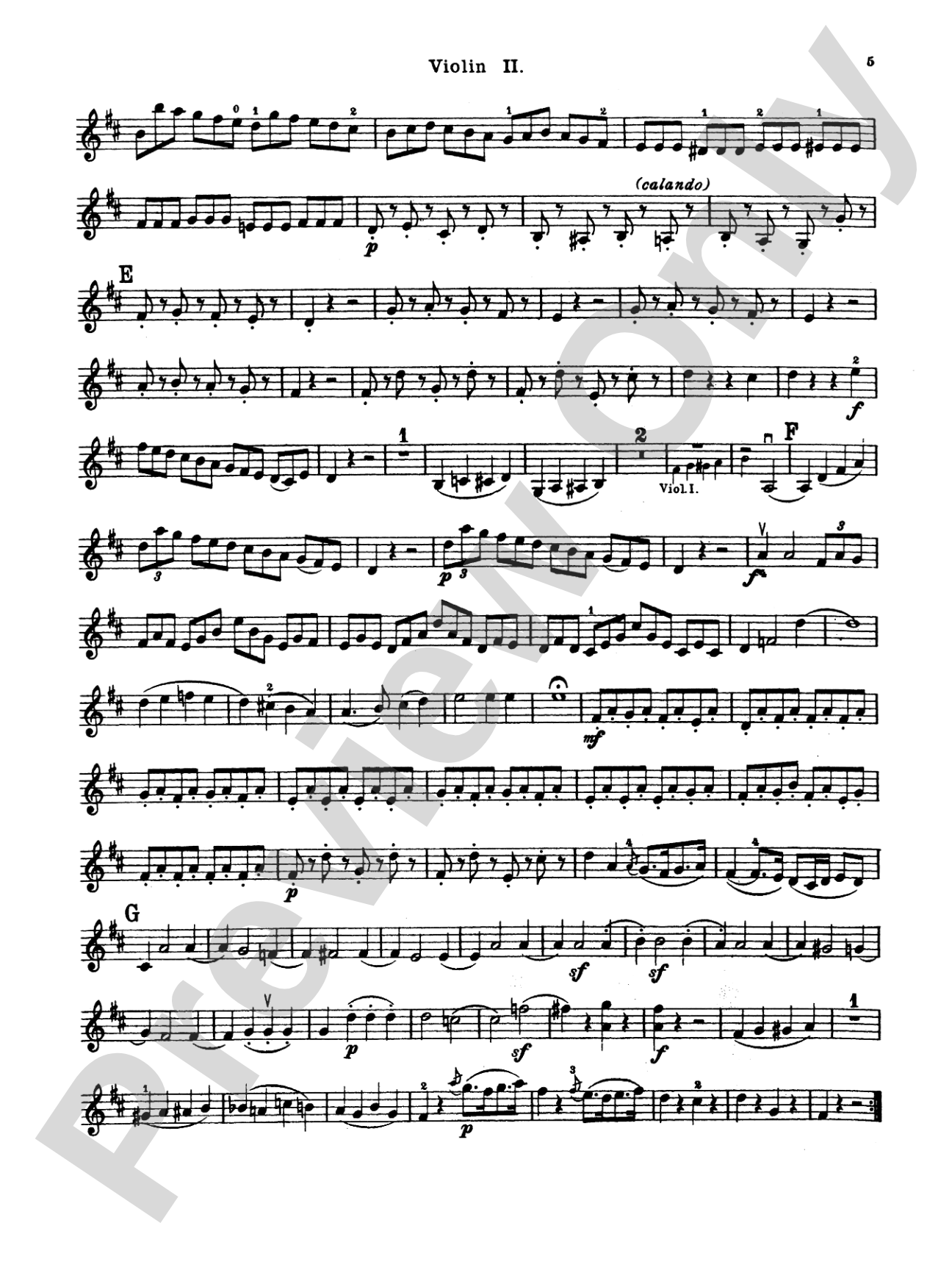
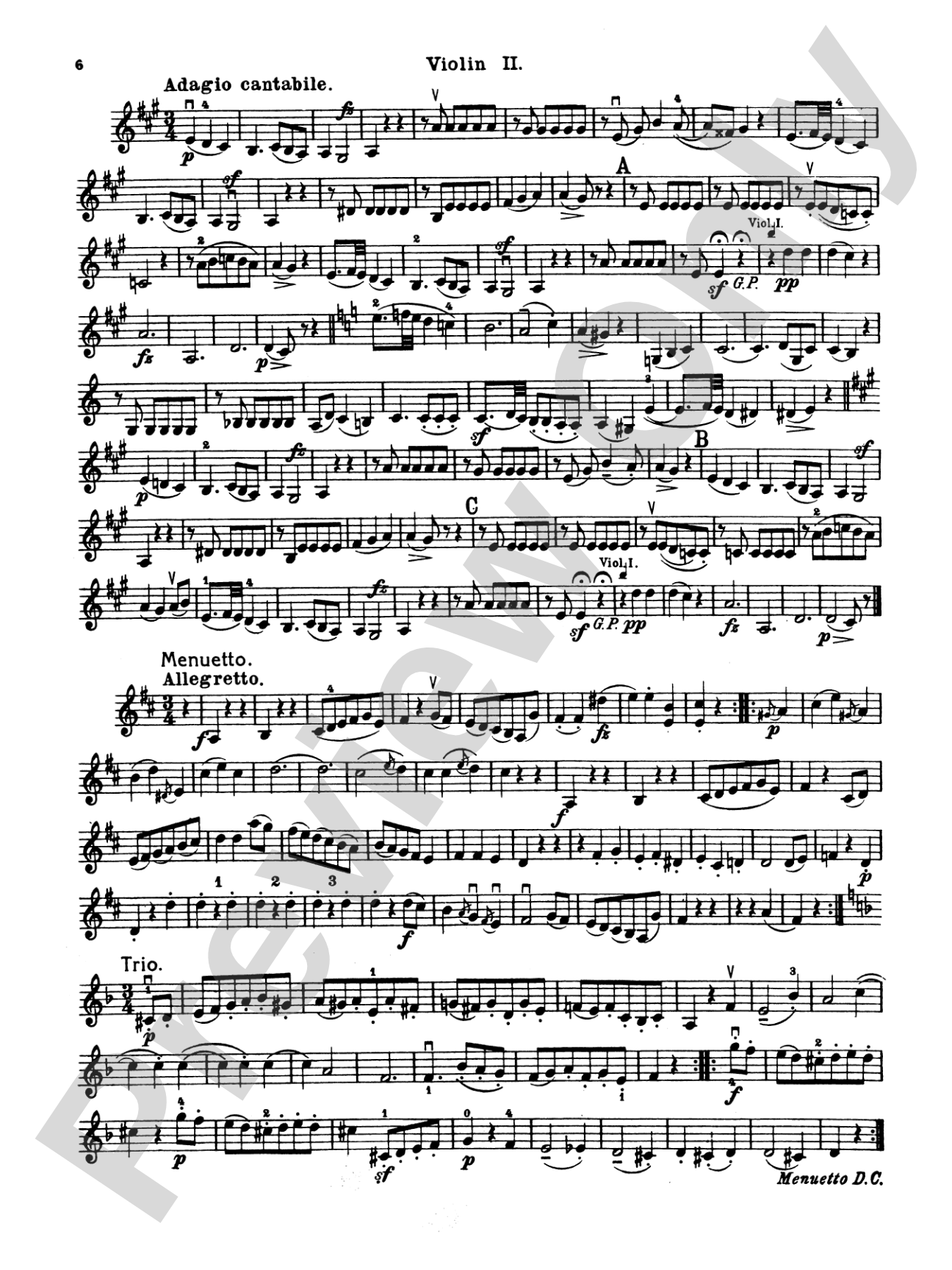
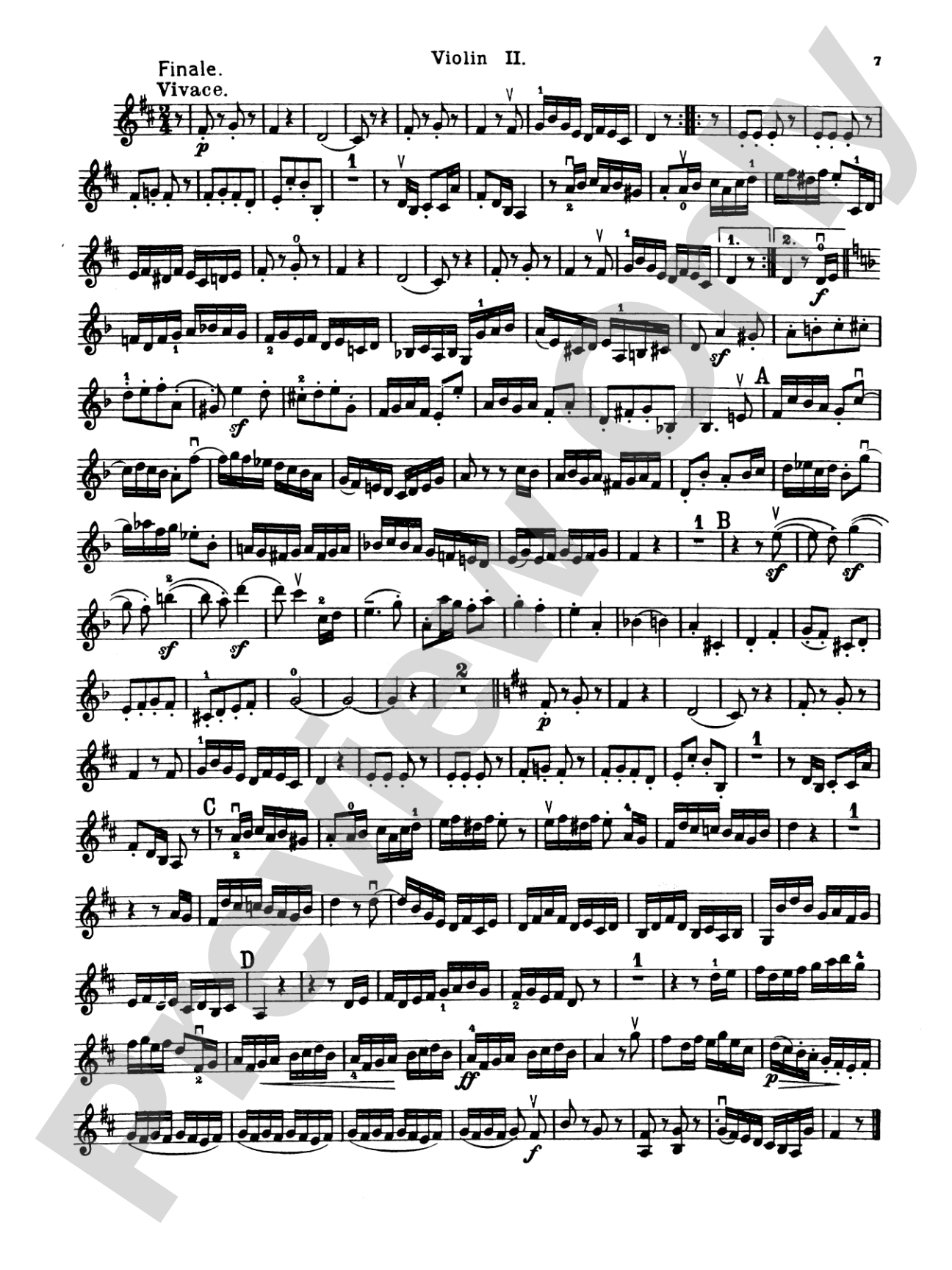
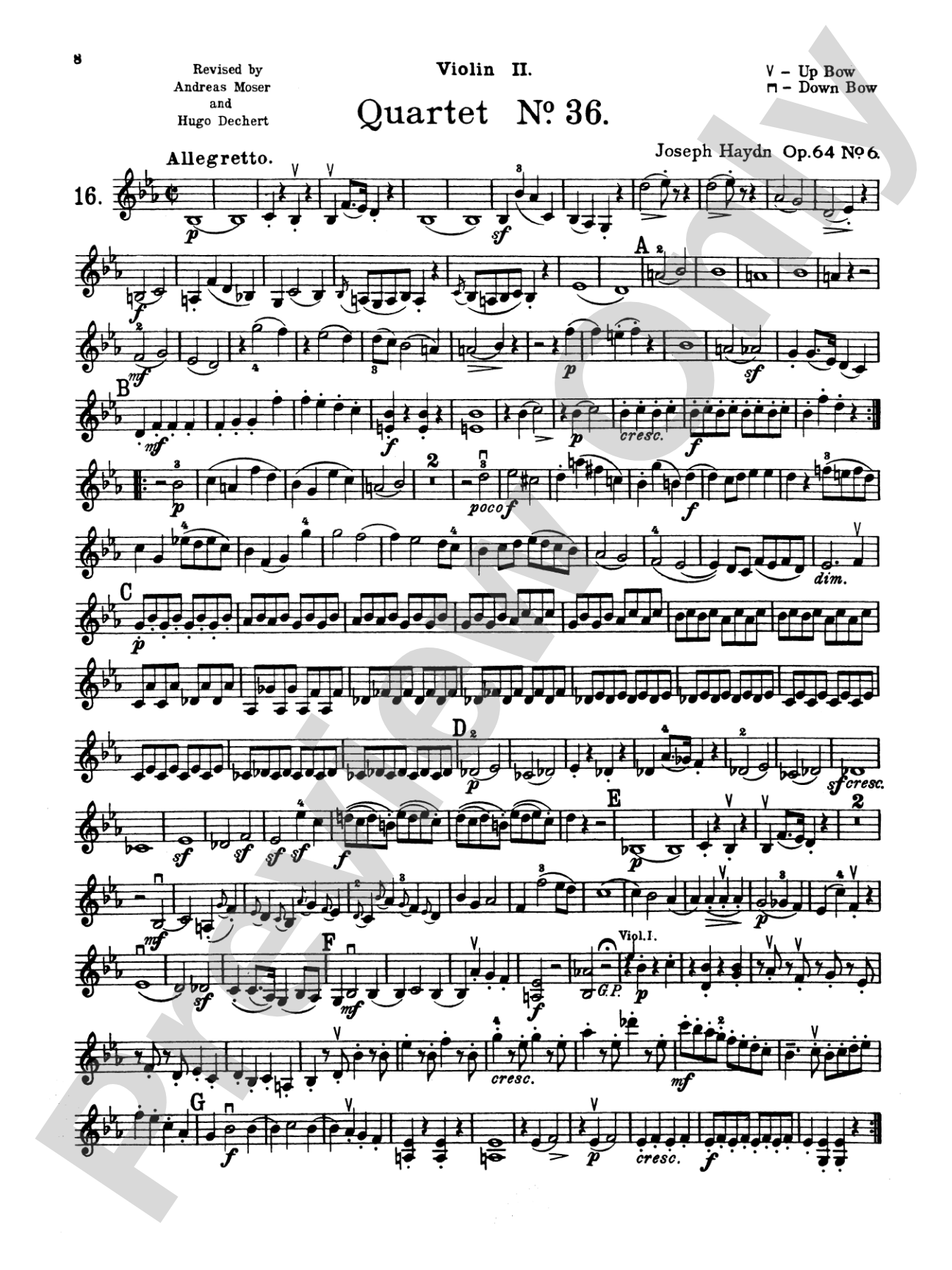
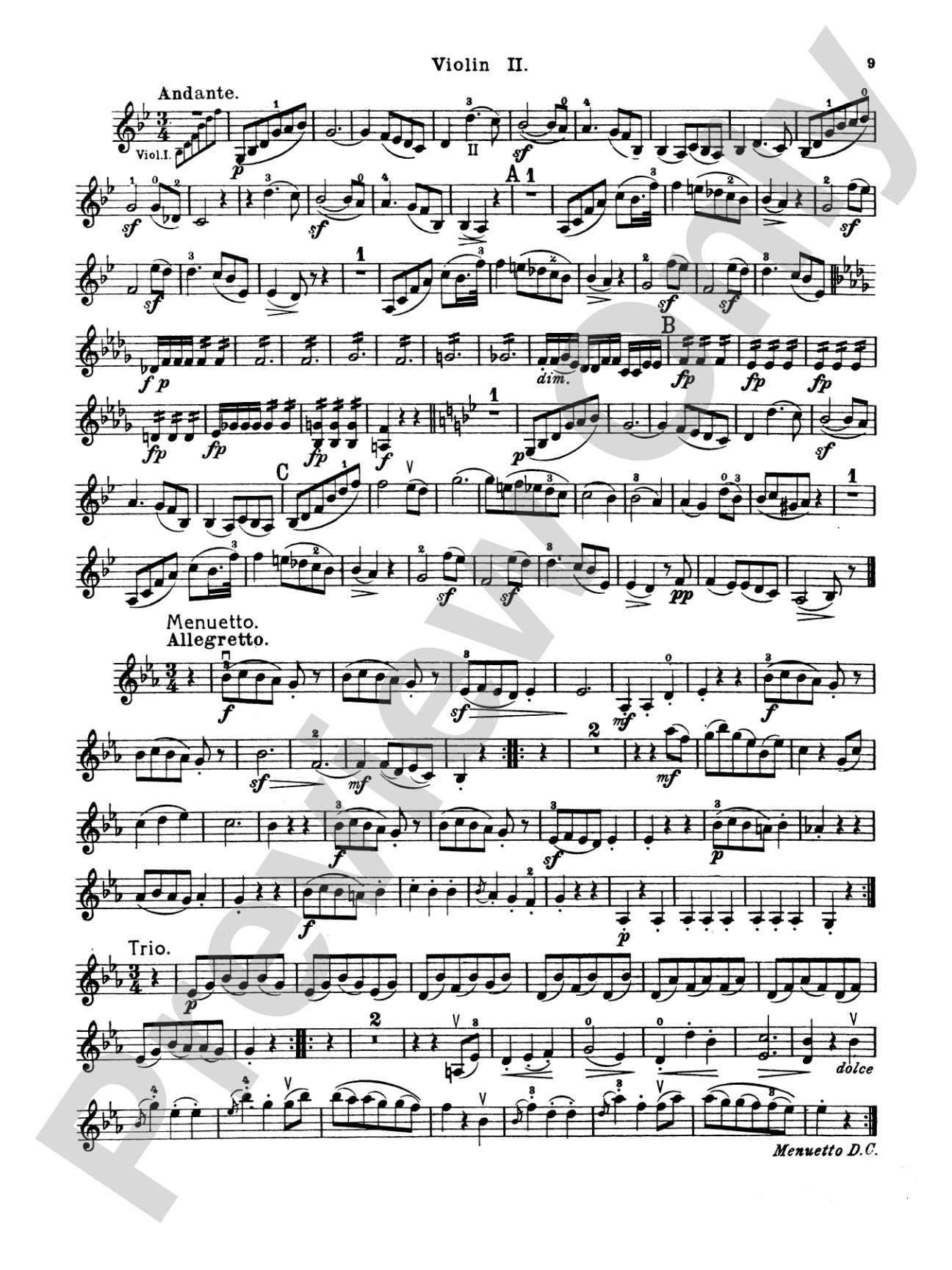
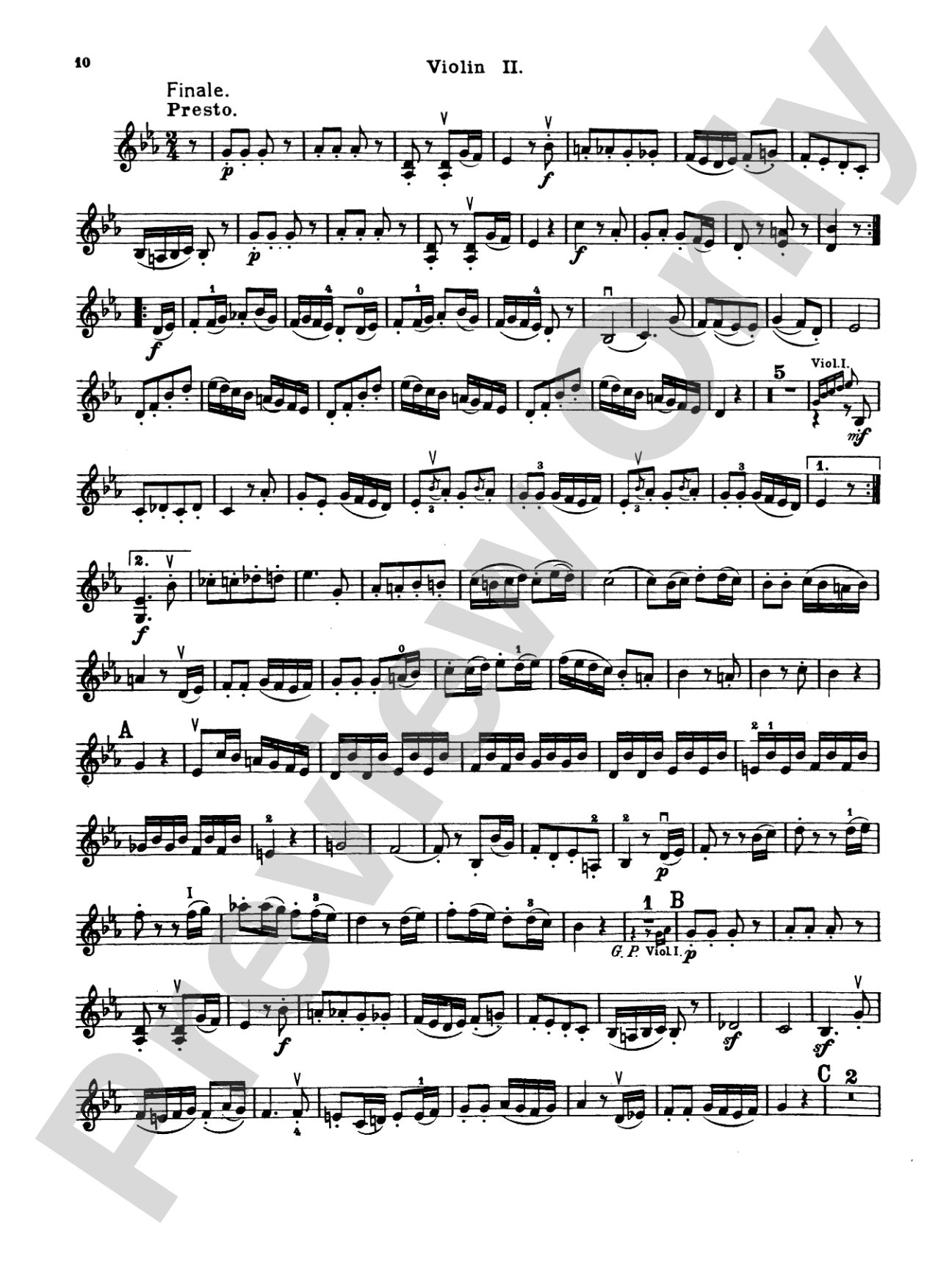
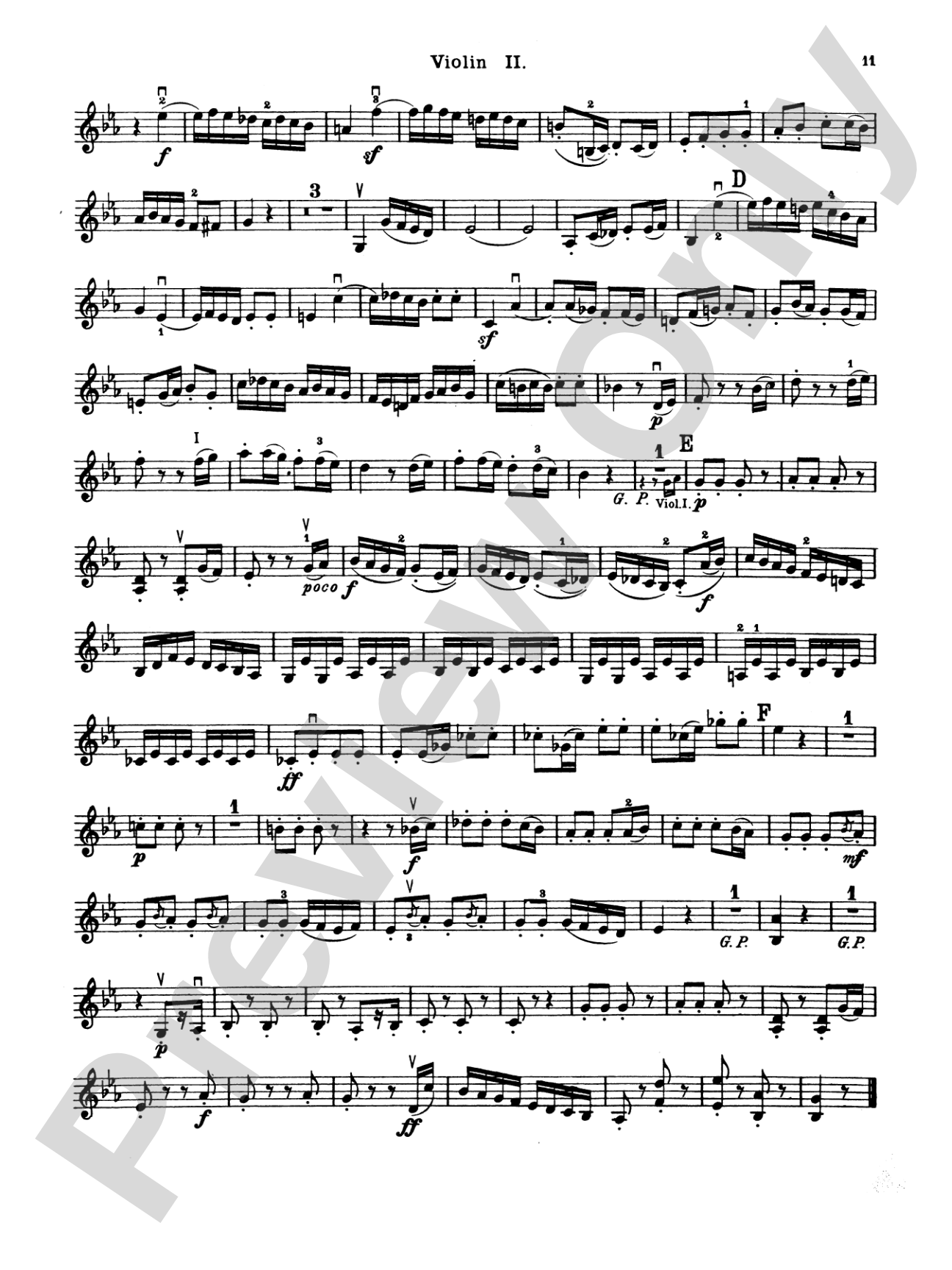
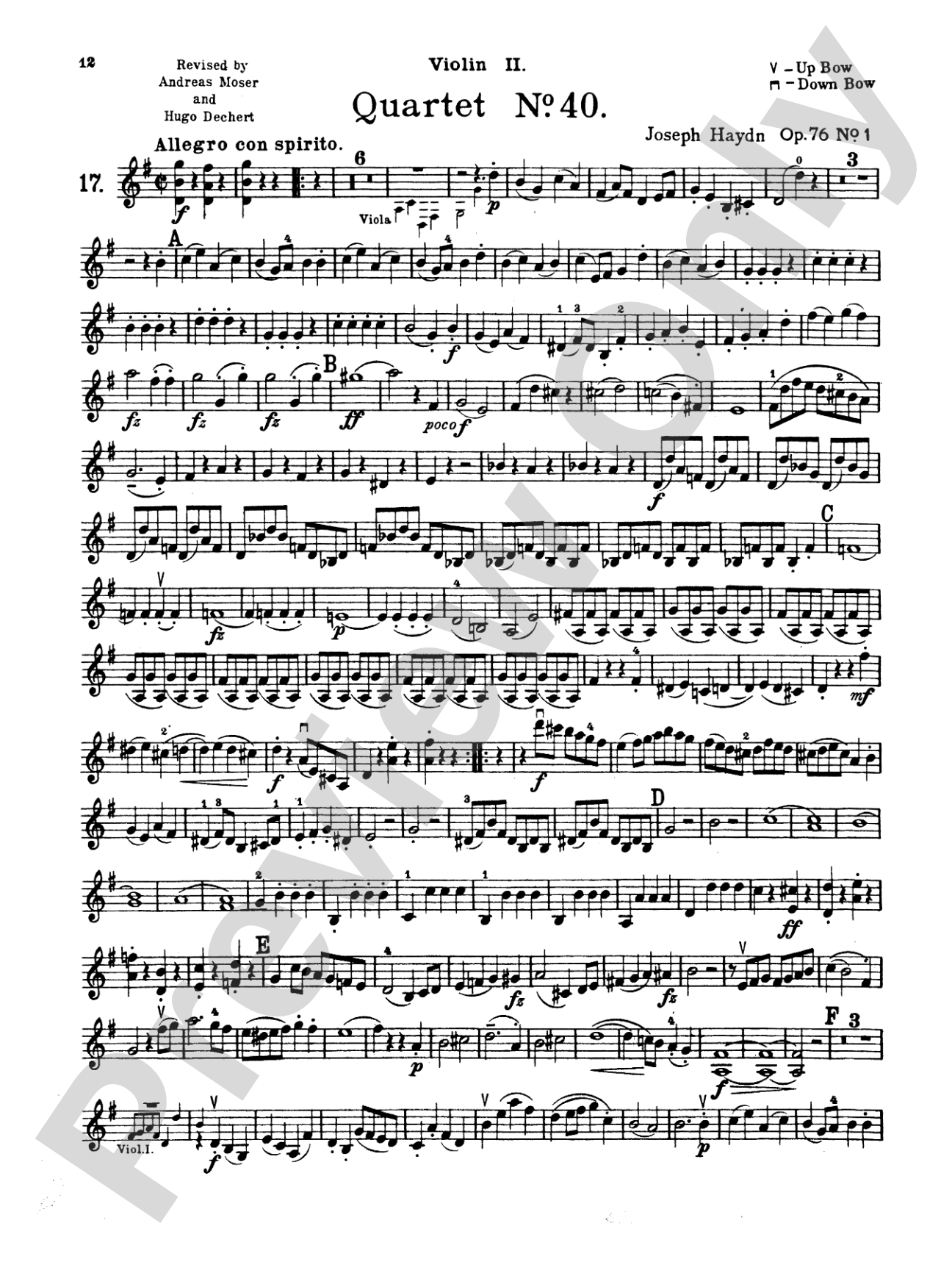
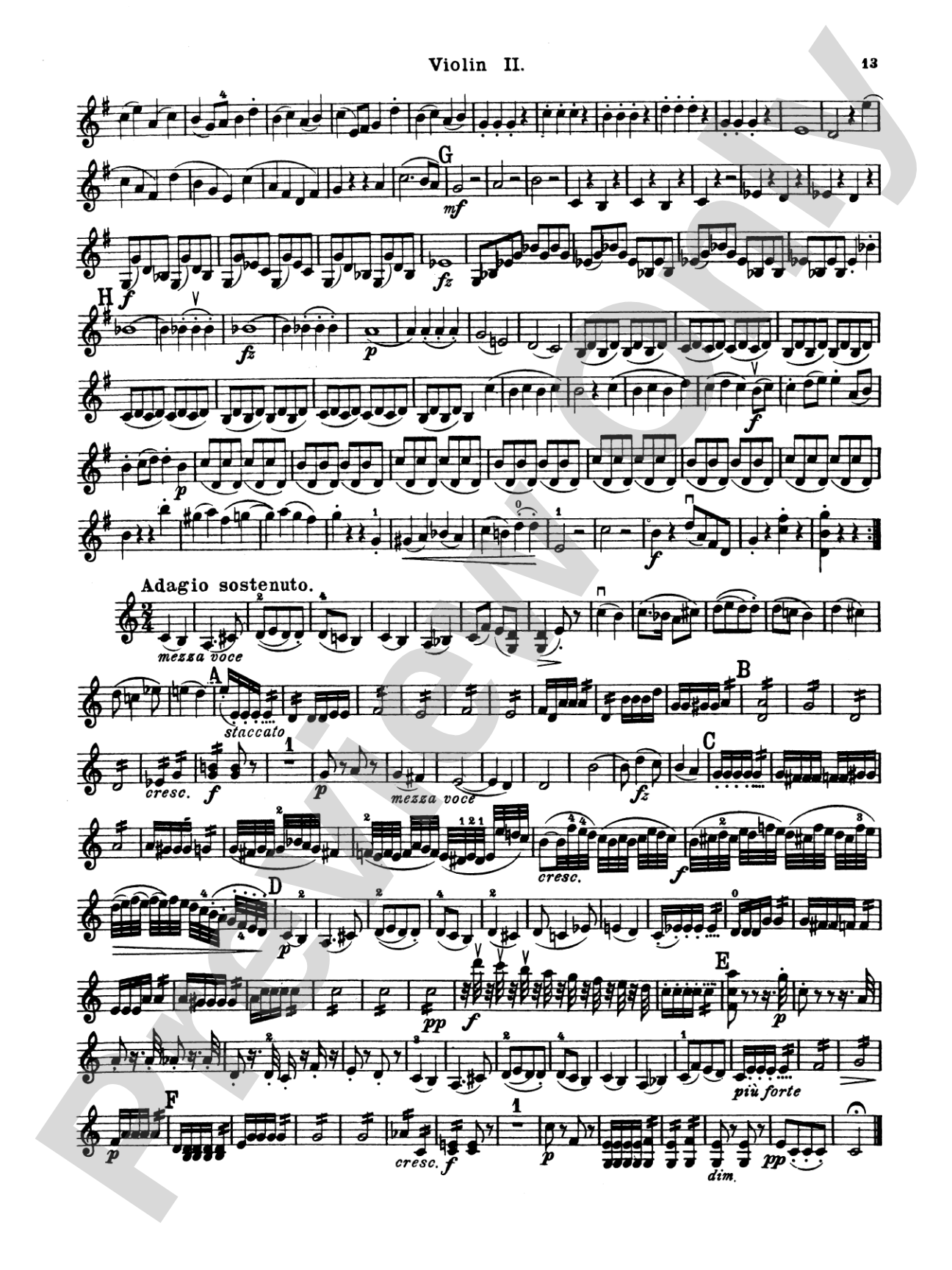
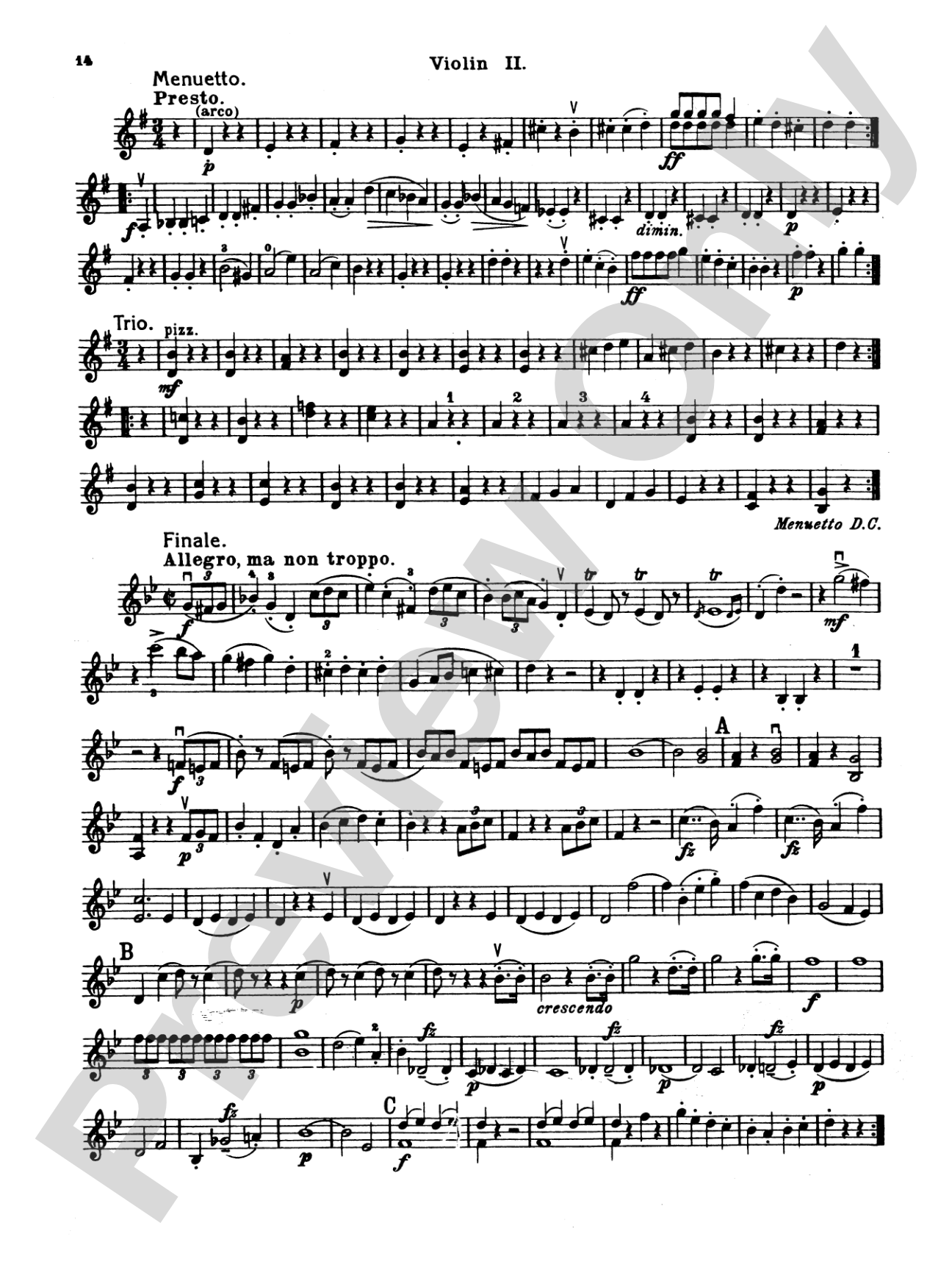
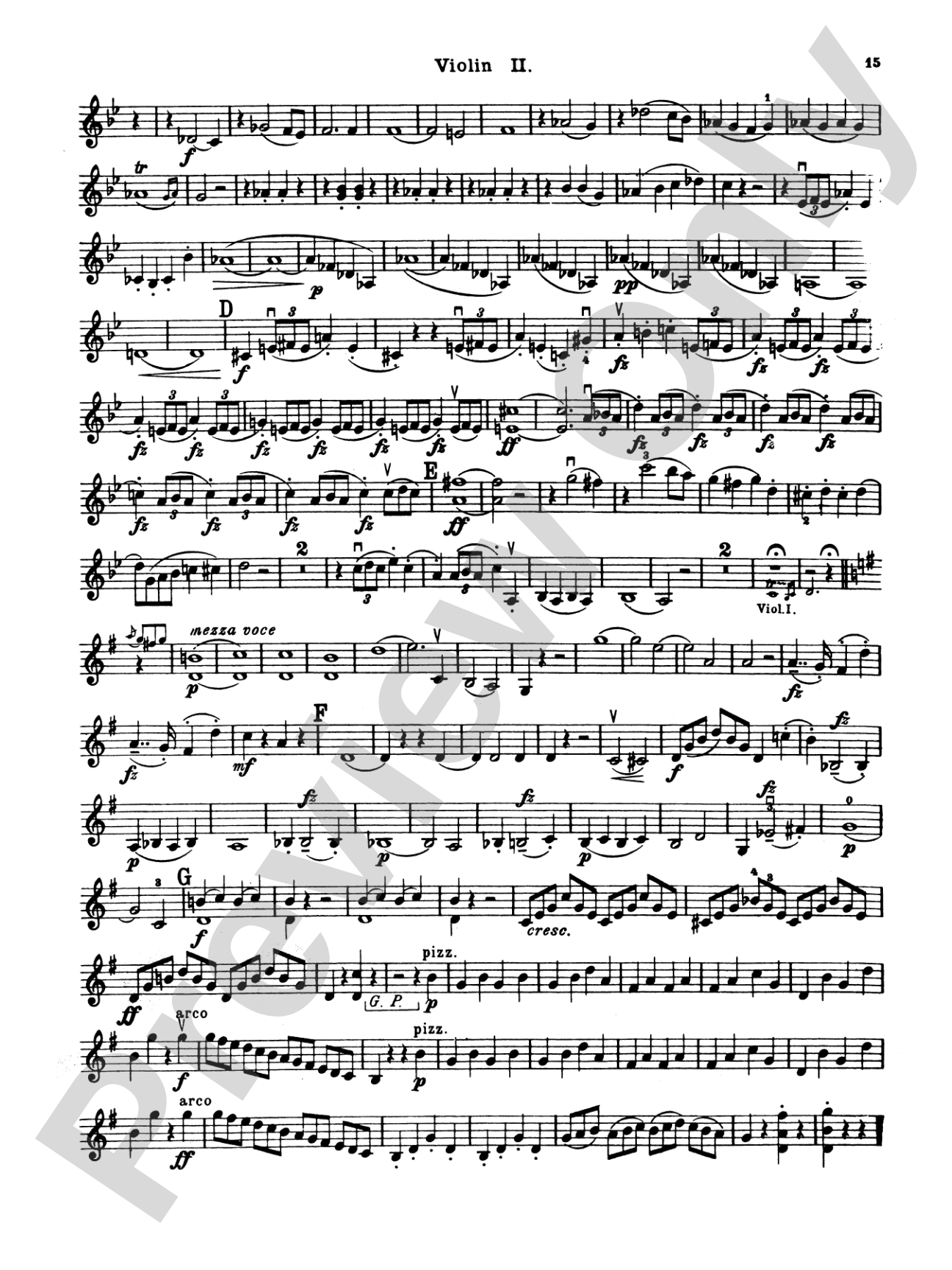

Thirty Celebrated String Quartets, Volume II - Op. 3, Nos. 3, 5; Op. 20, Nos. 4, 5, 6; Op. 33, Nos. 2, 3, 6; Op. 64, Nos. 5, 6; Op. 76, Nos. 1, 2, 3, 4, 5, 6: 2nd Violin
By Franz Joseph Haydn; Revised by Andreas Moser and Hugo Dechert
Item: 00-PC-0002519_VN2
$12.00
Pickup currently not available
Description
Expertly arranged String Quartets by Franz Joseph Haydn from the Kalmus Edition series. This is from the Classical era. Op. 3, Nos. 3, 5; Op. 20, Nos. 4, 5, 6; Op. 33, Nos. 2, 3, 6; Op. 64, Nos. 5, 6; Op. 76, Nos. 1, 2, 3, 4, 5, 6


Thirty Celebrated String Quartets, Volume II - Op. 3, Nos. 3, 5; Op. 20, Nos. 4, 5, 6; Op. 33, Nos. 2, 3, 6; Op. 64, Nos. 5, 6; Op. 76, Nos. 1, 2, 3, 4, 5, 6: 2nd Violin isn't in MakeMusic Cloud just yet...but it could be. Let us know you'd like to see it, and you'll help shape what comes next. In the meantime, start a free trial and dive into thousands of interactive titles your students can play along with today.
Request This Title
Tell us you want it.
Start Your Free Trial
Explore everything that's ready to play right now.
Sample Audio
No sample audio found.
Sample Video
No sample videos found.
Additional Details
Series:
Kalmus Edition
Publisher:
Alfred Music
Page Count:
304
SKU:
00-PC-0002519_VN2
More about this title
About the Composer: Franz Joseph Haydn
Franz Joseph Haydn (1732-1809) shaped the string quartet into one of the most important chamber music forms in the Western canon. Working first as Kapellmeister for the Esterházy family in rural Hungary, Haydn had the freedom to experiment extensively with instrumental forms, and the string quartet became his laboratory for structural innovation and lyrical expression. His 68 quartets chart the evolution of Classical style from its early roots through the sophisticated harmonic language of his late works.
For music educators, Haydn's quartets offer an unmatched curriculum in ensemble playing, intonation, balance, and musical architecture. These pieces demand musical maturity from all four players while remaining accessible to advanced high school and early undergraduate ensembles. The variety across his opus numbers allows teachers to select works that match both the technical level and artistic goals of their students.
Why we love this
This collection spans Haydn's creative arc in quartets, from the extroverted charm of Op. 3 through the intellectual rigor of Op. 76, allowing directors to build a cohesive season around a single master. The Kalmus edition provides reliable, performable texts of 16 complete quartets in a single downloadable volume, eliminating the need to purchase multiple scores. String quartets at this level of sophistication command respect at festivals and competitions while genuinely rewarding the ensemble members who perform them.
What to expect
Haydn's string quartets balance wit and substance, formal clarity and harmonic surprise. These works sparkle with instrumental dialogue, sudden contrasts, and moments of genuine tenderness, all expressed through the intimacy of four voices in conversation. Whether the movement is playful or profound, there is always a sense of architectural inevitability and craft.
Who it's for
Advanced high school and undergraduate string quartets preparing for chamber music competitions, festivals, or concert series. Quartets with strong intonation and the ability to sustain focused rehearsals will thrive with Haydn's demands for precision, inner listening, and stylistic clarity.
How to get the most out of it
- Establish clear communication about vibrato intensity across all four players; Haydn's Classical textures benefit from restrained, unified vibrato that showcases the pure sonority of the ensemble.
- Attend closely to the independence of inner voices (viola and second violin), especially in the slower movements where Haydn often voices surprising harmonic progressions in the middle registers.
- Shape phrase lengths according to harmonic rhythm rather than bar lines; Haydn frequently places cadences at irregular intervals, and ensemble cohesion depends on recognizing the true phrase structure.
- Balance the first violin's melody with sensitive accompaniment from the other three players; resist the temptation to let the cello and second violin recede too far in the background.
How to use it
Feature one quartet per concert to build a thematic series across a season, or program a single quartet as the centerpiece of a chamber concert alongside works from other periods. The Op. 76 set (all six quartets included here) can serve as the core of an ambitious all-Haydn concert or be distributed across multiple programs to showcase the ensemble's range and growth.
Skills your students will build
- Ensemble intonation and balance across all four voices
- Phrasing in Classical style with attention to harmonic rhythm
- Inner voice independence and transparent accompaniment textures
- Stylistic awareness of early, middle, and late Classical period conventions
- Independent musicianship and leadership within a small ensemble
- Interpretation of Classical form (sonata, minuet, variation, rondo)