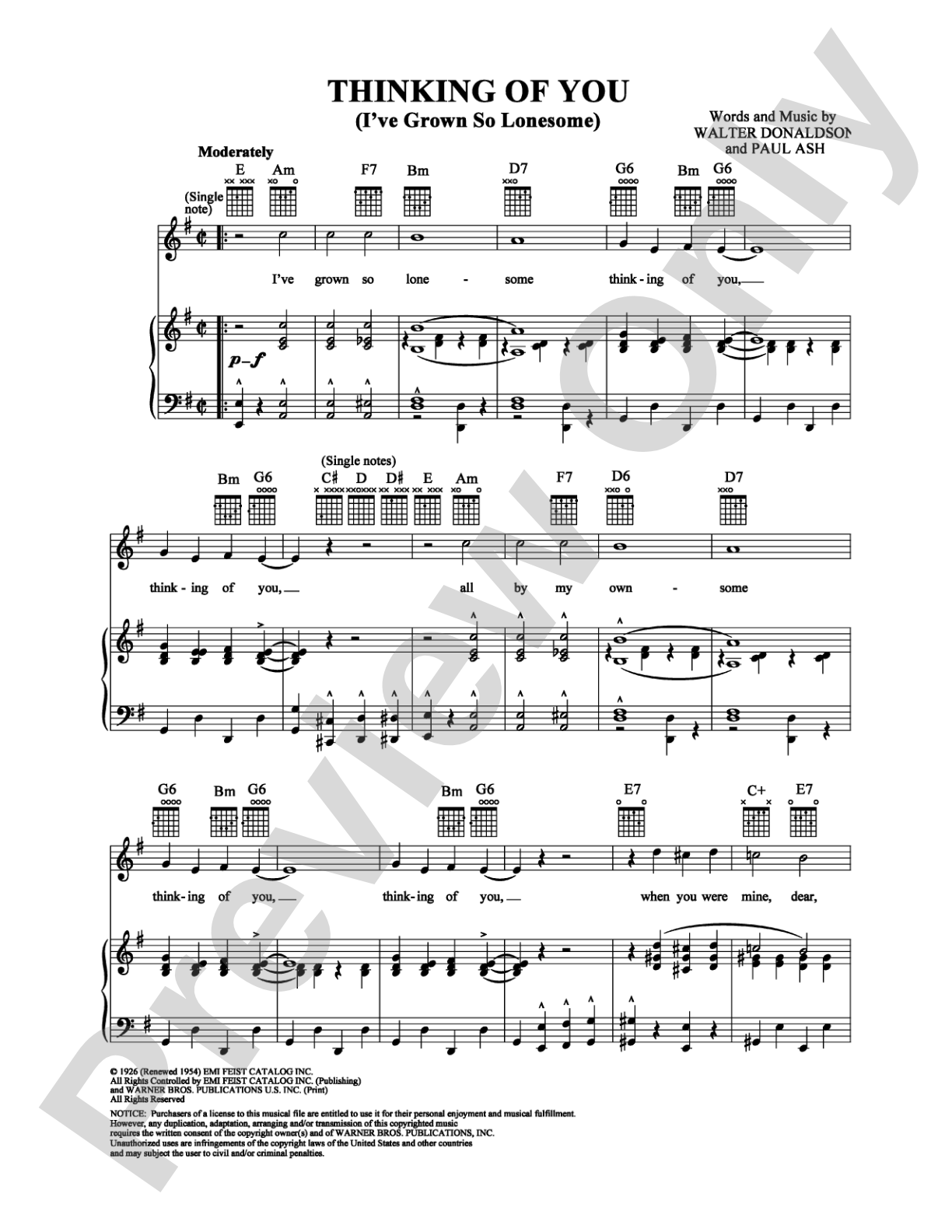
Thinking of You (I've Grown So Lonesome): Piano/Vocal/Chords Digital Sheet Music

Thinking of You (I've Grown So Lonesome): Piano/Vocal/Chords Digital Sheet Music

Walter Donaldson, Kay Kyser, Paul Ash

Item: 00-PS-0007225

Digital Download
$3.99
Description

Thinking of You (I've Grown So Lonesome): Piano/Vocal/Chords Digital Sheet Music isn't in MakeMusic Cloud just yet...but it could be. Let us know you'd like to see it, and you'll help shape what comes next. In the meantime, start a free trial and dive into thousands of interactive titles your students can play along with today.

Sample Audio
No sample audio found.
Sample Video
Additional Details
SKU: 00-PS-0007225

More about this title

About the Artist: Kay Kyser

Kay Kyser (1905-1987) led one of the most popular dance orchestras of the 1930s and 1940s, bringing jazz and swing to mainstream American audiences through radio broadcasts, recordings, and film. Known for his showmanship and ability to connect with listeners, Kyser's orchestra became a cultural force during the big band era, helping to legitimize jazz as entertainment and art.

Why we love this

This is a genuine jazz standard with authentic period charm that works beautifully in small vocal recital settings or jazz ensemble contexts. The song's emotional directness and the flexibility of the piano/vocal/chords format make it accessible whether you're coaching a singer through a single ballad or building out a full program of mid-century American song.

What to expect

Lonesome, wistful, and introspective, this ballad captures the ache of missing someone with understated grace. The harmonic movement invites vulnerability without sentimentality, creating space for the performer to bring personal expression to the lyric.

Who it's for

Vocalists building a jazz or American songbook repertoire will find this standard a rewarding addition to their collection. Pianists accompanying singers in recital or jazz contexts can explore the interplay between voice and piano through a tune with genuine emotional depth and harmonic interest.

How to get the most out of it

  • Pay attention to the harmonic language beneath the melody; these chords suggest specific voicing choices that will shape the song's mood and require intentional voice leading in the piano part.
  • Approach the tempo as conversational rather than metronomic, allowing room for the vocalist to shape phrases with natural rubato while the piano provides steady harmonic support.
  • Balance the vocal line so it floats above the piano without overpowering; this song depends on intimate connection between singer and accompanist.

How to use it

Feature this as a solo ballad in a cabaret-style recital or as part of a jazz vocalist's set list. It pairs naturally with other standards from the swing era and offers a quieter moment in programs that might otherwise focus on uptempo jazz numbers.

Skills your students will build

  • Interpreting jazz harmony and chord changes
  • Balancing vocal phrasing with harmonic accompaniment
  • Shaping rubato and emotional expression within a standard form
  • Reading and navigating piano/vocal/chord notation

You May Also Like