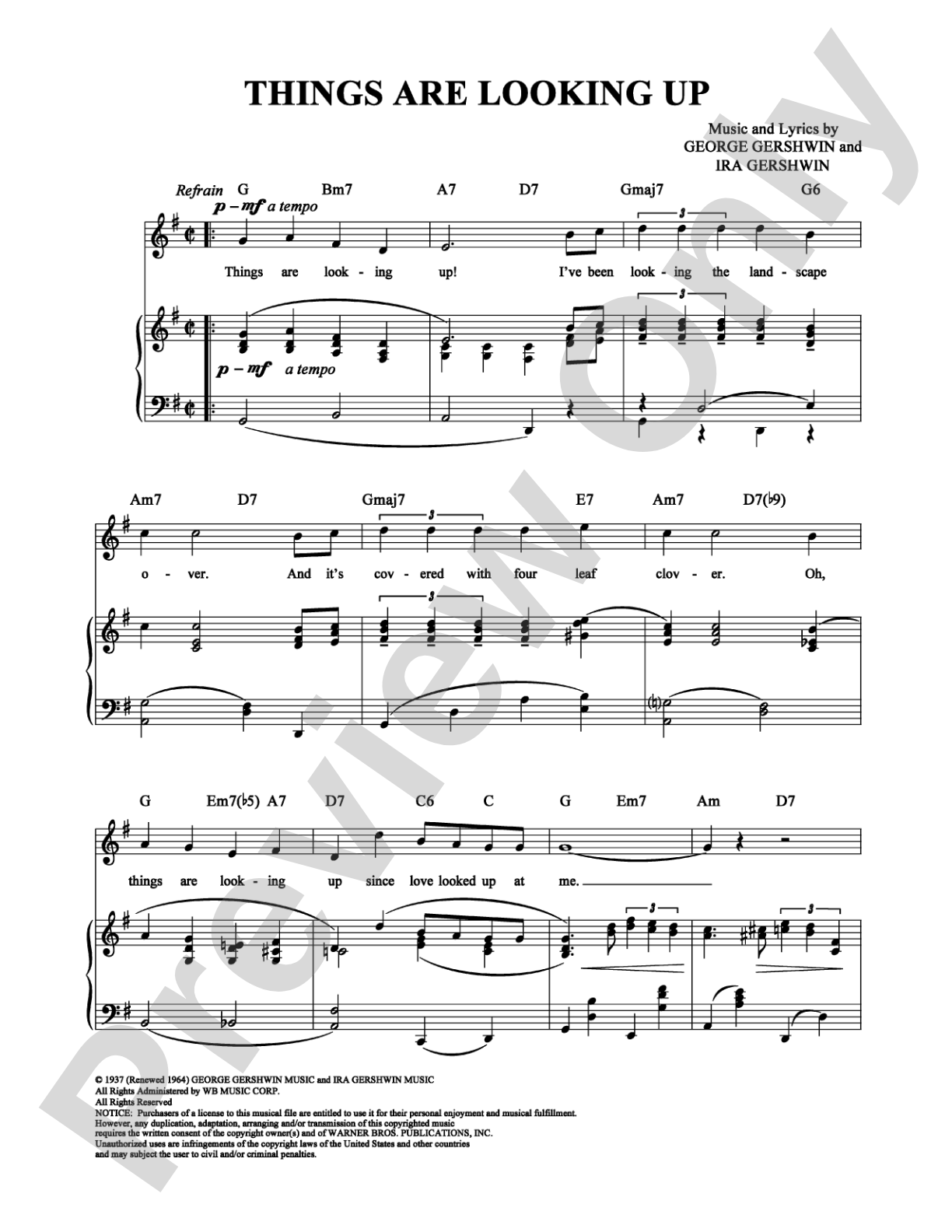
Things are Looking Up: Piano/Vocal/Chords Digital Sheet Music

Things are Looking Up: Piano/Vocal/Chords Digital Sheet Music

George Gershwin, Ira Gershwin, Fred Astaire

Item: 00-PS-0001172

Digital Download
$3.99
Description

Things are Looking Up: Piano/Vocal/Chords Digital Sheet Music isn't in MakeMusic Cloud just yet...but it could be. Let us know you'd like to see it, and you'll help shape what comes next. In the meantime, start a free trial and dive into thousands of interactive titles your students can play along with today.

Sample Audio
No sample audio found.
Sample Video
Additional Details
SKU: 00-PS-0001172

More about this title

About the Artist: Fred Astaire

Fred Astaire (1899–1987) was an American dancer, singer, and actor whose influence on music and performance extended far beyond the stage. His impeccable sense of rhythm, musicality, and interpretive clarity made him a natural musician as well as a dancer. Astaire's recordings and film performances established a standard for pop standards and show tunes that continues to shape how musicians approach vocal melody, phrasing, and accompaniment.

Why we love this

This song captures the optimistic spirit and sophisticated harmonic language that made Great American Songbook standards enduring fixtures in jazz and pop pedagogy. The piano/vocal/chords format gives pianists and singers alike the flexibility to learn the melody, understand the harmonic movement, and develop their own interpretive choices. It's a natural choice for repertoire study, recital programming, or classroom exploration of how classic popular song structure supports both melodic and harmonic development.

What to expect

The song radiates warmth and gentle confidence, with a melody that feels conversational rather than showy. The harmonic progression suggests movement and forward momentum, creating a sense of optimism without sentimentality.

Who it's for

Pianists and singers preparing material for jazz studies, popular song interpretation, or recital performance will find this digital sheet music an essential resource. Music educators teaching voice or piano can use it to explore how melody, harmony, and rhythm interact in the Great American Songbook tradition. Students studying vocal jazz or piano accompaniment benefit from the clear chord voicing and straightforward layout.

How to get the most out of it

  • Anchor the tempo through the piano's rhythmic feel rather than rushing into the melody. Let the accompaniment establish the groove before the vocal line enters.
  • Pay close attention to where the chords suggest harmonic tension and resolution. Use this harmonic map to shape your phrasing, not just the lyrical content.
  • Balance the vocal melody so it sits naturally above the piano part. The piano chords should support, not compete with, the singer's line.
  • Explore the rhythmic flexibility within the melody. Astaire's phrasing often plays against the beat in subtle ways. Practice singing and playing together to find where the melody breathes.

How to use it

Include this as a stand-alone recital piece for advanced pianists with vocal background, or pair it with other standards from the same era to create a cohesive jazz vocal program. It works equally well in a vocal jazz ensemble setting or as a model piece for students learning how to voice chord changes for jazz accompaniment.

Skills your students will build

  • Reading and interpreting chord symbols in real time
  • Balancing melody and accompaniment as a pianist
  • Phrasing and interpretation of lyrical melody over jazz harmonies
  • Understanding harmonic function and tension/resolution in popular song form

You May Also Like