
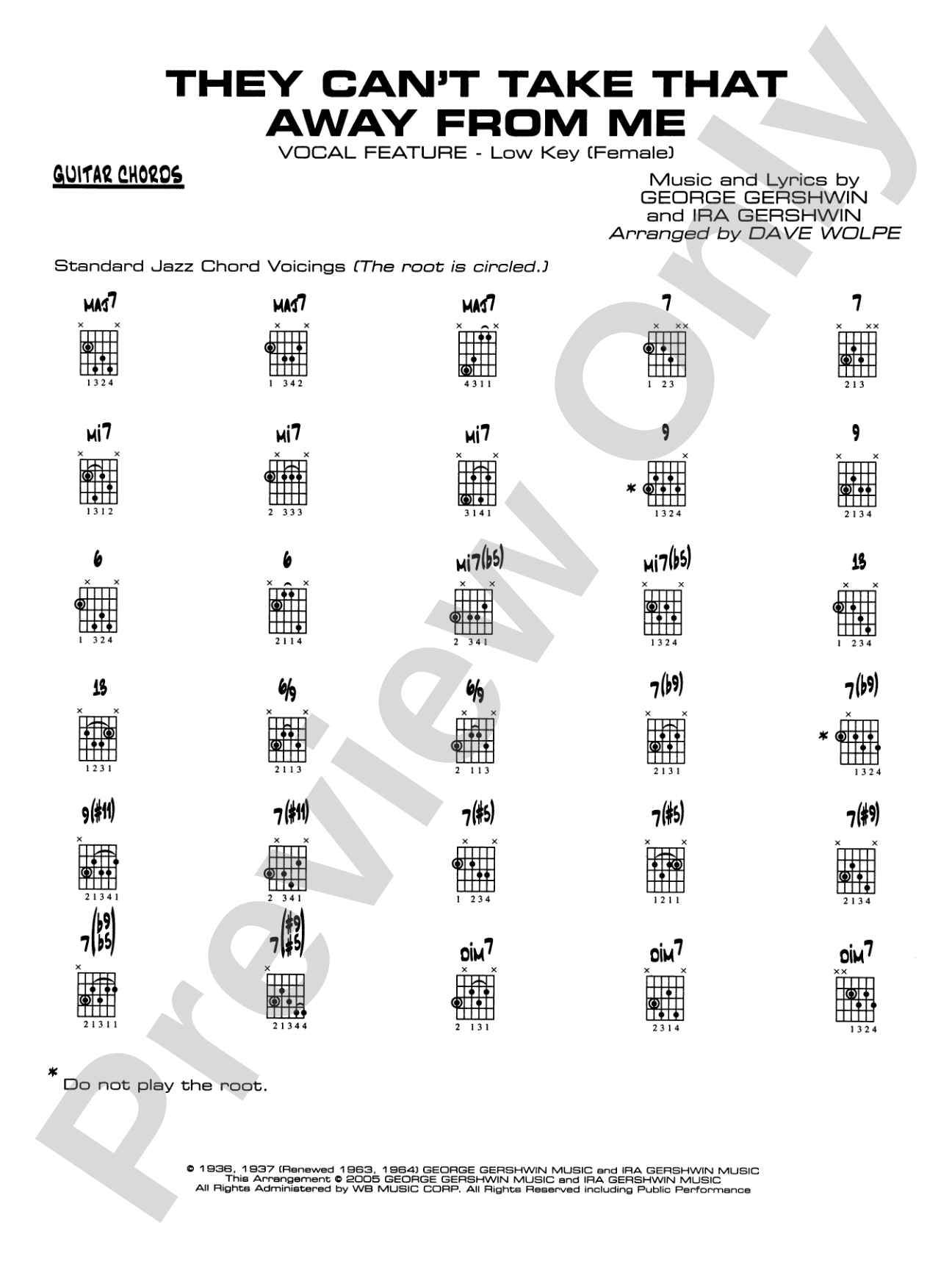

They Can't Take That Away from Me: Guitar Chords
Vocal Feature
Music and lyrics by George Gershwin and Ira Gershwin / arr. Dave Wolpe
Grade: 3.5 (Medium)
Item: 00-PC-0017276_GC
$3.00
Pickup currently not available
Description
A Gershwin classic for solo vocalist arranged by Dave Wolpe, this chart is written in two keys, B-flat and E-flat, to allow flexibility. The parts are reversible---just flip the page. Wolpe knows how to make your vocalist sound fantastic and how to keep the band happy with some wonderful Sinatra-style ensemble writing. Vocal range low key (B-flat): B-flat below middle C to third line B-flat, high key (E-flat): first line E-flat to fourth space E-flat. A winner. (3:04)


Don't just read it, hear it, play along with it, and watch your students grow with it. In MakeMusic Cloud, They Can't Take That Away from Me: Guitar Chords comes alive with professional accompaniment, adjustable tempo, and built-in practice tools that turn solo practice into real progress.
Open in the Player
Jump straight in and assign it today.
Start Your Free Trial
Open this title and explore the full library in minutes.
Sample Audio
1
Audio File
--:--
0:00
0:00
Sample Video
No sample videos found.
Additional Details
Series:
Jazz Vocal Series
Publisher:
Alfred Music
Page Count:
82
SKU:
00-PC-0017276_GC
More about this title
About the Composer: George Gershwin
George Gershwin (1898-1937) bridged concert music and American popular song with an immediacy that still defines the sound of the 1920s and 30s. His rhythmic invention, harmonic sophistication, and gift for melody made him equally at home writing for Broadway, the concert hall, and the jazz club. Educators value Gershwin's work because it demonstrates that serious compositional craft and genuine popular appeal are not opposites.
Ira Gershwin, George's lyricist brother, had an equally sharp ear for language and phrasing. Together they created standards that have outlasted countless more ephemeral hits, partly because the words serve the music rather than the reverse. Their partnership set a standard for craft in American songwriting that students can learn from across all levels.
Why we love this
Wolpe's arrangement captures exactly why this Gershwin standard endures: a melody so natural it seems inevitable, paired with ensemble writing that sounds like it's listening to the vocalist rather than drowning them out. The reversible parts in two keys mean you can use this chart year after year with different singers, and the Grade 3.5 level makes it accessible without feeling simplified.
What to expect
Sophisticated and warm, with the ease of a standard that's been played thousands of times but still feels fresh when the band locks in. The vocal line has an unhurried, conversational quality, while the ensemble writing underneath suggests the relaxed groove of a good Sinatra recording from the golden age of jazz.
Who it's for
Jazz ensembles with a strong vocalist who can handle Gershwin's range and style, from high school programs to community and college jazz bands. The two-key flexibility means you can feature different singers across seasons without replacing the chart, making it a smart long-term investment for any program that prioritizes vocal jazz.
How to get the most out of it
- Balance the vocalist's entrance against the opening ensemble figures; the band should establish the groove without forcing the singer to oversing just to be heard.
- Work the reversible pages carefully with your ensemble. Mark which key you're using for each run-through so players don't flip to the wrong side mid-rehearsal.
- Shape the vocal line with the jazz inflection the melody suggests, but keep enough clarity that the Gershwin line sings through any rhythmic syncopation in the ensemble.
- Pay attention to the Sinatra-style ensemble passages; they're written to complement the vocal phrase, so lock the ensemble phrasing to the vocalist's breath and line shape.
How to use it
This works beautifully as a feature on a jazz concert, either paired with another vocal standard or sandwiched between instrumental charts to showcase your vocalist's musicality. The 3:04 length gives it weight without commandeering a whole set, and the elegant arrangement suggests professionalism without requiring a polished big band.
Skills your students will build
- Phrasing and interpretation of jazz standards with rhythmic nuance
- Balancing vocal soloist and ensemble texture
- Reading from reversible parts and managing key transpositions
- Ensemble listening and responding to the vocalist's tempo and phrasing
- Swing feel and jazz articulation in section writing