
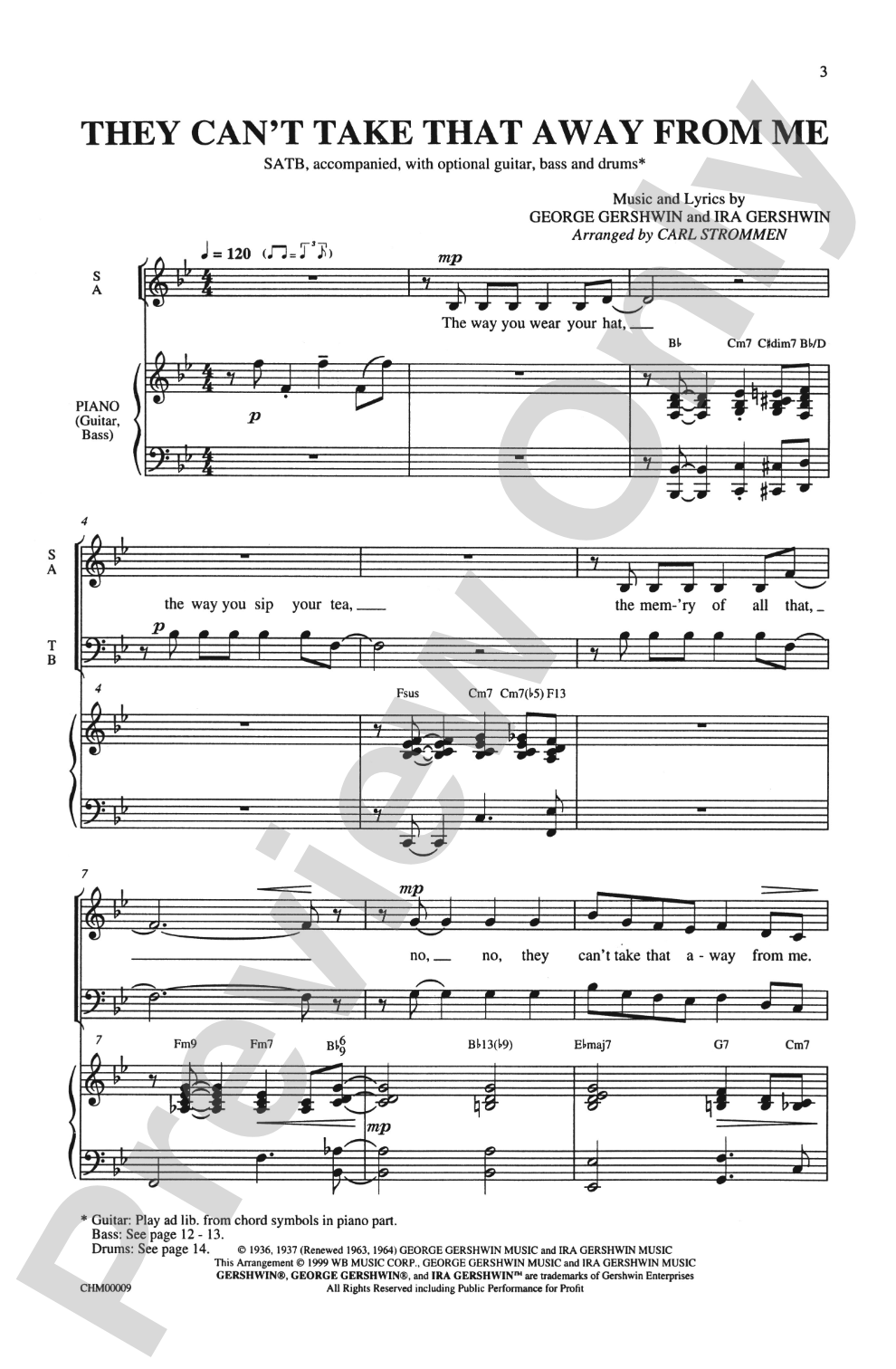
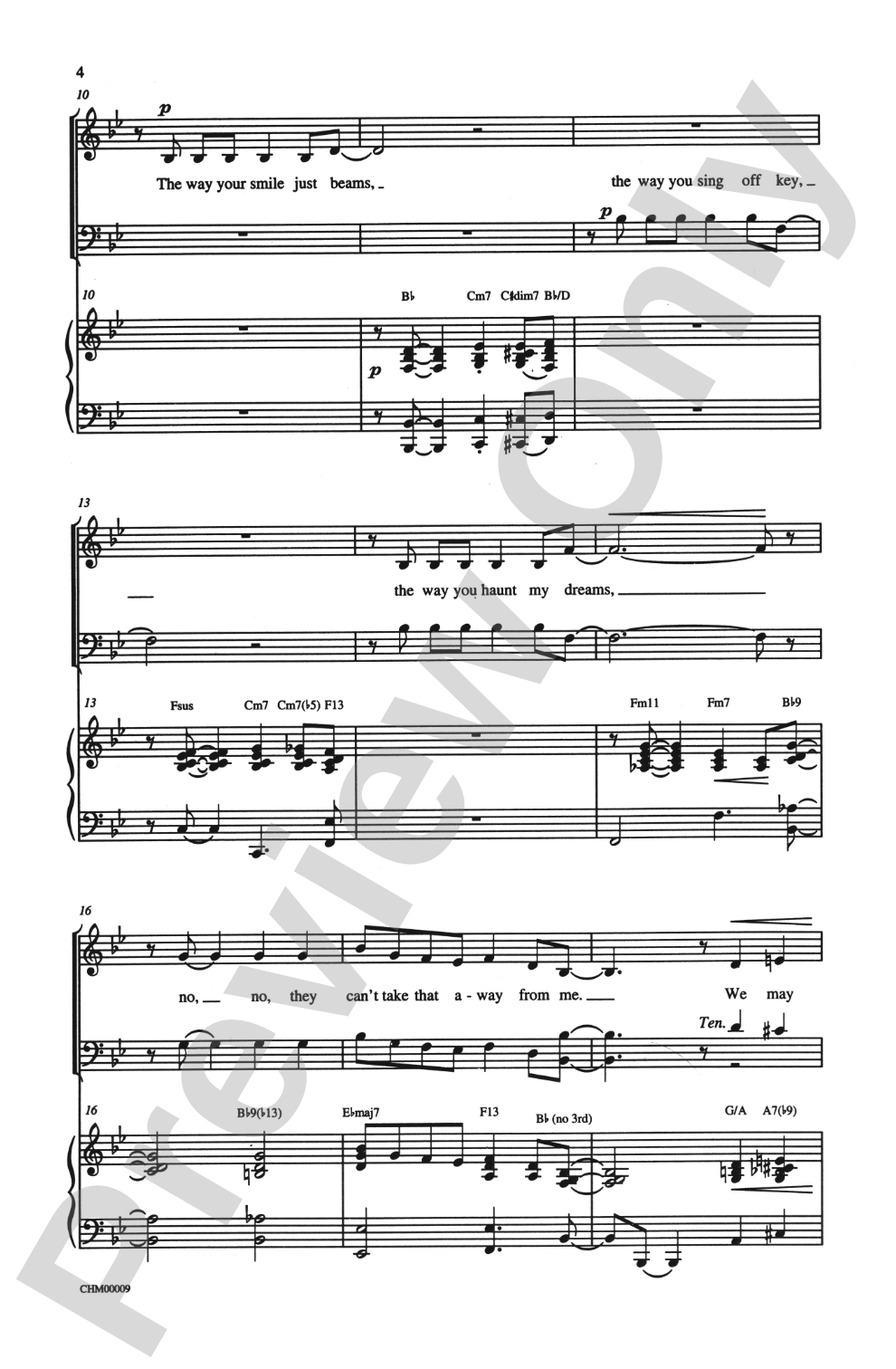
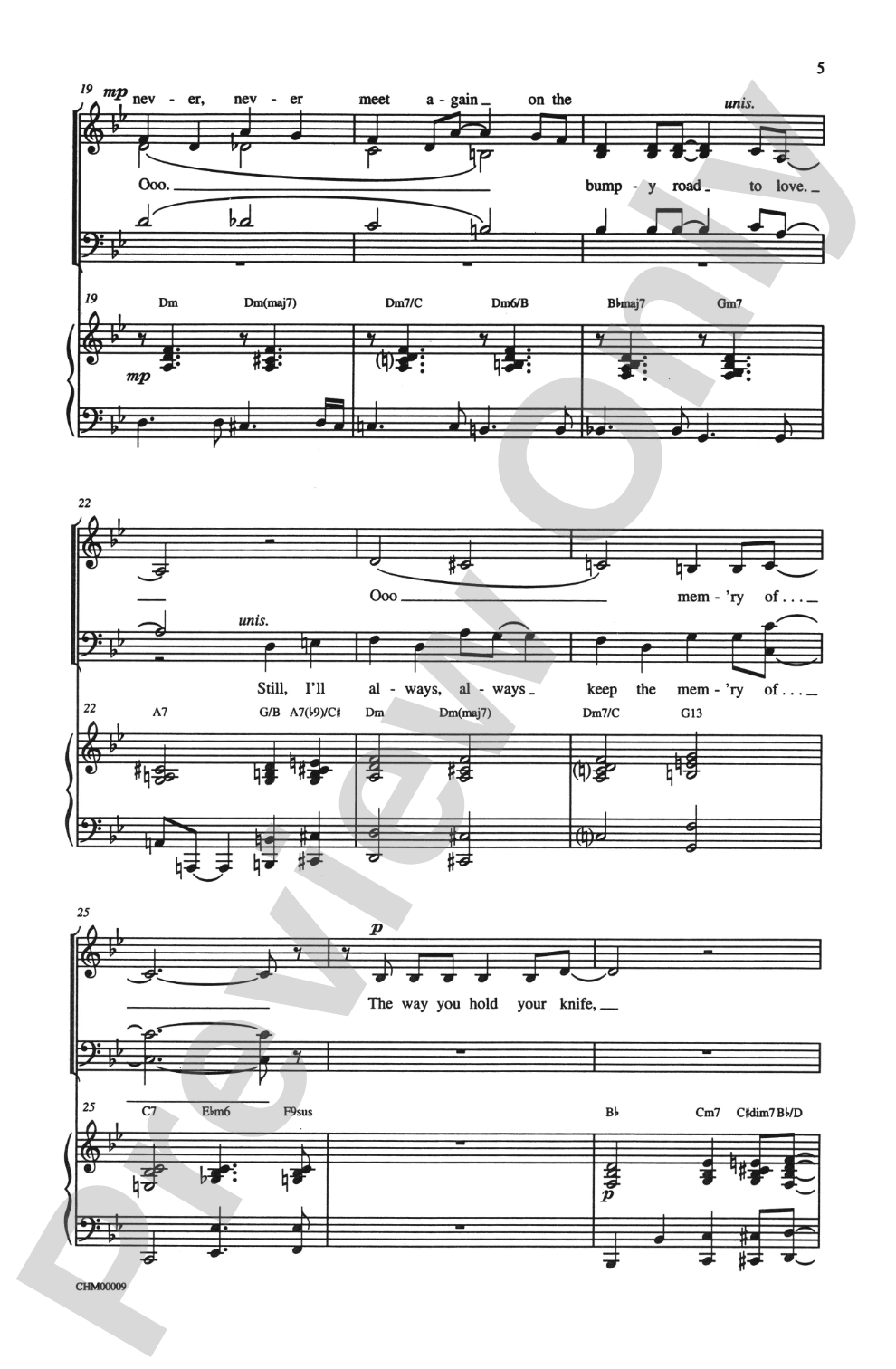

They Can't Take That Away from Me: SATB Choral Octavo
Music and lyrics by George Gershwin and Ira Gershwin / arr. Carl Strommen
Item: 00-PO-0006750
$2.95
Minimum order quantity: 20 copies
One moment…
Description
The memory of this song will linger with any audience that hears it performed. Carl Strommen has done a masterful job of creating a choral setting for this classic solo by George and Ira Gershwin. This is a sentimental piece arranged with sensitivity, and requires some maturity and experience from its performing group.


Discover MakeMusic Cloud: thousands of interactive titles your students can play along with today.
Sample Audio
No sample audio found.
Sample Video
No sample videos found.
Additional Details
Series:
Alfred Pop Choral Series
Publisher:
Alfred Music
Page Count:
16
SKU:
00-PO-0006750
More about this title
About the Composer: George Gershwin
George Gershwin (1898–1937) revolutionized American music by merging jazz idioms with classical forms at a time when such fusion was considered daring. His ability to write melodies that lodged instantly in the public ear, combined with sophisticated harmonic language, made him one of the most performed composers of the 20th century. Works like Rhapsody in Blue and An American in Paris remain staples of both concert halls and educational settings.
Gershwin's gift for crafting songs that balance accessibility with genuine artistic substance makes his compositions ideal for choral arrangers. Even in his popular songs, written with his brother Ira's lyrics, there is a structural integrity and emotional authenticity that elevate them beyond typical Broadway fare. This is why his melodies have aged so gracefully and why choral directors continue to seek out tasteful settings of his work.
Why we love this
Strommen's arrangement honors the song's inherent elegance without overshooting it. The piece walks the line between accessibility and sophistication in a way that satisfies both experienced ensembles and audiences who simply know they love the melody. Programming this octavo lets your singers inhabit one of America's most durable love songs while building real interpretive maturity.
What to expect
Warm nostalgia with genuine emotional weight. The Gershwin melody is inherently buoyant yet reflective, and Strommen's setting preserves that duality, wrapping the tune in four-part harmony that feels both timeless and intimate. Performing this piece invites singers and listeners alike into a moment of quiet recognition, the kind of memory the lyrics promise to preserve.
Who it's for
Choirs with secure harmonic sense and the vocal maturity to sustain lyrical singing over an entire 16-page piece. This works well for advanced high school groups and adult community or collegiate choirs that understand how to balance ensemble blend with individual voice beauty. Directors seeking a standard that conveys sophistication and sincerity without requiring extended technical difficulty will find it here.
How to get the most out of it
- Shape the opening phrases with clear rubato; this song lives in the space between strict time and freely sung melody, so allow the harmony to guide your natural phrasing rather than locking to a rigid pulse.
- Balance transparency in the four voices: the arrangement likely weaves the melody through different parts, so ensure no single voice dominates and that inner harmonies remain audible.
- Attend to the lyrical weight of Ira Gershwin's text; sentimentality can tip into cliché, so invest in the meaning of the words rather than leaning on a manufactured sweetness.
- If using the recorded accompaniment, rehearse several times without it first so your choir develops independent harmonic security and ownership of the sound.
How to use it
This octavo fits naturally into a concert pairing American standards or exploring the Great American Songbook with your ensemble. Consider programming it in a set with other arranged popular classics, or place it in a spring pops concert where it can anchor a section celebrating mid-century popular song. Its lyrical nature and moderate length also make it suitable for special events or community partnerships where emotional resonance matters more than technical showiness.
Skills your students will build
- Sustaining legit singing over longer phrases without oversinging or losing focus
- Balancing four-part harmony while allowing the melody to sing through clearly
- Interpreting rhythmic flexibility and rubato in a notated score
- Understanding harmonic function and how inner voices support a central melody
- Connecting text meaning to musical expression in a standard arrangement