
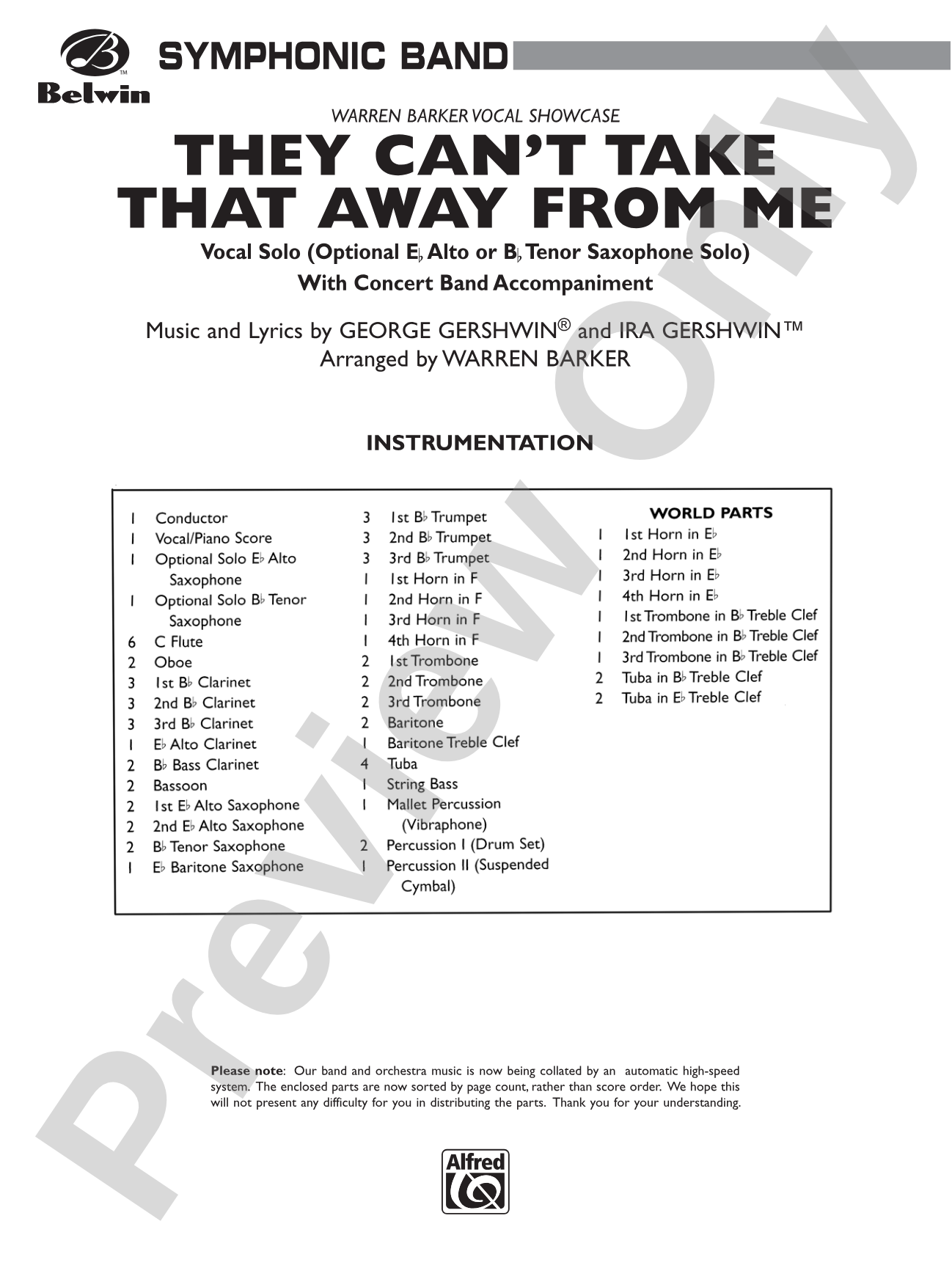

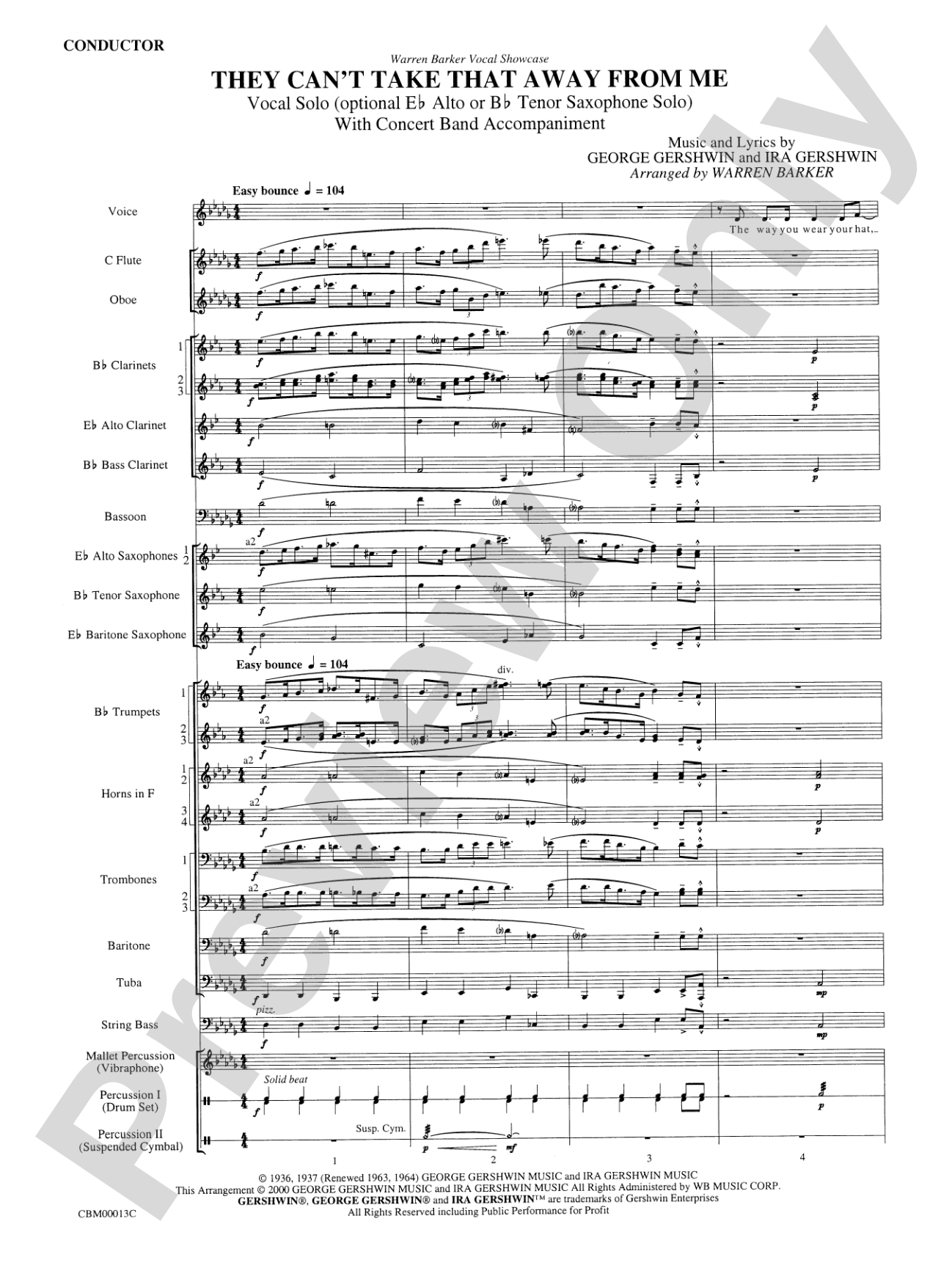
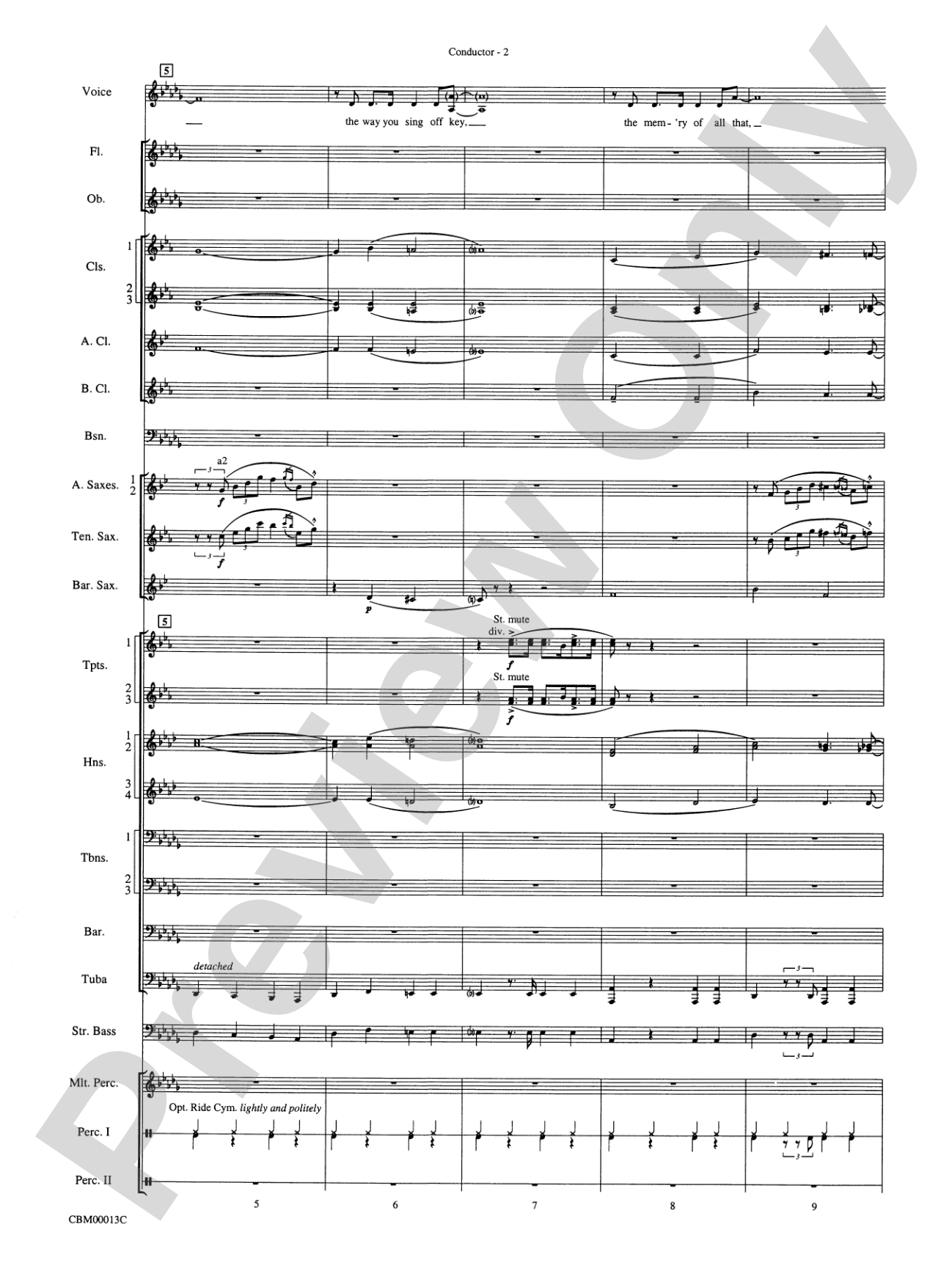
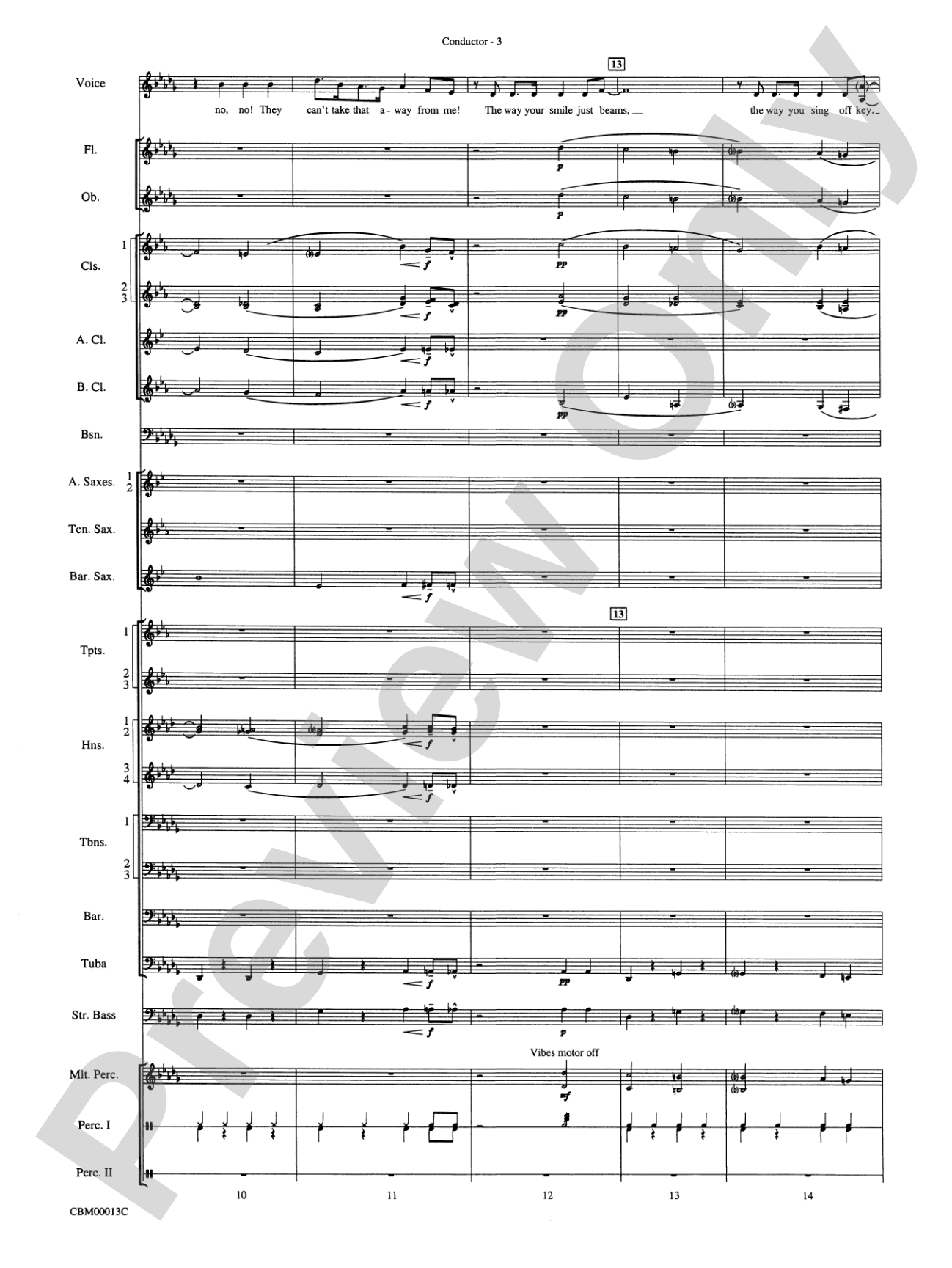
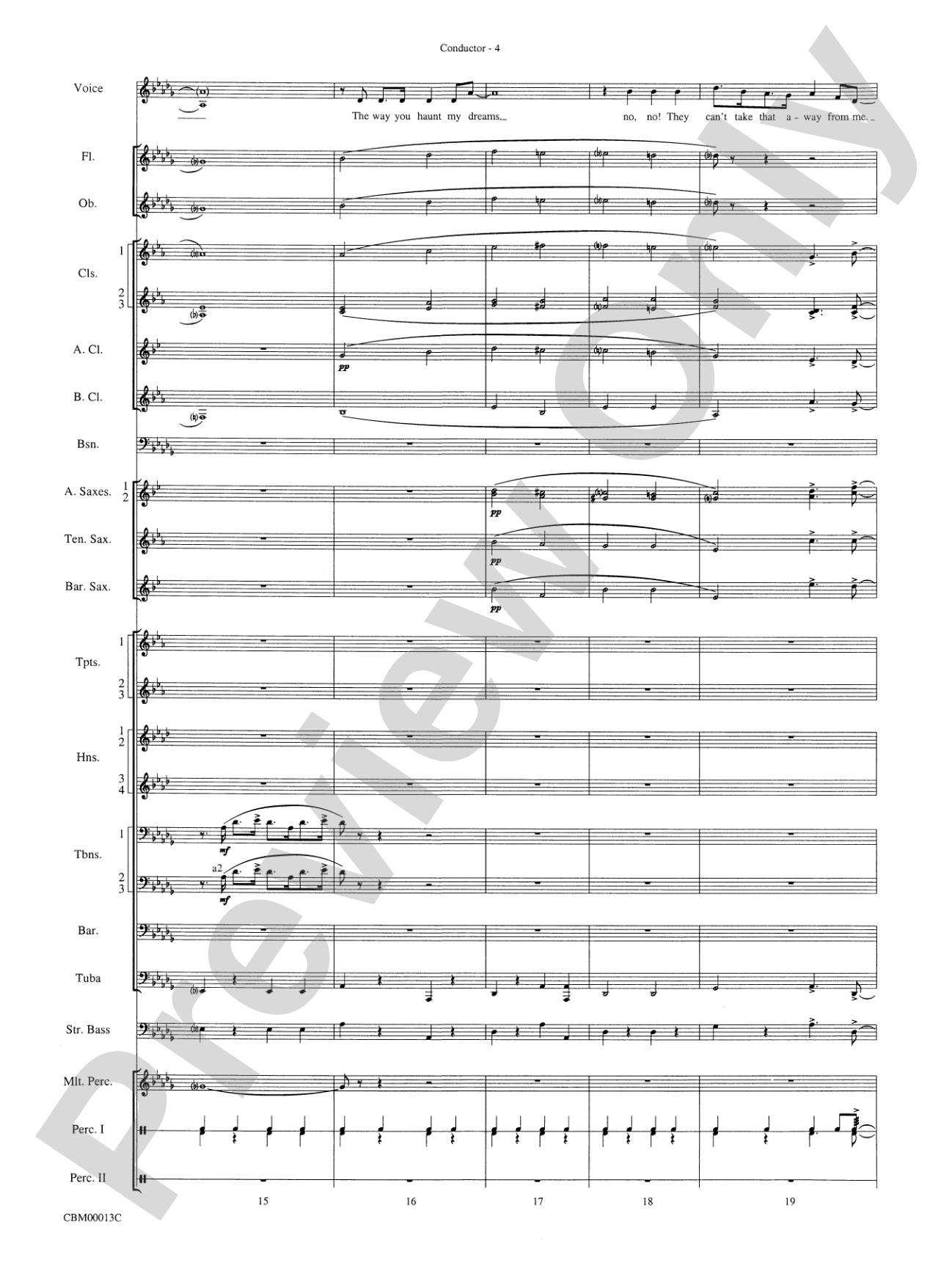
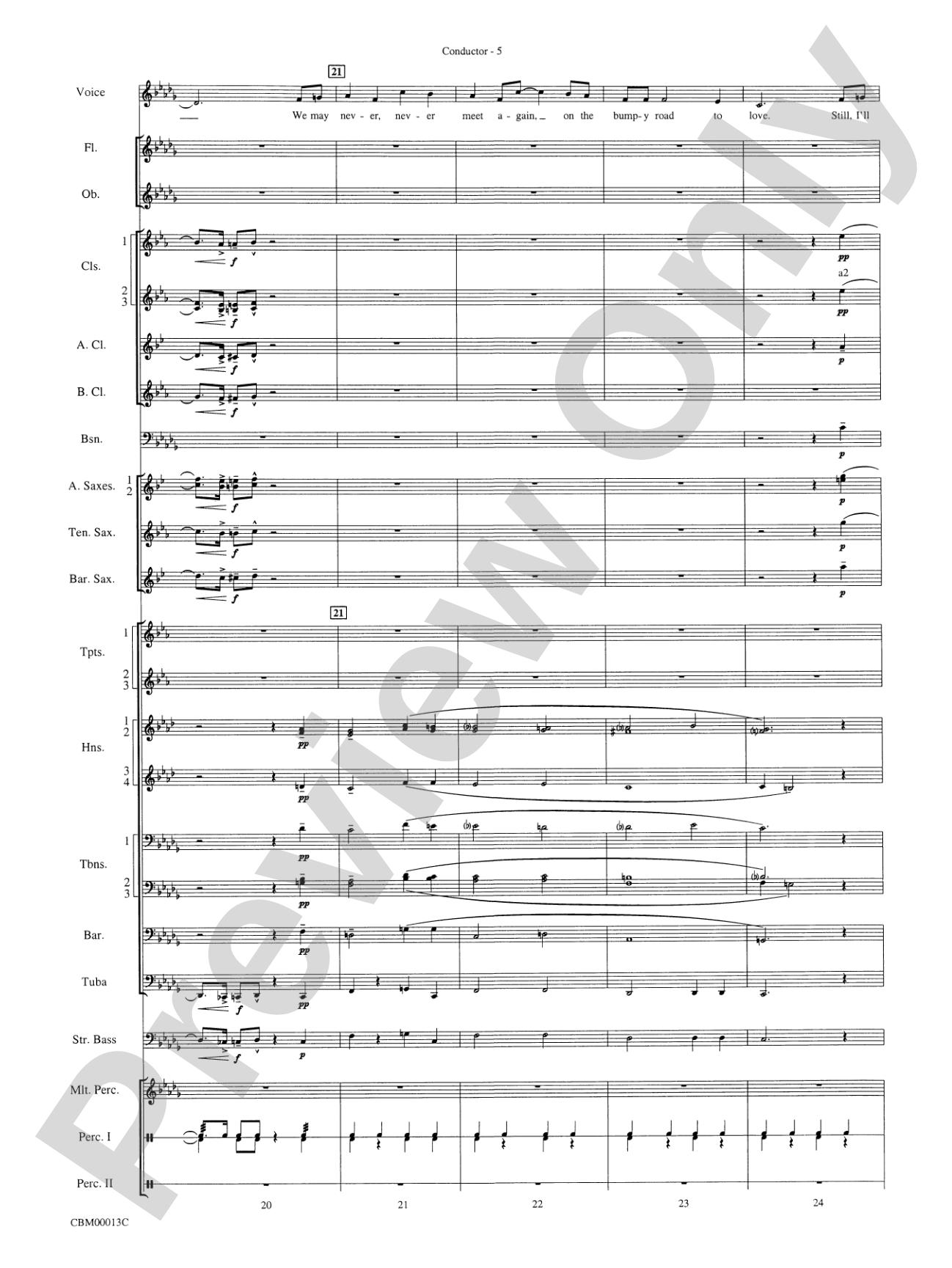
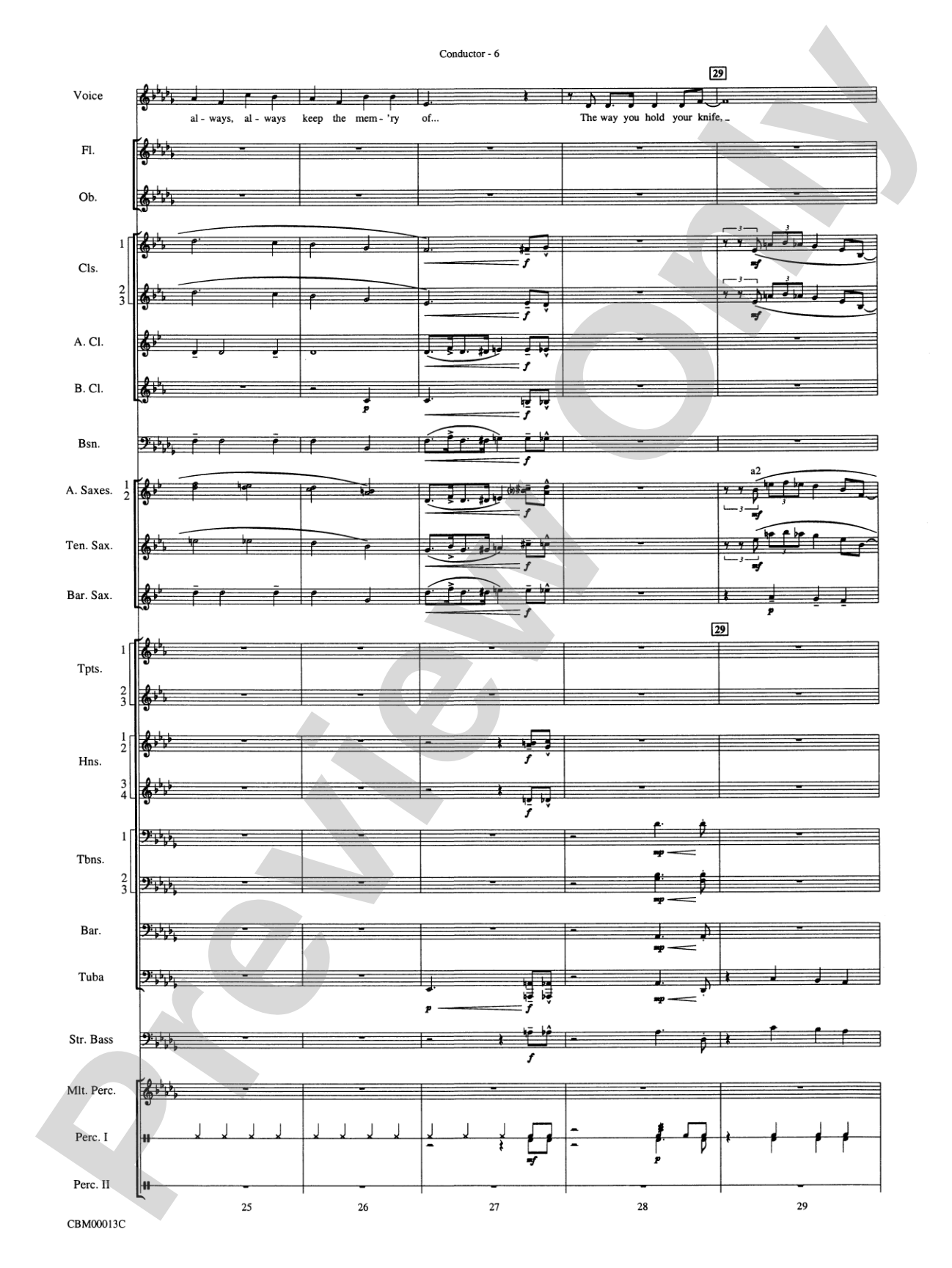
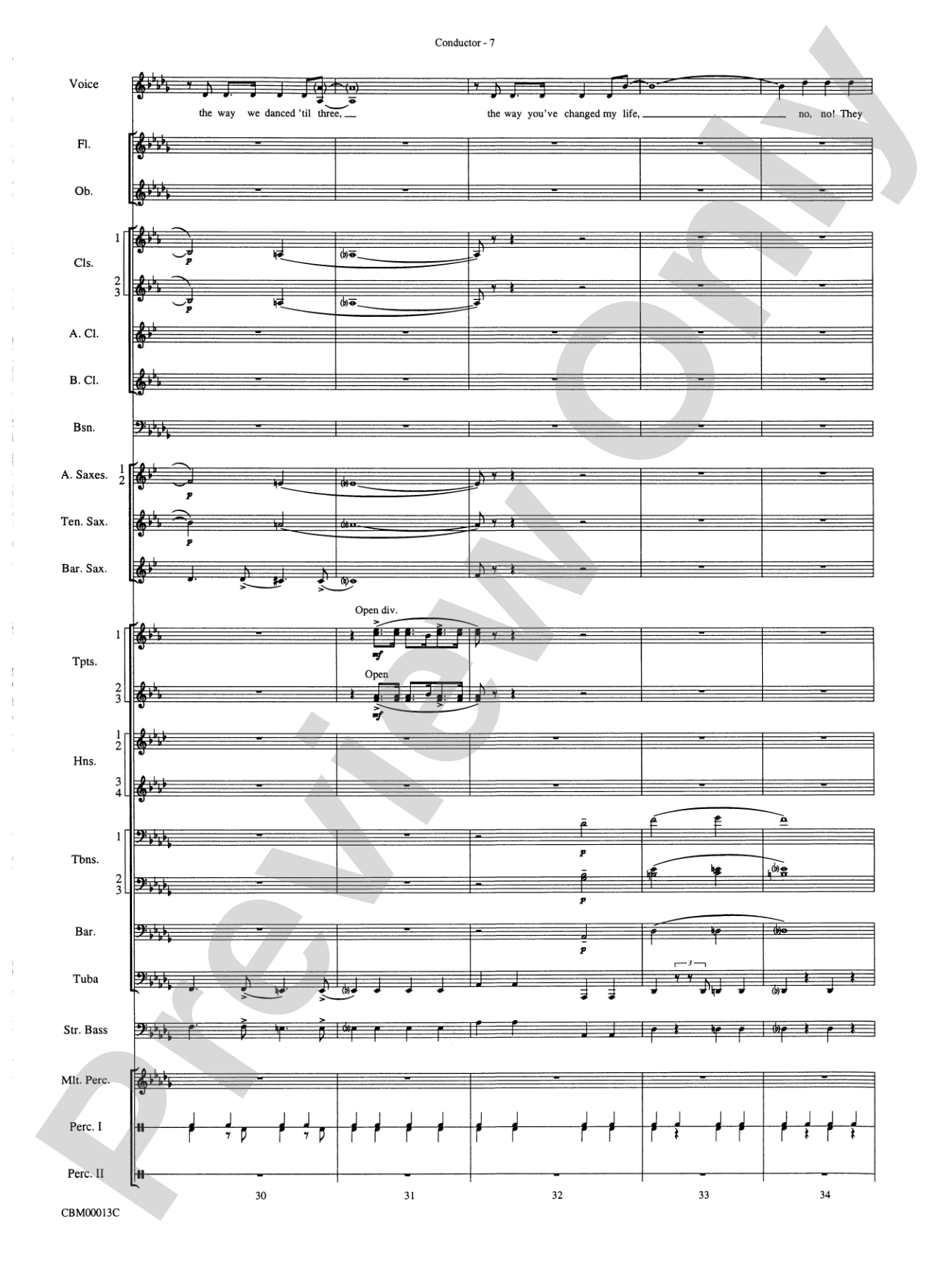
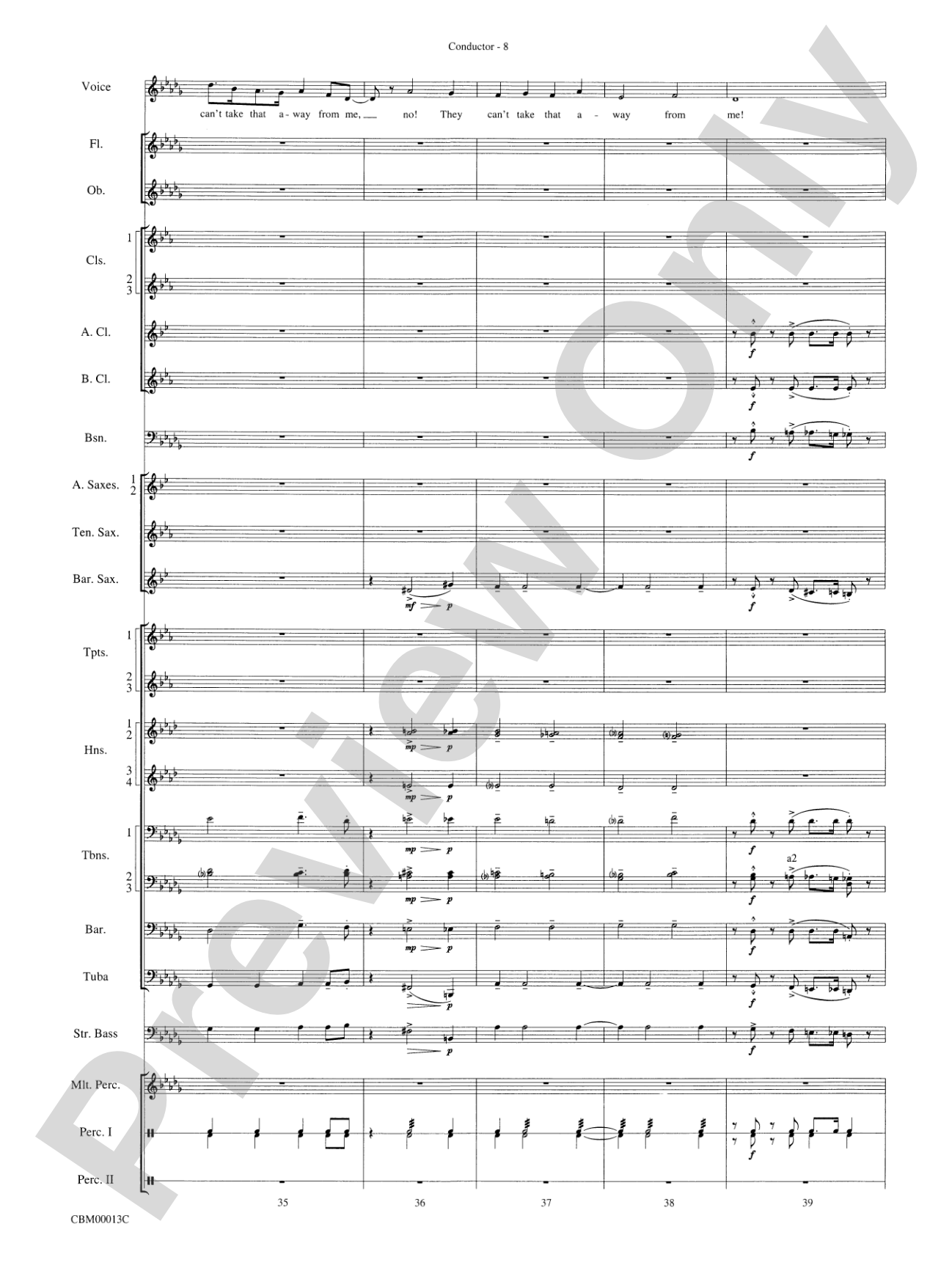
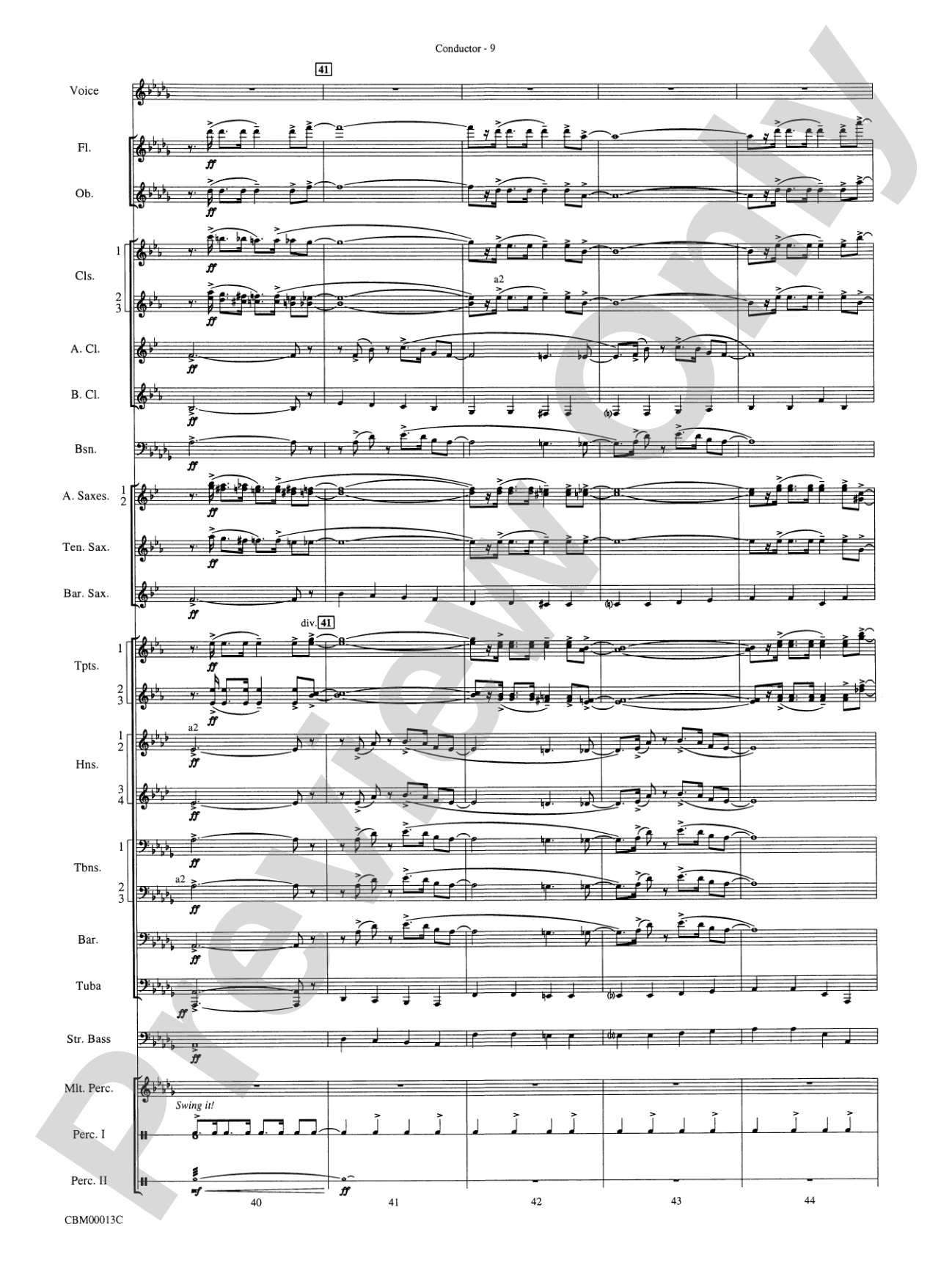
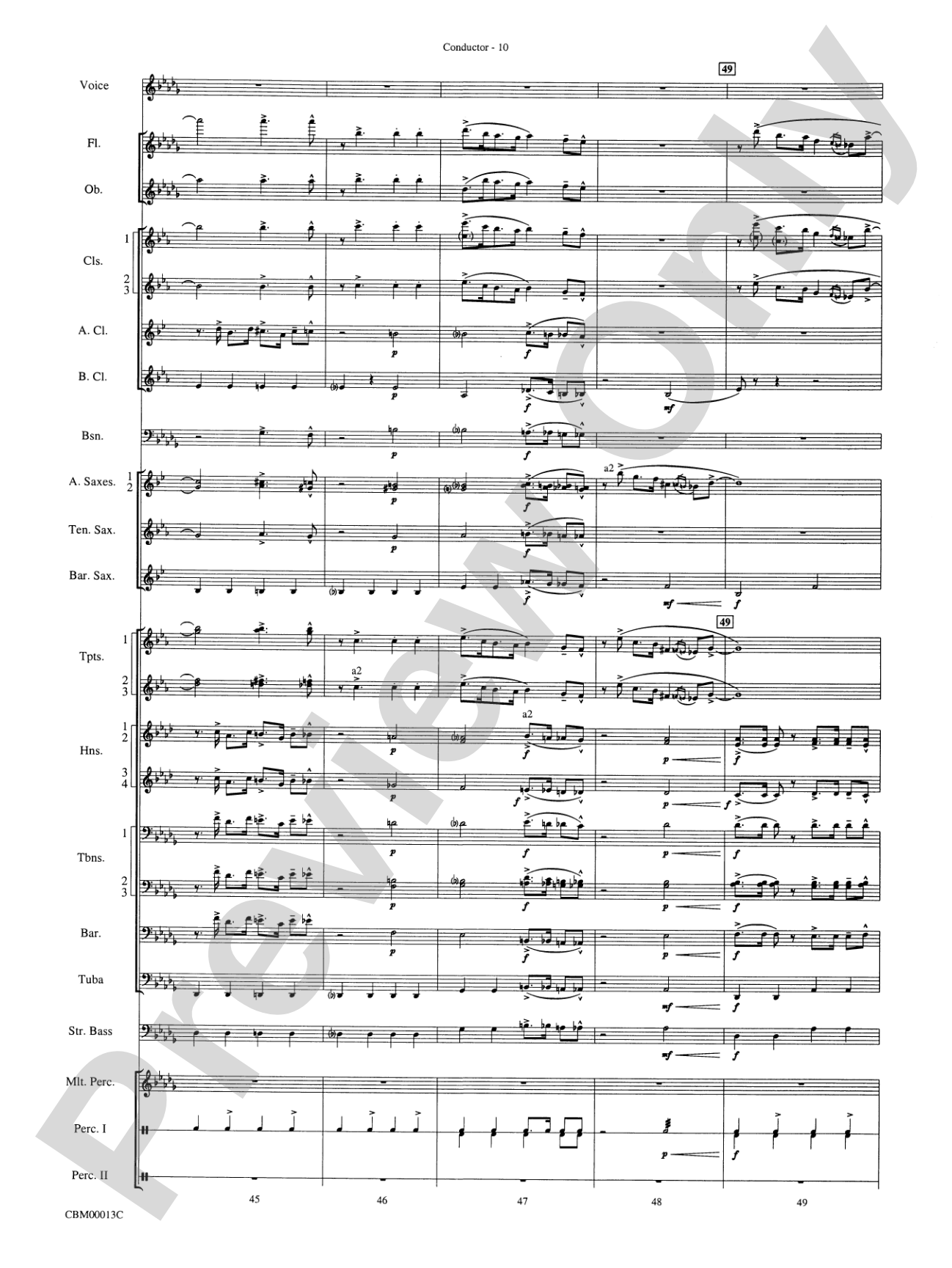
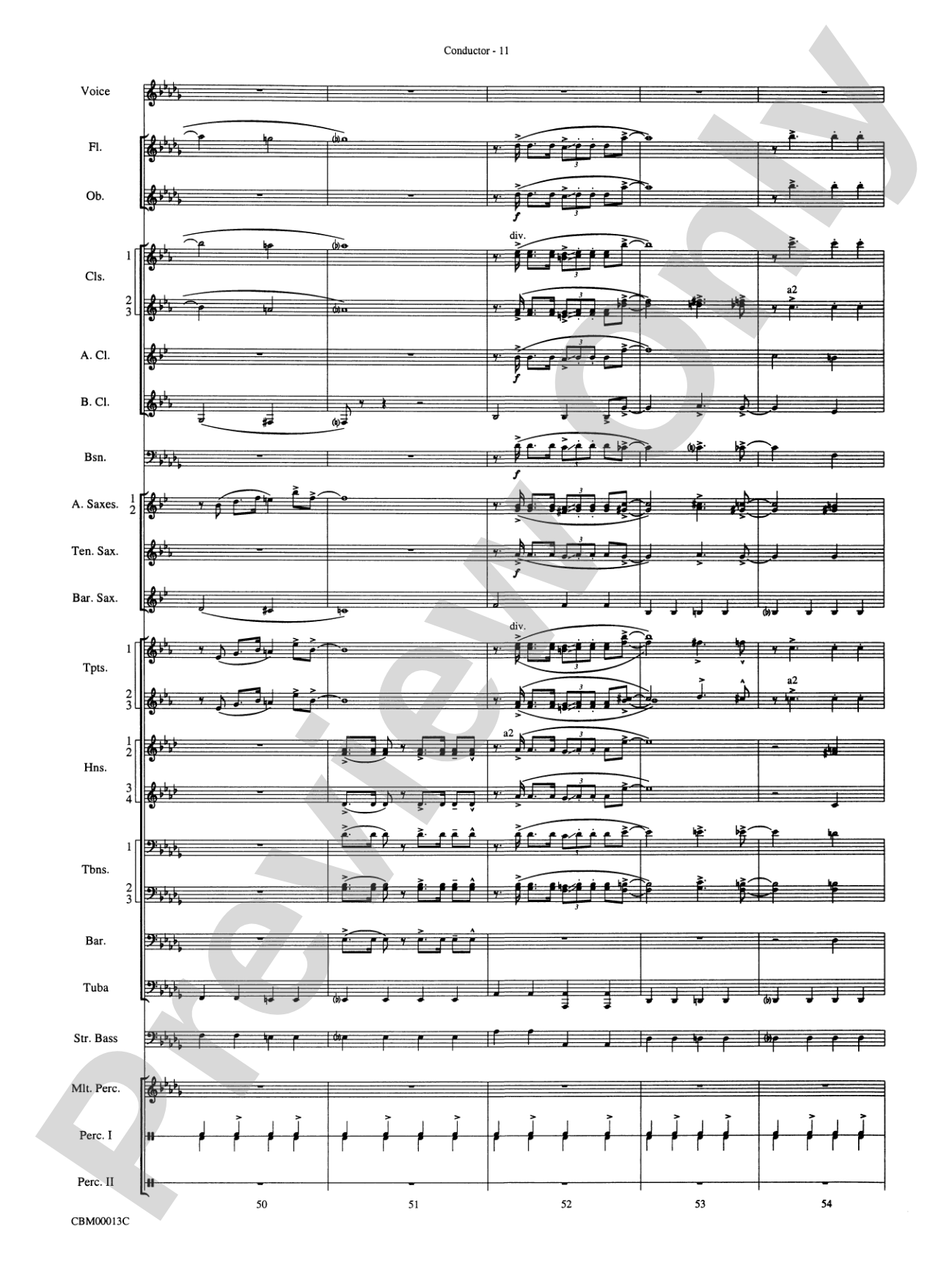
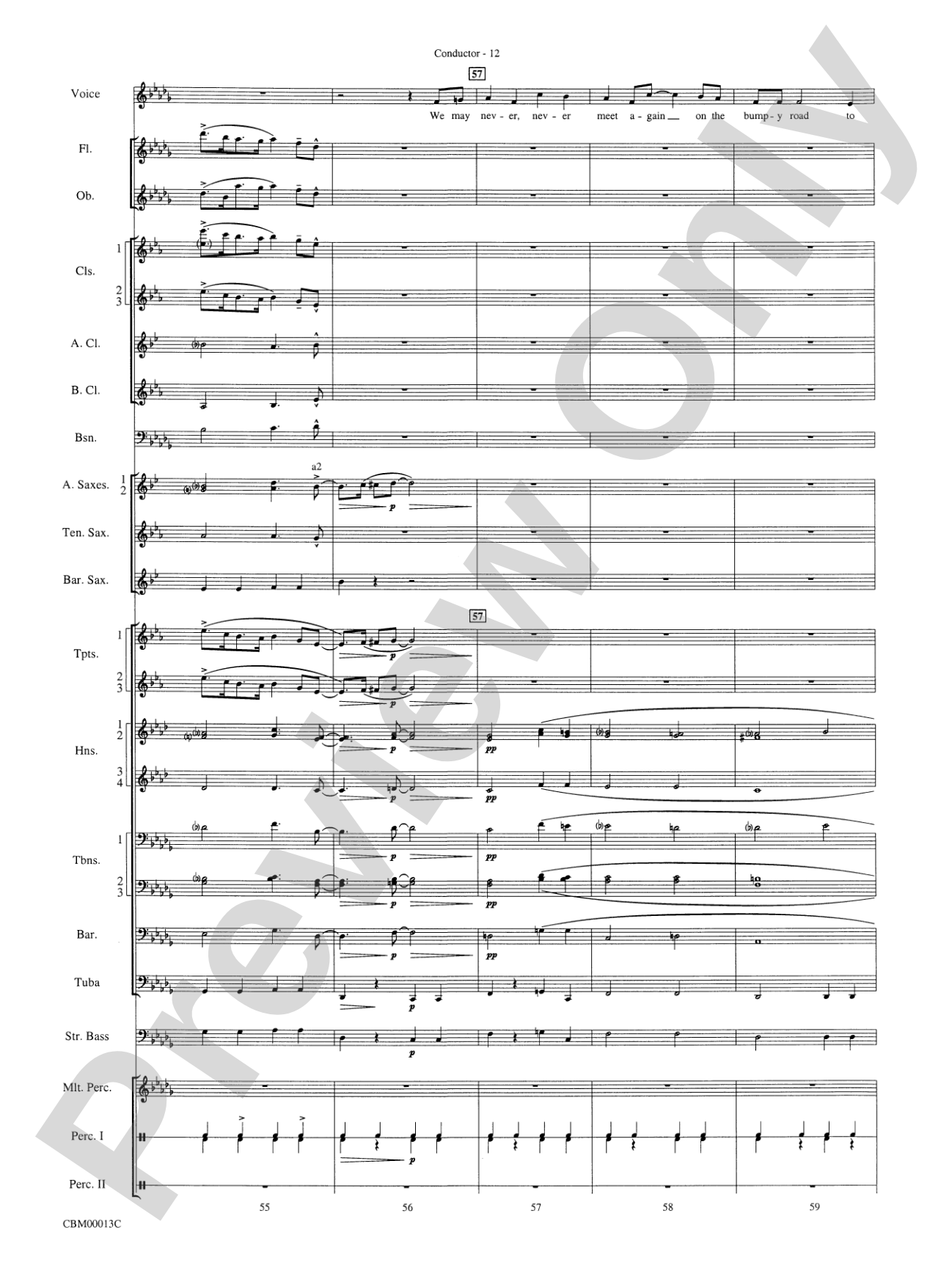
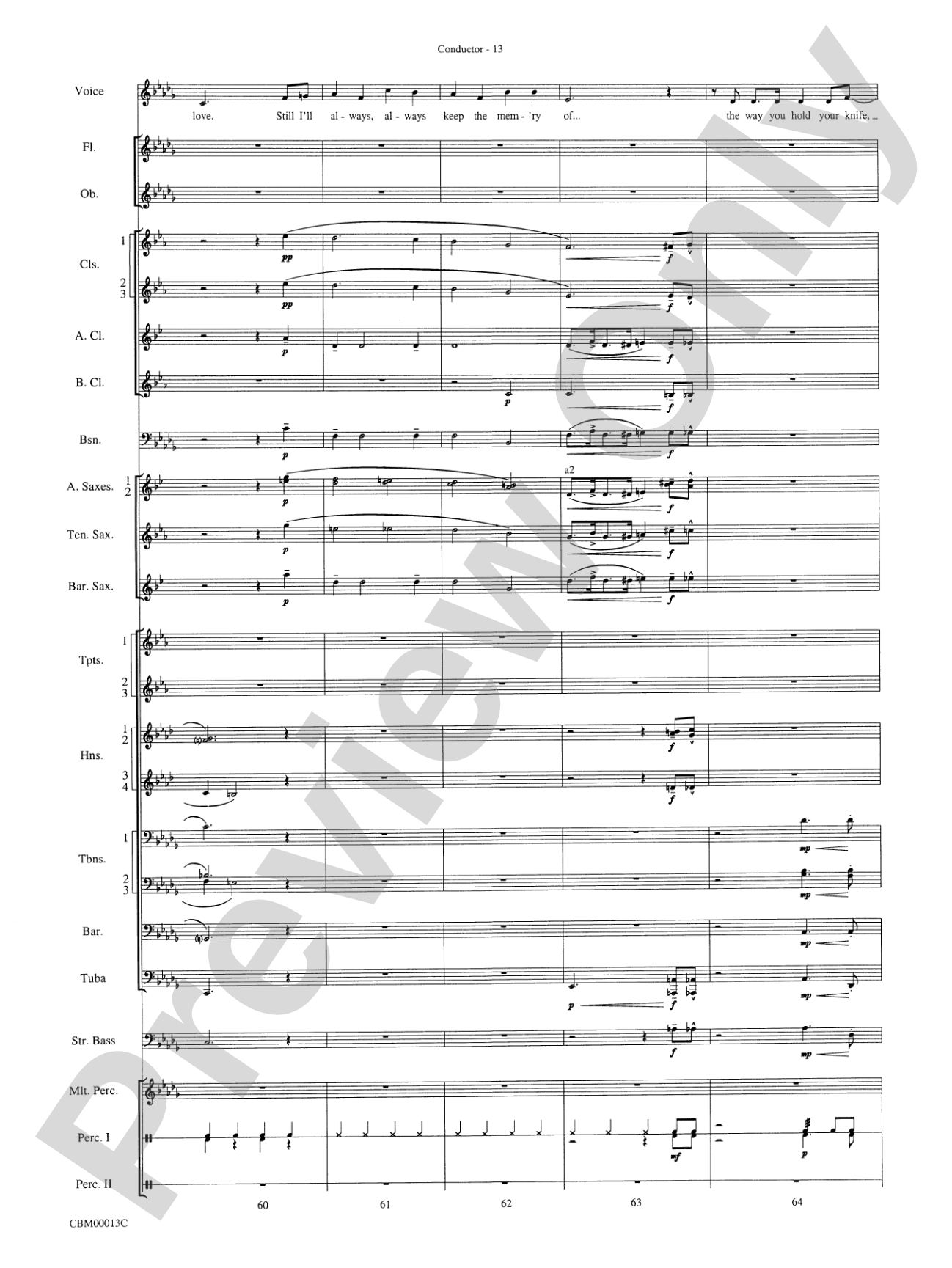
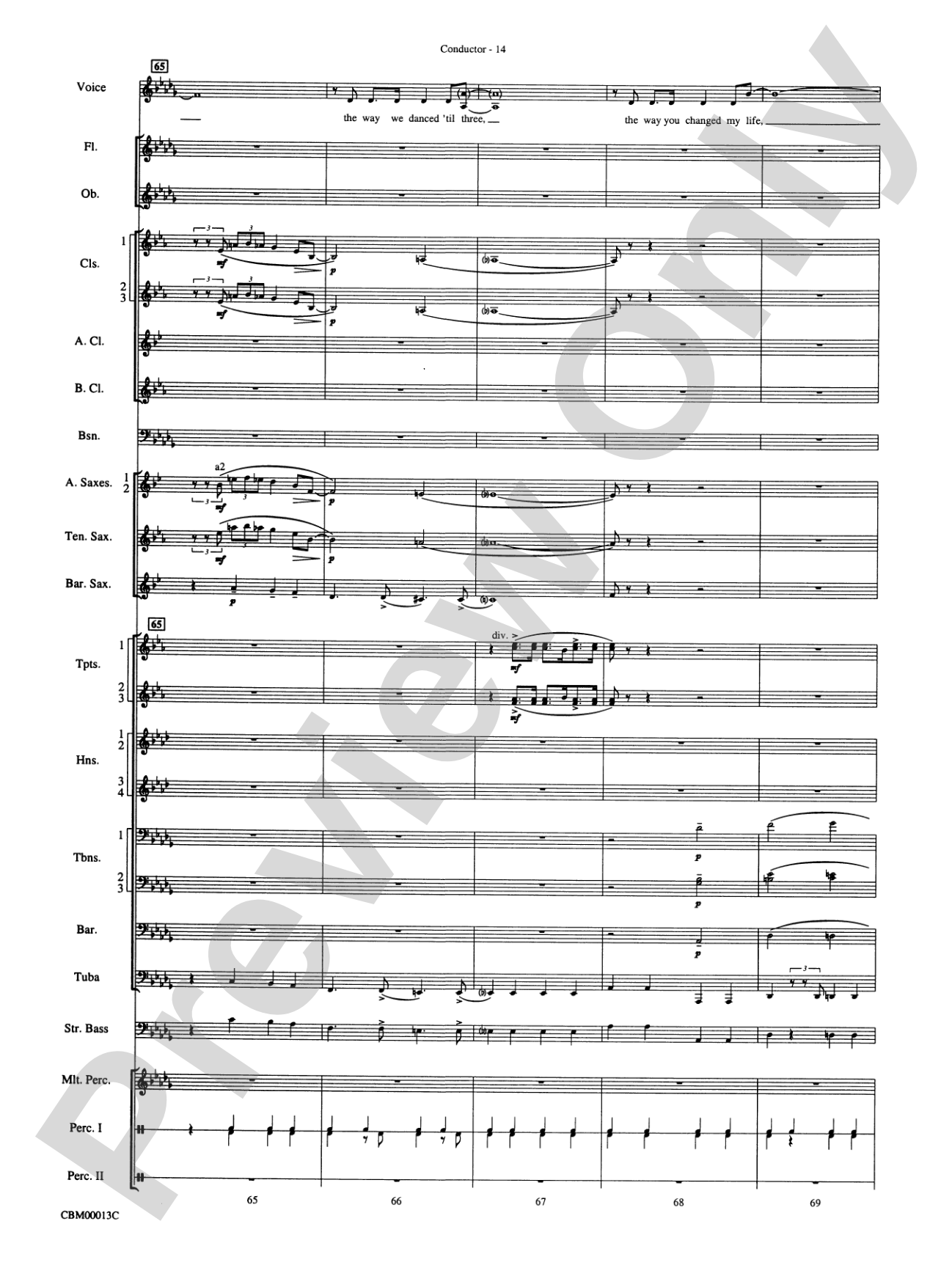
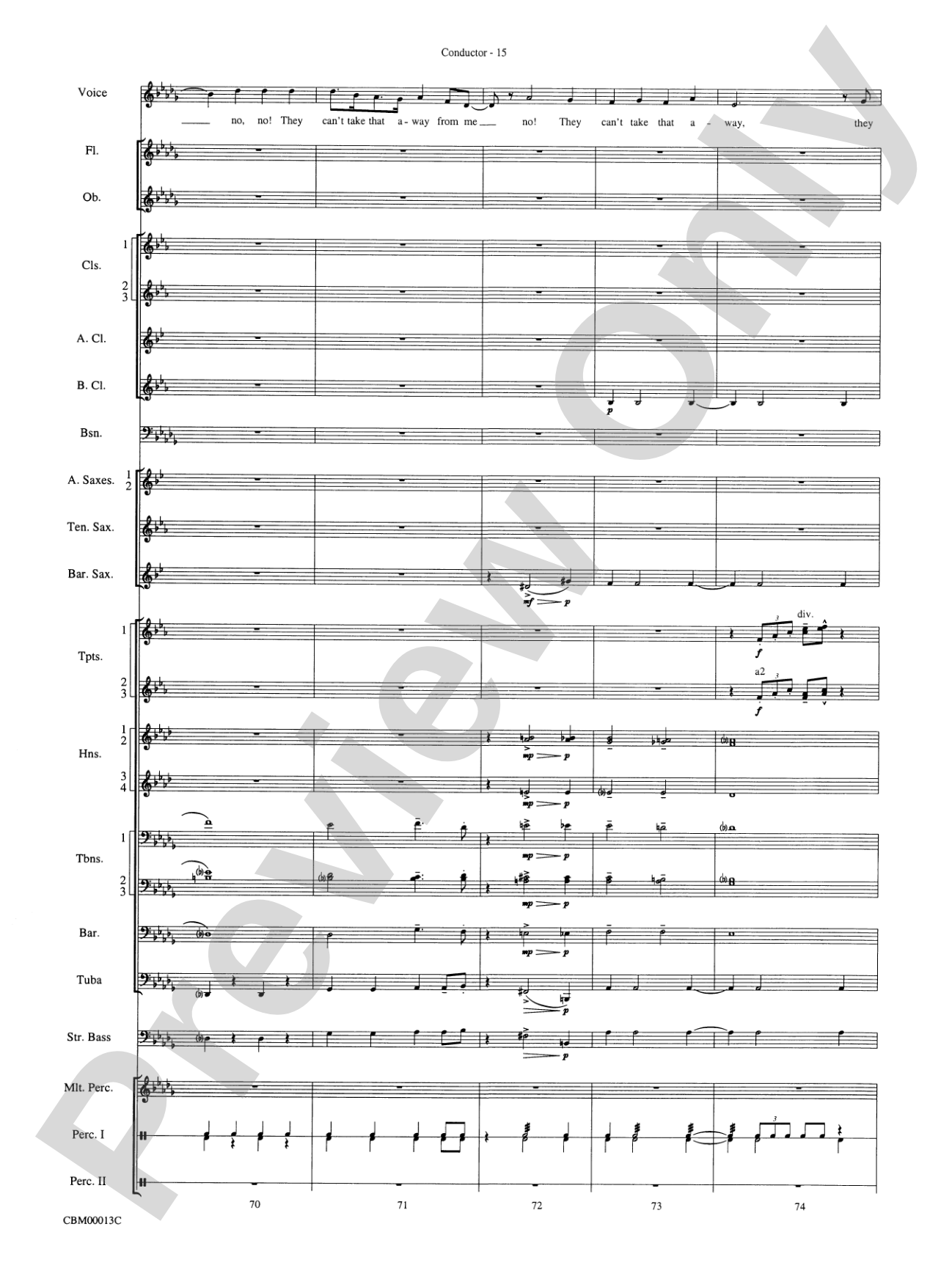
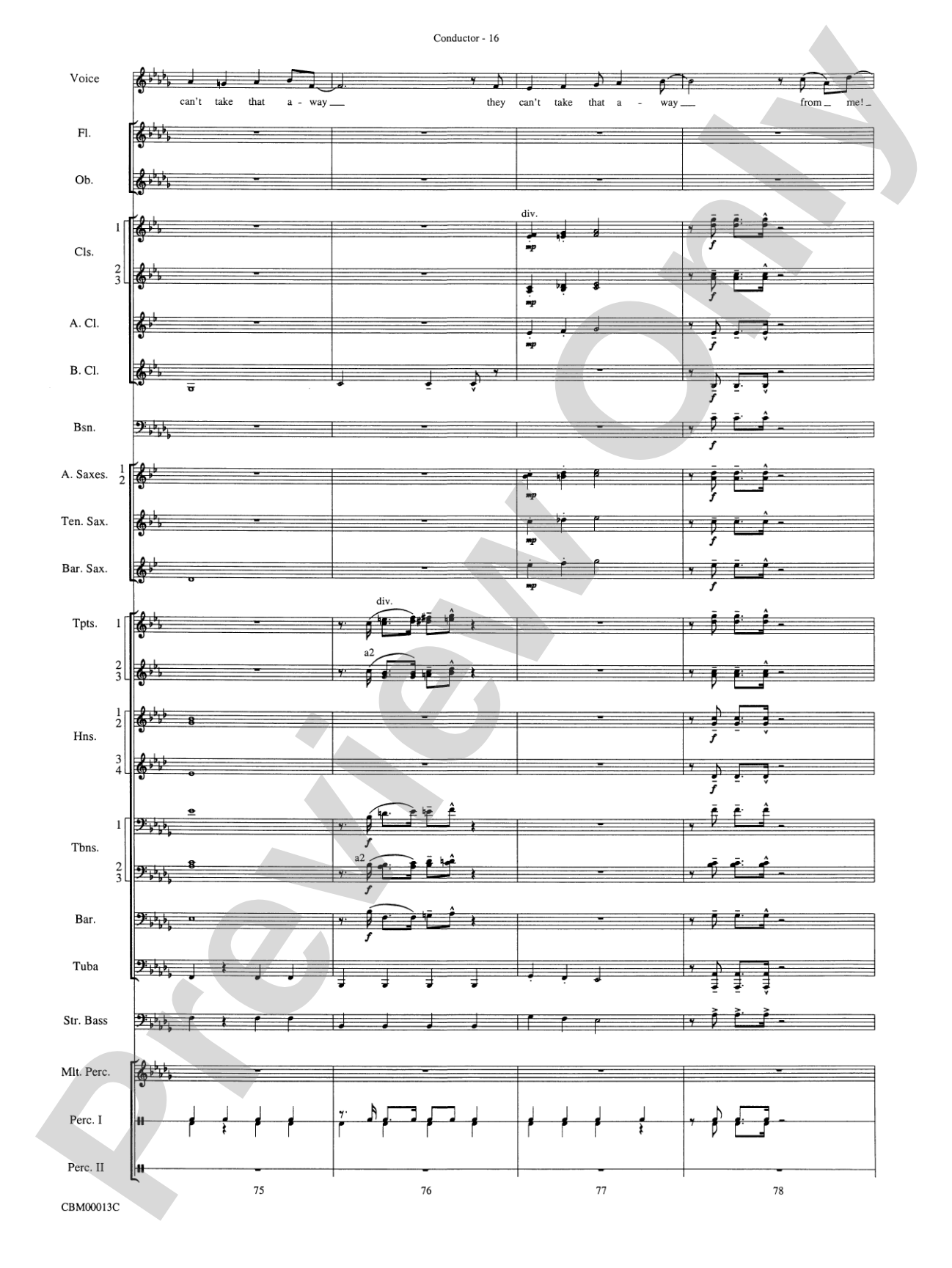
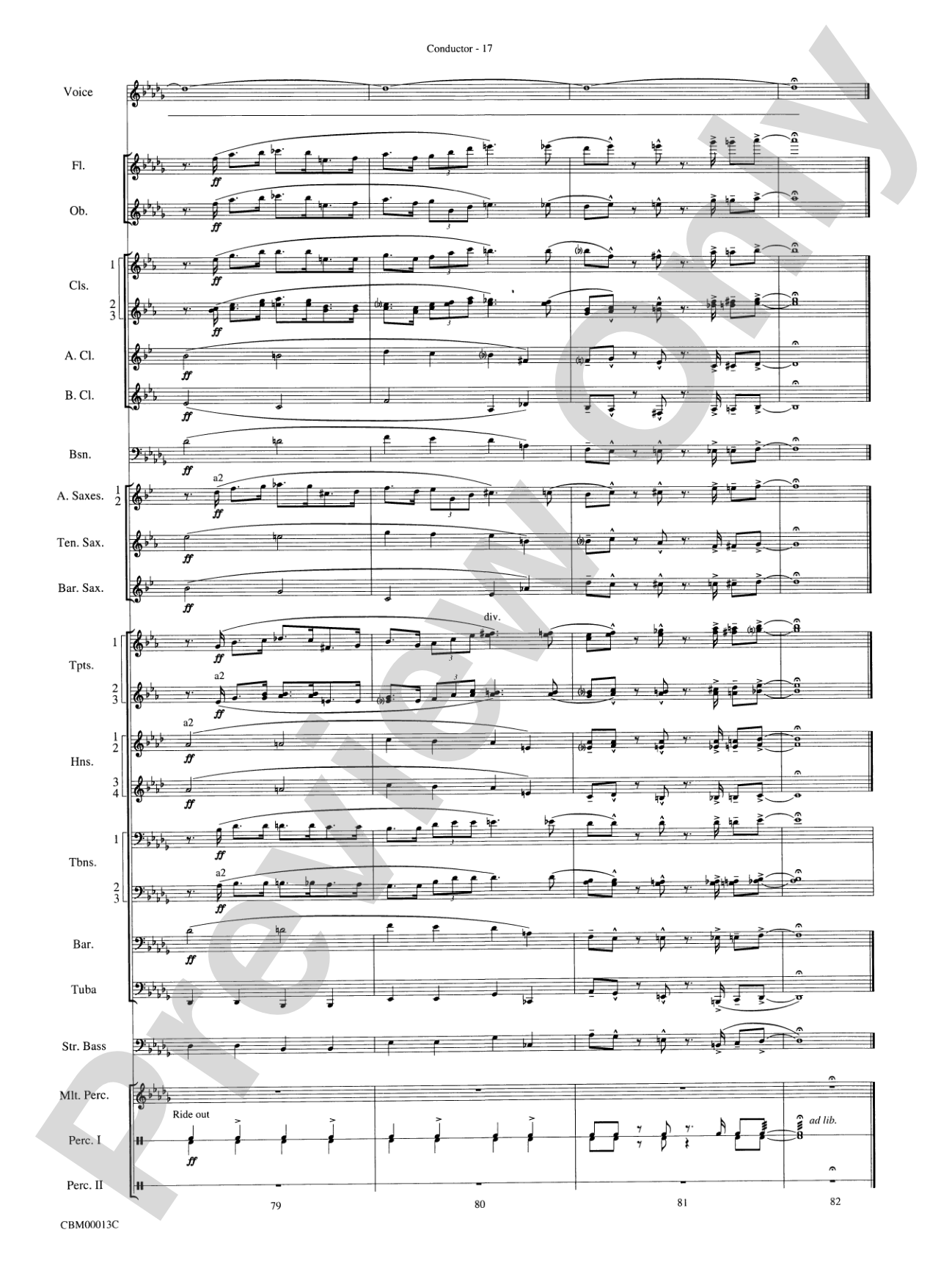


They Can't Take That Away from Me: Concert Band Conductor Score & Parts
With Vocal Soloist or Opt. E-Flat or B-Flat Solo Instrument
By George Gershwin / arr. Warren Barker
Grade: 4 (Medium)
Item: 00-PK-0002341

$87.00
One moment…
Description
Your spring concert or outdoor performance won't be complete without the stellar new arrangement of George and Ira Gershwin's They Can't Take That Away From Me. Written for your male or female vocal soloist or optional E-flat or B-flat solo instrumentalist, this familiar melody is both sassy and smooth. A sure winner!


Don't just read it, hear it, play along with it, and watch your students grow with it. In MakeMusic Cloud, They Can't Take That Away from Me: Concert Band Conductor Score & Parts comes alive with professional accompaniment, adjustable tempo, and built-in practice tools that turn solo practice into real progress.
Open in the Player
Jump straight in and assign it today.
Start Your Free Trial
Open this title and explore the full library in minutes.
Sample Audio
No sample audio found.
Sample Video
No sample videos found.
Additional Details
Series:
Pop Symphonic Band
Publisher:
Alfred Music
Page Count:
250
SKU:
00-PK-0002341
Instrumentation:
Opt. E-flat or B-flat Solo Instrument
More about this title
About the Composer: George Gershwin
George Gershwin (1898-1937) bridged classical music and popular song in ways no American composer before him had attempted. His gift for melody and his ability to write idiomatically for jazz-inflected ensembles made him a natural fit for Broadway, where he created some of the Great American Songbook's most enduring standards alongside his brother Ira, who provided the lyrics.
Gershwin's concert works, including Rhapsody in Blue, became teaching staples because they demonstrate how popular forms can sustain serious musical development. His influence on wind band arranging remains profound; his melodies are built to sing, and they work beautifully in ensemble settings where clarity and style matter as much as virtuosity.
Why we love this
Warren Barker's arrangement captures the sophisticated charm of Gershwin's melody while writing idiomatically for concert band. The optional solo (vocal or instrumental) gives you flexibility for spring programming, and the Grade 4 scoring keeps the ensemble parts musical and engaging without demanding excessive technical demands. This is a piece that sounds far more polished than its difficulty level suggests, making it an excellent choice for programs that need to sound intentional and stylish.
What to expect
Smooth sophistication wrapped in a familiar, accessible melody. The arrangement has the swagger of 1930s Broadway without pretension; it swings gently and lets the soloist shine while the band creates a rich, supportive texture. There's an optimistic ease to the piece, the musical equivalent of a well-tailored suit.
Who it's for
Concert bands at the Grade 4 level looking for accessible, audience-friendly repertoire with star power. Directors who want to showcase a strong vocalist or solo instrumentalist while keeping the ensemble part rewarding for all sections. Programs that pair American standards with classical or contemporary pieces and need something that feels at home in a spring or outdoor concert context.
How to get the most out of it
- Let the soloist own the song's natural phrasing and rubato; the arrangement is written to support flexible, legit singing or playing, not rigid metronomic precision. If you're using an instrumentalist, remind them that this is a vocal melody at heart and should breathe like one.
- Balance the band carefully during tutti sections so the melody stays prominent. The arrangement likely adds harmonic color and rhythm section support, but Gershwin's tune must always be the focal point.
- Attend to intonation in the sustained harmony parts. The chord progressions in Great American Songbook standards can expose small tuning issues, especially in the middle and lower voices.
- Shape the ending with the soloist. Whether it's a sustained note, a rhythmic tag, or a final phrase, rehearse how the band transitions into and out of the soloist's last moments; clarity here makes the difference between a good performance and a memorable one.
How to use it
Feature this in a spring concert that celebrates Great American Songbook standards, or pair it with other Gershwin or contemporaneous American popular classics. Outdoor performances benefit from its bright, memorable character and its appeal to audiences of all ages. It works equally well as a concert closer (if the soloist has significant presence) or as a compelling mid-program transition into lighter or more playful territory.
Skills your students will build
- Supporting and balancing around a featured soloist
- Sustaining harmonic tuning in jazz-inflected chord progressions
- Playing with swing inflection and appropriate rhythmic flexibility
- Sectional listening and blend (especially in inner harmony voices)
- Phrasing lyrical material idiomatically when the melody lies with a soloist rather than the ensemble