
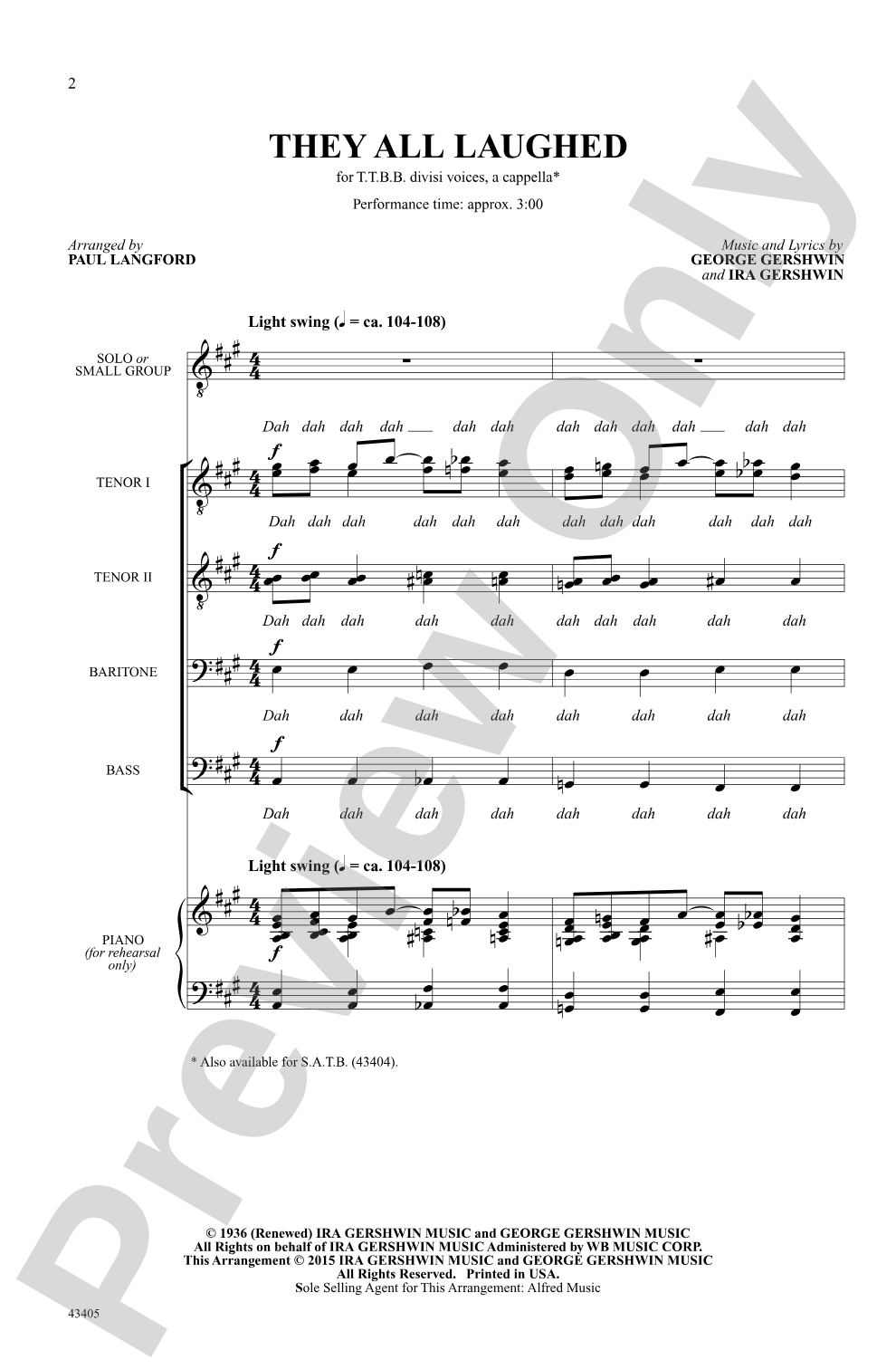
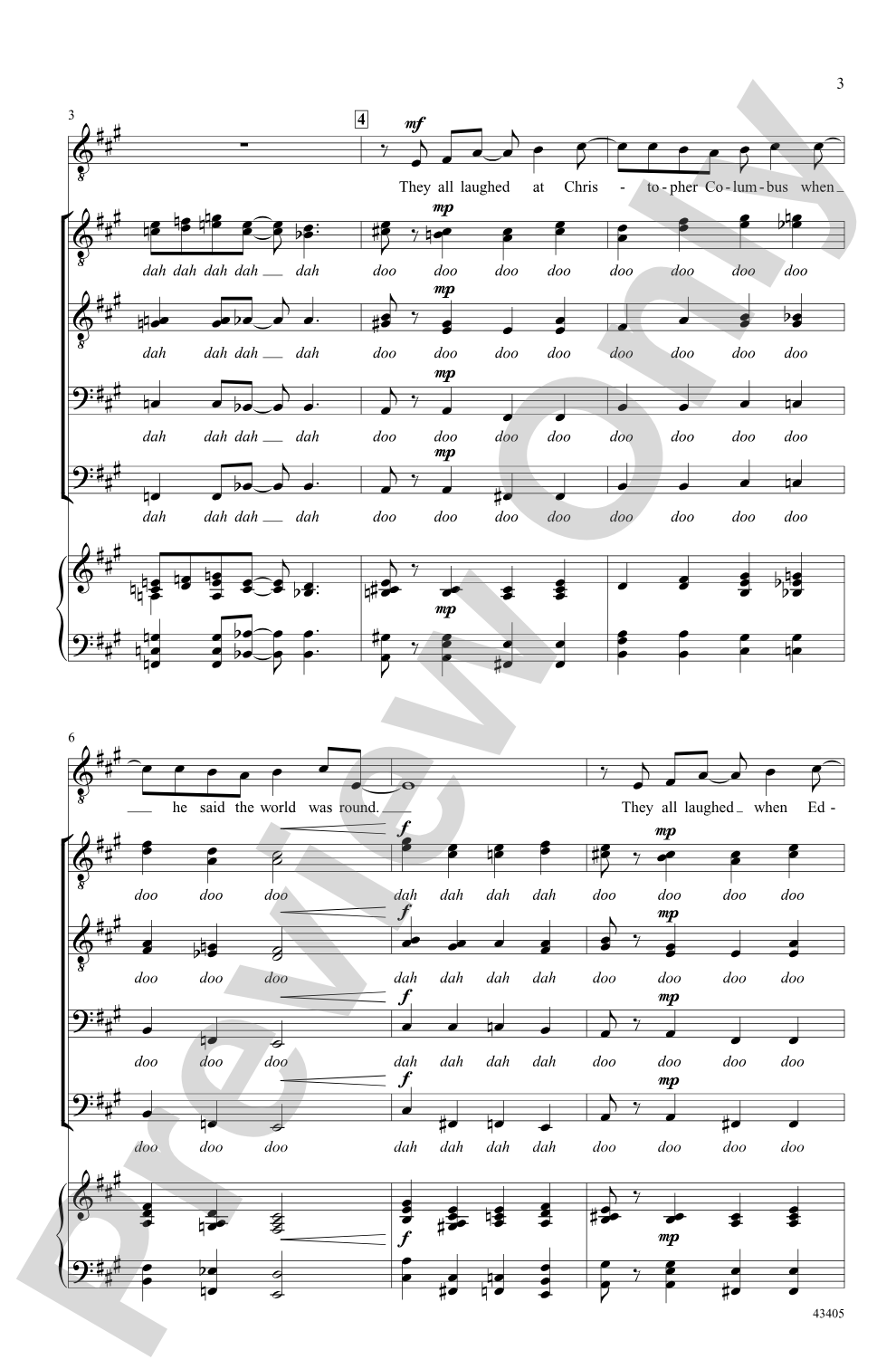
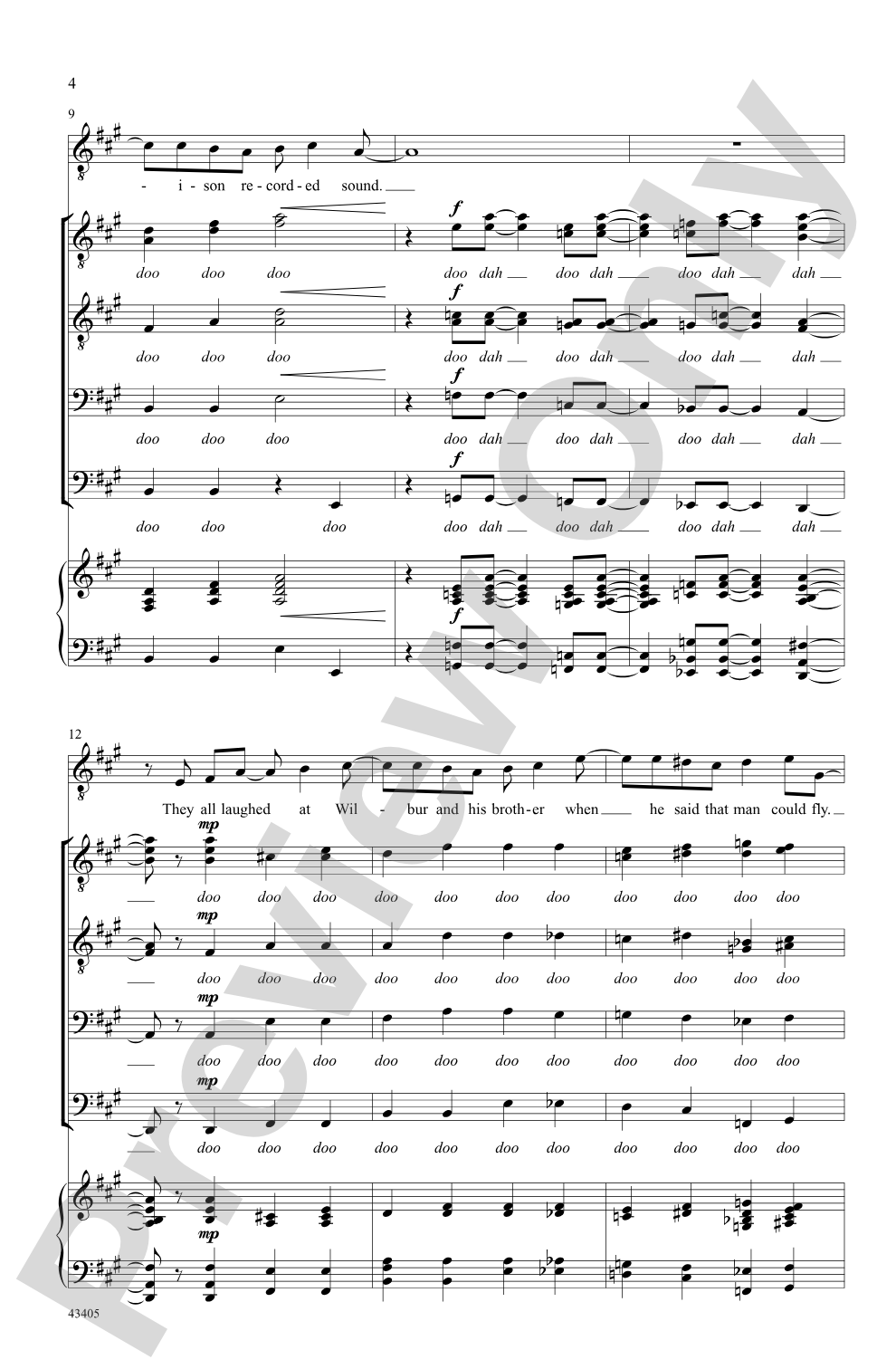

They All Laughed: TTBB divisi, a cappella Choral Octavo
Music and lyrics by George Gershwin and Ira Gershwin / arr. Paul Langford
Item: 00-PO-0003342
$2.25
Minimum order quantity: 20 copies
One moment…
Description
Well-crafted choral writing with an unending rhythmic drive propels this spectacular arrangement from beginning to end.


They All Laughed: TTBB divisi, a cappella Choral Octavo isn't in MakeMusic Cloud just yet...but it could be. Let us know you'd like to see it, and you'll help shape what comes next. In the meantime, start a free trial and dive into thousands of interactive titles your students can play along with today.
Request This Title
Tell us you want it.
Start Your Free Trial
Explore everything that's ready to play right now.
Sample Audio
1
Audio File
--:--
0:00
0:00
Sample Video
No sample videos found.
Additional Details
Series:
Alfred Pop Choral Series
Publisher:
Alfred Music
Page Count:
16
SKU:
00-PO-0003342
More about this title
About the Composer: George Gershwin
George Gershwin (1898–1937) revolutionized American music by fusing jazz idioms, blues harmony, and popular song forms with concert hall sophistication. His output spanned theater, film, orchestral works, and standards that remain central to the American songbook; his influence on compositional practice and music education extends far beyond his lifetime.
Ira Gershwin (1896–1983) was George's lyricist and collaborator, crafting witty, rhythmically inventive lyrics that matched his brother's melodic ingenuity. The two created some of the most enduring songs in American music, and their partnership set a standard for composer-lyricist collaboration that shaped musical theater and popular music pedagogy.
Why we love this
Paul Langford's arrangement respects the harmonic sophistication and rhythmic complexity of Gershwin's original while tailoring it specifically for men's voices. The divisi writing prevents any single part from becoming buried, and the a cappella texture demands precise ensemble work that rewards careful rehearsal with sparkle and clarity.
What to expect
Bright, propulsive, and urbane. The arrangement captures the sophisticated comedy of the lyric while maintaining an a cappella transparency that lets every voice line breathe. There's an almost orchestral buoyancy to the harmonic movement, and the rhythmic precision required gives singers the satisfaction of executing something genuinely intricate.
Who it's for
Men's choirs, college vocal ensembles, and high school groups with solid sight-reading skills and the ability to balance four independent lines. Directors seeking a standard that combines accessibility with genuine musical substance will find this arrangement sits perfectly between crowd-pleaser and challenging repertoire.
How to get the most out of it
- Establish the rhythmic drive early. The relentless forward motion is the arrangement's signature; lock the pulse in full ensemble before sectionals so singers understand where the energy lives.
- Balance the four voices evenly during divisi passages. Mark which syllables carry the tune versus which provide harmonic texture, then rehearse blend by rotating who sings the melody line.
- Shape phrases by voicing dynamics across the whole choir rather than by individual line. Gershwin's melodies often cut across traditional phrase boundaries; think in longer arcs than the octavo's bar divisions suggest.
- Let diction carry the wit. The lyrics demand clarity and rhythmic precision; over-legit singing will bury the charm.
How to use it
Pair this with other Gershwin standards or American songbook material for a concert exploring the intersection of popular and art music. Its rhythmic vitality and humor also make it an excellent closer for a more formal program, providing a high-energy send-off that audiences find both musically substantial and thoroughly enjoyable.
Skills your students will build
- Reading divisi TTBB voicing and managing independent lines in a cappella texture
- Executing rhythmic precision and ensemble synchronization without instrumental foundation
- Balancing jazz-influenced harmony with diatonic song structure
- Sustaining forward harmonic motion through Gershwin's sophisticated chord progressions
- Performing with style and character in a popular-music idiom