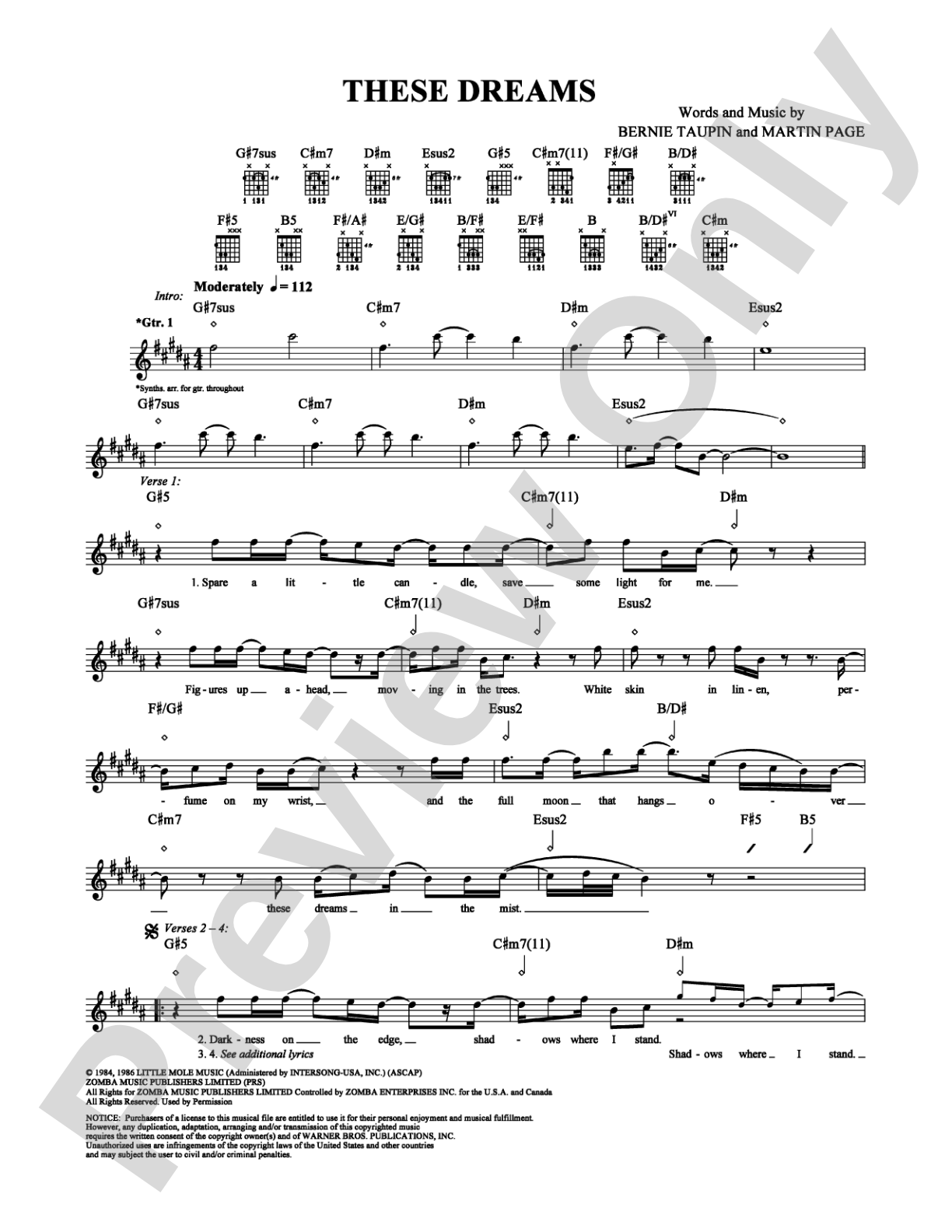
These Dreams: Lead Sheet Digital Sheet Music

These Dreams: Lead Sheet Digital Sheet Music

Bernie Taupin, Martin Page, Heart

Item: 00-PS-0007871

Digital Download
$1.99
Description

These Dreams: Lead Sheet Digital Sheet Music isn't in MakeMusic Cloud just yet...but it could be. Let us know you'd like to see it, and you'll help shape what comes next. In the meantime, start a free trial and dive into thousands of interactive titles your students can play along with today.

Sample Audio
No sample audio found.
Sample Video
Additional Details
SKU: 00-PS-0007871

More about this title

About the Artist: Heart

Heart emerged from Seattle in the 1970s as one of rock music's most powerful and technically skilled bands, fronted by sisters Ann and Nancy Wilson. Their catalogue spans hard rock, power ballads, and pop-rock hits that showcase sophisticated vocal harmonies, dynamic arrangements, and Ann Wilson's commanding vocal presence. The band's influence on rock music, particularly in demonstrating how women could lead and define the sound of a major rock act, makes them essential listening in any contemporary music education context.

Why we love this

This lead sheet captures one of the 1980s' most iconic pop-rock melodies in a format that serves singers, pianists, and small ensemble arrangers equally well. The song's vocal line sits in a singable range while the harmonic structure rewards thoughtful interpretation, making it engaging for students learning to read lead sheets and for experienced musicians building jazz or contemporary arrangements.

What to expect

The song carries an urgent, yearning quality with soaring melodic contours that ask for emotional commitment from the performer. It balances rock-solid grooves with the kind of pop polish that makes big melodies feel effortless to the listener, even though they demand precision and control in execution.

Who it's for

Singers in jazz ensembles, pop-rock groups, or vocal jazz classes will find this lead sheet immediately useful. Pianists and guitarists building contemporary repertoire for accompanying vocalists also benefit from the straightforward harmonic layout.

How to get the most out of it

  • Pay attention to the vocal line's contour in the verses; the melody rises gradually, so shape each phrase to support that climb rather than playing it as a series of isolated notes.
  • The chorus demands space and resonance. Don't rush the accompaniment or crowd the lead line, let the melody breathe and land cleanly on the target notes.
  • Explore different instrumental interpretations in rehearsal. A lead sheet gives you freedom to voice the harmony distinctly depending on your ensemble's instrumentation.
  • Lock onto the lyrical rhythm. Singing or playing the melody with the original lyrics in mind often reveals phrasing decisions that a pure reading might miss.

How to use it

Include this in a contemporary or pop-rock concert where your ensemble is exploring songs from the MTV era and beyond. It works equally well as a solo feature for a strong vocalist or as the foundation for a student arrangement project in a jazz or commercial music class.

Skills your students will build

  • Reading and interpreting lead sheet notation
  • Connecting melody to harmonic changes in a pop-rock context
  • Performing with stylistic awareness in a non-classical idiom
  • Building arrangements from a single-line melody and chord symbols

You May Also Like