There will come soft rains Sheet Music Preview

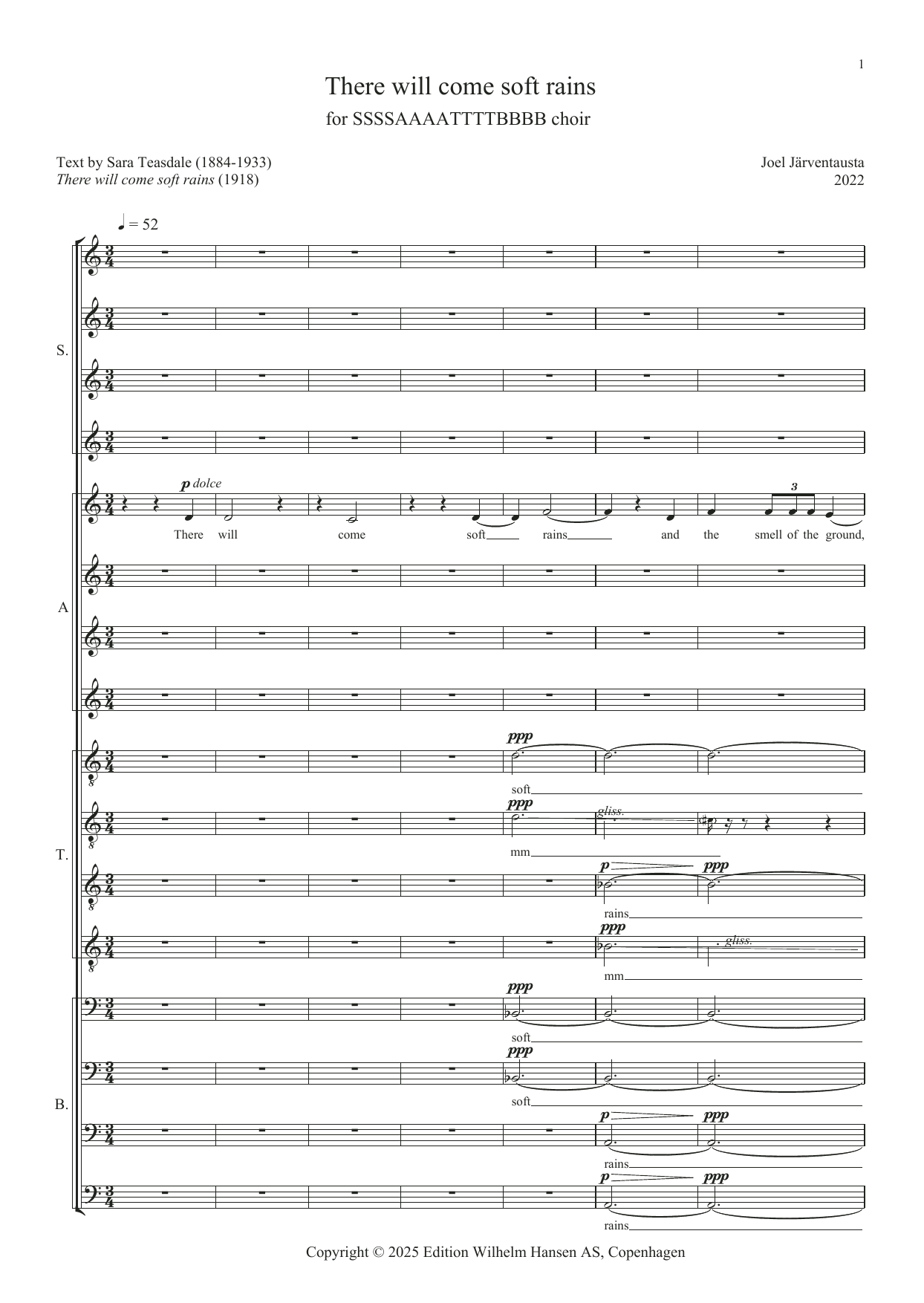
There will come soft rains: SATB divisi Choral Octavo

By Joel Järventausta

Item: 35-DS01683883

Digital Download
$7.95
Description

There will come soft rains: SATB divisi Choral Octavo isn't in MakeMusic Cloud just yet...but it could be. Let us know you'd like to see it, and you'll help shape what comes next. In the meantime, start a free trial and dive into thousands of interactive titles your students can play along with today.

Sample Audio
No sample audio found.
Sample Video
Additional Details
Publisher: Hal Leonard
Page Count: 25
SKU: 35-DS01683883

More about this title

About the Composer: Joel Järventausta

Joel Järventausta is a Finnish composer whose choral writing demonstrates a refined understanding of vocal texture and harmonic color. His work often draws inspiration from literary sources, translating poetic language into precise musical gestures that serve the text.

Why we love this

Järventausta crafts a setting that respects the delicate restraint of Ray Bradbury's poem while creating vocal architecture substantial enough to hold a full choral ensemble's attention. The divisi writing opens sonic possibilities without demanding virtuosity, making it genuinely singable for choirs working at intermediate to advanced levels.

What to expect

The music carries a hushed, introspective quality that mirrors Bradbury's meditation on mortality and natural renewal. Järventausta's harmonic language is modern yet accessible, creating moments of luminous stillness alongside passages of gentle density.

Who it's for

This octavo suits choirs with solid musicianship who are ready to explore contemporary choral literature grounded in art song traditions. It works equally well for concert programming, festival performances, or repertoire aimed at stretching singers beyond pop and Broadway arrangements.

How to get the most out of it

  • Balance the divisi sections carefully in rehearsal by isolating voice parts and checking that inner voices carry their harmonic weight without drowning out the melodic line.
  • Attend to the poem's contemplative pacing; resist the urge to push the tempo even if the harmonic language feels modern and complex.
  • Shape phrases around the text's natural breathing rather than musical bar lines, allowing the words to guide your interpretive choices.

How to use it

Pair this with other contemporary choral works exploring themes of nature or reflection for a thematically cohesive concert segment. Its intimate scope makes it an ideal piece for mid-concert positioning, where it can serve as a moment of contemplation before returning to more energetic repertoire.

Skills your students will build

  • Reading and sustaining divisi voice parts with harmonic independence
  • Shaping vocal lines through text-driven phrasing rather than purely musical gestures
  • Balancing inner harmony voices with outer melodic lines
  • Interpreting contemporary harmonic language with expression and sensitivity

You May Also Like