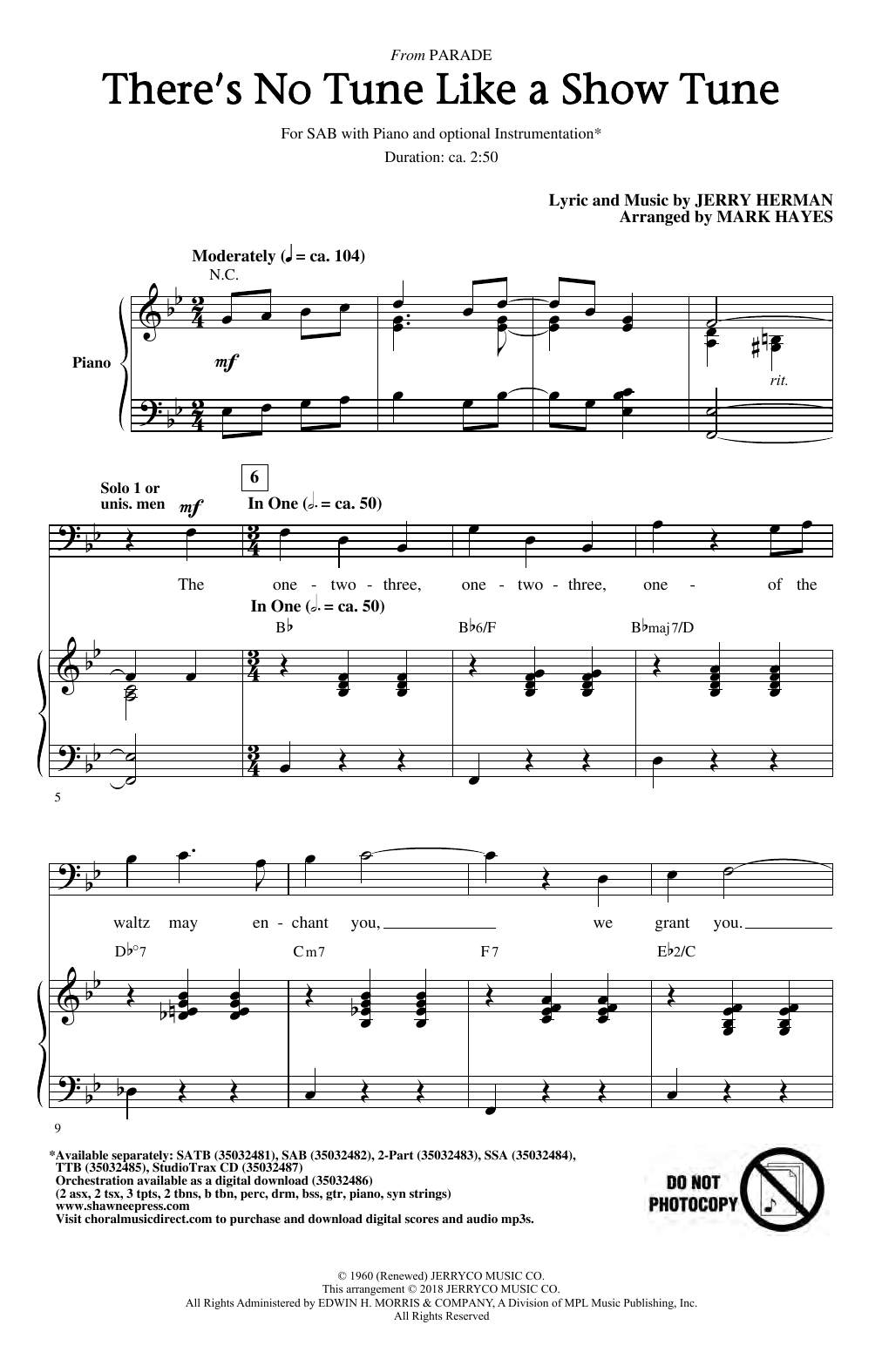
There's No Tune Like A Show Tune (arr. Mark Hayes) Sheet Music Preview

There's No Tune Like A Show Tune (arr. Mark Hayes): SAB Choral Octavo

Arranged by Mark Hayes

Item: 35-DS00430951

Digital Download
$2.99
Description

There's No Tune Like A Show Tune (arr. Mark Hayes): SAB Choral Octavo isn't in MakeMusic Cloud just yet...but it could be. Let us know you'd like to see it, and you'll help shape what comes next. In the meantime, start a free trial and dive into thousands of interactive titles your students can play along with today.

Sample Audio
No sample audio found.
Sample Video
Additional Details
Publisher: Hal Leonard
Page Count: 14
SKU: 35-DS00430951

More about this title

About the Arranger: Mark Hayes

Mark Hayes

Mark Hayes has established himself as a prolific composer and arranger with over 1,750 published works spanning sacred and secular genres. After earning his degree in piano performance from Baylor University, he built a career conducting at prestigious venues including Lincoln Center, Carnegie Hall, and the National Cathedral, while simultaneously developing one of the most extensive catalogs in contemporary music education.

Beyond concert halls, Hayes has made significant contributions to musical theater, orchestrating works like Madame Buttermilk and arranging scores for stage productions. His compositional voice is particularly distinctive in piano literature, where he has published more than 100 books drawing from gospel, classical, jazz, and Broadway idioms. This versatility across genres and mediums informs arrangements like this one, where his understanding of both choral writing and show music creates pieces that serve classroom and concert needs with equal fluency.

Why we love this

Hayes brings his orchestrator's ear to Broadway material, crafting an arrangement that captures the theatrical flair of show tunes without overwhelming a three-part ensemble. The medley structure keeps energy high while remaining genuinely singable, and the 14-page length suggests thoughtful pacing that allows each tune to breathe rather than rushing through a string of snippets.

What to expect

Nostalgic yet immediate. Show tunes carry built-in audiences' affection, and Hayes's arrangement honors that emotional familiarity while letting singers experience the joy of ensemble singing on material that feels both classic and present. The three-part writing opens space for singers at different experience levels to feel both supported and challenged.

Who it's for

Choirs at the middle school, high school, and community levels seeking accessible Broadway repertoire that plays well in concert settings. This works equally well as a show choir selection, a fun change of pace in a mixed-voice festival program, or an end-of-year celebration piece.

How to get the most out of it

  • Balance the familiar melodies against any countermelodies or inner harmony lines; Hayes often writes these to enhance rather than compete with the main tune, so they should support the overall shape rather than draw solo attention.
  • Attend to any key changes between medley sections as momentum shifters. Use them intentionally to refresh the piece's energy rather than treating them as technical obstacles to navigate.
  • Consider the pianistic accompaniment as your rehearsal anchor. Hayes's writing for keyboard typically outlines harmonic and rhythmic patterns clearly, making it an excellent reference for intonation and ensemble balance.

How to use it

Position this as a breather in a concert program between heavier classical or contemporary work, or lead your spring concert with it to establish an upbeat tone. The medley format also makes it ideal for school pep assemblies, holiday concerts, or community performances where audiences appreciate immediate recognition and accessibility.

Skills your students will build

  • Sustaining blend and balance across changing harmonic textures
  • Interpreting stylistic nuance in show material (legit versus character inflection)
  • Managing key modulations and internal form within a medley structure
  • Coordinate ensemble rhythm when accompanying material drives the pulse more than vocal lines do

You May Also Like