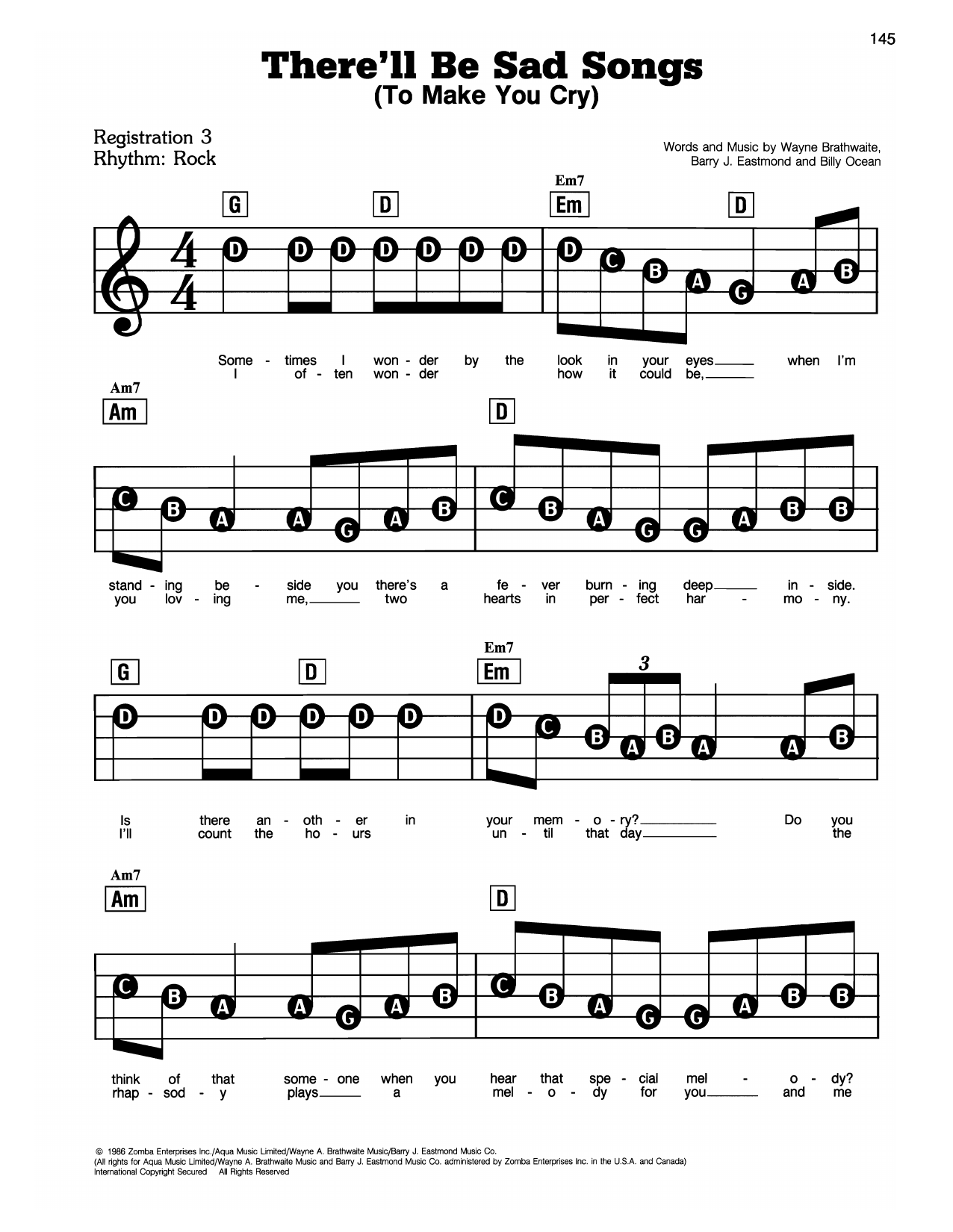
There'll Be Sad Songs (To Make You Cry): E-Z Play Today

As performed by Billy Ocean

Item: 35-DS01651462

Digital Download
$4.99
Description

There'll Be Sad Songs (To Make You Cry): E-Z Play Today isn't in MakeMusic Cloud just yet...but it could be. Let us know you'd like to see it, and you'll help shape what comes next. In the meantime, start a free trial and dive into thousands of interactive titles your students can play along with today.

Sample Audio
No sample audio found.
Sample Video
Additional Details
Publisher: Hal Leonard
Page Count: 5
SKU: 35-DS01651462

More about this title

About the Artist: Billy Ocean

Billy Ocean rose to prominence in the 1980s as a Caribbean-born soul and pop vocalist whose smooth delivery and polished production became signatures of the era. His chart success came through emotionally direct songwriting that balanced pop accessibility with genuine vocal conviction, earning him a devoted following across pop and R&B audiences.

Why we love this

This arrangement captures the sentimental melodic core that made the original resonate with listeners, making it an excellent choice for students learning to shape a vocal melody with accompaniment. The five-page length keeps the scope manageable while preserving the song's emotional arc, and the E-Z Play format opens access to pianists who are building toward more complex arrangements.

What to expect

The piece carries the wistful, introspective quality of a ballad about heartache and reflection. The arrangement maintains the song's conversational intimacy, inviting the player to create space for a vocalist's emotional expression rather than commanding attention.

Who it's for

Student pianists comfortable with pop and contemporary idioms who want to develop vocal accompaniment skills. This works well for anyone preparing for auditions, recitals, or collaborative performances where supporting a singer is the goal.

How to get the most out of it

  • Shape the melody through subtle dynamics rather than tempo changes; let the natural phrasing of the lyric guide your breathing and control.
  • Balance the right-hand melody against the left-hand support so the vocal line remains primary without the accompaniment disappearing entirely.
  • Find the tender quality in the harmonic progressions; resist the urge to rush through slower chord changes where the emotional weight sits.

How to use it

Consider pairing this with other pop-styled accompaniments in a vocal showcase or student recital focused on contemporary material. It also serves as a bridge piece for students transitioning from classical to commercial music contexts, building confidence with modern harmonic language and contemporary song structure.

Skills your students will build

  • Supporting a melodic line while maintaining independence in the accompaniment
  • Interpreting and performing pop-era harmonic language at the keyboard
  • Balancing dynamic control between right and left hands in a vocal accompaniment context
  • Shaping phrase endings and managing rubato in emotional ballad material

You May Also Like