
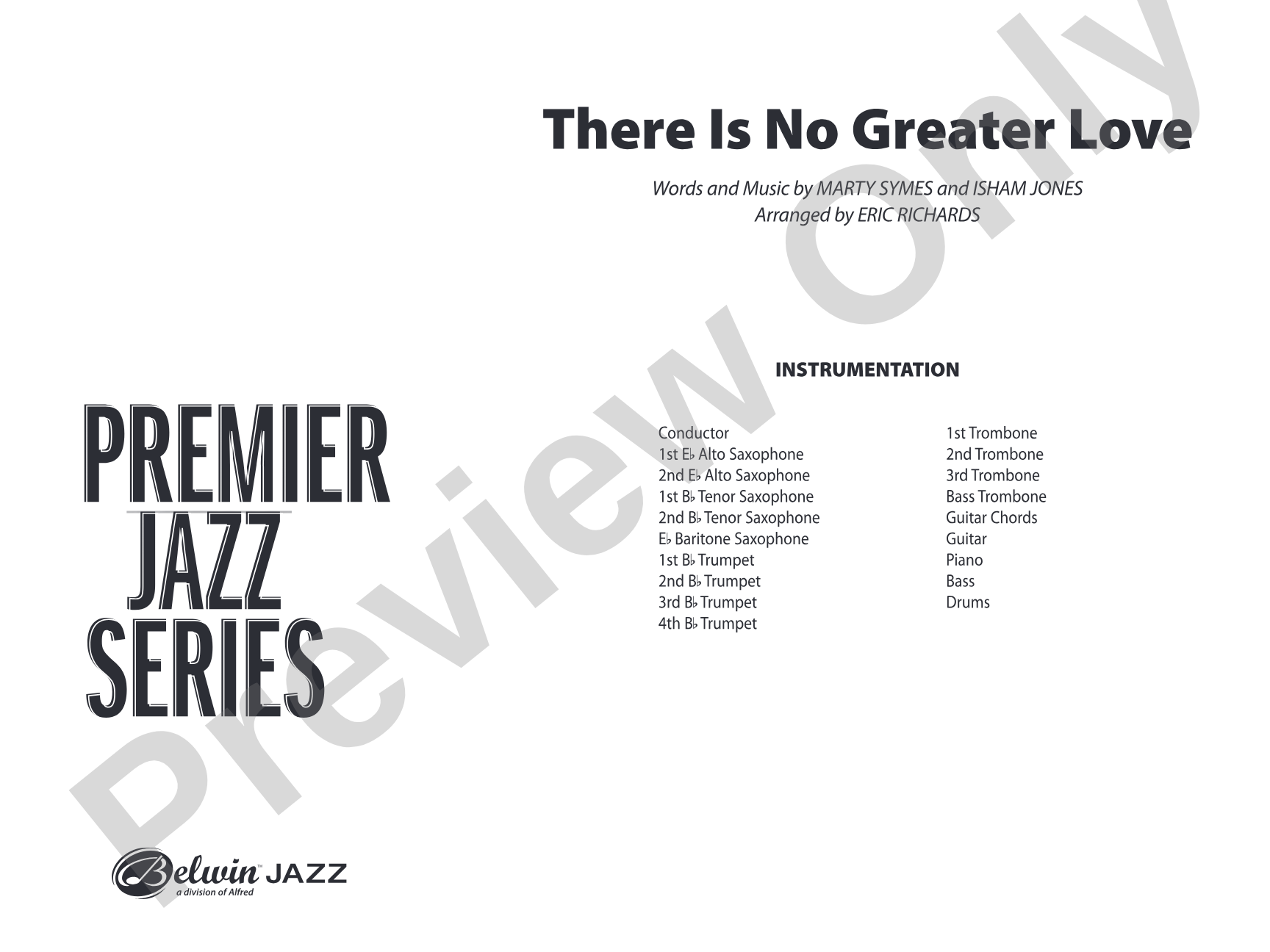
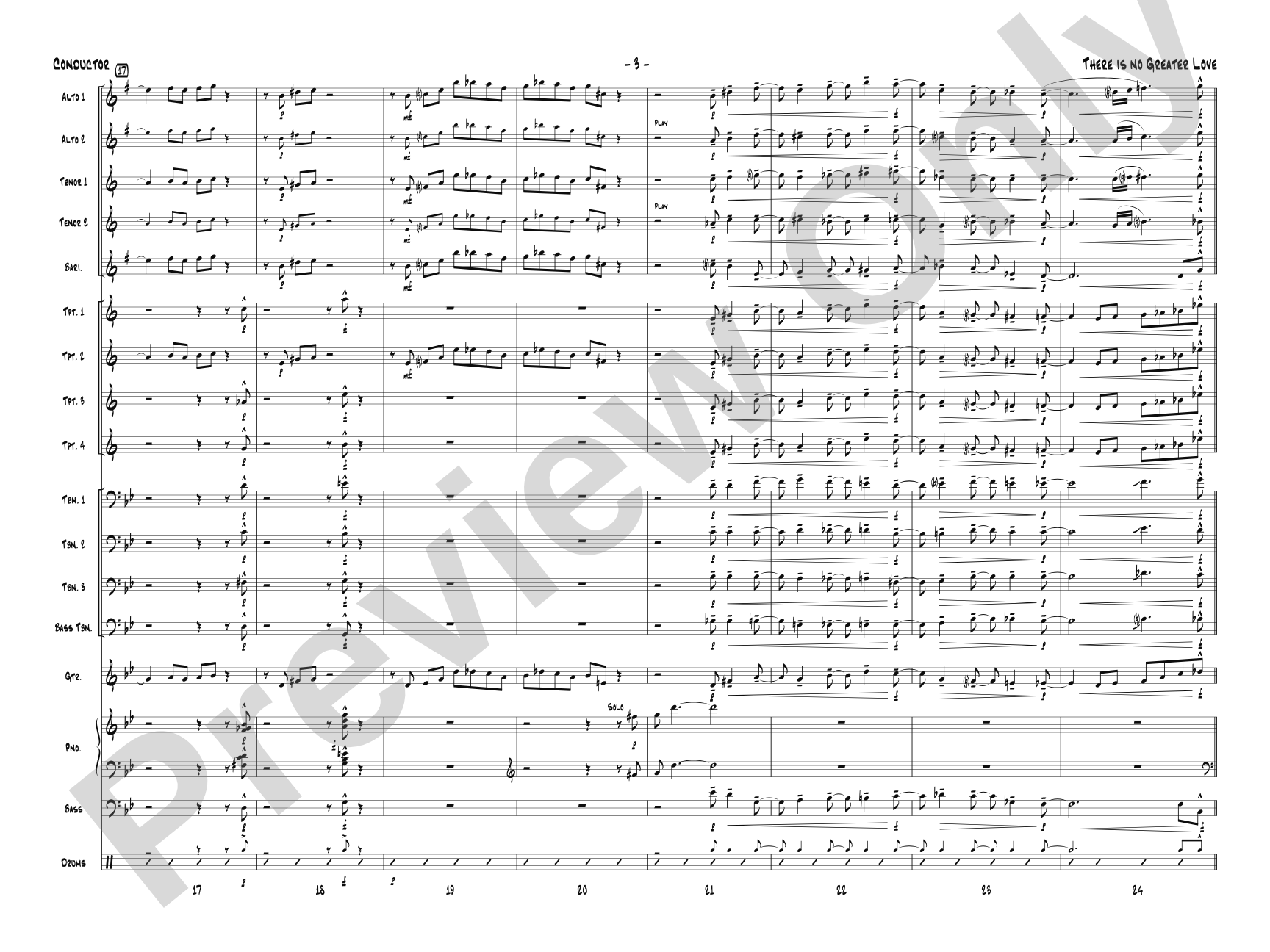
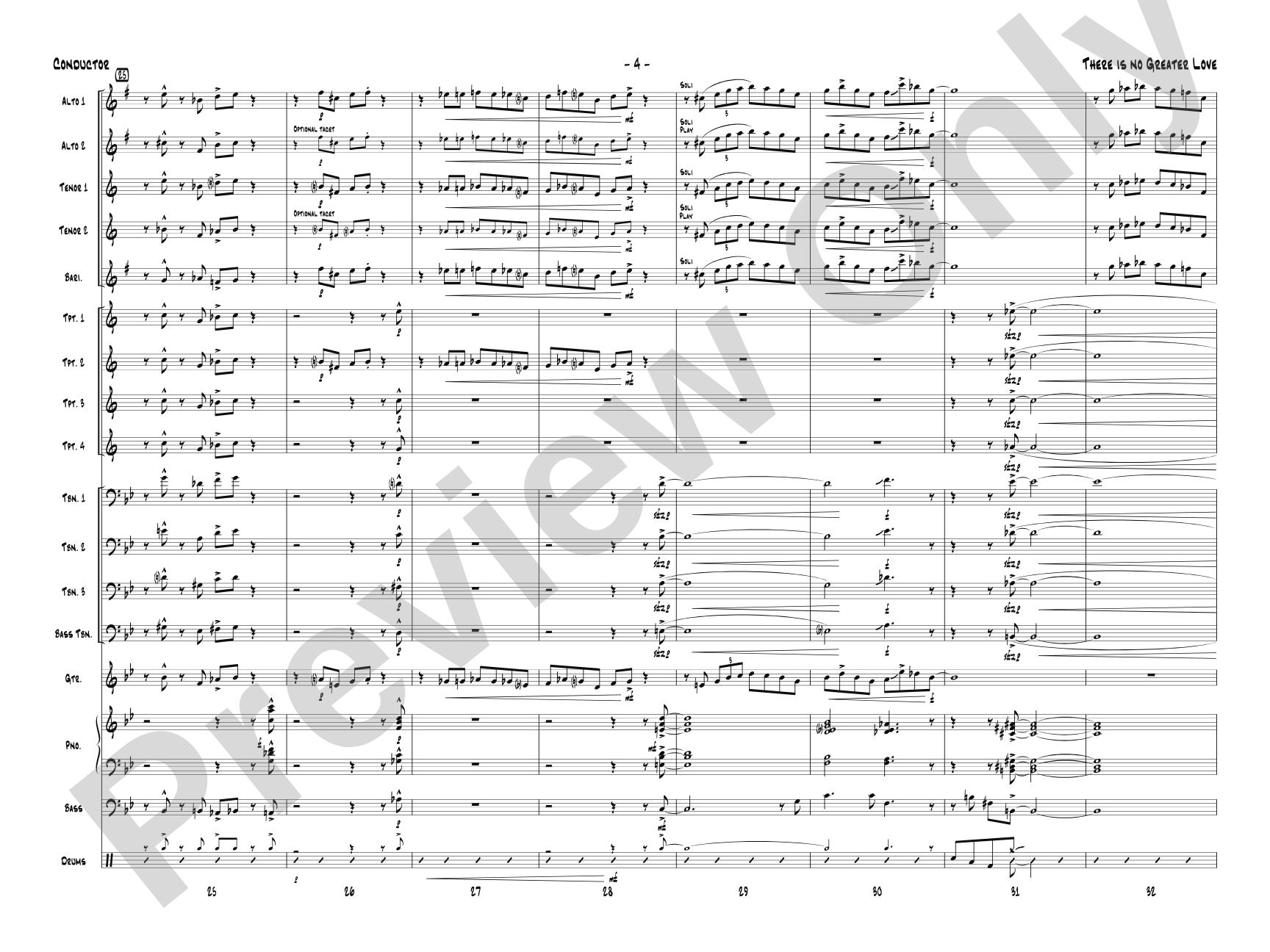
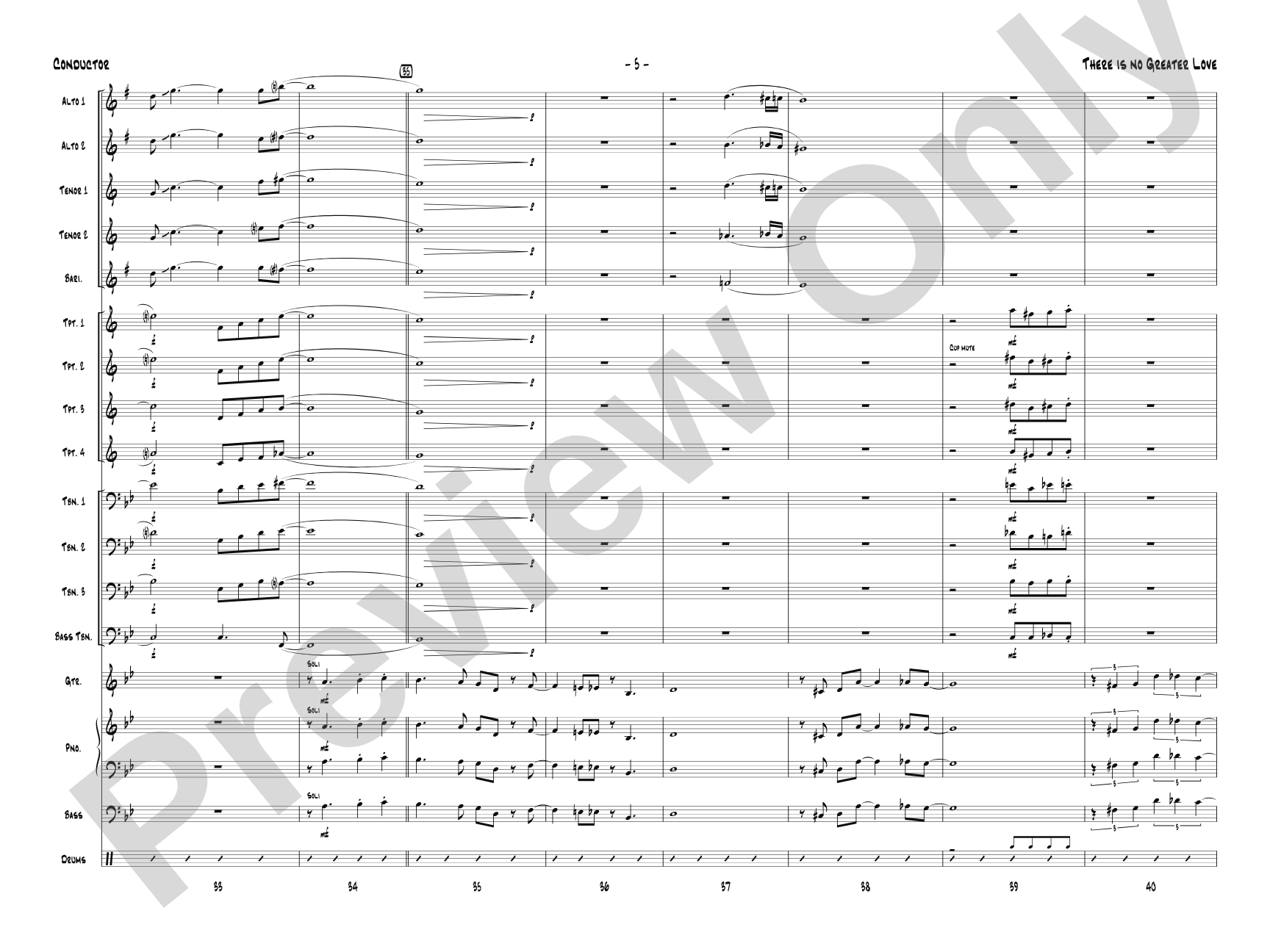
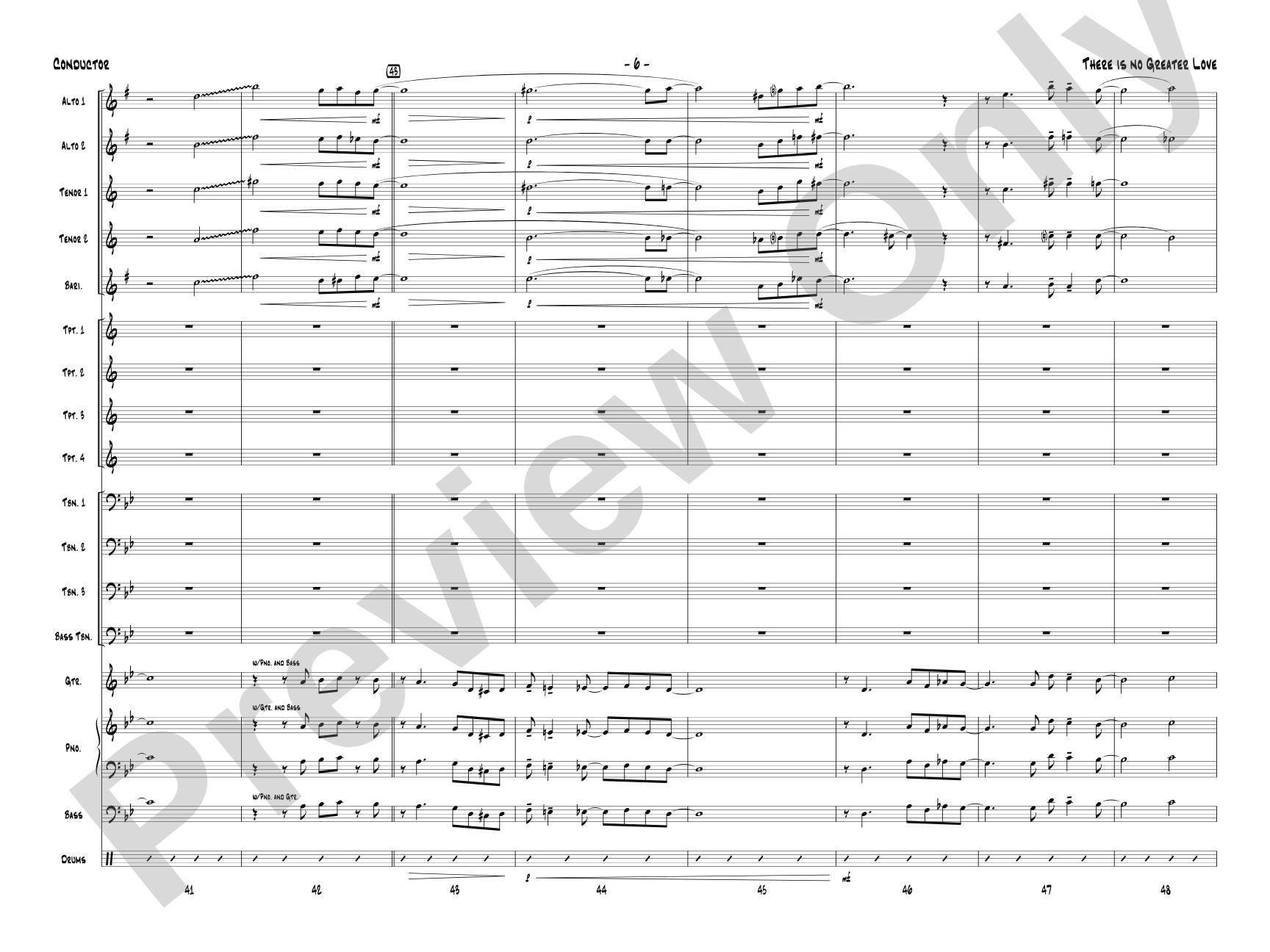
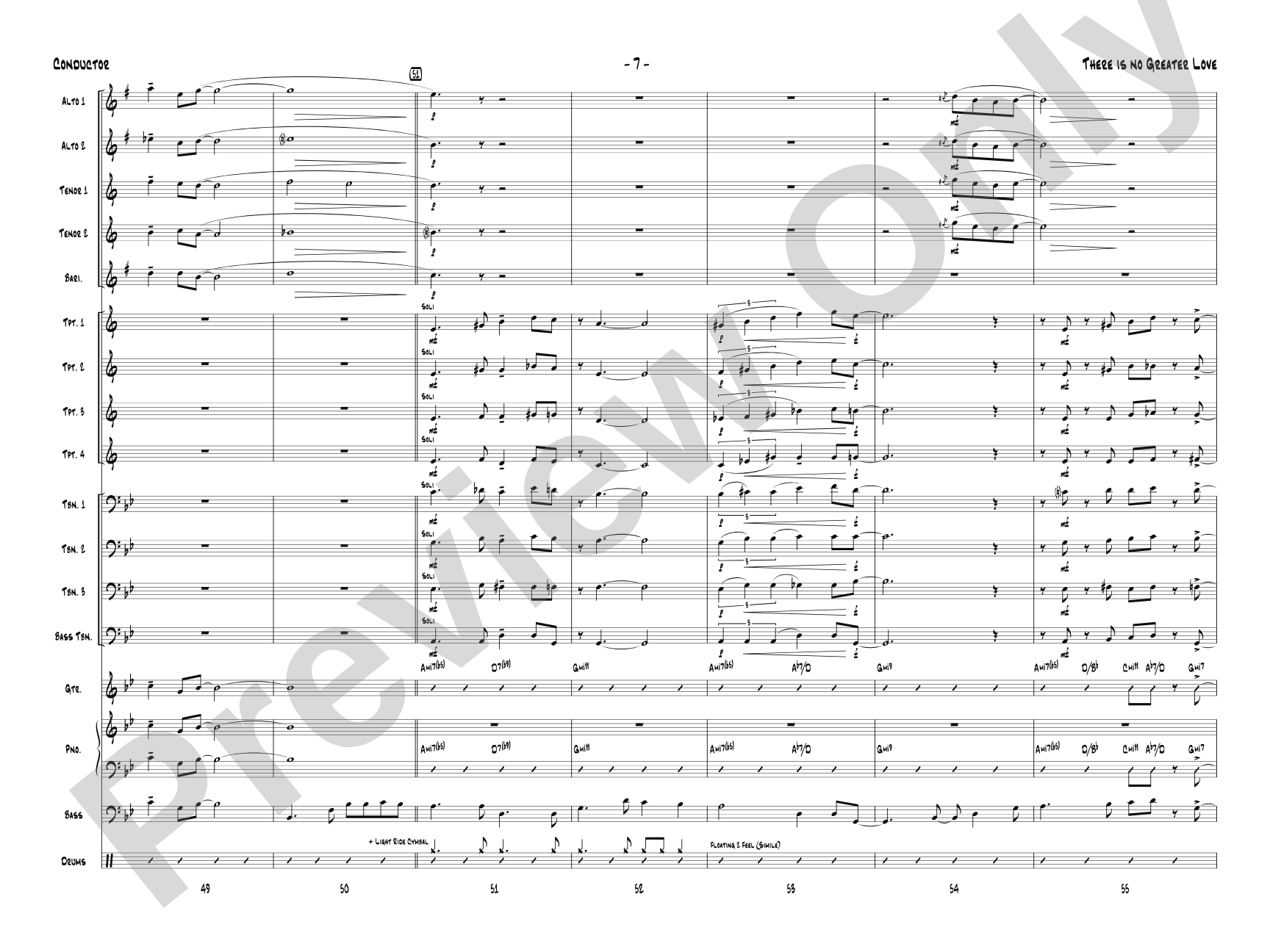
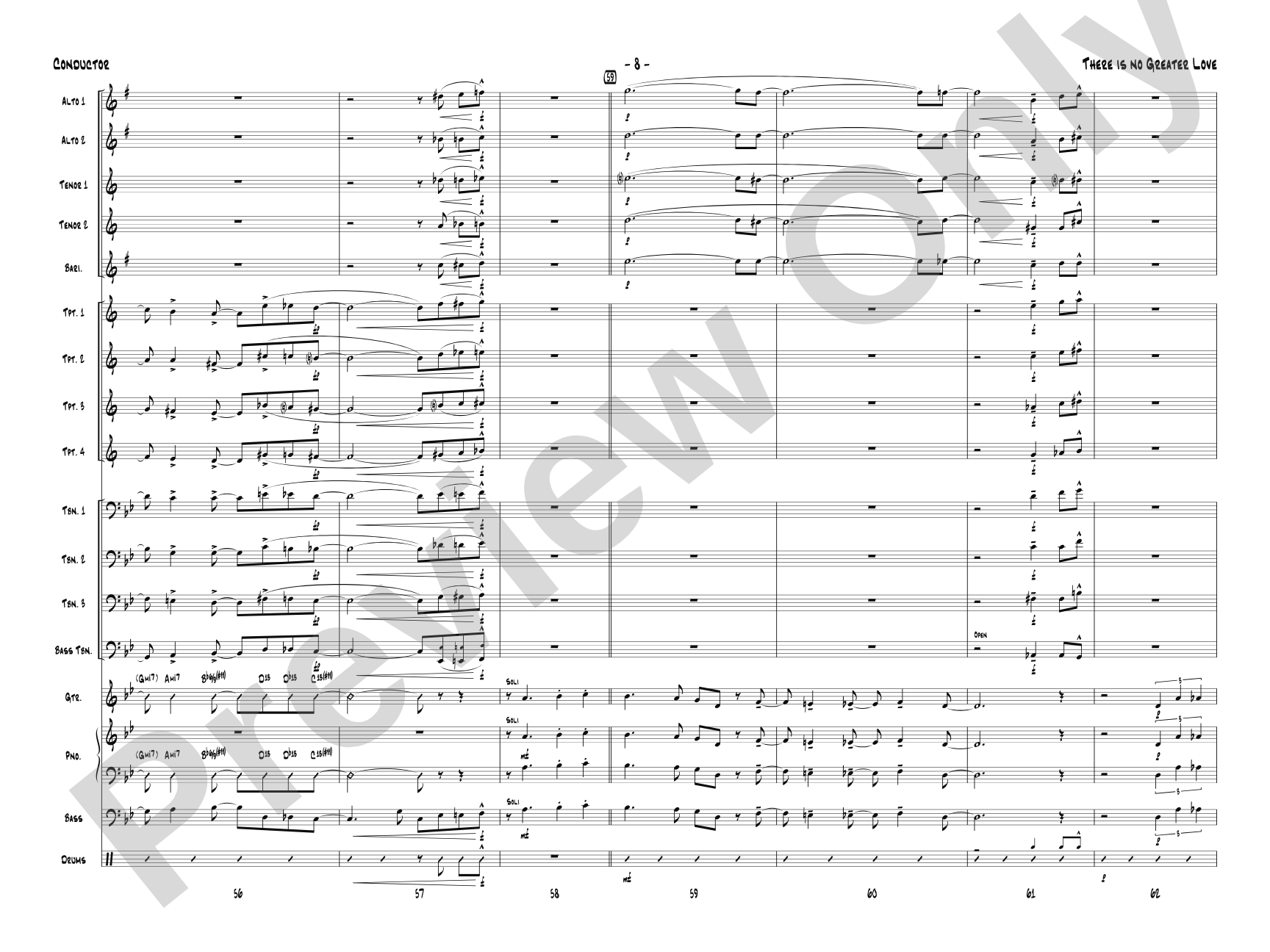
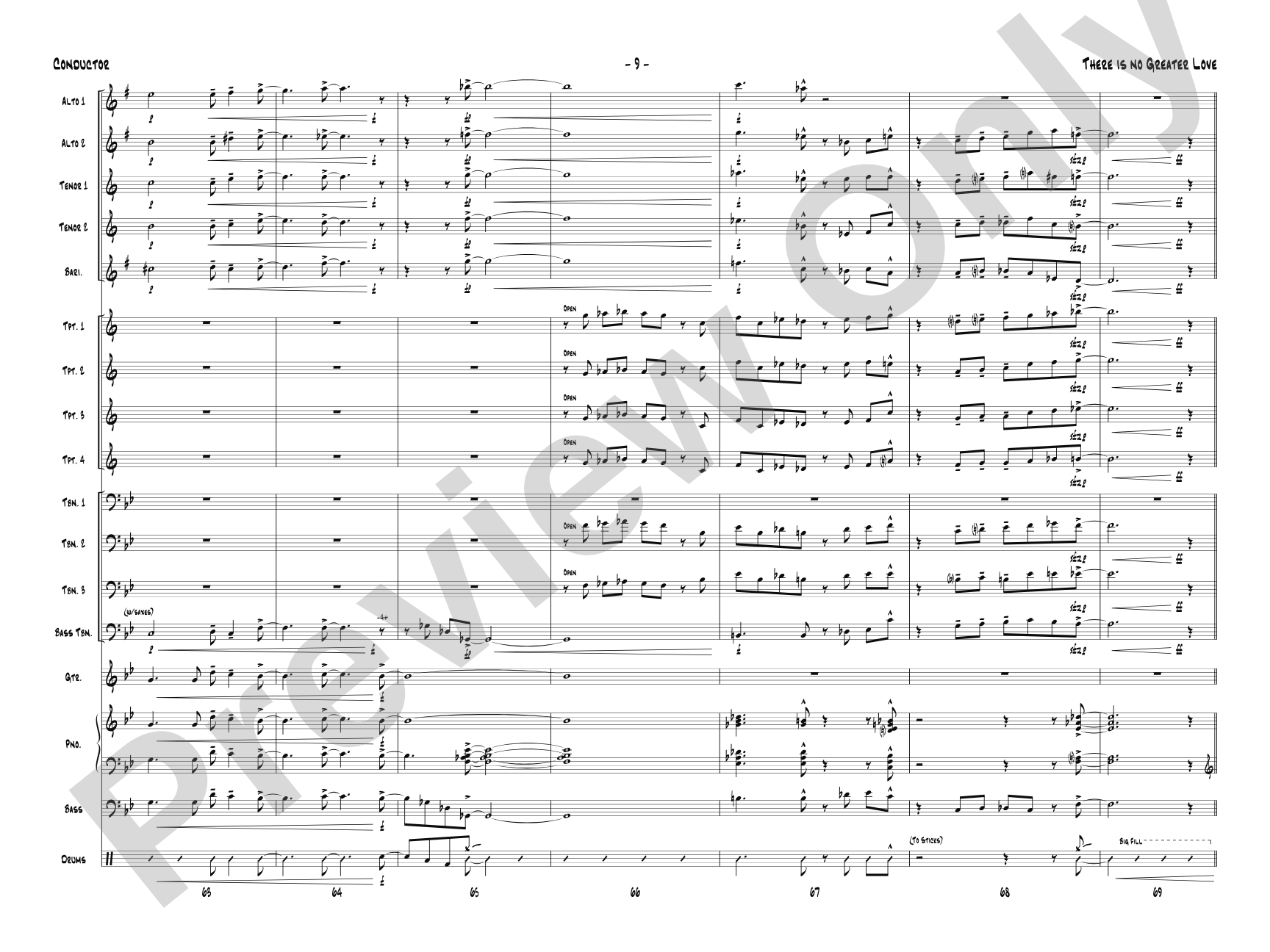
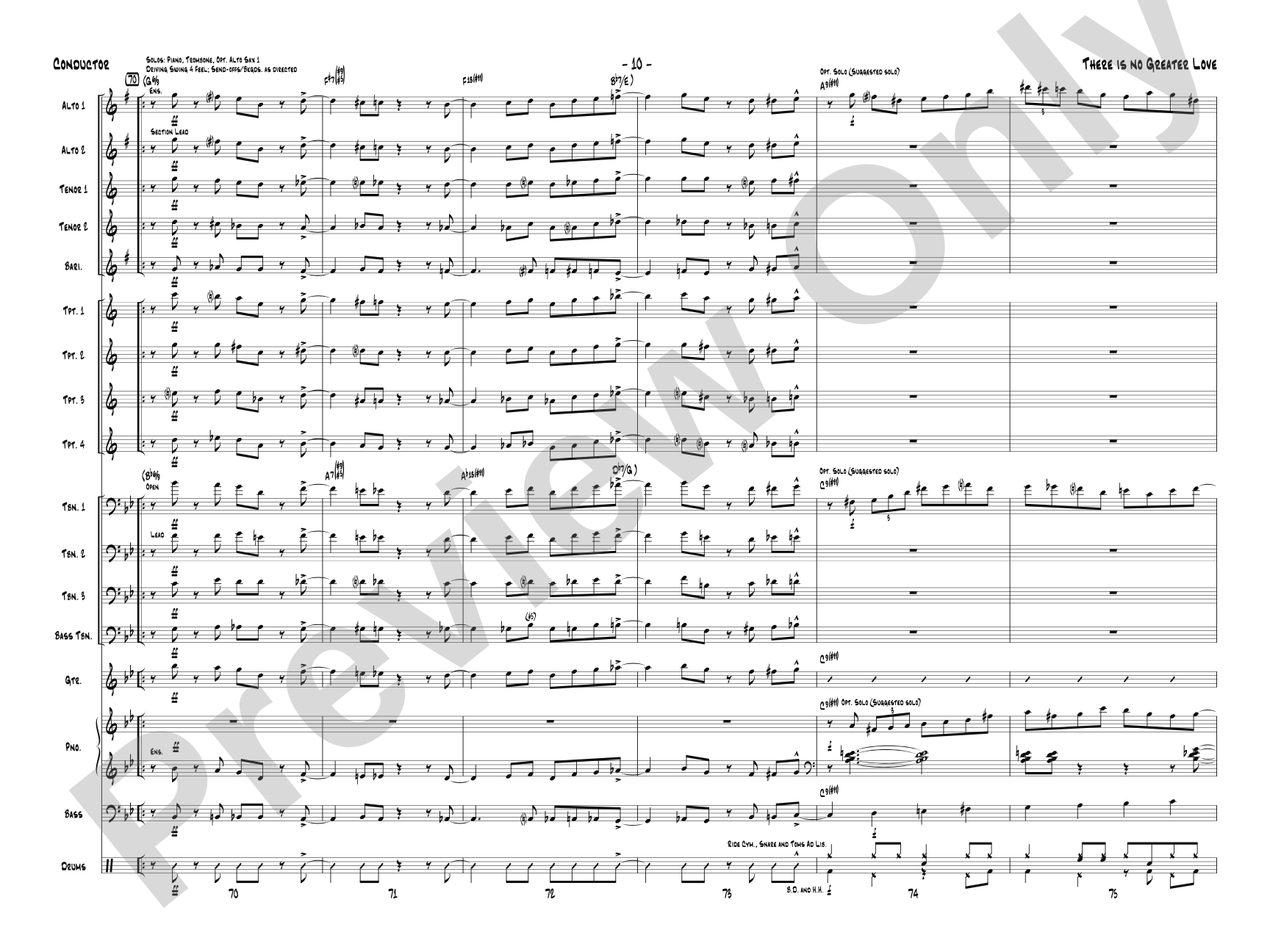
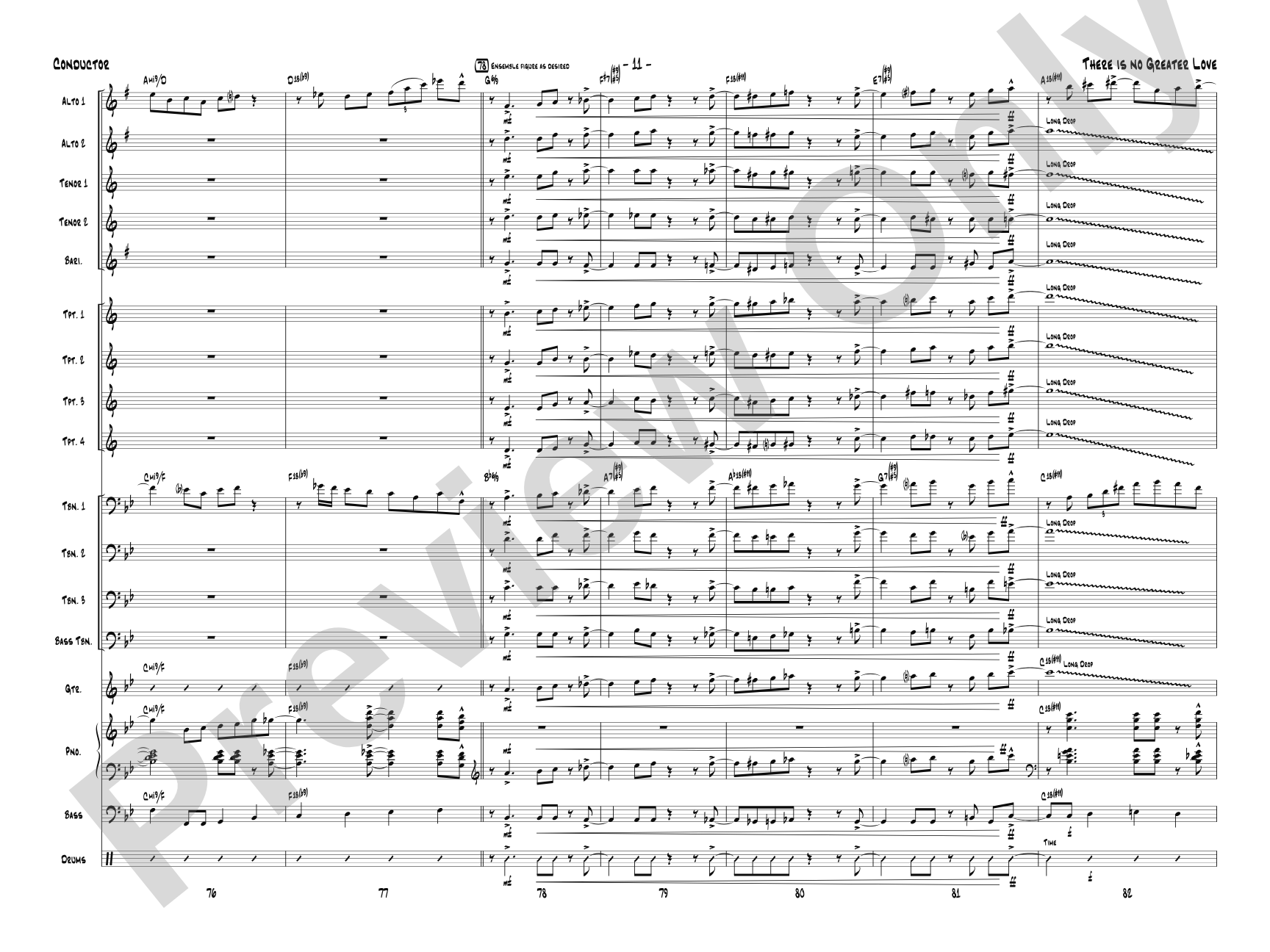
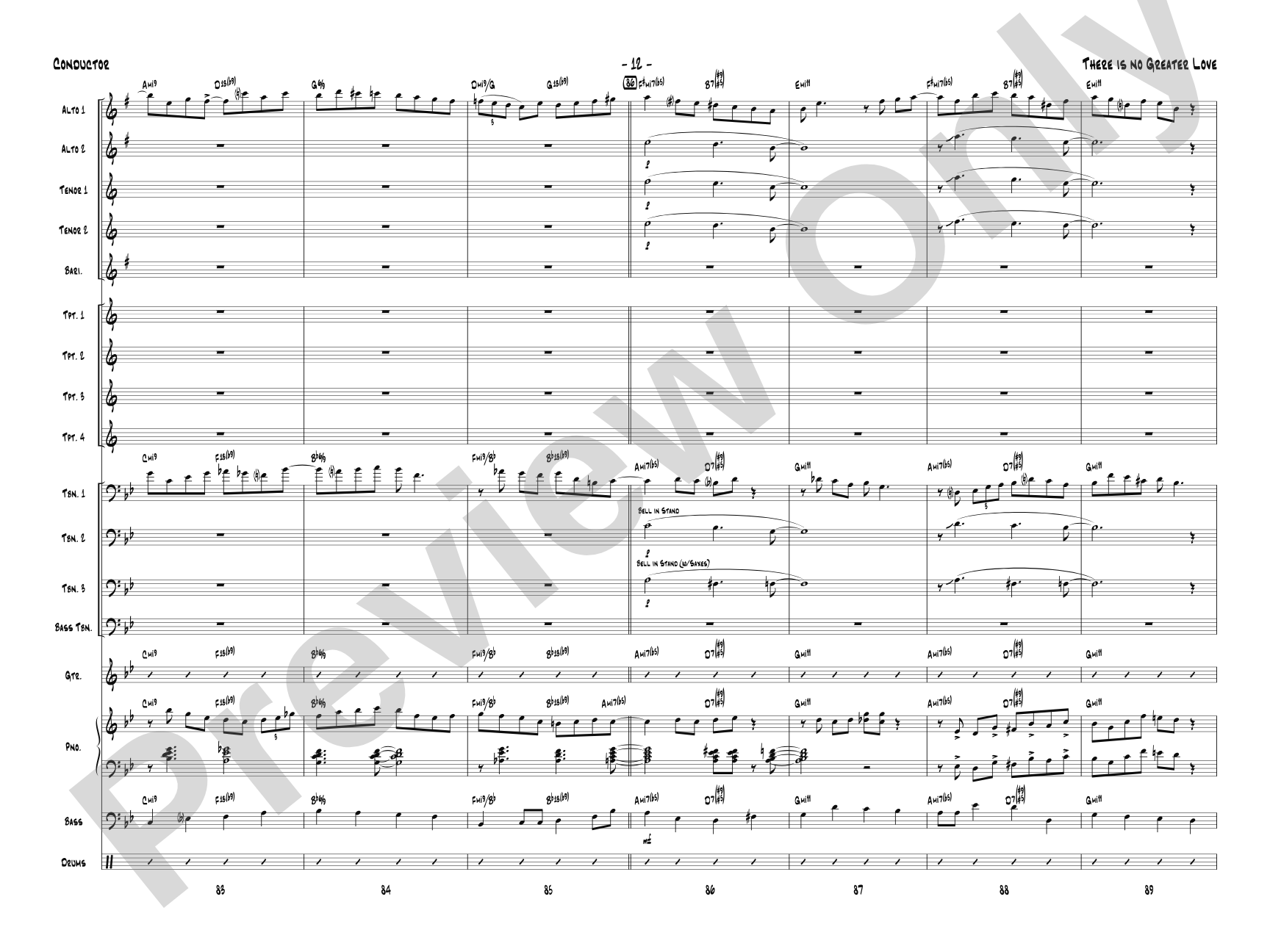
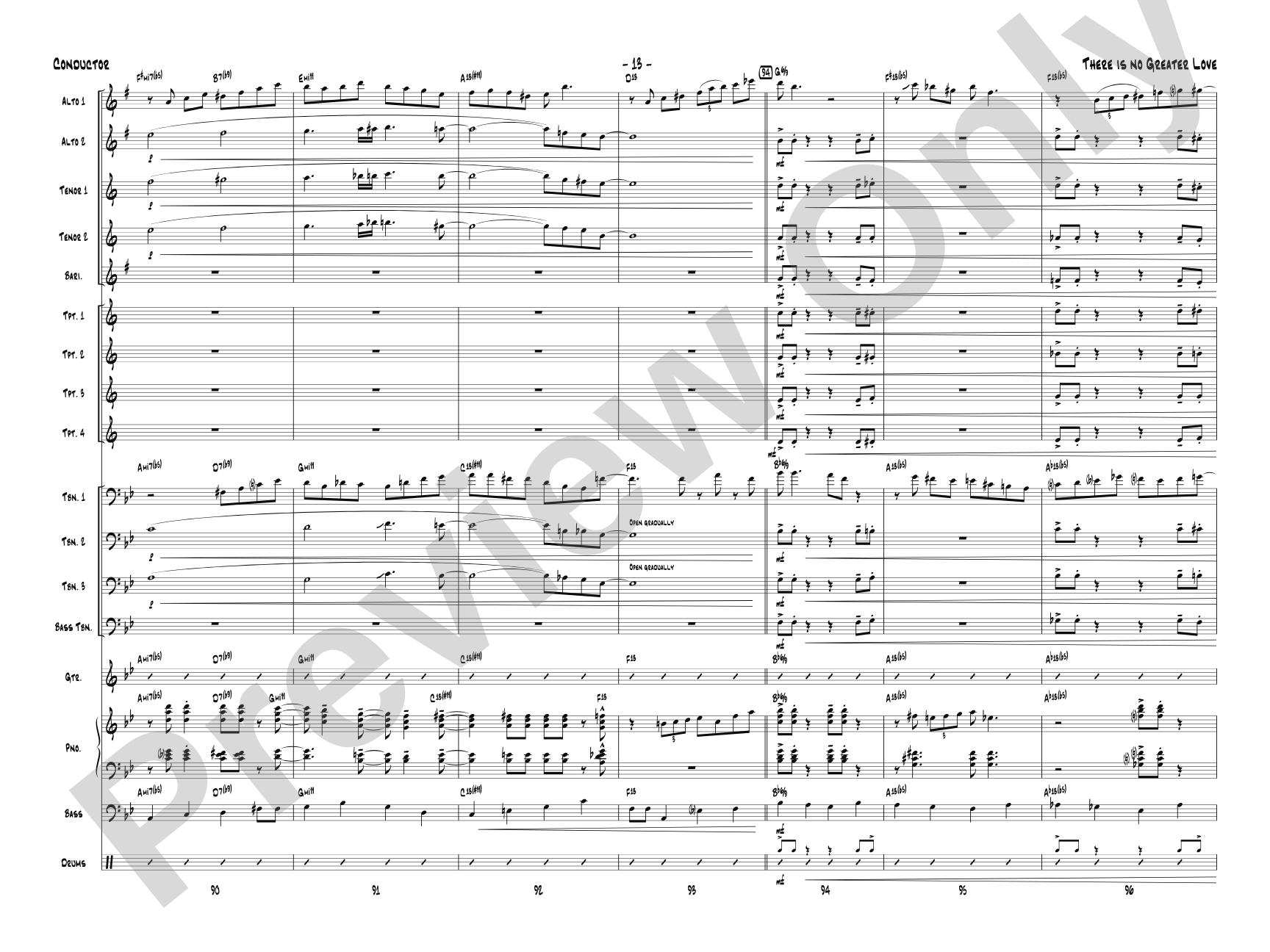
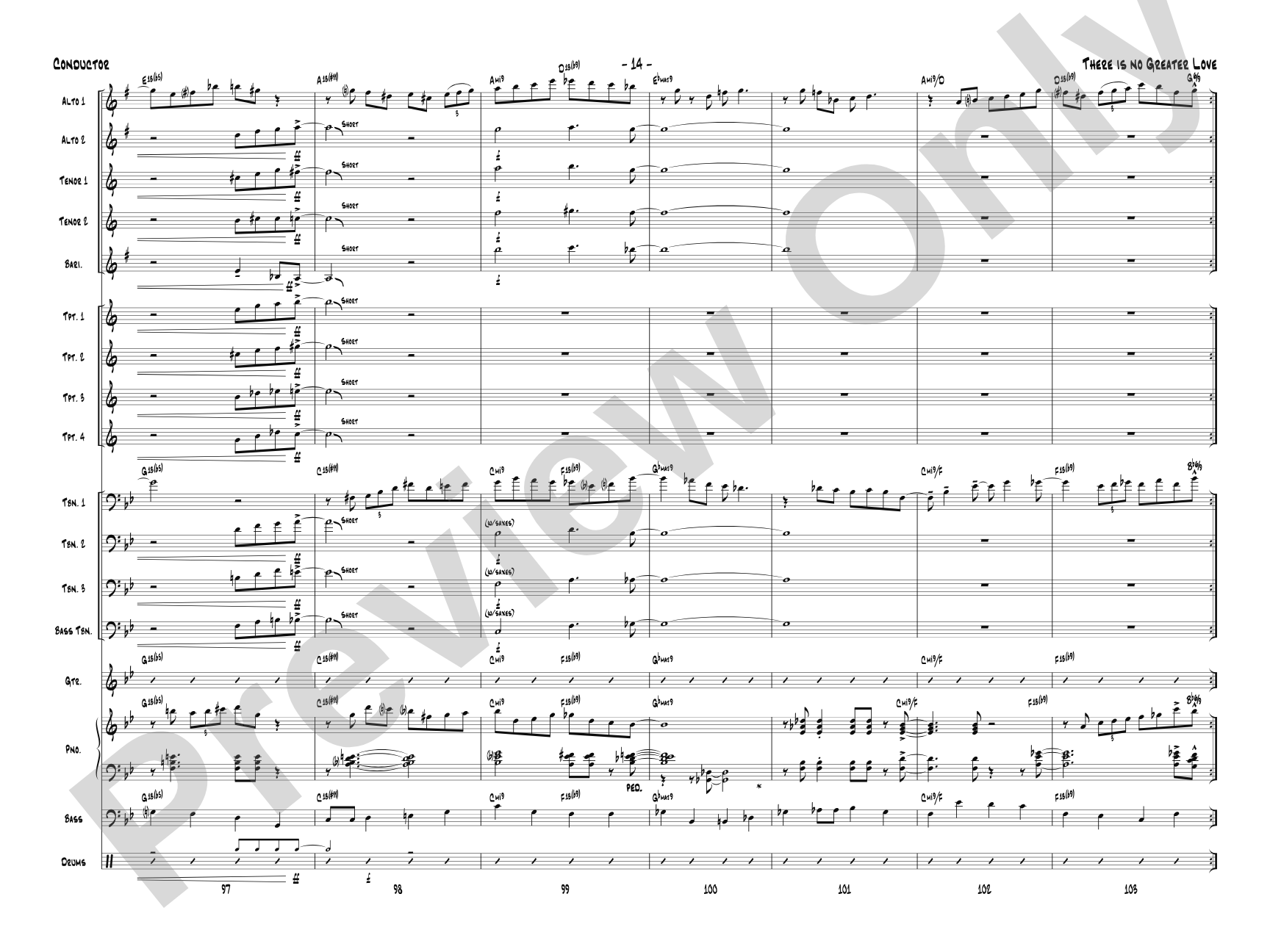
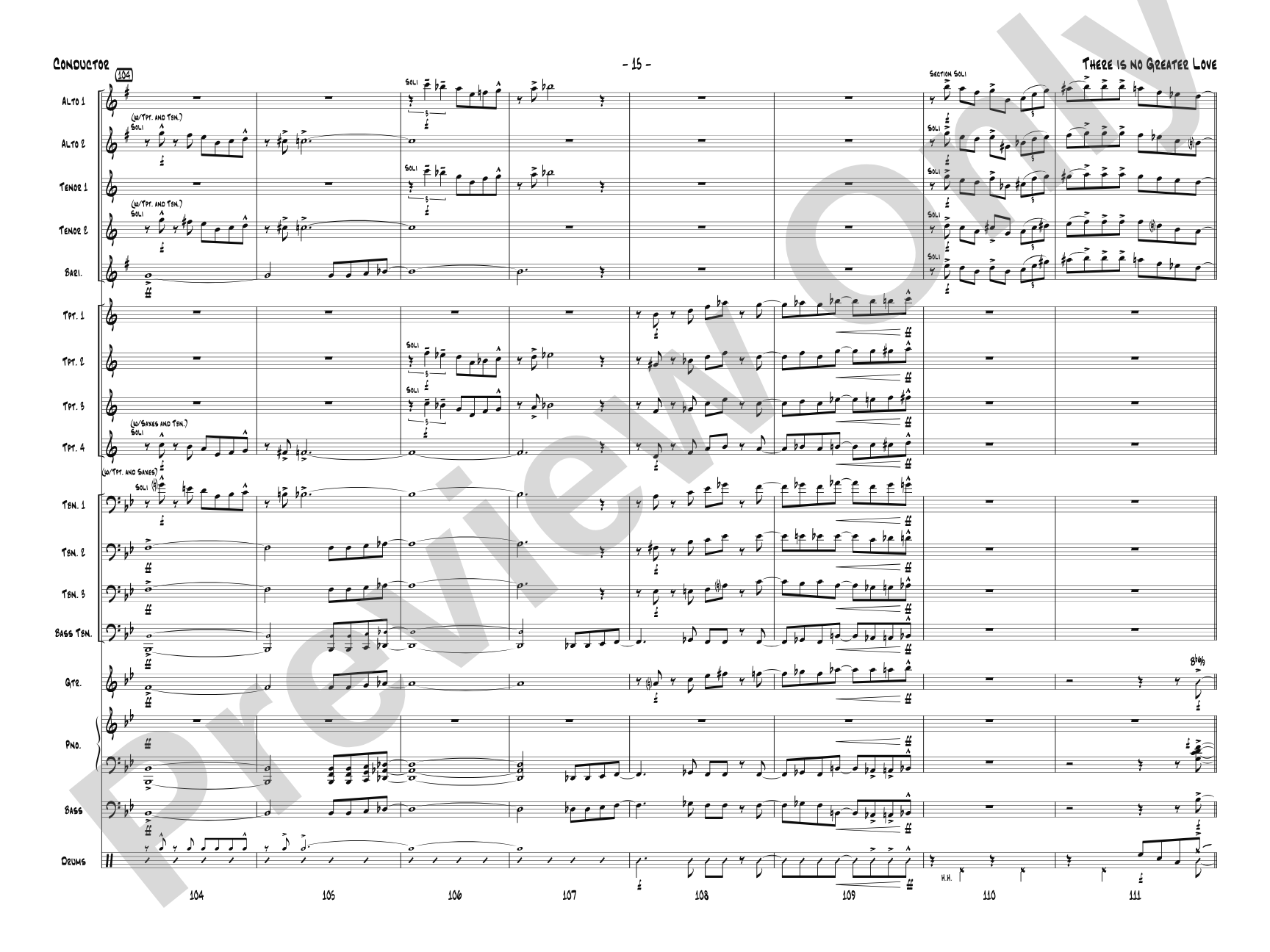
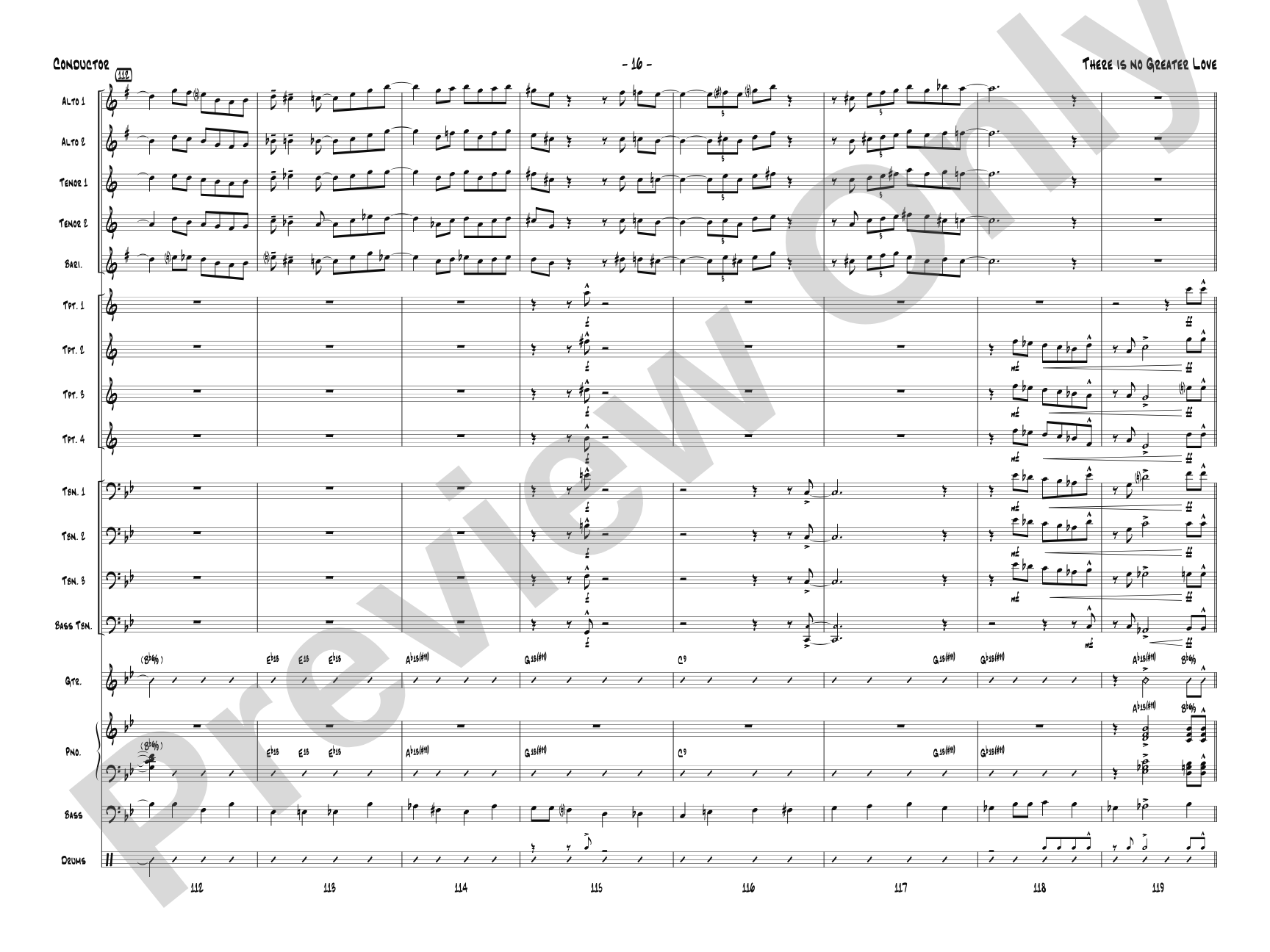
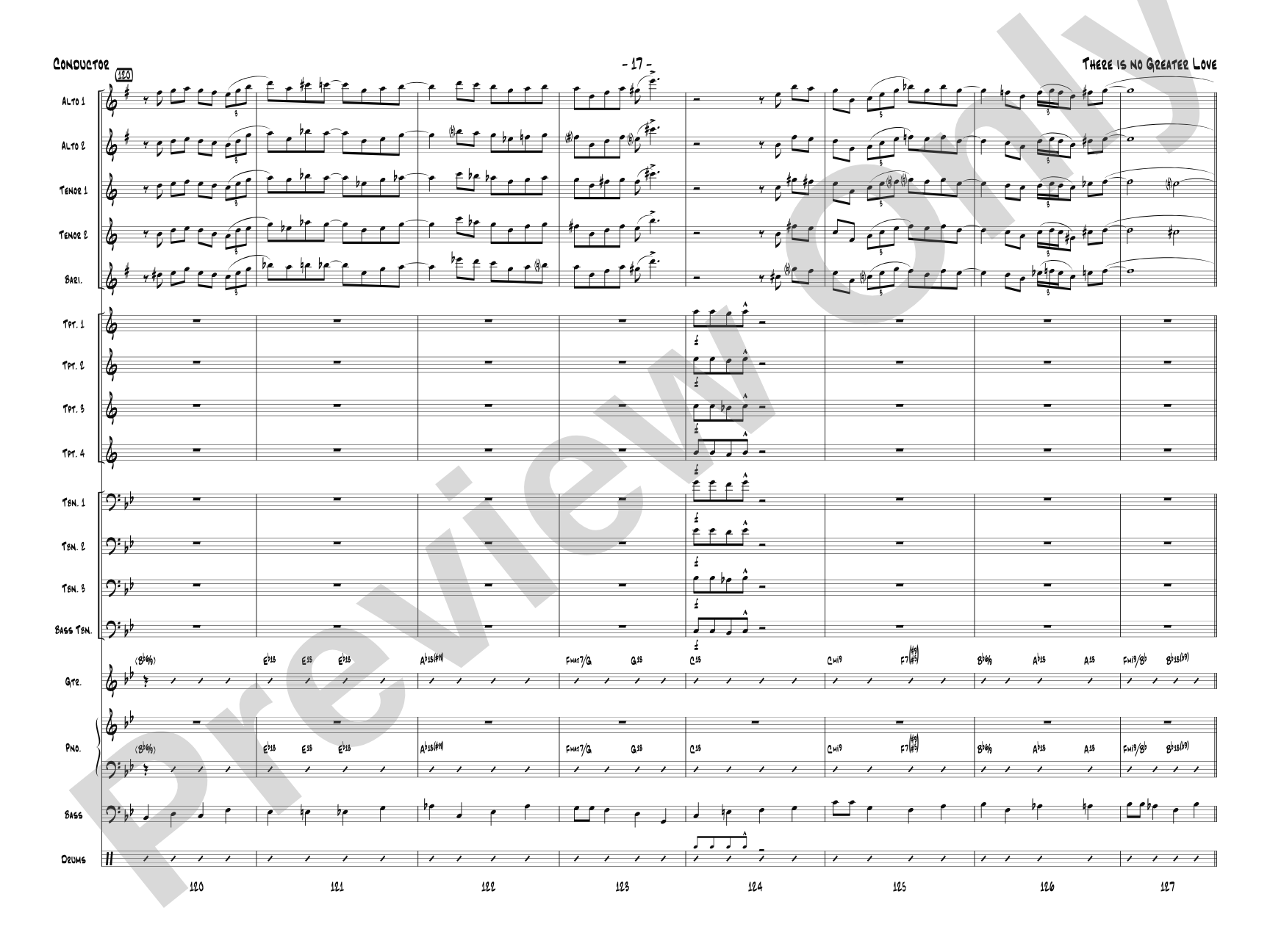
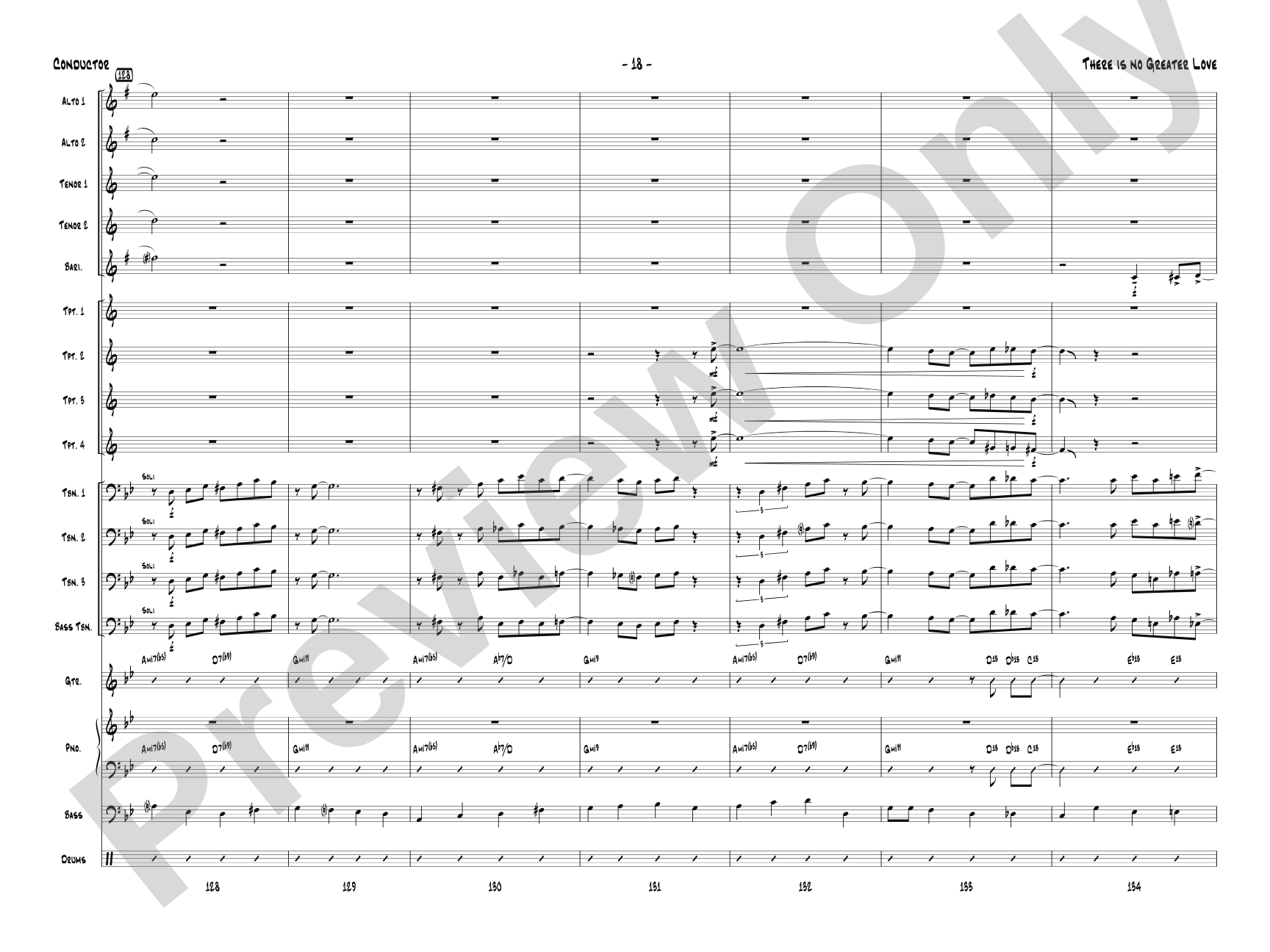
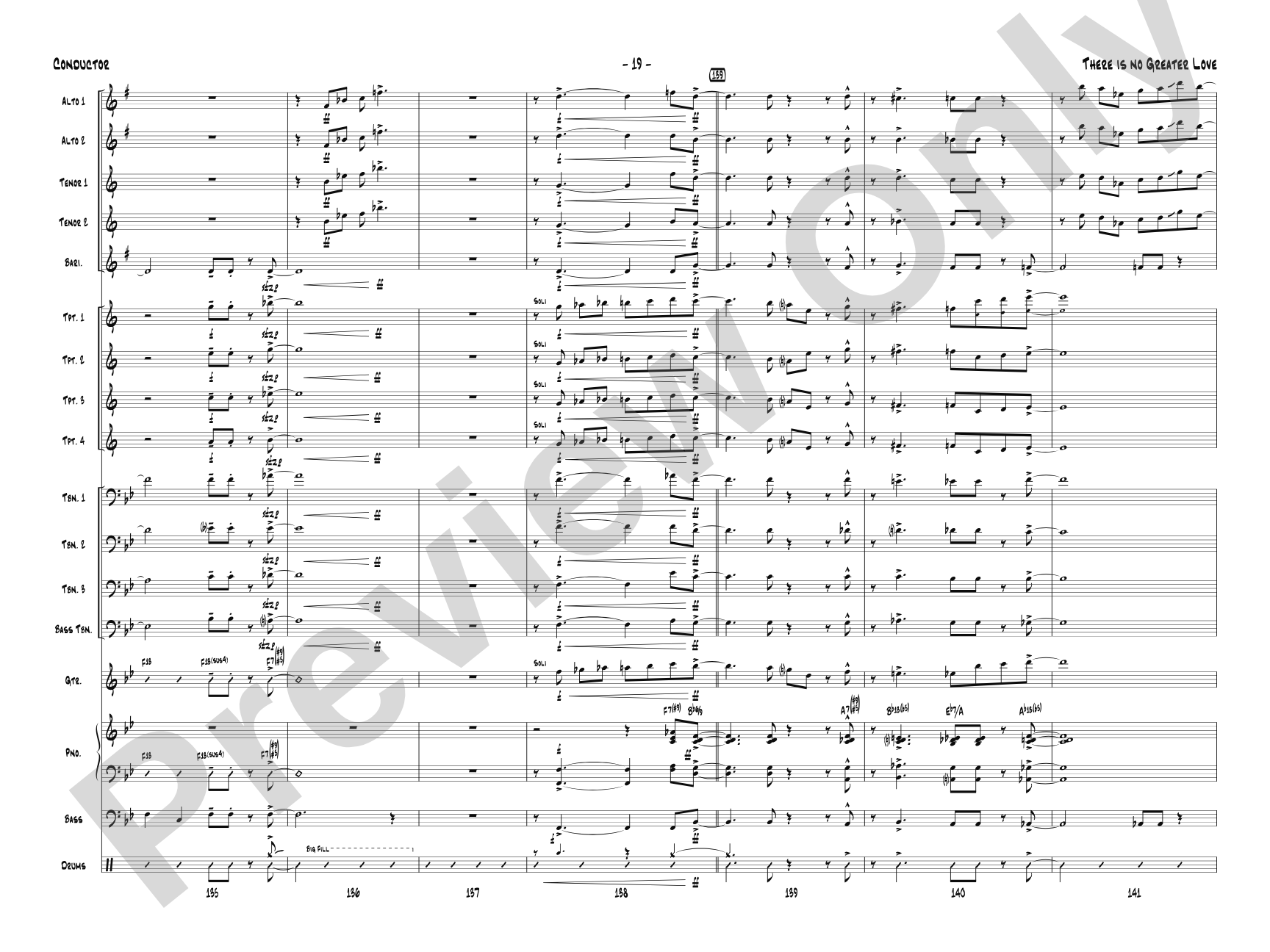
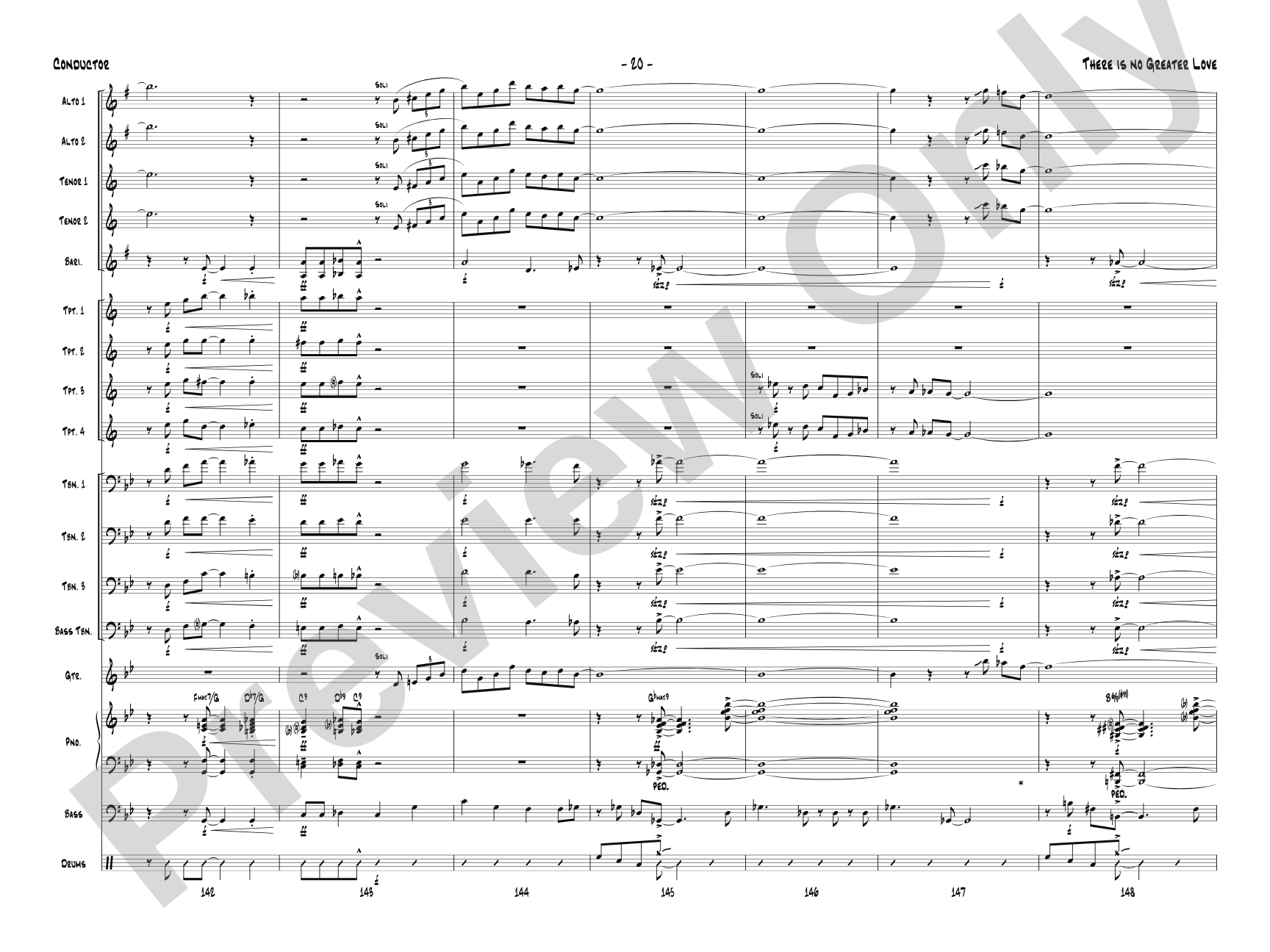
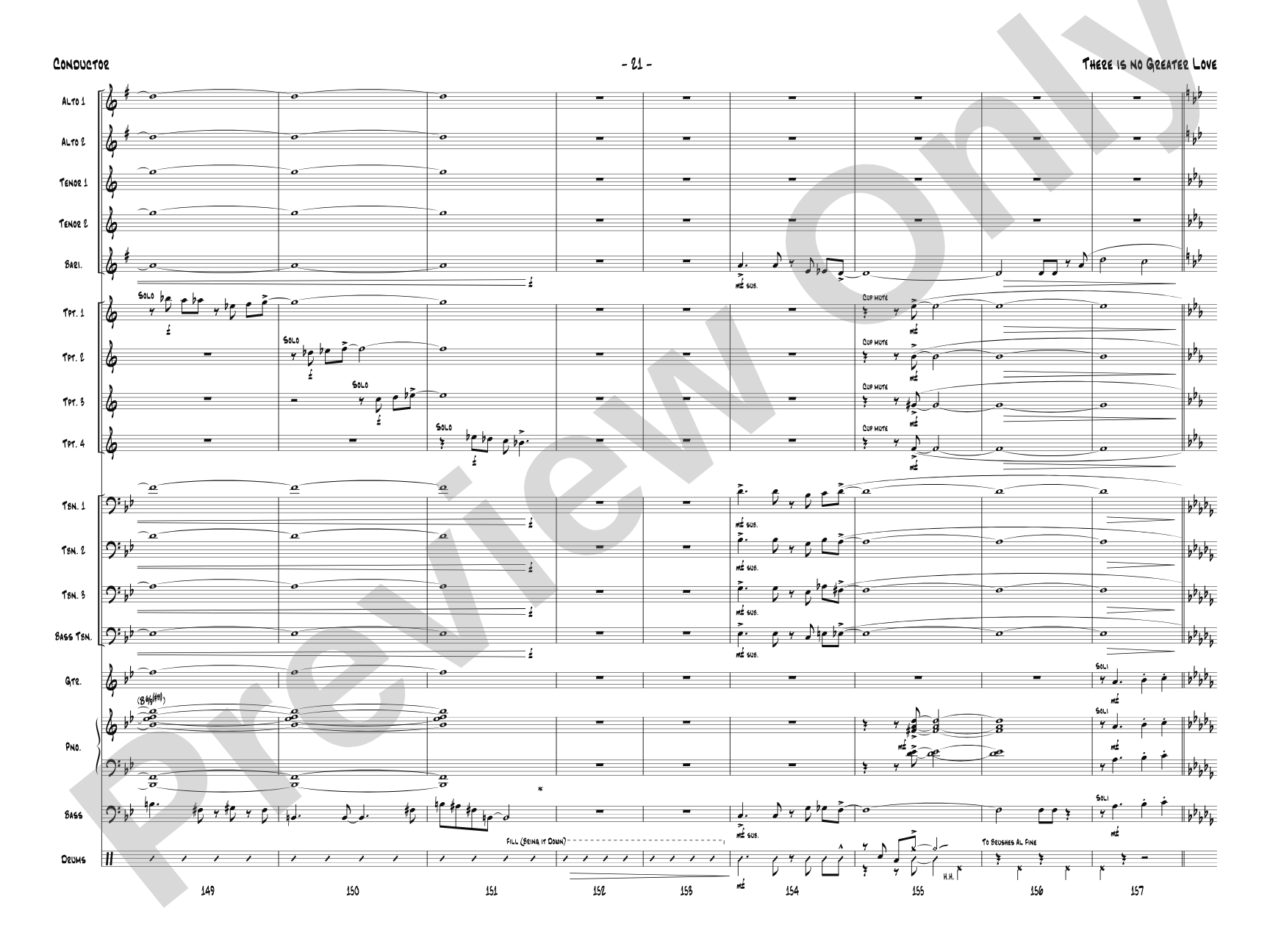
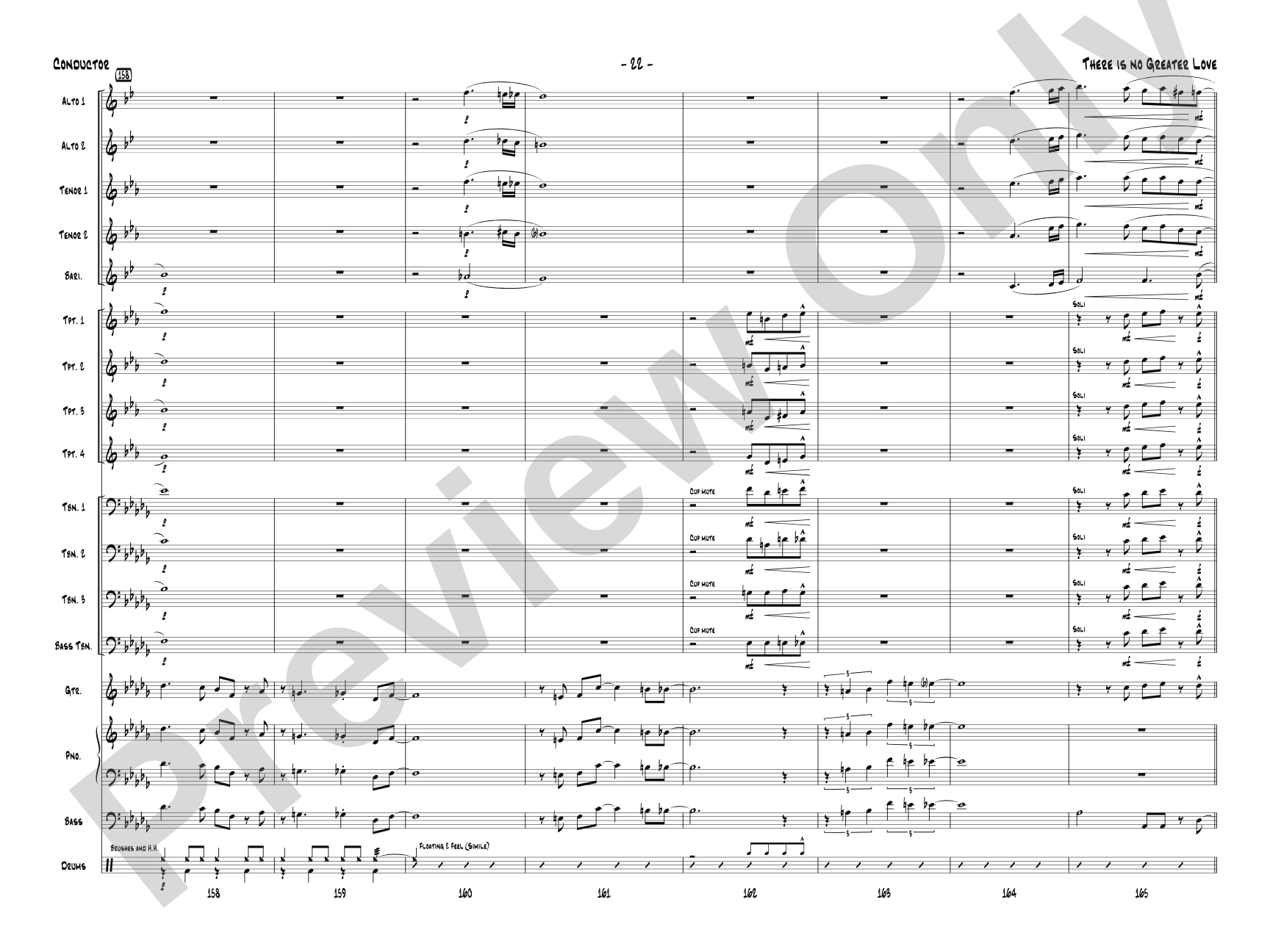
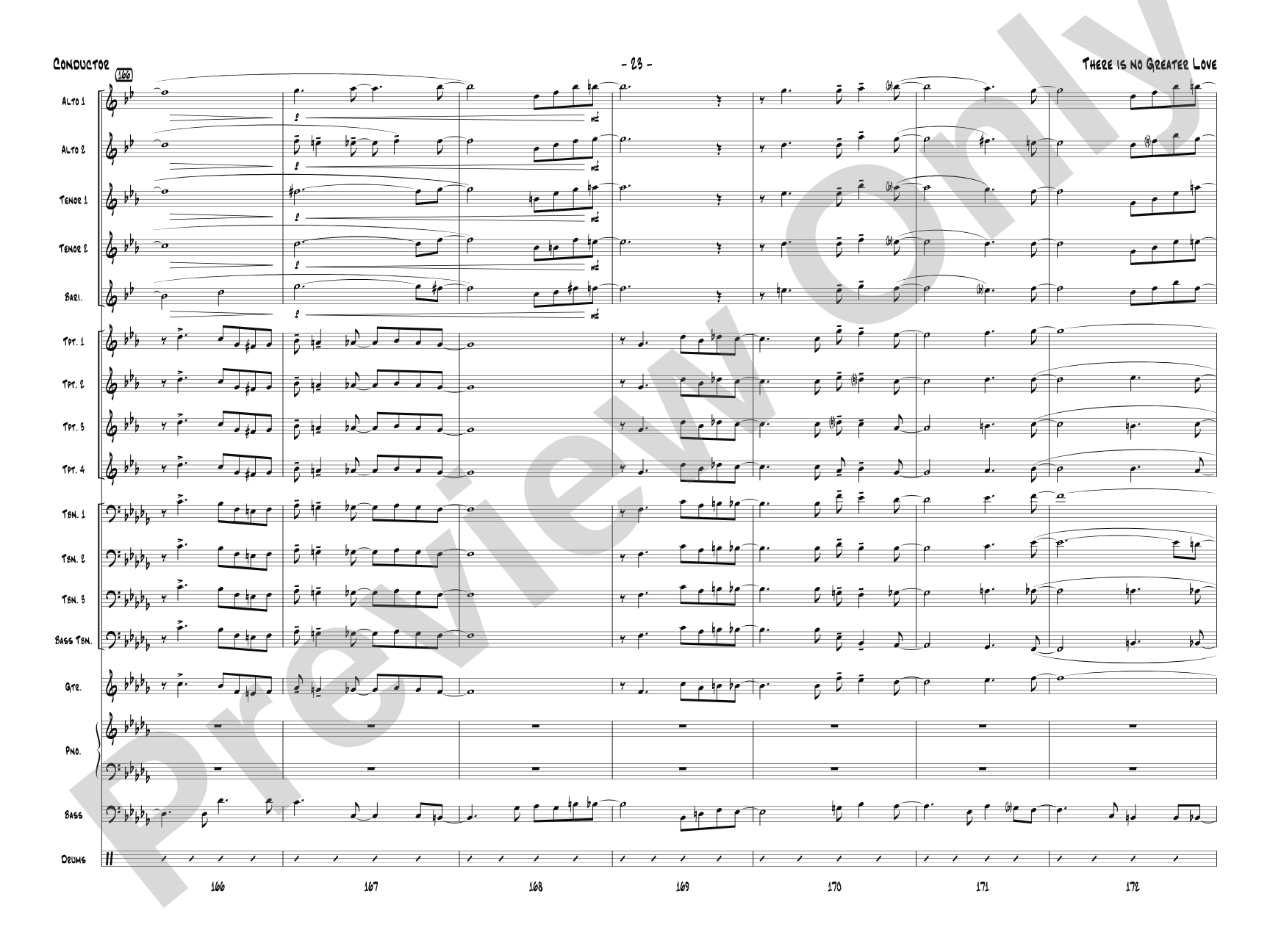
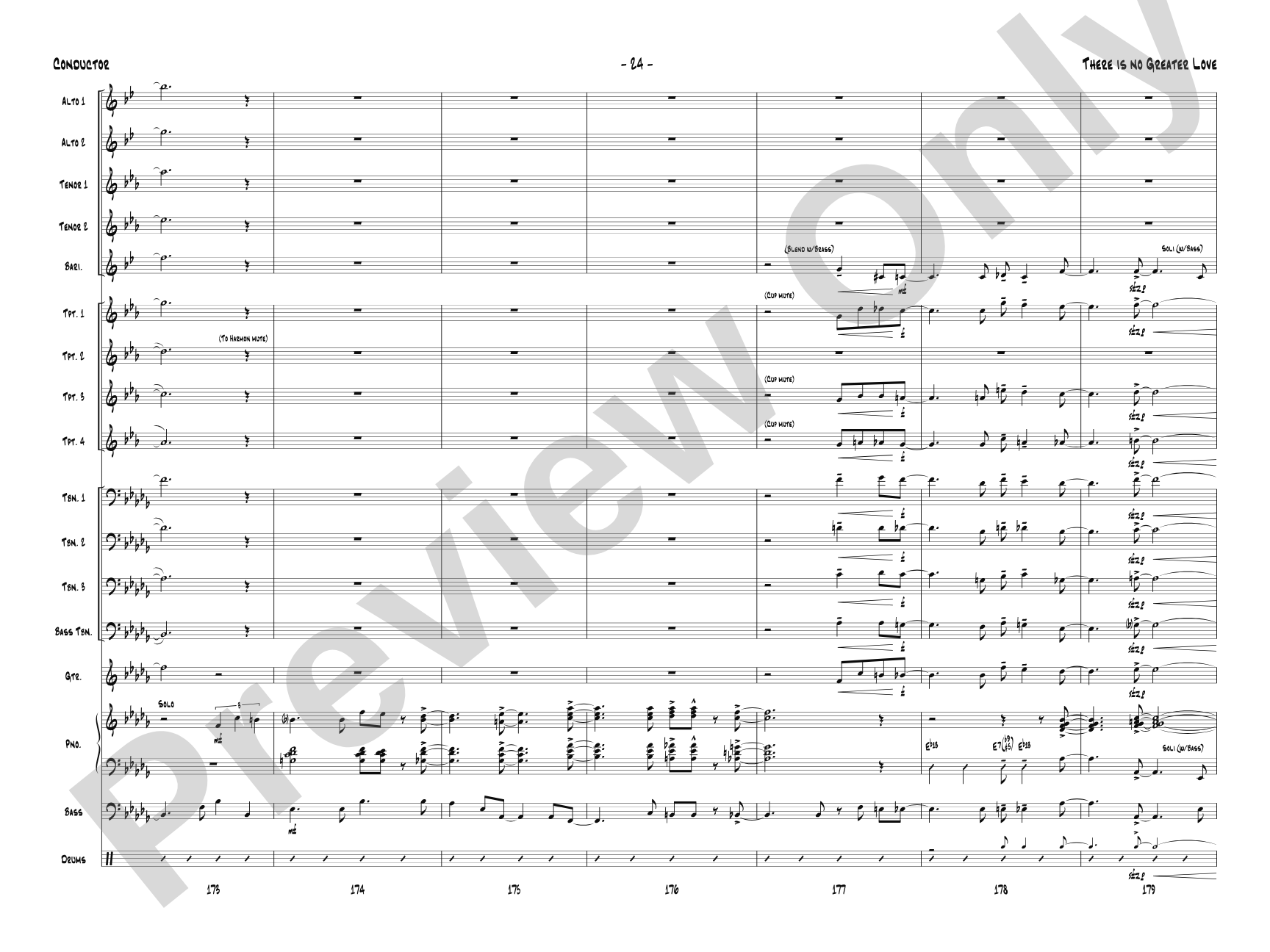
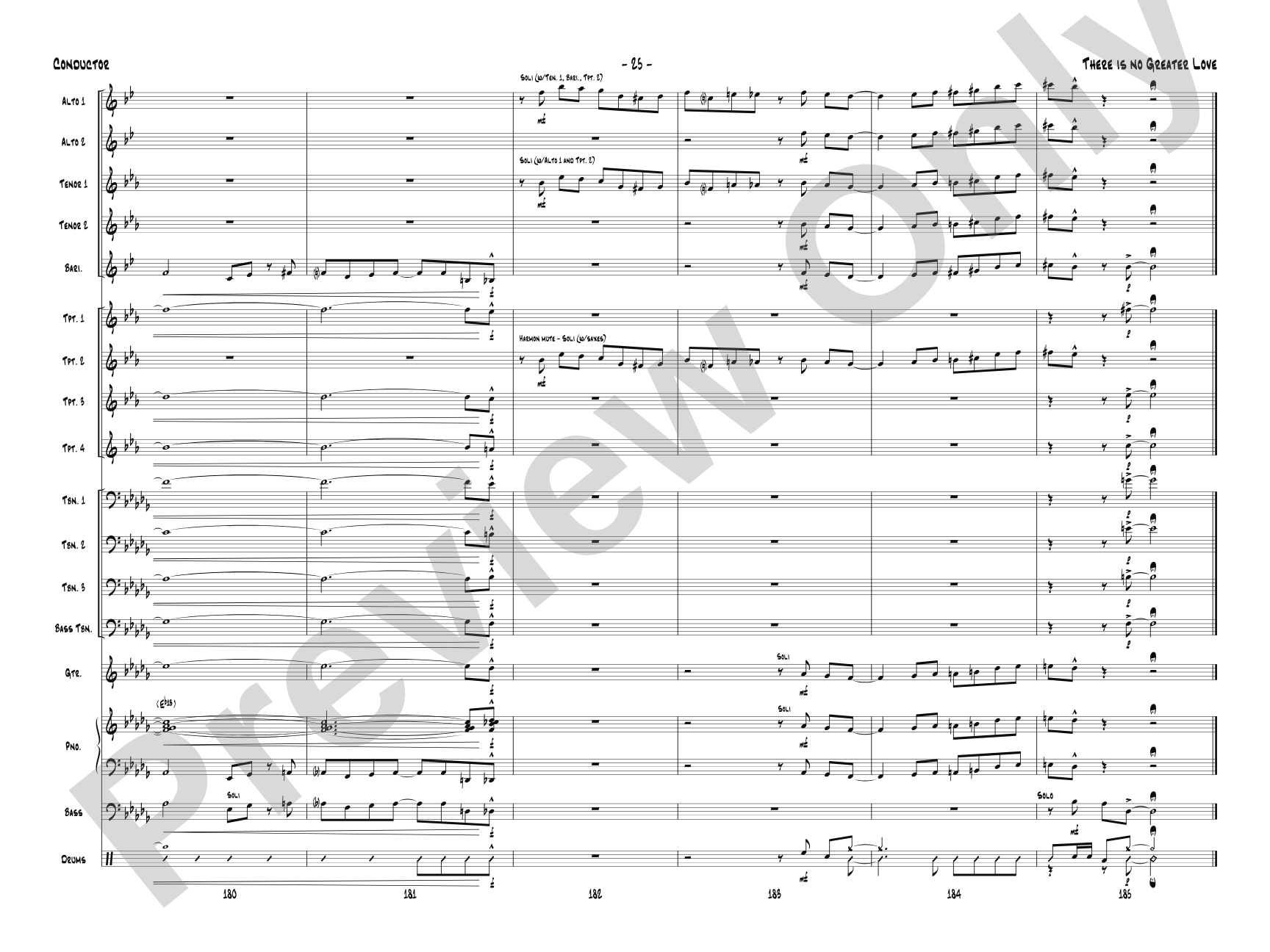

There Is No Greater Love: Jazz Ensemble Conductor Score & Parts
Words and music by Marty Symes and Isham Jones / arr. Eric Richards
Grade: 5 (Advanced / Difficult)
Item: 00-PK-0006021

$60.00
One moment…
Description
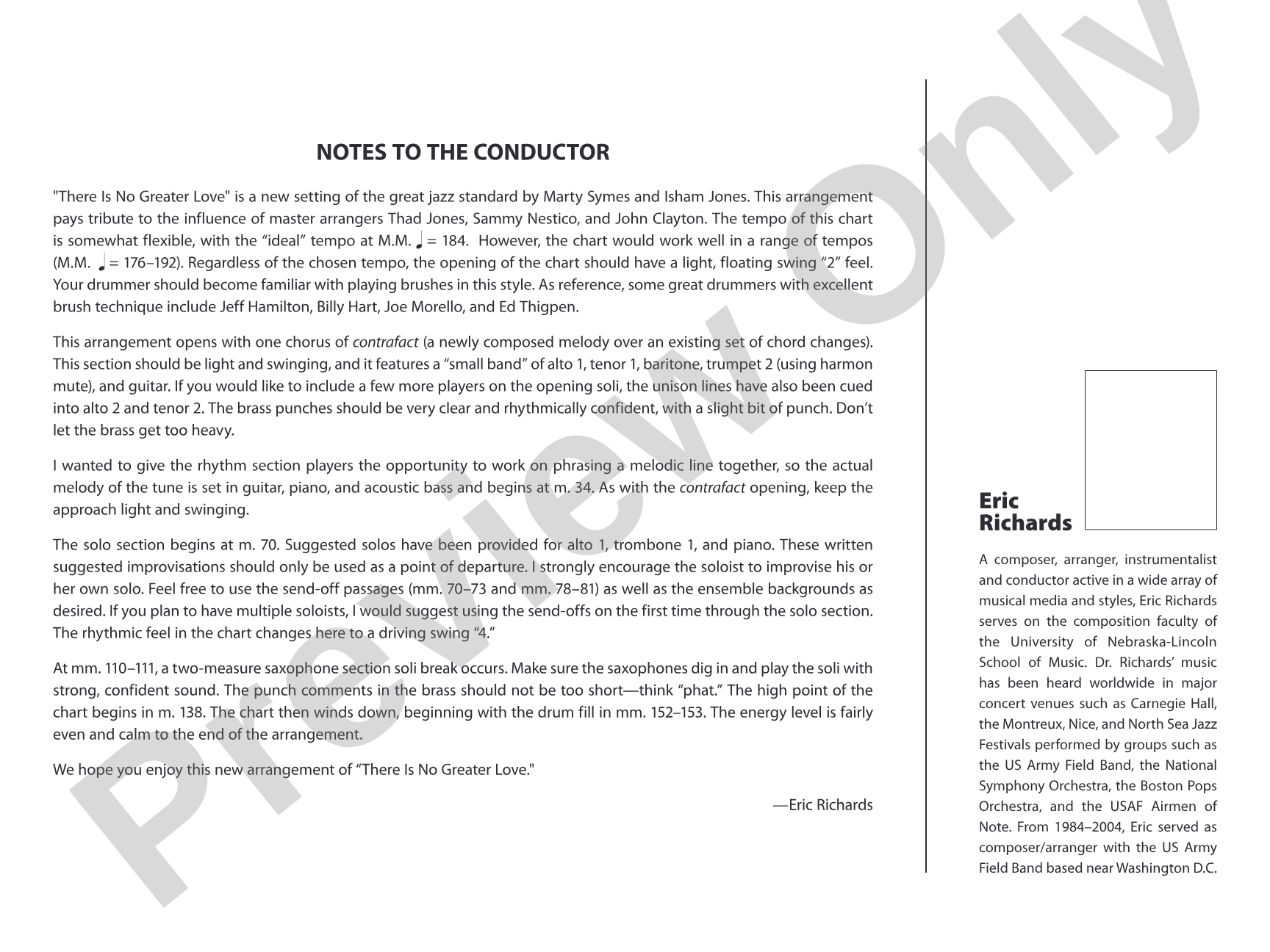
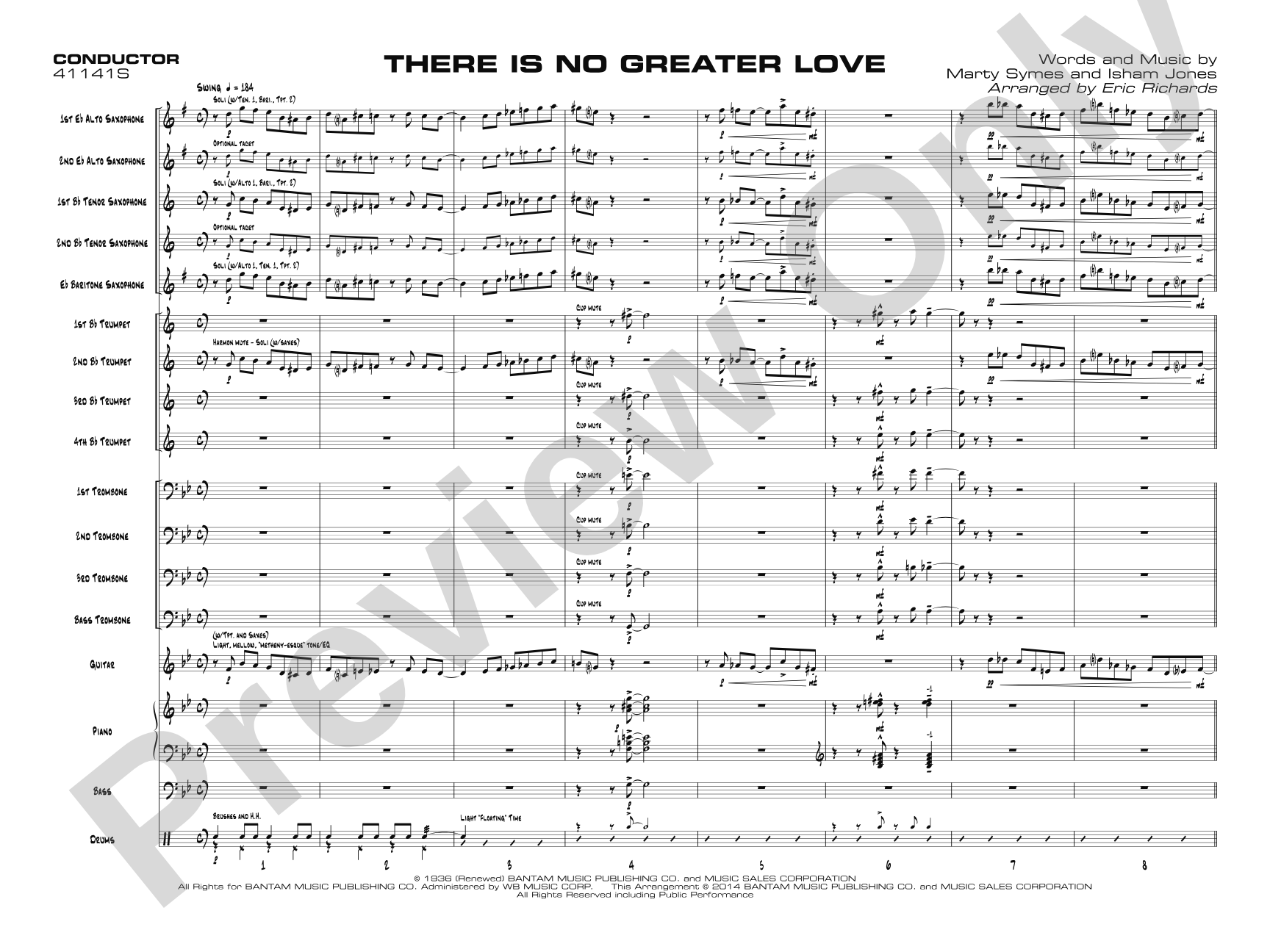
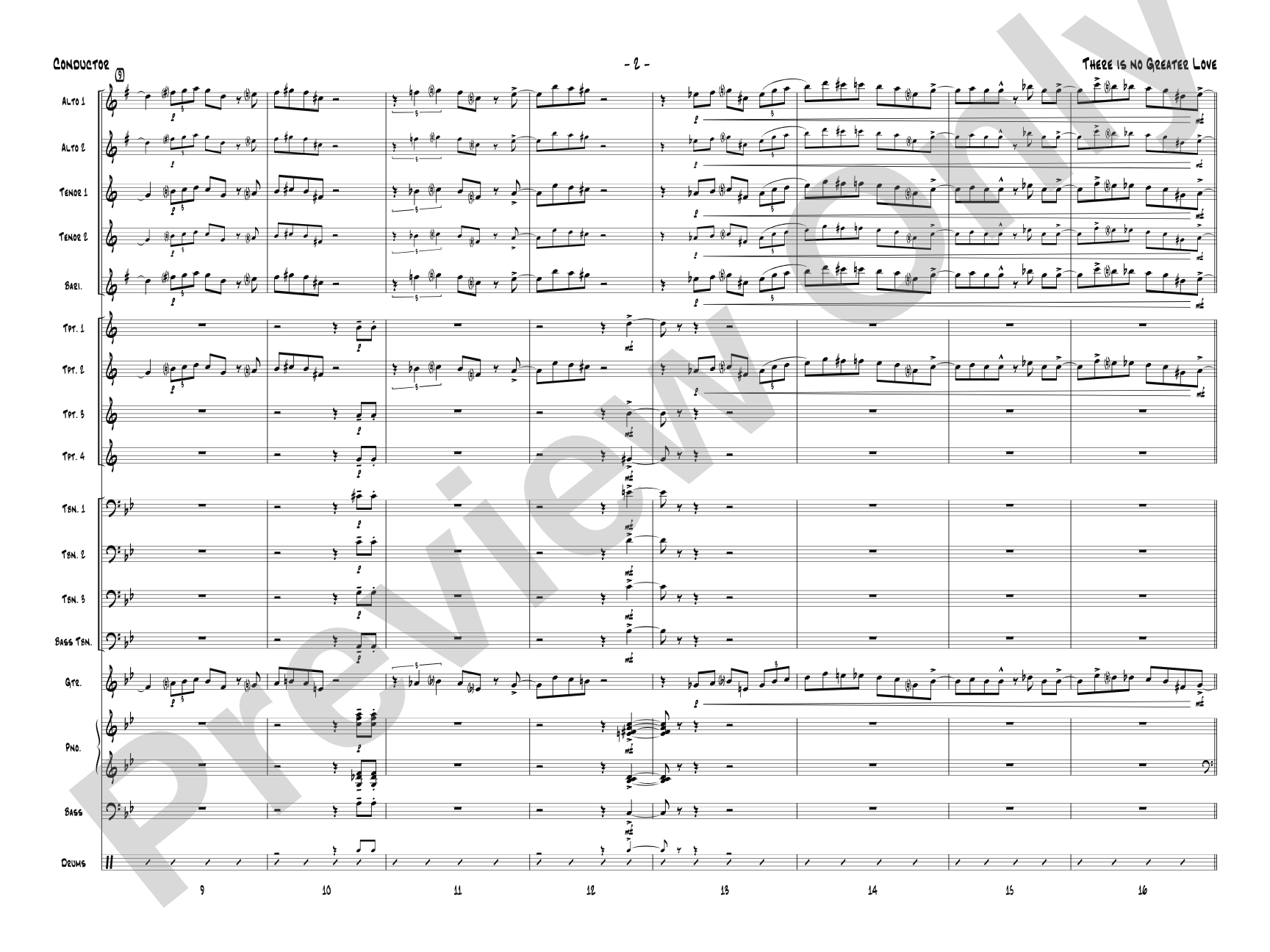
An excellent swing chart for a strong band. At 184 BPM, the chart opens with a small group contrafact and includes some solo space for alto, trombone, and piano, followed by a kickin' sax soli and a shout. Lead trumpet range is to written high D. A quality chart top to bottom. (4:52) This title is available in MakeMusic Cloud.


Don't just read it, hear it, play along with it, and watch your students grow with it. In MakeMusic Cloud, There Is No Greater Love: Jazz Ensemble Conductor Score & Parts comes alive with professional accompaniment, adjustable tempo, and built-in practice tools that turn solo practice into real progress.
Open in the Player
Jump straight in and assign it today.
Start Your Free Trial
Open this title and explore the full library in minutes.
Sample Audio
1
Audio File
--:--
0:00
0:00
Sample Video
No sample videos found.
Additional Details
Series:
Premier Jazz Series
Publisher:
Alfred Music
Page Count:
82
SKU:
00-PK-0006021
More about this title
About the Composer: Marty Symes
Marty Symes was a prolific composer and lyricist who shaped the American songbook in the early-to-mid 20th century. He collaborated with numerous composers and contributed to film and popular music, establishing himself as a skilled craftsman of memorable melodies and sophisticated harmonic structures.
For jazz educators, Symes represents the songwriting tradition that underpins the standard jazz repertoire. His compositions remain vital teaching and performance material precisely because they balance melodic accessibility with harmonic substance, offering ensembles room to explore improvisation and arrangement within a structured, singable framework.
Why we love this
Eric Richards has created an arrangement that respects the tune's swing heritage while giving your ensemble genuine solo real estate and section features. The small group opening into full sax soli feels earned rather than grafted on, and the shout finale gives your section players a moment to shine with confidence and blend. This is the kind of chart that rewards rehearsal investment with authentic performance payoff.
What to expect
A swinging night out condensed into five minutes. The opening whispers and negotiates; the solos invite listeners into a conversation; the final sax soli and shout feel like a table of musicians getting louder and more confident as the set rolls on. It's got charm, it's got teeth, and it never once feels like an exercise.
Who it's for
Advanced jazz ensembles ready to handle swing fundamentals with sophistication and a competitive or festival-ready standard. Your rhythm section needs maturity and independence; your soloists need harmonic fluency; your ensemble needs to balance individual voices within a cohesive section sound.
How to get the most out of it
- Nail the articulation and separation in the small group opening. These first few measures set the groove's pocket and establish the swing feel for the entire arrangement.
- Give the soloists (alto, trombone, piano) adequate coaching time on their changes. The contrafact harmony may surprise players used to the head, so spend bars on clarity before full-tempo run-throughs.
- Anchor the sax soli section with a locked rhythm section. The power of this passage depends on front-line unity and unison precision, which requires discrete full-section rehearsal.
- Manage the lead trumpet's high D passages with awareness of individual range limits. Consider doubling strategically if your section lacks the stamina or security for sustained high work.
How to use it
Program this as a mid-set or closing number where you need confidence and accessibility without sacrificing musicianship. It pairs well with ballads (offering a clean stylistic pivot) and sits naturally alongside other swing standards, making it a natural fit for festival programs or community jazz nights where you want material that both players and audiences genuinely enjoy.
Skills your students will build
- Swing articulation and rhythmic precision at tempo (184 BPM)
- Harmonic improvisation over a contrafact head
- Section blend and unison accuracy in full sax soli
- Listen-and-respond skills in small-group textures
- Range and endurance management in lead trumpet parts
- Rhythm section independence and pocket awareness