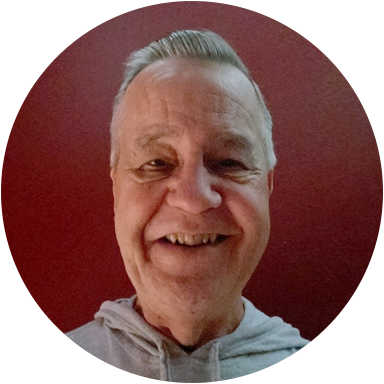
Douglas E. Wagner grew up in Chicago and earned both his undergraduate and graduate degrees in music from Butler University. He spent three decades as a high school music director and administrator before transitioning to full-time composition, a shift that has proven remarkably prolific: since 1973, he has published more than 3,500 works across choral, band, orchestral, handbell, organ, piano, and vocal genres.
Wagner's music reaches millions annually. Well over seventeen million copies of his compositions have been purchased worldwide, and his pieces regularly appear on concert programs and broadcasts throughout North America and internationally. He currently lives in Indianapolis with his wife, Sandy.
Why we love this
Wagner and Lee craft an arrangement that honors the weight of a significant moment without resorting to sentimentality. The text lands with quiet clarity, and the harmonic language supports rather than overwhelms the emotional content, making this genuinely moving to sing and hear.
What to expect
Reflective and grounded. The piece conveys quiet confidence and acceptance, inviting singers and listeners into a moment of shared contemplation. There is strength in its simplicity.
Who it's for
Choirs preparing graduation services, memorial programs, or inspirational concert sets will find this arrangement accessible yet substantial. It suits both school and church ensembles looking for material that feels genuinely reverent without demanding technical virtuosity.
How to get the most out of it
Approach the text as spoken language first. Shape phrases around natural speech rhythms and word stress, allowing the music to follow the meaning rather than imposing rigid meter feel.
Balance transparency in the voicing by resisting the urge to overdrive dynamics. Let individual lines breathe and remain audible, especially in the inner voices.
Consider the role of silence. Punctuate key moments with clear releases and brief pauses to give the message room to land with listeners.
How to use it
Position this as a focal point in a ceremony or concert rather than as filler. Its meditative quality and clear message make it particularly effective as a closing piece or as a centerpiece within a thematic program exploring change, passage, or legacy.
Skills your students will build
Sustaining long phrase lines with controlled breath support
Balancing blend and balance across four parts in homophonic writing
Interpreting text with musical sensitivity and emotional restraint
Achieving clarity of diction within sustained harmony
You May Also Like
Scan to Complete Your Purchase
Use your phone's camera to scan the code below
You'll log in on your phone and the order will be added to your account