There Goes My Everything Sheet Music Preview

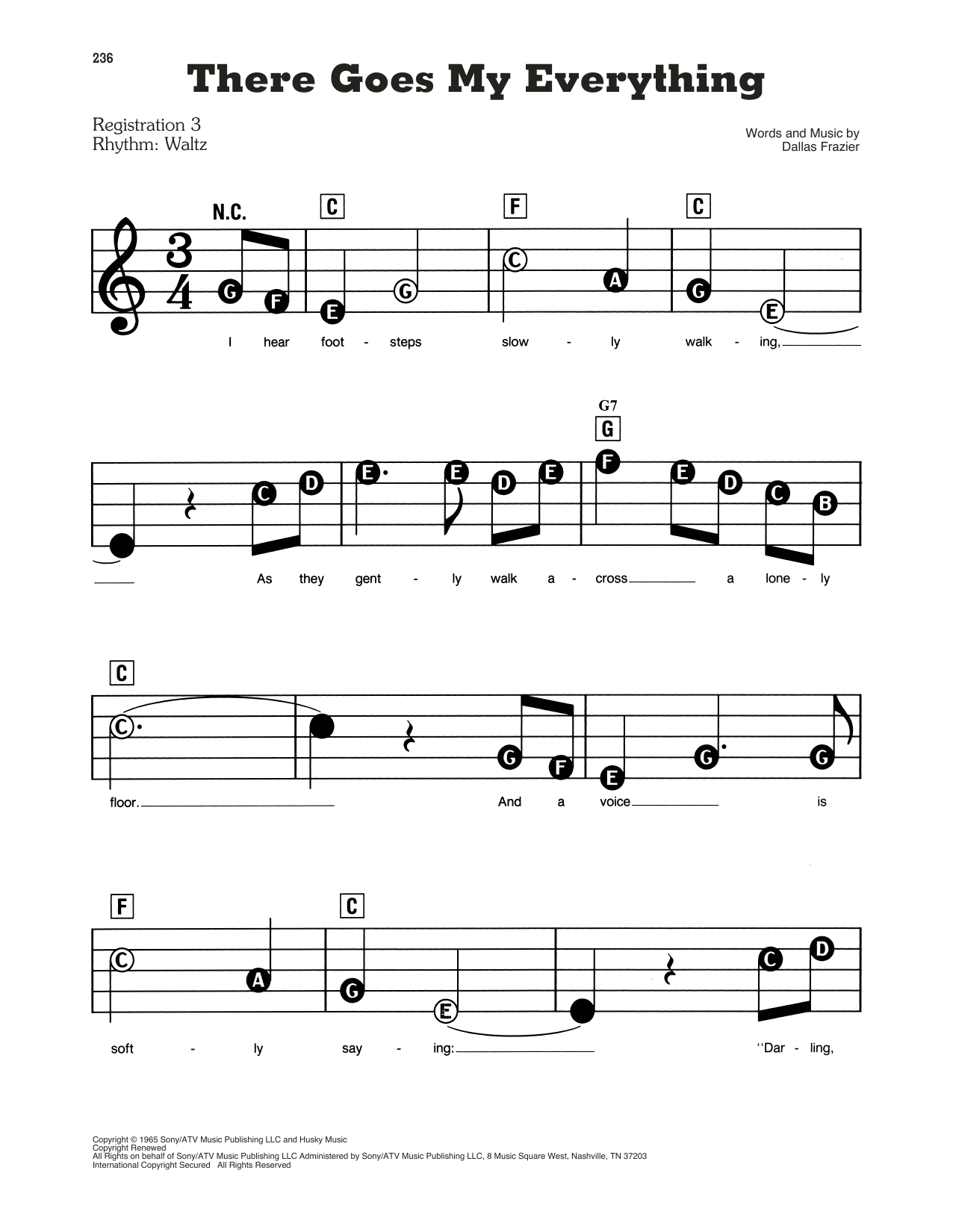
There Goes My Everything: E-Z Play Today

As performed by Engelbert Humperdinck / As performed by Jack Greene / As performed by Elvis Presley

Item: 35-DS00492100

Digital Download
$4.99
Description

There Goes My Everything: E-Z Play Today isn't in MakeMusic Cloud just yet...but it could be. Let us know you'd like to see it, and you'll help shape what comes next. In the meantime, start a free trial and dive into thousands of interactive titles your students can play along with today.

Sample Audio
No sample audio found.
Sample Video
Additional Details
Publisher: Hal Leonard
Page Count: 2
SKU: 35-DS00492100

More about this title

About the Artist: Engelbert Humperdinck

Engelbert Humperdinck emerged as a dominant force in easy listening and pop music during the 1960s and 1970s, known for his rich baritone and orchestral arrangements that defined an era of sophisticated pop ballads. His interpretations of standards and contemporary songs brought emotional depth and vocal control that made him a fixture on both radio and television, influencing generations of singers in the crossover between classical training and popular music.

Why we love this

This arrangement captures the emotional restraint and melodic clarity that made the song a multi-artist standard. At just two pages, it's accessible enough for intermediate students while offering enough harmonic substance to reward careful listening and expressive phrasing.

What to expect

Bittersweet and introspective, this arrangement unfolds with the vulnerability of someone watching something beloved slip away. The harmonic language sits comfortably between jazz and pop, never harsh or over-dramatic, instead letting silence and restraint carry as much weight as the notes themselves.

Who it's for

Pianists developing interpretive skills in popular standards will find this accessible yet musically substantive. Students preparing auditions or recitals that call for a ballad will appreciate the arrangement's elegant simplicity and emotional directness.

How to get the most out of it

  • Honor the song's inherent rubato by breathing at phrase endings rather than strictly metering them; the melody wants to settle into moments of reflection.
  • Voice the left hand lightly to avoid overwhelming the vocal line; think of it as accompaniment, not countermelody.
  • Pay attention to dynamic shaping across the form so the piece builds naturally toward its emotional peak rather than staying at a single intensity level.

How to use it

Pair this with other American standards for a recital set exploring how simple melodies and chord changes can carry profound emotional content. It also works well as a bridge between classical technique work and popular music arrangements for students exploring a broader musical palette.

Skills your students will build

  • Phrasing and breath management in melody-driven arrangements
  • Balancing vocal melody with supportive accompaniment textures
  • Navigating rubato and flexible meter while maintaining harmonic clarity
  • Expressive dynamic shaping across longer musical forms

You May Also Like