Then There Were Five Cover Image

Then There Were Five: String Orchestra Conductor Score

$7.00 USD
Sale price  $7.00 USD Regular price 
Skip to product information
Then There Were Five Cover Image

Then There Were Five: String Orchestra Conductor Score

By Loreta Fin

Grade: 2

Item: 76-49878S

$7.00
Shipped

One moment…

Description
The irregular 5/4 time signature found here is not often used in educational ensemble music. Then There Were Five is an original piece by Loreta Fin, using a 3 + 2 feel and, at times, a 2 + 3 feel. The syncopated rhythm is repetitive and has a lilting quality. The middle section changes to 3/4 time, before returning to the main ideas. This piece is for Loreta's five grandchildren, who have often been the inspiration for her pieces. (2:25)

Then There Were Five: String Orchestra Conductor Score isn't in MakeMusic Cloud just yet...but it could be. Let us know you'd like to see it, and you'll help shape what comes next. In the meantime, start a free trial and dive into thousands of interactive titles your students can play along with today.

Sample Pages

Sample Audio
No sample audio found.
Sample Video
Additional Details
Series: Wilfin String Orchestra: Young String Ensemble Series
Publisher: Wilfin Music
ISBN10: 1-4706-5127-0
ISBN13: 978-1-4706-5127-5
UPC: 038081572185
SKU: 76-49878S

More about this title

About the Composer: Loreta Fin
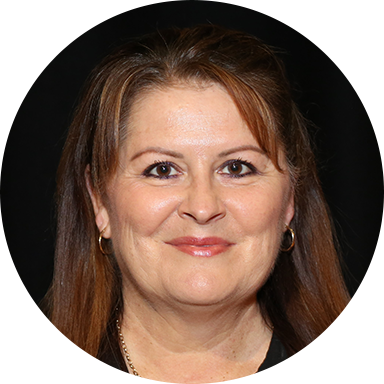
Loreta Fin

Loreta Fin AM is an Australian violist, educator, and prolific composer whose work has shaped string education across the Pacific region and beyond. A graduate of the Sydney Conservatorium of Music and former first violinist with the Sydney Youth Orchestra, she served as Principal Viola player with the Queensland Pops Orchestra for over 25 years while establishing herself as Director of Strings at Somerville House School in Brisbane, a position she has held since 1993. Her contributions to string pedagogy earned her the National Award for Services to Music and String Teaching in Australia, and she was nominated for the ARIA "Best Teacher" award.

Fin has composed more than 100 works for string orchestra, all published worldwide by Alfred Music, and has been deeply involved in the professional music community as an examiner with the Australian Music Examinations Board, State Advisor for Strings, and longtime member of the Australian Strings Association, where she served as both State and National President. Her work conducting the State and National Honours Ensembles Programs in Brisbane since 2015, combined with her presentations at Australian and American National String Teachers' Conferences, reflects her commitment to developing the next generation of string players.

Why we love this

Loreta Fin has written a meter study that never feels like a meter study. The 5/4 signature, divided into alternating 3 + 2 and 2 + 3 patterns, sits so naturally under the syncopated, lilting rhythm that students absorb the metric flexibility through playing rather than counting. At Grade 2, this is a genuine rarity: an accessible entry point into irregular meters that respects both the conductor's pedagogical goals and the ensemble's musicality.

What to expect

Rhythmically playful and slightly offbeat, Then There Were Five bounces along with the kind of gentle syncopation that catches the ear without becoming complicated. The lilting quality gives the piece an almost whimsical character, as if the rhythm itself is dancing around a steady pulse that keeps shifting shape beneath it. When the middle section settles into 3/4, the return to 5/4 lands with renewed energy and purpose.

Who it's for

String orchestras at Grade 2 who are ready to expand beyond standard time signatures and want to build metric independence without sacrificing musicality. This piece works especially well for groups preparing for concert or festival programming that showcases their range as an ensemble.

How to get the most out of it

  • Conduct the 5/4 in two large beats rather than five, letting the 3 + 2 division emerge from the phrasing rather than the baton pattern. This helps the strings hear the meter as a flowing, logical shape.
  • Mark the middle section's shift to 3/4 clearly in rehearsal. The contrast will feel more striking if students understand it's a temporary departure, not a rewrite of the pulse.
  • Shape the syncopated lines with gentle weight on the "and" of beats where the rhythm lands, so the lilting quality stays forward without sounding accidental or rushed.
  • Use the return to 5/4 as a moment to reinforce the original feel. Have the ensemble focus on how familiar the rhythm has become after the 3/4 interlude.

How to use it

Program this near the beginning of a concert to establish that your ensemble is comfortable with rhythmic exploration at an accessible level. It pairs well with more traditional Grade 2 repertoire, showing the range of what young string orchestras can handle. The short runtime (2:25) makes it ideal for festival rotations or as a palate cleanser between heavier works on a concert.

Skills your students will build

  • Reading and performing in 5/4 time with 3 + 2 and 2 + 3 subdivisions
  • Maintaining steady pulse through syncopated rhythmic patterns
  • Transitioning between different time signatures (5/4 to 3/4 and back)
  • Executing syncopated rhythms with rhythmic precision and musical phrasing
  • Understanding metric structure as a compositional choice, not just a counting exercise

You May Also Like