Themes from The Nutcracker: Violin 1 Sheet Music Preview

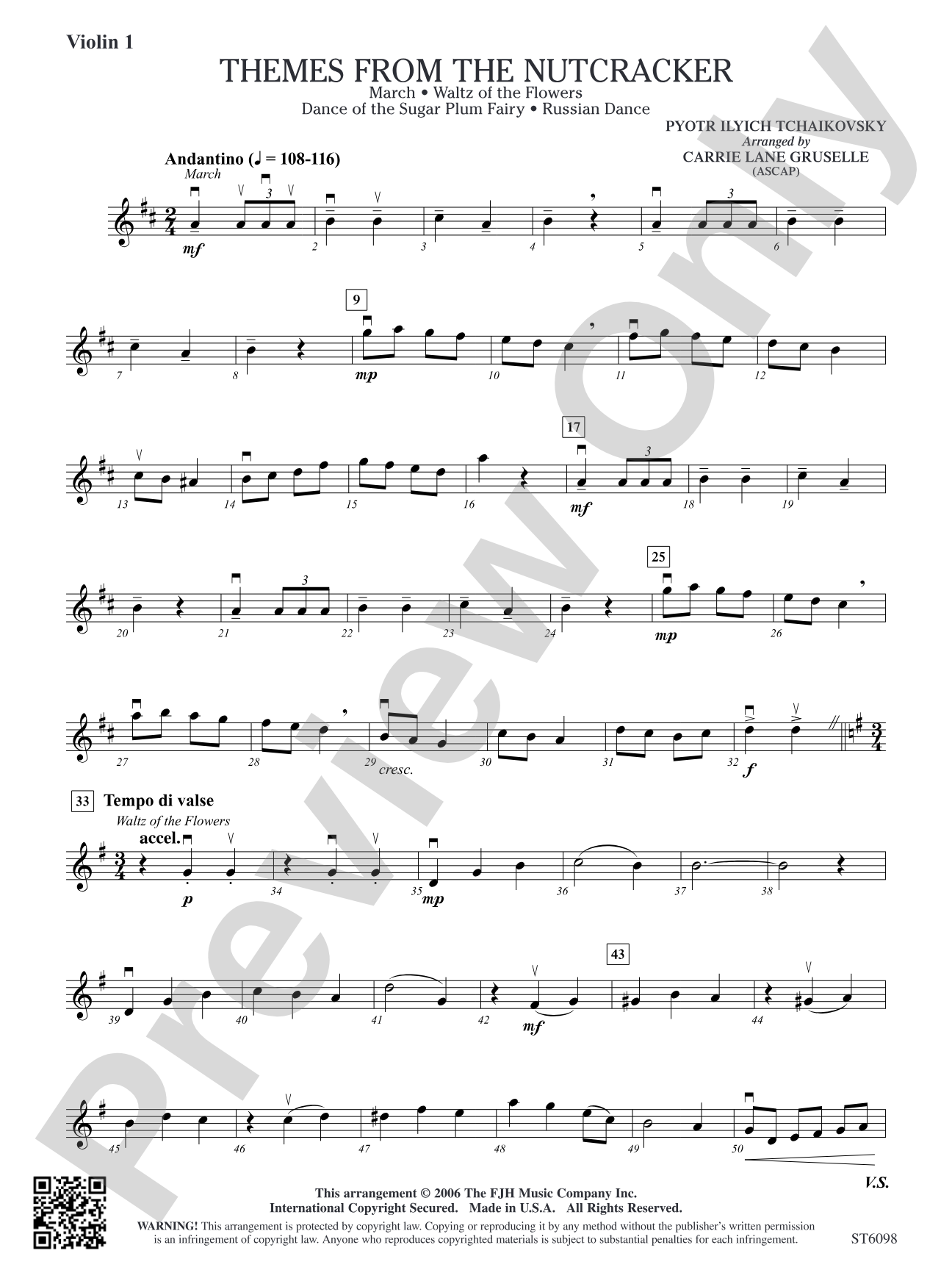
Themes from The Nutcracker: Violin 1

By Pyotr Ilyich Tchaikovsky / arr. Carrie Lane Gruselle

Grade: 2.5

Item: 98-PC-DST6098_VN1

Digital Download
$7.00
Description
A great choice for the holidays or any time of year, these timeless melodies from The Nutcracker are set entirely in first position. Sections include March, Waltz of the Flowers, Dance of the Sugar Plum Fairy, and Russian Dance. Directors will enjoy the great deal of performance flexibility, as they program the entire work or choose from individual selections to customize a program suitable for any ensemble. (2:45)

Don't just read it, hear it, play along with it, and watch your students grow with it. In MakeMusic Cloud, Themes from The Nutcracker: Violin 1 comes alive with professional accompaniment, adjustable tempo, and built-in practice tools that turn solo practice into real progress.

Sample Audio
0:00
0:00
Sample Video
Additional Details
Series: FJH Developing Strings
Publisher: The FJH Music Company, Inc.
SKU: 98-PC-DST6098_VN1

More about this title

About the Composer: Pyotr Ilyich Tchaikovsky

Pyotr Ilyich Tchaikovsky (1840-1893) was a Russian composer whose gift for memorable melody and orchestral color made him one of the most performed composers in concert halls worldwide. His ballets, symphonies, and concertos remain central to the repertoire, and his music speaks directly to performers and audiences alike with emotional clarity and technical brilliance. The Nutcracker, premiered in 1892, stands as one of his most enduring works, beloved for its accessibility and imaginative orchestration that translates beautifully across ensemble levels.

Why we love this

Gruselle's arrangement captures the charm and elegance of Tchaikovsky's most recognizable themes while keeping the ensemble grounded in first position, making these beloved sections attainable for developing players. The flexibility to perform individual dances or the complete suite gives you genuine programming control, whether you're building a holiday concert or filling a spring festival slot. These melodies carry their own momentum, freeing you to focus on musicality, phrasing, and ensemble balance rather than fighting technical demands.

What to expect

These selections sparkle with Tchaikovsky's gift for memorable melody and orchestral charm. From the bright, processional March through the graceful Waltz and delicate Sugar Plum Fairy to the vibrant Russian Dance, the music captures the magic and pageantry of the ballet without overwhelming younger players. The orchestration sits naturally for strings, allowing the ensemble to sound polished and confident.

Who it's for

String orchestra directors working with developing ensembles (grades 4-7) who want substantial concert repertoire that feels polished without requiring shifts or complex fingering patterns. This arrangement serves equally well in school orchestra programs, community youth orchestras, and festival settings where players are building foundational skills and ensemble experience.

How to get the most out of it

  • Let the March establish clear forward motion from the opening; young ensembles often drag here, so anchor the tempo early and maintain it consistently through the section.
  • Shape the Waltz of the Flowers with gentle dynamic waves rather than static mezzo-forte; this helps string players discover phrasing within a familiar melody.
  • Balance the Dance of the Sugar Plum Fairy so that the melody sits naturally above the accompaniment without requiring extreme dynamic shifts that disrupt first-position comfort.
  • Bring out the character in the Russian Dance through rhythmic clarity and articulation; this section rewards attention to bow control and rhythmic precision among your lower voices.

How to use it

Open a holiday concert with the March, then feature the Waltz and Sugar Plum Fairy as a contrasting pair midway through the program. Alternatively, perform all four selections as a cohesive suite (2:45) as your concert centerpiece, or use individual dances to complement other seasonal works. This arrangement also works well in festival competitions where judges appreciate strong musicianship on recognizable repertoire.

Skills your students will build

  • Reading and executing first-position technique across multiple string parts
  • Sustaining long melodic lines with consistent tone and vibrato control
  • Balancing melody and accompaniment roles within the ensemble
  • Maintaining rhythmic precision in dance-based meters and syncopated figures
  • Interpreting dynamic and articulation markings to shape phrasing

You May Also Like