
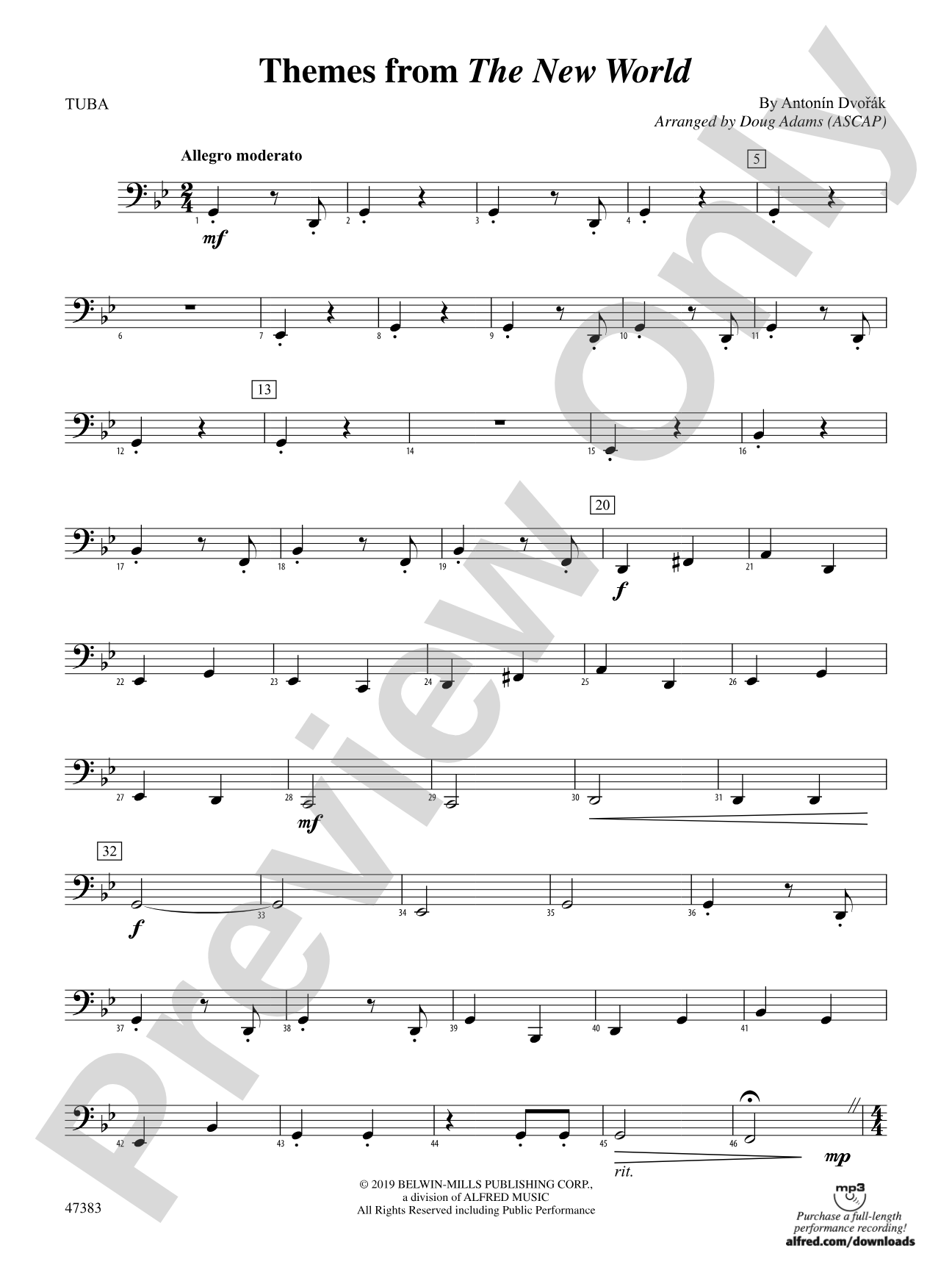

Themes from The New World: Tuba
By Antonín Dvorák / arr. Doug Adams
Grade: 1 (Very Easy)
Item: 00-PC-0017917_TB1
$3.00
Pickup currently not available
Description
Romantic and nationalistic Czech composer Antonín Dvorák's Symphony No. 9 was influenced by his research on the tonality and rhythms of Native-American and African-American music. Introduce this master composer to your beginners with the selected themes, which omit technical obstacles yet provide teaching opportunities for dynamic shading and contouring as well as diverse articulations. Bravo!


Don't just read it, hear it, play along with it, and watch your students grow with it. In MakeMusic Cloud, Themes from The New World: Tuba comes alive with professional accompaniment, adjustable tempo, and built-in practice tools that turn solo practice into real progress.
Open in the Player
Jump straight in and assign it today.
Start Your Free Trial
Open this title and explore the full library in minutes.
Sample Audio
1
Audio File
--:--
0:00
0:00
Sample Video
Additional Details
Series:
Belwin Beginning Band
Publisher:
Alfred Music
Page Count:
254
SKU:
00-PC-0017917_TB1
More about this title
About the Composer: Antonín Dvorák
Antonín Dvorák (1841-1904) stands as one of the most significant composers of the Romantic era, bringing Czech musical identity to the world stage at a time when his nation had no independent political voice. His command of orchestral color and gift for memorable melody made him a bridge between European tradition and the musical cultures he encountered, particularly during his years in America as director of the National Conservatory of Music in New York (1892-1895).
Dvoták's willingness to study and incorporate influences from African-American spirituals and Native-American musical traditions into his symphonic language was unusual for his era and reflects a genuine curiosity about music beyond the European canon. His Symphony No. 9 in E minor, known colloquially as "From the New World," became his most performed work and remains a cornerstone of the orchestral repertoire. For beginning band students, his music offers both accessibility and artistic substance: clear harmonic structures, singable melodies, and orchestration that translates beautifully to young ensembles.
Why we love this
Doug Adams has extracted the signature themes from Dvorák's masterwork and crafted them for young musicians without compromising the dignity of the original. What makes this arrangement special is that it preserves the emotional arc and orchestral ambition of the symphony while deliberately removing the technical hurdles that would frustrate beginners; students encounter real compositional craftsmanship rather than a simplified substitute. Programming this gives your band immediate access to a work that feels important and genuinely beautiful.
What to expect
Dvorák's melodies carry a romantic warmth and a subtle sense of searching, as if the music itself is exploring unfamiliar landscapes. The arrangement maintains this introspective quality while allowing young players to experience the satisfaction of shaping long, singing lines and contributing to rich harmonic textures.
Who it's for
Beginning concert bands and young wind ensembles seeking repertoire that sounds substantial and mature without requiring advanced technical skills. This works equally well for Grade 1 high school bands or advanced middle school groups ready to perform on festival programs with confidence.
How to get the most out of it
- Shape the opening theme with a gentle crescendo to the highest note, then allow the phrase to breathe as it descends. Beginners often rush this natural architectural moment.
- Balance the inner voices carefully when the main melody passes between sections. The countermelodies are written accessibly so that every part contributes to the harmonic color.
- Observe the marked articulations as character indicators, not merely technical instructions. Legato passages should sing; marked notes should carry intentional weight.
- Use the moderate tempos as an opportunity to build ensemble precision. At these speeds, any rhythmic drift becomes audible, teaching your band to listen across the sections.
How to use it
This pairs effectively with other accessible masterwork arrangements, creating a concert program that demonstrates your band's musical literacy alongside its technical growth. Consider programming it mid-set where it can anchor an entire half, or use it as a festival selection that impresses adjudicators precisely because it asks students to refine musicianship rather than dazzle with virtuosity.
Skills your students will build
- Dynamic shading and phrase contouring
- Articulation clarity and style (legato, marked, and staccato)
- Ensemble balance when the melody moves between sections
- Sustaining long melodic lines with proper breath support and intonation
- Listening to harmonic color and supporting inner voices