

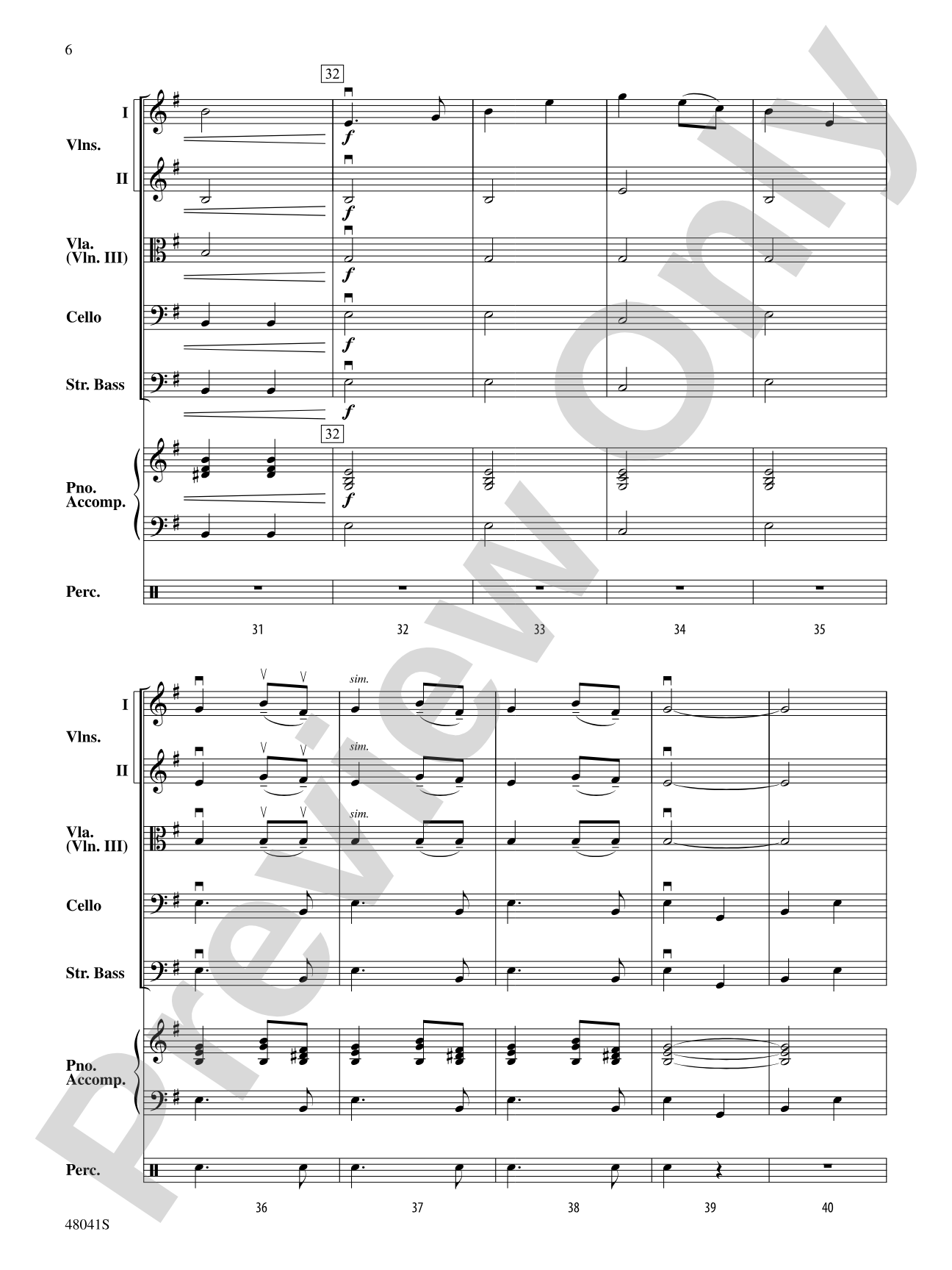
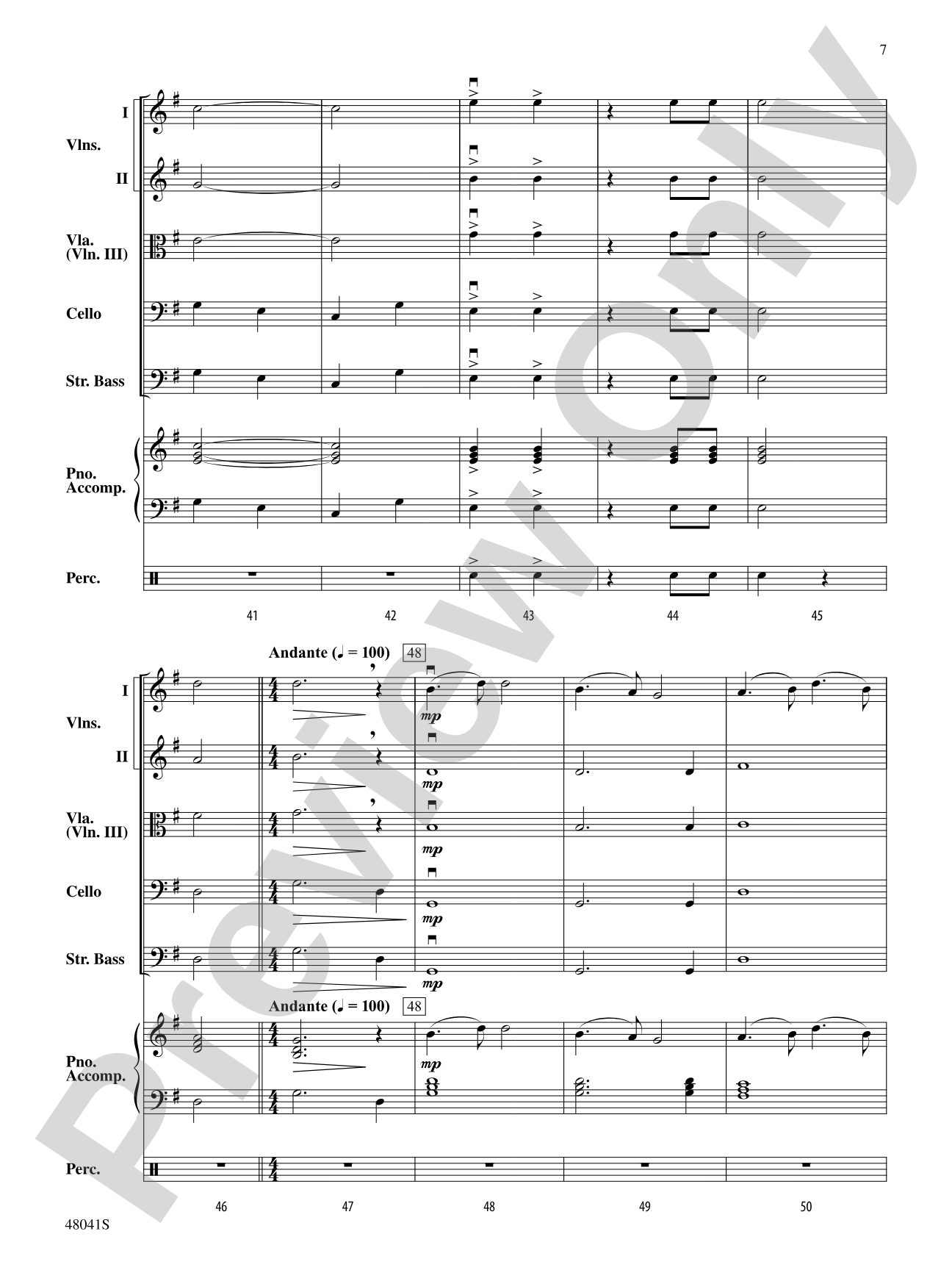
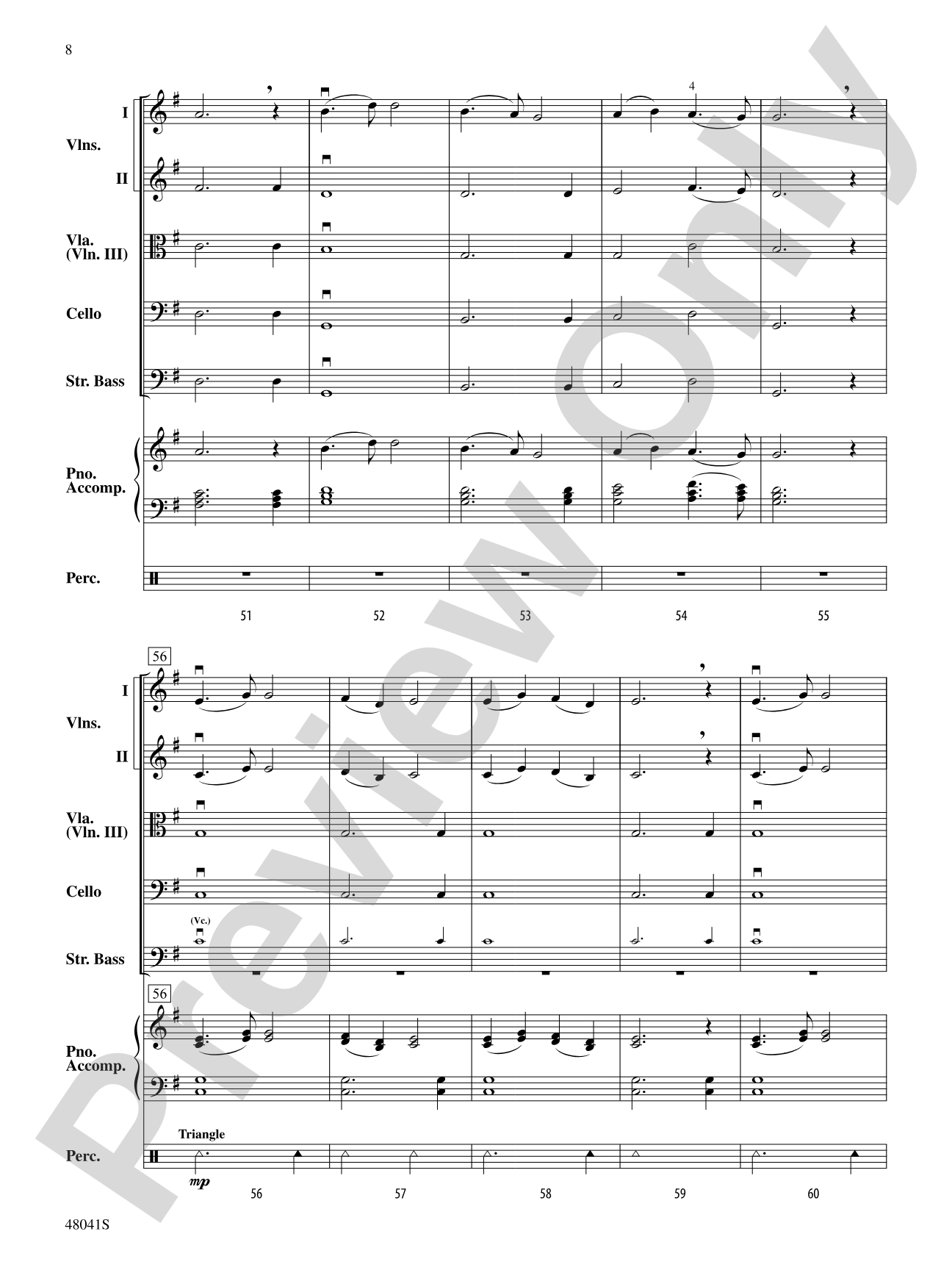
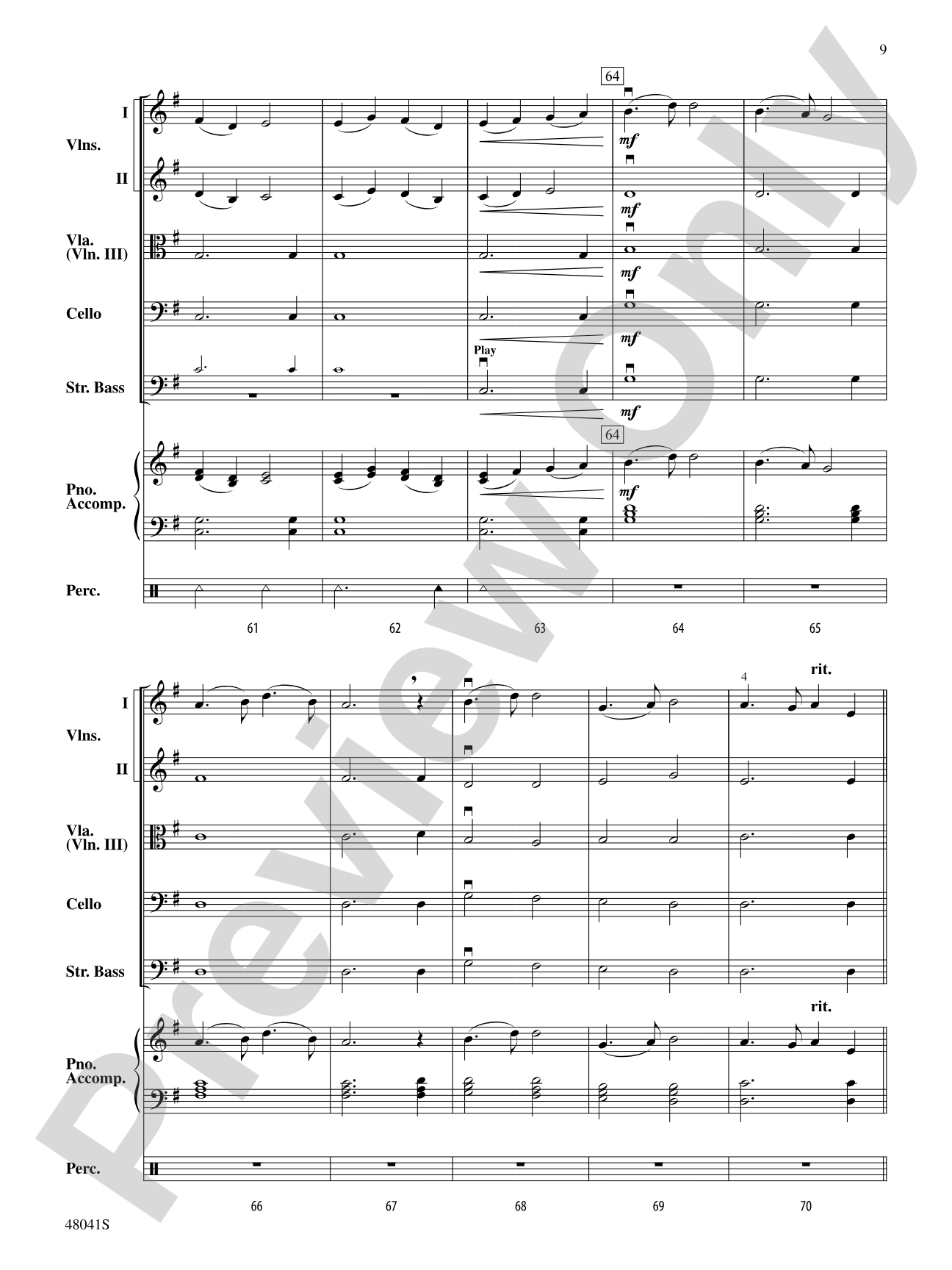

Themes from The New World: String Orchestra Conductor Score & Parts
By Antonín Dvorák / arr. Doug Adams
Grade: 1
Item: 00-PK-0008131

$50.00
Pickup currently not available
Buy Extra Parts (Digital PDF Download)
Parts Added to Cart!
Related Items
Themes from The New World: Concert Band Conductor Score & Parts |
$56.00
|
View | |
Themes from The New World: Concert Band Conductor Score & Parts |
$56.00
|
View | |
Themes from The New World: Concert Band Conductor Score |
$10.00
|
View | |
Themes from The New World: String Orchestra Conductor Score & Parts |
$50.00
|
View | |
Themes from The New World: String Orchestra Conductor Score |
$9.00
|
View |
Description
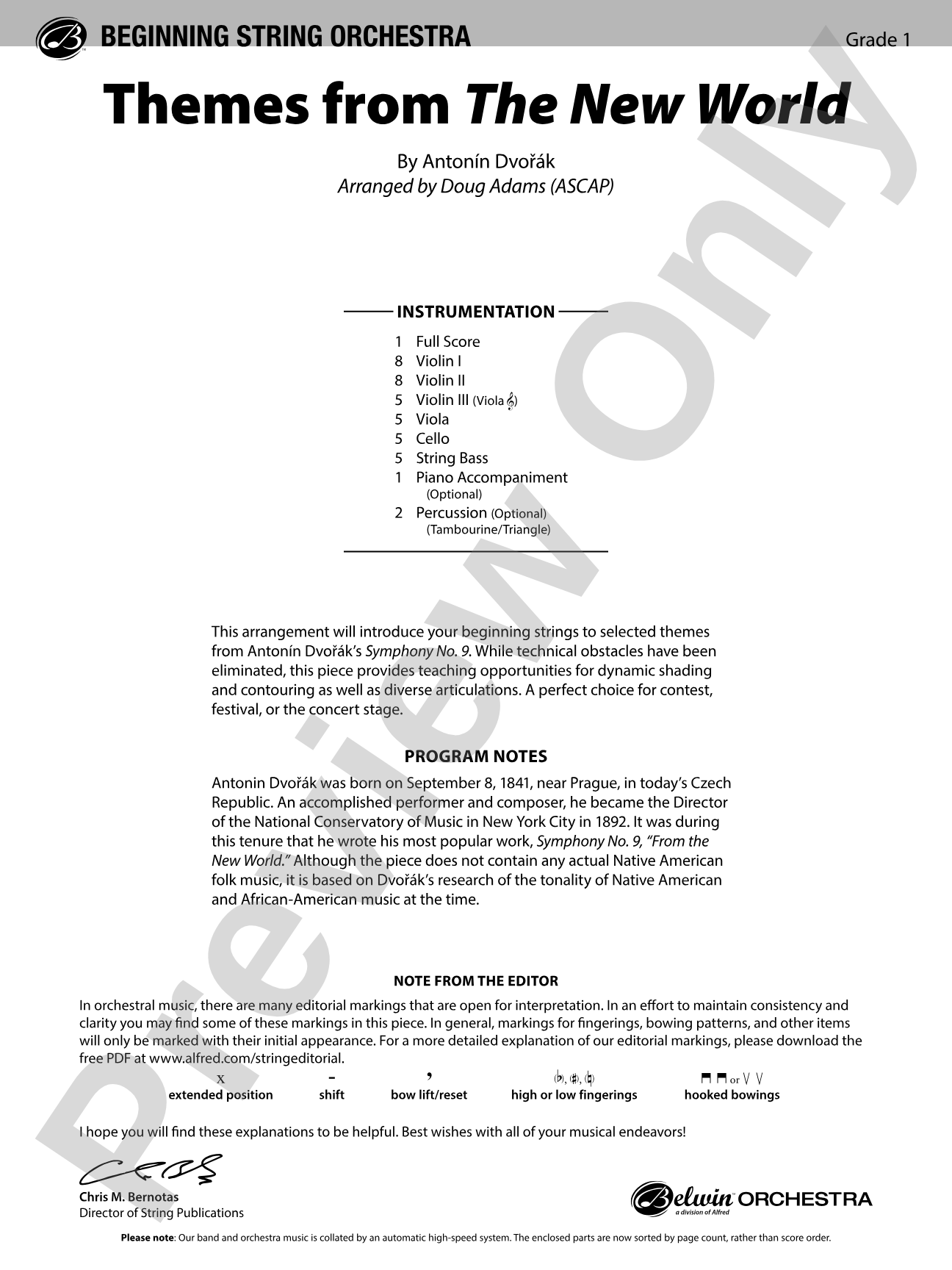
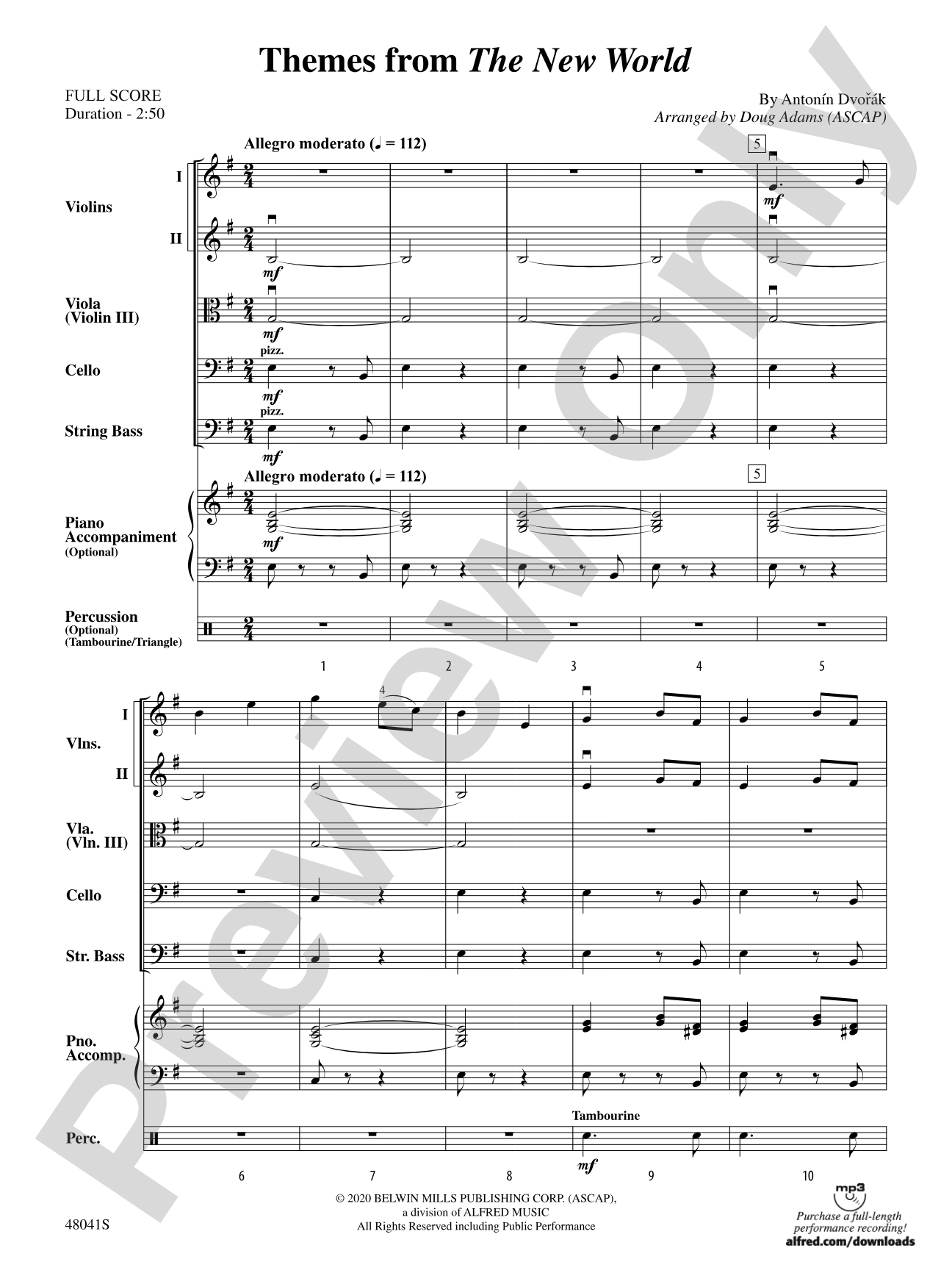
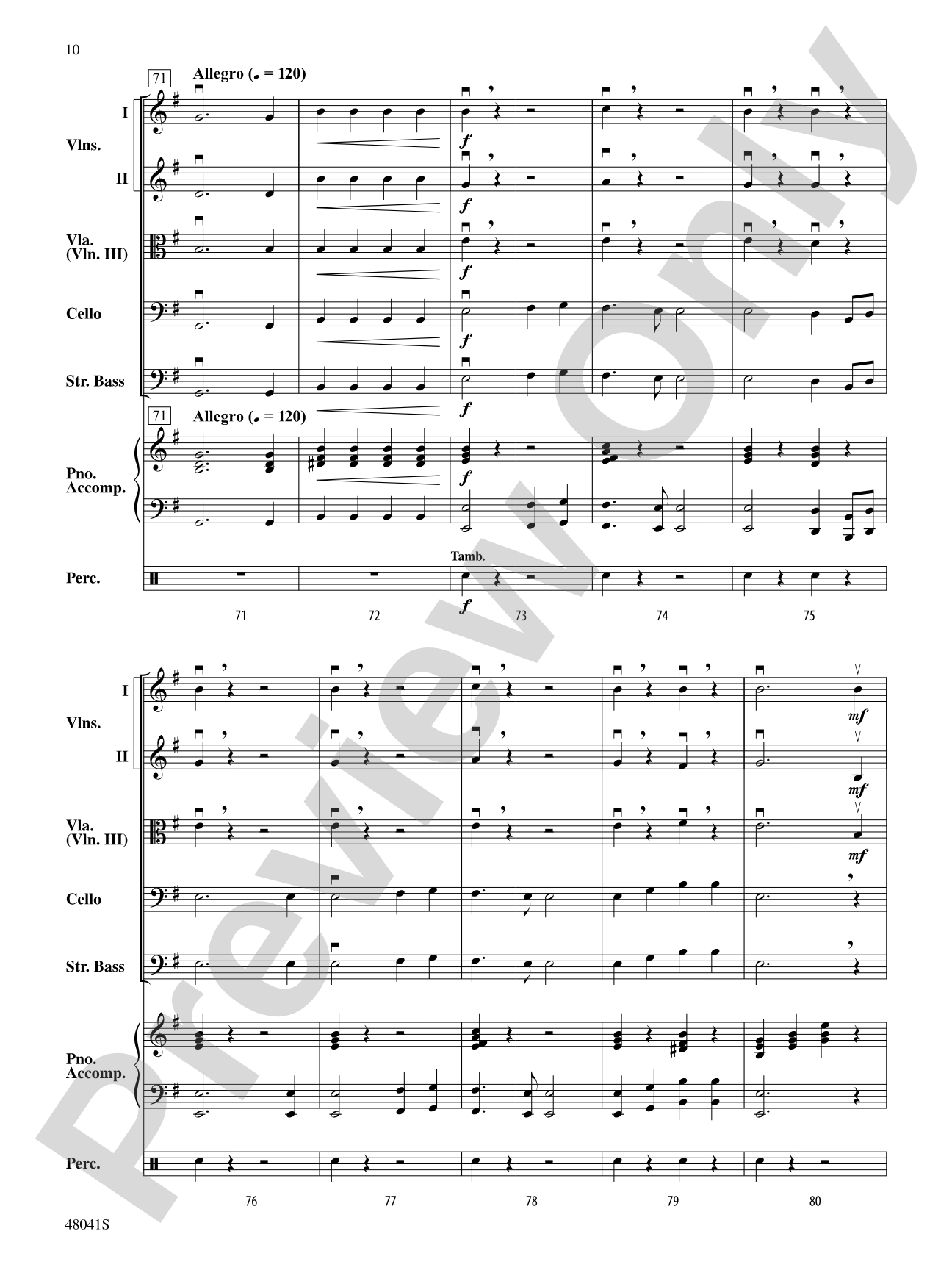
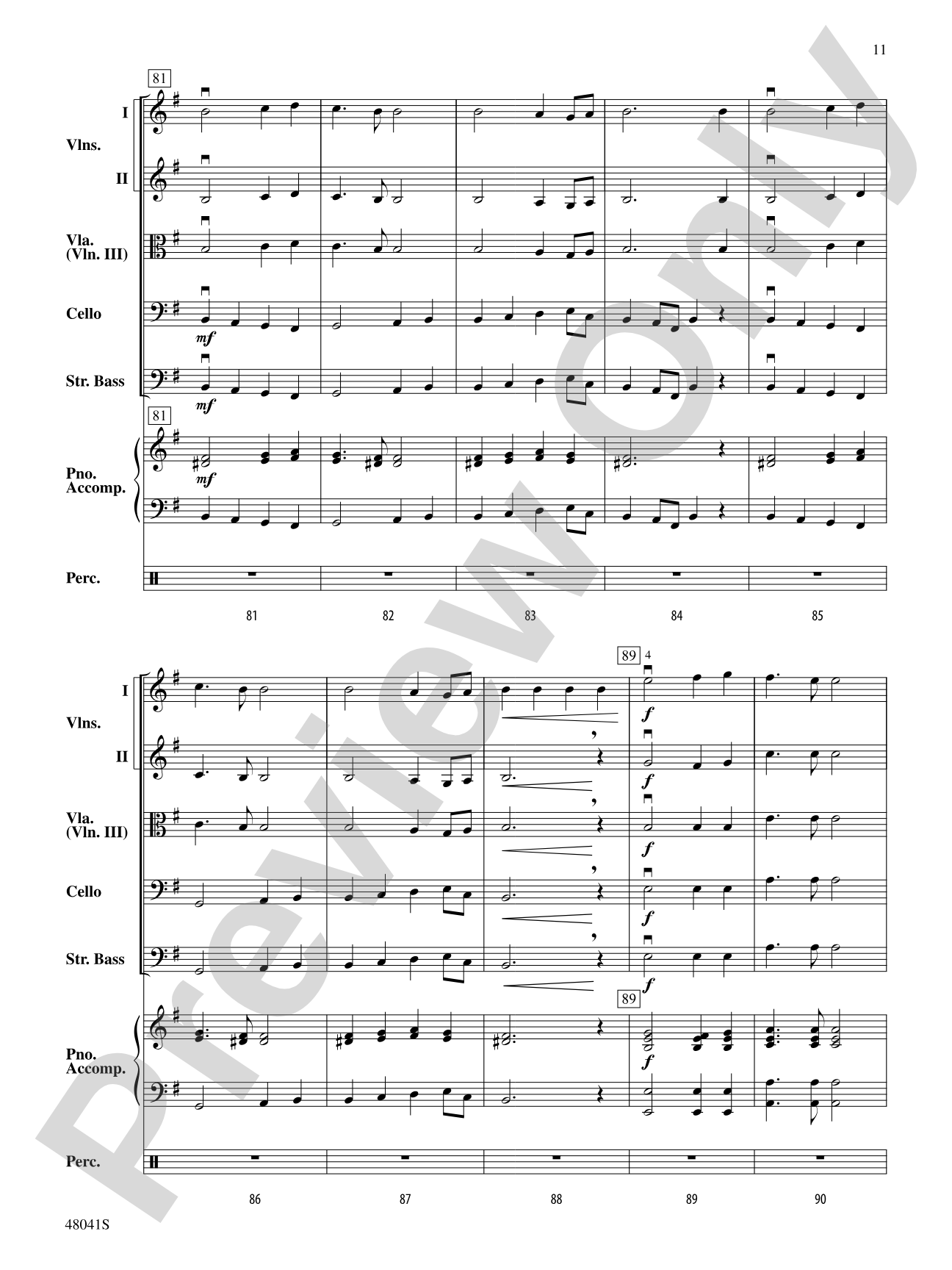
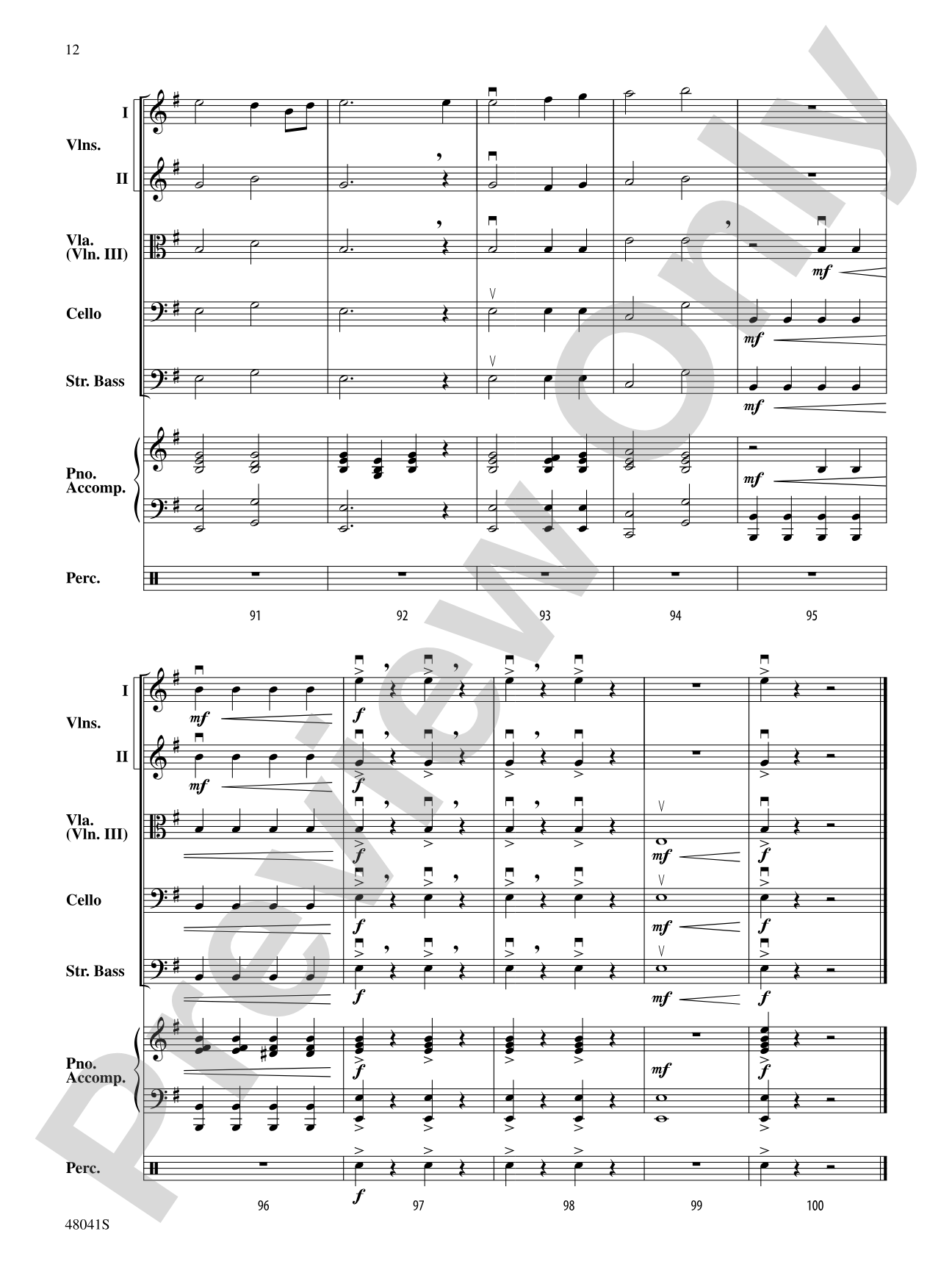
Doug Adams' arrangement of themes from Symphony No. 9 in E minor by Antonín Dvorák will introduce your beginning strings to selections from this well-known symphony. While technical obstacles have been eliminated, this piece provides teaching opportunities for dynamic shading and contouring as well as diverse articulations. A perfect choice for contest, festival or the concert stage. (2:50) This title is available in MakeMusic Cloud.


Don't just read it, hear it, play along with it, and watch your students grow with it. In MakeMusic Cloud, Themes from The New World: String Orchestra Conductor Score & Parts comes alive with professional accompaniment, adjustable tempo, and built-in practice tools that turn solo practice into real progress.
Open in the Player
Jump straight in and assign it today.
Start Your Free Trial
Open this title and explore the full library in minutes.
Sample Audio
1
Audio File
--:--
0:00
0:00
Sample Video
Additional Details
Series:
Belwin Beginning String Orchestra
Publisher:
Alfred Music
Page Count:
152
SKU:
00-PK-0008131
More about this title
About the Composer: Antonìn Dvorák
Antonín Dvořák (1841-1904) was a Czech composer who drew deeply from his national heritage while mastering the symphonic forms of his European predecessors. His career spanned the late Romantic era, and he became known for melodies of remarkable accessibility paired with sophisticated orchestration and harmonic language. Dvořák's influence on music education is immense; his works appear in curricula worldwide because they balance technical rigor with genuine musicality that students find engaging.
The Ninth Symphony, subtitled "From the New World," was composed during Dvořák's time in America (1892-1895) and remains one of the most performed symphonies in the classical repertoire. Its themes are instantly recognizable and emotionally direct, qualities that make them ideal for introducing young musicians to the world of great orchestral literature.
Why we love this
Doug Adams has preserved the unmistakable character and sweep of Dvořák's melodies while genuinely simplifying the technical demands for Grade 1 orchestras. The arrangement doesn't resort to oversimplification; instead, it opens the door to teaching musicality and shaping within a manageable technical framework. Young musicians perform a genuine masterwork and hear themselves creating something that matters.
What to expect
Nostalgic, lyrical, and emotionally direct. The themes evoke a sense of longing and reflection without demanding virtuosity from the performers. Students experience what it feels like to play music that resonates beyond the rehearsal room.
Who it's for
Beginning string orchestras ready to expand beyond unison repertoire into scored arrangements with independent parts. Directors seeking material that builds student confidence through familiarity while teaching genuine musicianship skills. This works equally well for festival or contest programming and for building concert repertoire that audiences recognize and love.
How to get the most out of it
- Shape the famous melody from the Largo movement with long, singing phrases; even at a beginner level, students can learn the difference between simply playing notes and sculpting a line.
- Balance dynamics carefully between sections so that the primary melody always emerges clearly, especially when multiple instruments share similar material.
- Articulate the contrasting sections distinctly; the piece offers opportunities to explore how crisp staccatos and smooth legatos define musical character.
- Encourage careful listening during runs and scalar passages so that rhythmic precision serves the melodic line rather than overshadowing it.
How to use it
Pair this with a contemporary work to show students the continuum of orchestral writing, or program it as the centerpiece of a concert exploring symphonic themes across centuries. The 2:50 runtime fits comfortably into festival formats and gives your orchestra a polished, substantial-sounding closer that audiences respond to immediately.
Skills your students will build
- Dynamic shading and contouring across phrases
- Contrasting articulations (legato and staccato) within a single piece
- Balance and blend when multiple parts carry melodic material
- Listening and responding to sectional independence while maintaining ensemble cohesion
- Sustaining melodic lines across longer musical phrases