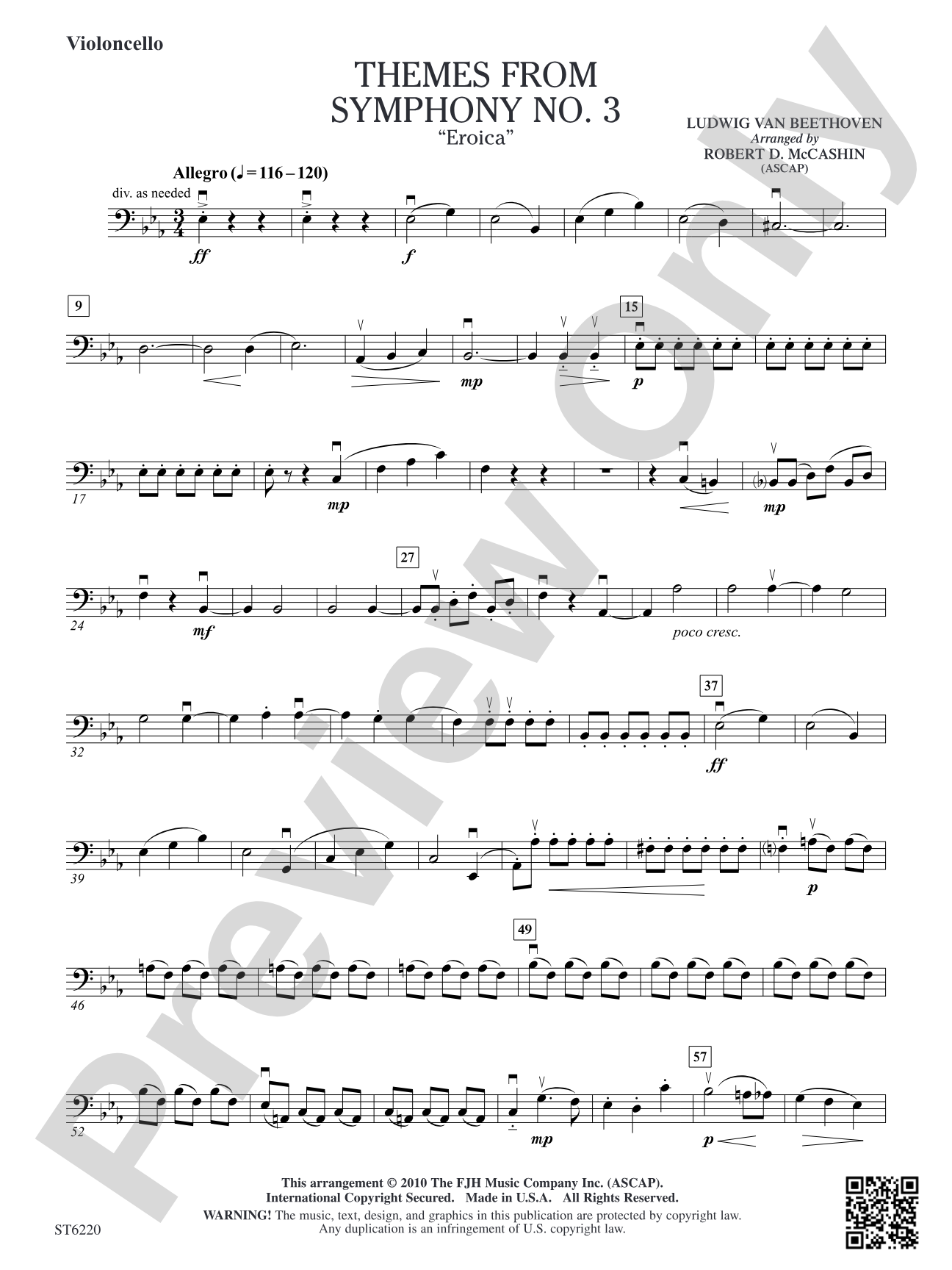
Themes from Symphony No. 3 "Eroica": Violoncello Sheet Music Preview

Themes from Symphony No. 3 "Eroica": Violoncello

By Ludwig van Beethoven / arr. Robert D. McCashin

Grade: 3.5

Item: 98-PC-DST6220_VC1

Digital Download
$7.00
Description
Italian for "heroic," the Eroica Symphony lives up to its name in every way. Beethoven's masterpiece begins with two bold chords before the lower strings state the main theme. Exploring several aspects of the original, this faithful arrangement is sure to inspire your students to further explore the music of Beethoven.

Themes from Symphony No. 3 "Eroica": Violoncello isn't in MakeMusic Cloud just yet...but it could be. Let us know you'd like to see it, and you'll help shape what comes next. In the meantime, start a free trial and dive into thousands of interactive titles your students can play along with today.

Sample Audio
0:00
0:00
Sample Video
Additional Details
Series: FJH String Orchestra
Publisher: The FJH Music Company, Inc.
SKU: 98-PC-DST6220_VC1

More about this title

About the Composer: Ludwig van Beethoven

Ludwig van Beethoven (1770-1827) fundamentally transformed the symphony from a courtly entertainment into a vehicle for profound human expression. His nine symphonies span from Classical refinement to Romantic intensity, and they remain central to orchestral repertoire and music education. Beethoven's innovations in structure, harmonic language, and instrumental color influenced every composer who followed.

For student musicians, Beethoven's work offers essential lessons in musical architecture and emotional directness. His themes are memorable and singable, his orchestrations transparent enough for young players to hear their individual contributions while experiencing the power of ensemble unity. Teaching Beethoven at the secondary level plants seeds for lifelong engagement with serious music.

Why we love this

This arrangement distills the Eroica's dramatic core into a piece that Grade 3.5 orchestras can actually command. McCashin preserves the famous opening chords and the insistent main theme while paring away complexity, so your students feel the heroism without drowning in thick textures. The result is a genuine Beethoven experience, not a watered-down substitute.

What to expect

Powerful and urgent from the first measures. The two opening chords feel like a declaration, and when the main theme emerges in the lower strings, there is a sense of inexorable forward motion. This is music that announces something important is about to happen.

Who it's for

String orchestras at the Grade 3.5 level who want to tackle a major work without excessive technical demand. This arrangement suits ensembles preparing for competitions or festival performances where strong programming and confident execution matter equally.

How to get the most out of it

  • Shape the opening two chords with real weight and unified attack. These are the piece's calling card; they must arrest attention immediately.
  • Bring out the lower string theme once it enters. Violas and cellos carry the melody here, so balance your upper strings carefully to let it sing.
  • Resist the temptation to rush. Beethoven's themes need space and breathing room to land their full effect.
  • Use the contest/festival context as motivation. Frame rehearsals around what adjudicators will hear: clarity, ensemble precision, and genuine musicality from every stand.

How to use it

Program this alongside lighter contemporary works to show range and ambition. It works especially well on festival or contest programs where you want to demonstrate your orchestra's maturity and depth. Consider pairing it with a piece that shares Beethoven's heroic energy or one that contrasts with it sharply.

Skills your students will build

  • Executing two-note chords with unified articulation and dynamic control
  • Balancing parts so that lower strings can sustain a singable melody over sustained accompaniment
  • Maintaining steady tempo through thematic statement and development
  • Reading and executing Classical phrase structure and cadence
  • Responding to the character and emotional weight of a major work

You May Also Like